Encountering Confucianism
Chapter Seven — Day 1
PHIL 210: World Religions
⌨️ Keyboard Shortcuts
→ / Space: Next slide
←: Previous slide
S: Speaker notes
F: Fullscreen
O: Overview
ESC: Exit/Close
Confucius's Project
Restoration, Not Revolution
His diagnosis: Society collapsed because people forgot how to be properly human.
His prescription: Restore the relationships, rituals, and virtues of the early Zhou "golden age."
"I transmit but do not innovate. I trust in and love the ancient ways."
— Analects 7.1
The Analects (Lunyu 論語)
What Kind of Text Is This?
- Not written by Confucius himself
- Compiled by disciples over generations
- Collection of sayings, dialogues, anecdotes
- No systematic treatise — wisdom in fragments
Think of it as: Collected tweets from a master teacher, curated by students who sometimes disagreed about what he meant.
The text developed in layers over perhaps 200 years. Earlier sections (Books 3-9) are considered most reliable. Later sections show influence of competing schools. Think: sayings compiled by followers, not a planned book.
The Five Constant Virtues
Wu Chang (五常) - The foundation of Confucian ethics
- Ren (仁) - Benevolence, humaneness
- Yi (義) - Righteousness, moral justice
- Li (禮) - Ritual propriety, proper conduct
- Zhi (智) - Wisdom, knowledge
- Xin (信) - Trustworthiness, integrity
These are not rules to obey, but virtues to cultivate through daily practice in relationships.
Systematized: Han Dynasty (206 BCE - 220 CE) as a summary of Confucian ethics
Meaning: Wu (五) = Five; Chang (常) = Constant/Enduring
These five virtues were considered the permanent moral qualities that define human excellence across all situations and eras. They became foundational for moral education throughout East Asian history.
Core meaning: Moral rightness, justice, doing what is appropriate in each situation
Yi is the virtue of discernment - knowing the right thing to do and having the moral courage to do it, even when it's difficult or unprofitable. It's about justice and integrity.
From the Analects: "The superior person understands righteousness (yi); the small person understands profit." (4.16)
A person of yi chooses what's morally right over what's personally advantageous.
Core meaning: Moral wisdom, discernment, knowledge of what is right
Zhi isn't just intellectual knowledge (knowing facts) - it's practical wisdom: understanding human nature, recognizing moral situations, making sound judgments, and applying virtue appropriately.
A wise person (zhi) can distinguish genuine virtue from its imitations, recognize when to speak and when to remain silent, and know how to apply ren and yi in complex situations.
Core meaning: Integrity, reliability, keeping one's word, sincerity
Xin is being trustworthy in all relationships - your words match your actions, your promises are kept, your character is consistent. Without xin, social relationships collapse because no one can rely on anyone else.
From the Analects: "If one's words are not trustworthy (xin), what can be accomplished?" (implied throughout)
Trust is the foundation of all the Five Relationships - without it, even family bonds dissolve.
The Five Constant Virtues
Wu Chang (五常) - The foundation of Confucian ethics
- Ren (仁) - Benevolence, humaneness
- Yi (義) - Righteousness, moral justice
- Li (禮) - Ritual propriety, proper conduct
- Zhi (智) - Wisdom, knowledge
- Xin (信) - Trustworthiness, integrity
Can you think of anything comparable in any other religion?
Systematized: Han Dynasty (206 BCE - 220 CE) as a summary of Confucian ethics
Meaning: Wu (五) = Five; Chang (常) = Constant/Enduring
These five virtues were considered the permanent moral qualities that define human excellence across all situations and eras. They became foundational for moral education throughout East Asian history.
Core meaning: Moral rightness, justice, doing what is appropriate in each situation
Yi is the virtue of discernment - knowing the right thing to do and having the moral courage to do it, even when it's difficult or unprofitable. It's about justice and integrity.
From the Analects: "The superior person understands righteousness (yi); the small person understands profit." (4.16)
A person of yi chooses what's morally right over what's personally advantageous.
Core meaning: Moral wisdom, discernment, knowledge of what is right
Zhi isn't just intellectual knowledge (knowing facts) - it's practical wisdom: understanding human nature, recognizing moral situations, making sound judgments, and applying virtue appropriately.
A wise person (zhi) can distinguish genuine virtue from its imitations, recognize when to speak and when to remain silent, and know how to apply ren and yi in complex situations.
Core meaning: Integrity, reliability, keeping one's word, sincerity
Xin is being trustworthy in all relationships - your words match your actions, your promises are kept, your character is consistent. Without xin, social relationships collapse because no one can rely on anyone else.
From the Analects: "If one's words are not trustworthy (xin), what can be accomplished?" (implied throughout)
Trust is the foundation of all the Five Relationships - without it, even family bonds dissolve.
Virtues of Moral Action
Yi (義) and Li (禮)
Yi (義) — Righteousness
- Doing what is morally right
- Acting from duty, not profit
- Inner sense of justice
- Moral worth over personal gain
Li (禮) — Ritual Propriety
- Proper behavior and manners
- Respect expressed through action
- Traditions that create harmony
- Ceremonies and daily etiquette
The relationship: Yi is the inner compass that knows what is right. Li is the outward expression—bowing, greeting, speaking respectfully—that makes inner righteousness visible in social relationships.
Virtues of Judgment and Trust
Zhi (智) and Xin (信)
Zhi (智) — Wisdom
- Moral understanding
- Good judgment in complex situations
- Knowing how to apply the virtues
- Practical moral intelligence
Xin (信) — Trustworthiness
- Honesty and reliability
- Keeping promises
- Foundation of social trust
- Word carries weight
Why these matter: Zhi prevents rigid rule-following—it's the wisdom to know when compassion requires flexibility. Xin makes relationships and government possible—without trust, society collapses.
The Foundation Virtue
Ren (仁) — Humaneness
The character 仁 combines 人 (person) and 二 (two), pointing to relationships. Moral life begins with recognizing our connection to others.
- Compassion and empathy
- Genuine care for others' wellbeing
- The emotional-moral core that animates all other virtues
- Not just feeling, but acting on that feeling
The crucial point: Without Ren, the other virtues become hollow performances. You might follow Li perfectly but without care. You might act with Yi but without compassion. Ren supplies the heart. Ren makes those actions truly human.
Confucian ethics are RELATIONAL — these virtues only make sense in the context of the Five Relationships.
The Five Relationships
Wulun (五倫) — The Structure of Social Harmony
Ruler ↔ Subject
Benevolence / Loyalty
Father ↔ Son
Care / Filial Piety
Husband ↔ Wife
Protection / Support
Elder ↔ Younger
Guidance / Respect
Friend ↔ Friend
Trust and Mutual Respect (equals)
Critical structure: Hierarchical BUT reciprocal. Both sides have obligations. A superior who fails their duties violates the relationship. Filial piety (孝 xiao) is the foundation—learn to love family, then extend that love outward.
Filial Piety
Xiao (孝) — The Root of All Virtue
The character 孝 shows an elder (老) supported by a child (子)—care across generations.
What is Xiao?
- Respect and devotion to parents
- Gratitude for the gift of life
- Care for parents in old age
- Bringing honor to the family name
Why It Matters
- Foundation of moral character
- Model for all social relationships
- Family harmony → social harmony
- First classroom of virtue
"Filial piety and fraternal duty—are they not the root of humaneness (ren)?"
— Analects 1.2
Confucian insight: Learning to love and respect family is the training ground for loving and respecting all humanity. The virtues learned at home extend outward to create a harmonious society.
Self-Cultivation
Where Confucian Ethics Begin
"If you guide them with government orders and regulate them with penalties, the people will seek to evade the law and be without shame. If you guide them with virtue and regulate them with ritual, they will have a sense of shame and become upright."
— Analects 2.3
Social harmony begins with personal moral development, not punishment or force.
Why the Self Matters
- Virtuous individuals create virtuous families
- Virtuous families create stable communities
- Virtue spreads through example, not coercion
- Self-reform is political action
How Cultivation Happens
- Study the classics and sages
- Practice Ren (humaneness)
- Live through Li (ritual propriety)
- Reflect and improve daily
The Ripple Model
Self → Family → Society → State
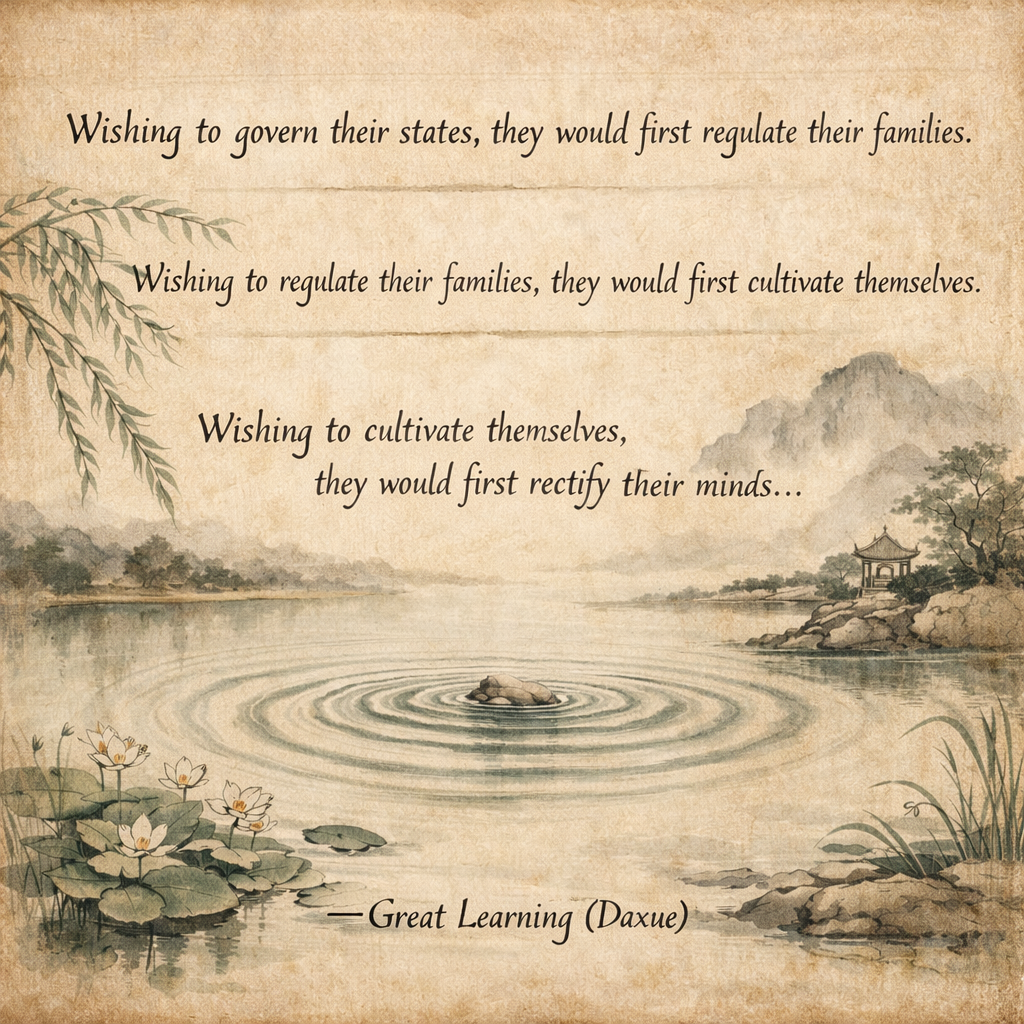
Great Learning (Daxue)
The Five Steps
- Study — read the classics, learn from sages
- Reflect — examine your actions daily
- Practice — act with ren and li until natural
- Mentorship — learn from exemplary persons
- Ritual — engage in li to train proper conduct
The Sequence
- You cannot skip steps
- Self → Family → Community → State
- Virtue radiates outward through example
- Government by moral charisma, not force
- Institutions need virtuous people to run them
The Moral Person and Social Order
Junzi (君子) and Zhengming (正名)
Junzi (君子) — Exemplary Person
- Originally "son of a ruler" (noble by birth)
- Confucius redefined: noble by character
- Acts with integrity and moral courage
- Leads others through personal example
Contrast: Xiaoren (小人) — the "small person" guided by self-interest rather than virtue.
Zhengming (正名) — Rectification of Names
- Names carry moral expectations
- Social roles must match real behavior
- A bad father isn't really a father
- Order depends on fulfilling your role
Confucian Rituals & Ceremonies
Confucian practice centered on ritual propriety in both family and community life
Home-Based Rituals
- Daily offerings at ancestral altars
- Qingming Festival grave-sweeping
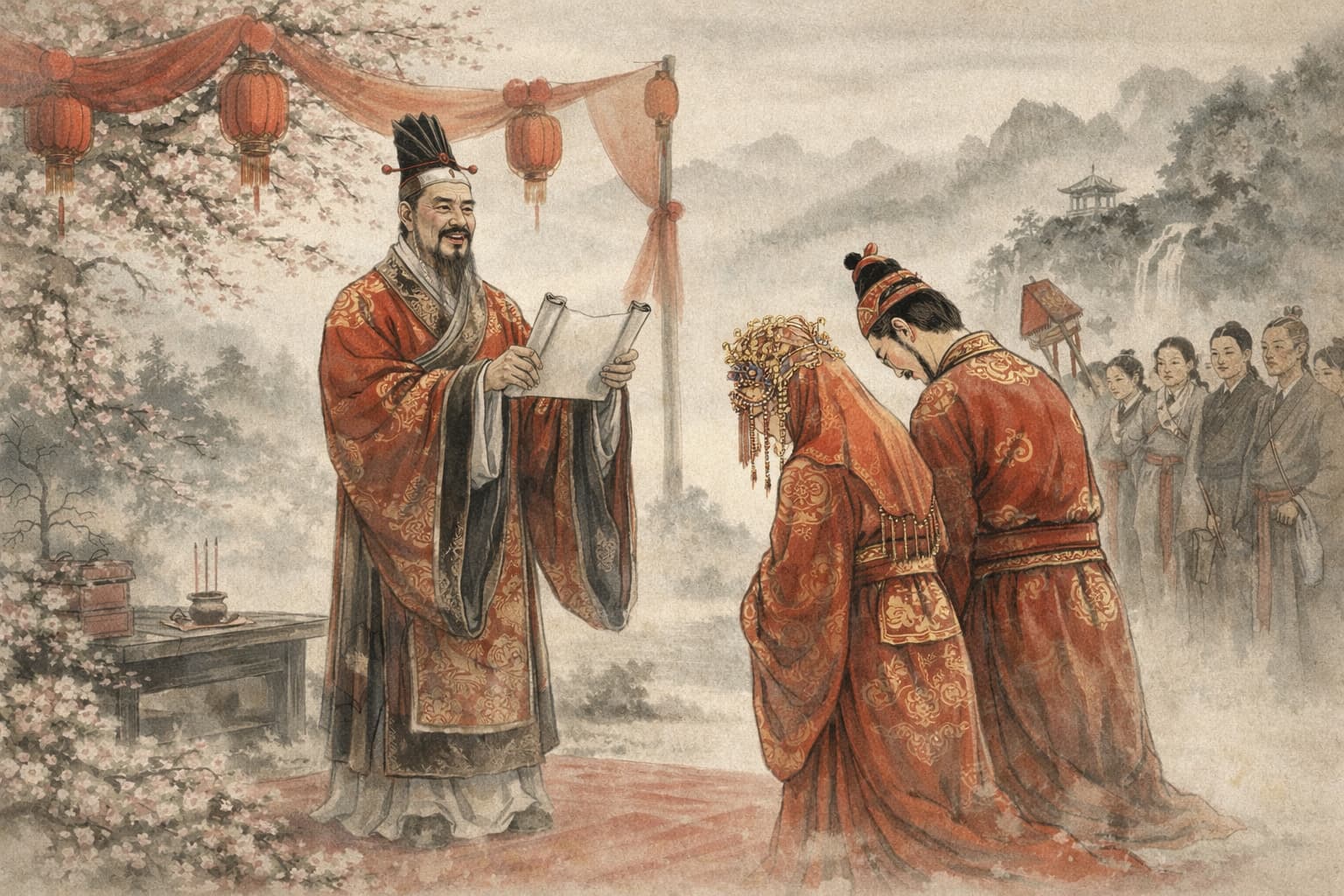
- Marriage ceremonies with prescribed li
- Coming-of-age ceremonies (especially for boys)
Community Rituals
- State sacrifices honoring Confucius (elite participation)
- Seasonal agricultural ceremonies
- Local magistrate rituals for social order
These rituals transformed everyday acts into sacred moments connecting family, society, and cosmic order.
Location: Central place in traditional Chinese homes, usually in the main hall
Components:
- Wooden tablets inscribed with ancestors' names and death dates
- Incense burner (constant offerings)
- Food and drink offerings (renewed regularly)
- Sometimes portraits or photographs of deceased relatives
Function: Physical space where the living maintain connection with deceased family members. Ancestors are believed to remain spiritually present and concerned with family welfare.
This is the heart of Confucian religious practice - daily veneration of ancestors rooted in xiao (filial piety). Duty to parents doesn't end at death; it continues through proper ritual care.
Name meaning: "Clear and Bright Festival" or "Tomb Sweeping Day"
When: Early April (15 days after spring equinox)
Practice: Families visit ancestral graves to clean burial sites, make offerings (food, alcohol, paper money), burn incense, and share meals with "the ancestors."
Religious significance: Maintains spiritual connection across generations. The dead remain part of the family, requiring ongoing care and respect.
Modern observance: Still a major holiday in China (national holiday), Taiwan, Hong Kong, Singapore, and among Chinese diaspora worldwide. This is living Confucian religious practice continuing today.
Confucian Temples (Wenmiao 文庙)
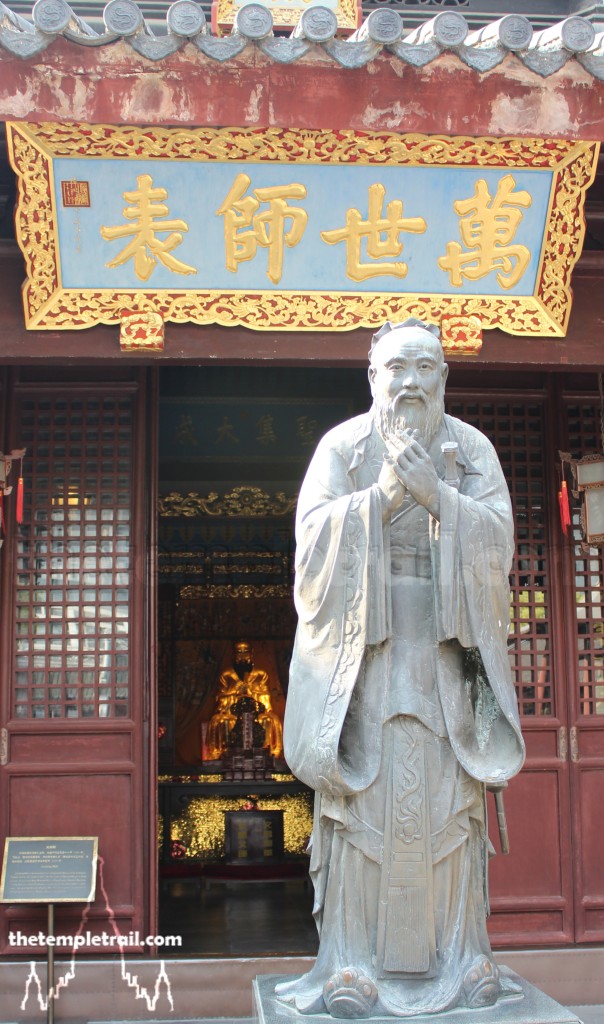
These functioned very differently from Buddhist or Daoist temples
- Educational institutions, not weekly gathering places
- Attached to schools and academies
- State ceremonies (spring/autumn) honoring Confucius — official events, not congregational worship
- Common people visited during examination season to pray for success
- No clergy, no regular worship services
Literal meaning: Wen (文) = culture, literature, civil arts; Miao (庙) = temple, ancestral shrine
Also called: Kongmiao (孔庙 - Temple of Confucius) or Xuegong (学宫 - Palace of Learning)
Function: Educational institutions that also served as ceremonial spaces for honoring Confucius and Confucian sages.
Found in every county seat, prefectural capital, and major city throughout imperial China. They symbolized the unity of education, government, and moral cultivation - all grounded in Confucian values.
Key distinction: These were NOT places where ordinary people gathered for weekly worship. They were primarily schools and examination centers where officials performed twice-yearly state ceremonies.
Duration: 605 CE (Sui Dynasty) to 1905 CE (Qing Dynasty) - 1,300 years!
Function: Meritocratic system for selecting government officials based on mastery of Confucian Classics.
Curriculum: Memorization and interpretation of the Four Books (Analects, Mencius, Great Learning, Doctrine of the Mean) and Five Classics.
Social impact:
- Created pathway for social mobility (even peasants could rise through exams)
- Embedded Confucian values in government bureaucracy
- Made Confucian education universally desirable
- Intensely competitive (pass rates often under 5%)
This system ensured Confucianism dominated Chinese culture for over a millennium. Success brought wealth, prestige, and power - thus everyone studied Confucian texts, even if they weren't personally "religious."
Confucianism: A Humanistic Social Philosophy
Ethics for Living Well Together
Confucianism focuses on how humans live well together in families, communities, and governments—not on gods, salvation, or the afterlife.
Humanistic
- Centered on human relationships and responsibilities
- Emphasizes moral character, not salvation
- Concerned with everyday ethical life
- Focus on this world, not the next
Social
- The self is shaped through roles and duties
- Family is the foundation of society
- Harmony grows from responsible relationships
- Individual fulfillment through social contribution
"If we are not yet able to serve other people, how can we serve spirits?
If we do not yet understand life, how can we understand death?"
— Analects 11.12
Does it have beliefs (myths) that guide actions?
Does it have actions (rituals) that bind people to each other?
Does it have community?
Does it have a sense of the sacred?
Fingarette's Challenge to Western Assumptions
When Westerners encounter Confucianism, they often ask: "Where are the gods? Where is the afterlife?"
- Western assumption: religion requires supernatural beings
- Fingarette argues: this definition is too narrow
- Confucius shows the sacred emerges within human social life
Li (禮) — Ritual as World-Making
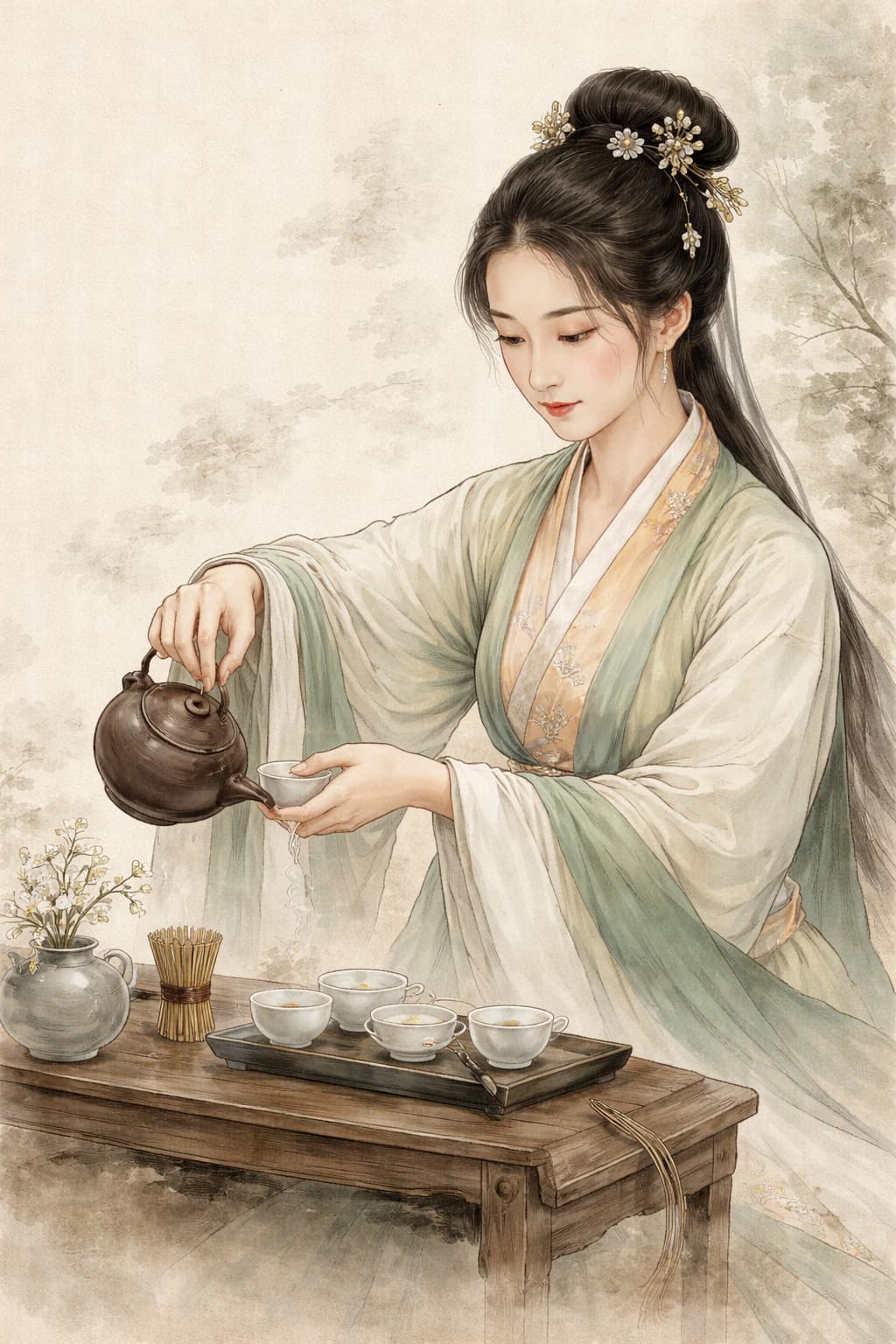
Ritual is not decorative or symbolic—it creates moral and social reality.
- Li includes formal ceremonies and everyday social conduct
- A bow, a handshake, a greeting—these shape relationships
- Performed correctly, li brings new realities into being
Often translated as "ritual," "rites," or "proper conduct." In Confucian thought, li encompasses everything from state ceremonies and ancestor veneration to table manners and how you greet a friend. It is the structured, patterned way humans express respect, create harmony, and establish moral relationships.
The Handshake: Fingarette's Key Example

At the physical level: Two bodies touching.
At the ritual level: A handshake can seal an agreement, express trust, establish recognition, and carry moral obligation.
If someone breaks a deal sealed with a handshake, we don't say "it was just muscles moving"—we treat it as a real violation.
Ritual as "Magic" — Performative Power
Ordinary Speech Acts
- "I apologize" doesn't report an apology — it is the apology
- "I promise" creates a promise in the moment of speaking
- "I pronounce you married" transforms two people's legal status
Confucian Ritual Works the Same Way
- A properly performed bow creates respect
- Mourning rites constitute filial piety
- Li doesn't express virtue — it enacts virtue
How We Usually Think About Identity
The Modern Assumption
- Most of us assume there is a true self inside — our authentic personality, our real feelings
- Social roles feel like performances layered on top of that inner self
- The inner self feels primary — behavior either expresses it or hides it
The Expressive Model
- Authenticity means letting the inner self show through
- Underlies therapy culture, social media, and most pop psychology
- This is exactly what Confucius will challenge

Fingarette's Reversal
The Modern Model
- Inner self → produces → outward behavior
- Social roles are performances layered over a private core
- There is a backstage self waiting to be discovered
Fingarette's Confucian Model
- There is no private soul behind social roles
- The person exists in and through relationships
- Enacted behavior in relationships → constitutes → the self

American philosopher at UC Santa Barbara. His 1972 book Confucius: The Secular as Sacred transformed Western understanding of Confucian ethics. Fingarette argued that Confucius presents a radical alternative to both Western individualism and classical virtue ethics — a fully relational account of the human person.
The Goal: Becoming Fully Human
The Junzi — Exemplary Person
- Not a social rank — a moral achievement
- Keeps commitments reliably
- Shows appropriate respect in each relationship
- Fulfills responsibilities with care
What Defines the Junzi
- Not inner emotion, private intention, or hidden virtue
- Character is what other people reliably experience
- "A good person inside despite bad behavior" — Confucius rejects this

Often translated "gentleman," "exemplary person," or "superior person." In Confucian thought, the junzi is not a social rank but a moral achievement — a person who has cultivated ren (humaneness) and consistently expresses it through li (ritual propriety) in all relationships. The junzi is recognizable by conduct, not by private virtue.
Roles Are Not Masks
The Student's Worry
- "If I act differently with different people, am I being fake?"
- Modern assumption: one true self = one consistent behavior
- Variation across contexts feels like hypocrisy
The Confucian Answer
- Flexibility reflects moral sensitivity, not dishonesty
- Expressing ren through the appropriate form of li — in each context
- Moral skill = knowing which form is right, here, now

The central virtue in Confucian ethics — often translated as humaneness, benevolence, or goodness. Ren is not an abstract principle but a disposition that is only realized in concrete relationships. You cannot possess ren in isolation; it is enacted in how you treat other people.
The ceremonial norms, ritual practices, and codes of appropriate conduct that structure relationships in Confucian society. Li includes everything from formal ceremonies to everyday greetings. For Confucius, li is not mere convention — it is the form through which ren (humaneness) becomes visible in the world.
How the Self Is Formed
Modern Assumption
- Inner character → produces → outward behavior
- "I'm generous, so I give to charity"
- The self is discovered, then expressed
Confucian View
- Outward behavior, repeated → shapes → character
- You become respectful by practicing the forms of li
- The self is not discovered — it is cultivated
- Compare Aristotle: we become just by doing just acts

Fingarette's Most Challenging Claim
No Hidden Moral Identity
- There is no private moral self that exists apart from your behavior
- Your daily actions are not expressing who you are — they are forming who you are
- The pattern of roles you live out is the person you are becoming
Why This Matters
- "I'm a good person inside, even if I sometimes act badly" — a consoling fiction
- Ritual is not ceremony layered over the real you
- Ritual is the training ground of the self

The Confucian Question
If daily conduct shapes the self…
What kind of person are your habits forming?
The Path of the Junzi
- Self-cultivation is not self-expression
- Disciplined participation in relationships until virtuous conduct becomes natural
- Discussion: if character is what others reliably experience, what role does private virtue play?

The Person as Social Role, Not Private Soul
Western Model
- The self is a private mind that makes "choices"
- Moral life = internal struggle of the will
- Guilt: you violated an inner moral law — felt alone, in private
Confucian Model
- The person is defined by mastery of social roles
- Morality is not internal struggle — it is a public skill
- Shame: being "out of tune" with the community — requires an audience
- The Sage discerns rather than chooses — like a jazz musician following the music

The Secular as Sacred
The Sacred Is Not Elsewhere
- Not a separate supernatural realm hovering above everyday life
- The sacred emerges through fully realized human practices
- Contrast: most religions place the sacred "elsewhere" — heaven, mystical union, escape from matter
The Sacred Is Right Here
- Family roles become morally charged relationships
- Sharing a meal reaffirms family order and social roles
- Everyday conduct, shaped by li, becomes a site of dignity and reverence
- Discussion: when have ordinary actions felt sacred to you?
