The Mahayana Revolution
Rise of the "Great Vehicle"
Understanding Mahayana
Rise of Mahayana Buddhism
The "Great Vehicle"
- Develops gradually from 1st century BCE through 3rd century CE
- Emphasizes accessibility and universal liberation
- Develops new scriptures (sutras)
- Expands cosmology and practices
Mahayana means "Great Vehicle"—large enough to carry all beings to enlightenment. This is Mahayana's self-description; Theravada practitioners don't accept the implied contrast that theirs is a "lesser vehicle."
Mahayana Innovations
Bodhisattva Ideal
- Liberate all beings
- Compassion = wisdom
- Available to laypeople
Expanded Cosmology
- Celestial Buddhas
- Pure lands
- Cosmic scope
New Texts
- Heart Sutra
- Lotus Sutra
- Diamond Sutra
Mahayana sutras were composed from 1st century BCE through several centuries CE—long after the historical Buddha. They claim to be the Buddha's teachings preserved by bodhisattvas or revealed when the time was right. This is religious claim, not historical fact.
Key Mahayana Concepts
Bodhisattva vs. Arhat
- Arhat: Individual liberation (Theravada)
- Bodhisattva: Universal liberation (Mahayana)
Skillful Means (Upaya)
- Buddha teaches differently to different people
- Multiple valid paths
Emptiness (Shunyata)
All phenomena lack independent existence—everything depends on conditions. No separation between nirvana and samsara.
Emptiness doesn't mean "nothingness." It means things lack independent, permanent essence—they exist only in dependence on causes and conditions. This insight allows bodhisattvas to work in the world without attachment.
Major Mahayana Schools
Pure Land, Zen, and Vajrayana
Pure Land Buddhism
Salvation Through Faith and Devotion
Core Beliefs
- Amitabha Buddha (Amida)
- Western Pure Land paradise
- Rebirth through faithful recitation
Appeal
- Accessible to all people
- No meditation expertise needed
- Popular among working classes
Two Paths to Liberation
Traditional Path
- Meditation practice
- Monastic life
- Many lifetimes
- Jiriki (self-power)
Pure Land Path
- Faith and devotion
- Lay practice
- This lifetime
- Tariki (other-power)
Jiriki (self-power): Liberation through one's own effort. Tariki (other-power): Liberation through Amitabha Buddha's compassionate power. This distinction became central in Japanese Pure Land Buddhism, especially with Shinran (13th century).
Pure Land Practice
Central Practice: Nembutsu/Nianfo
- Japanese: "Namu Amida Butsu"
- Chinese: "Namo Amituofo"
- Meaning: "Homage to Amitabha Buddha"
Promise: Recite with sincere faith → Rebirth in Pure Land → Easy path to enlightenment
Repetitive chanting transforms consciousness through sustained devotion
Like the Jesus Prayer in Christianity ("Lord Jesus Christ, have mercy on me"), dhikr in Islam ("Allah"), or mantras in Hinduism, Pure Land uses repetitive sacred phrases for spiritual transformation and mental focus.
Zen (Chan) Buddhism
The Meditation School
Origins
- Chan in China (6th c.)
- Zen in Japan (12th c.)
- Son in Korea
- Thien in Vietnam
Core Principle
"A special transmission outside the scriptures, not dependent on words and letters, pointing directly to the human mind..."
Zen comes from Japanese pronunciation of Chinese "Chan" (禪), which derives from Sanskrit "dhyana" (meditation). The name emphasizes meditation as the heart of practice.
Zen Practice Methods
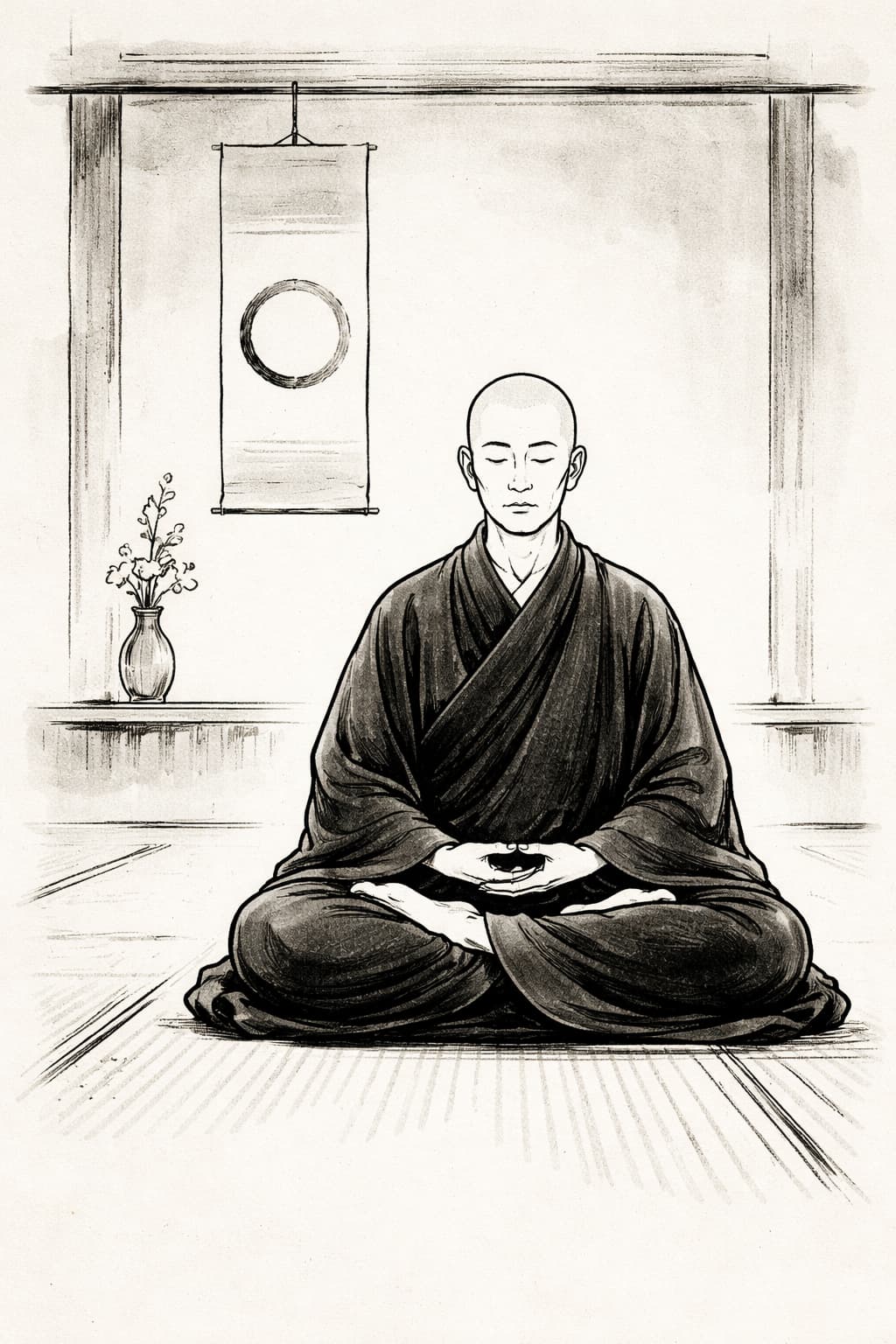
Zen practitioner in zazen (sitting meditation) posture
Zazen
(Sitting Meditation)
- "Just sitting" — simple presence
- Observe thoughts without attachment
- Realize your Buddha-nature
Koan Practice
(Paradoxical Questions)
- "Sound of one hand clapping?"
- Challenge conventional thinking
- Cultivate insight (satori)
Koans aren't riddles with answers but tools to transcend ordinary conceptual thinking. They function within teacher-student relationships in traditional Zen monasteries. Modern usage sometimes differs from traditional institutional contexts.
Two Zen Approaches
Rinzai Zen
- Emphasis on sudden insight
- Intensive koan practice
- Dynamic methods
- "Shock therapy" approach
Soto Zen
- Emphasis on gradual cultivation
- Just sitting (shikantaza)
- Gentle methods
- "Patient practice" approach
Traditional framing opposes sudden (Rinzai) and gradual (Soto) enlightenment. Modern scholars question this strict dichotomy—better understood as different emphasis on method rather than absolute opposition. Both aim for same realization.
Vajrayana Buddhism
The “Diamond / Thunderbolt Vehicle” (Tantric Buddhism)
- Often taught as a “third branch” next to Theravada & Mahayana
- Conceptually: tantric Mahayana (same philosophy, added methods)
- Core idea: transform perception into the path
- Famous for: “fast path” language (sometimes “one lifetime”)
Vajrayana keeps Mahayana goals, but uses a specialized tantric “toolkit.”
Origins & Spread
- Develops in India (early roots by ~6th c.)
- Flourishes in the tantric “boom” (7th–12th c.)
- Becomes dominant in Tibet & the Himalayan world
- Also influences East Asian esoteric lineages (e.g., Japan)
Not a simple “blend” with Shaivism—more like shared techniques, different goals.
The Tantric Toolkit
- Tantras: key scriptures (alongside sutras)
- Deity yoga: visualization + identity with awakened qualities
- Mantra / mudra / mandala: speech, body, and sacred space
- Prayer wheels: mantra practice in motion (especially “Om Mani Padme Hum”)
- Ritual + meditation: combined into one training system
These are “mind technologies” meant to reshape perception—not just exotic ceremony.
Tantras are a genre of Buddhist scriptures that emphasize method—ritual, visualization, mantra, and meditation techniques. They build on Mahayana foundations (compassion, emptiness, bodhisattva vows) rather than replacing them.
Many tantra-based practices are traditionally done after empowerment (initiation) and under teacher guidance.
Deity yoga is a structured meditation in which practitioners visualize an enlightened figure (a yidam) and may visualize themselves as that figure. This is not theistic worship; it is identity training meant to reshape perception and emotion.
The “deity” represents awakened qualities (wisdom, compassion, fearlessness). The practice rehearses “seeing like a Buddha.”
- Mantra: sacred sound or phrase used to focus attention and embody meaning.
- Mudra: ritual hand gesture that expresses meaning through the body.
- Mandala: symbolic “map” of an awakened world used in visualization and ritual.
Together they train speech, body, and perception as one integrated practice system.
A prayer wheel is a cylindrical wheel filled with written mantras (often on scrolls) that is rotated as a devotional practice. Turning the wheel is traditionally understood as a way of “reciting” the mantra and generating merit and compassion.
Prayer wheels are especially associated with Tibetan Buddhism and are commonly linked to the mantra “Om Mani Padme Hum”, connected with Avalokiteśvara (Chenrezig), the bodhisattva of compassion.
In classroom terms: it is mantra practice embodied—sound, intention, and repetition expressed through motion.
These are not gods in a theistic sense. They are meditational forms—symbolic embodiments of awakened qualities (compassion, wisdom, fearless clarity).
In deity yoga, students should picture a structured mental training: imagery + mantra + intention shape attention and identity.
Historically, tantric texts include rites for protection, healing, averting harm, etc. Outsiders may label this “magic.”
Practitioners typically frame these practices within Buddhist ethics and compassion (skillful means), not as mere sorcery.
Om Mani Padme Hum
“Om Mani Padme Hum” is one of the most famous Buddhist mantras, associated especially with the Bodhisattva of compassion Avalokiteshvara (Tibetan: Chenrezig). It is widely chanted by both monastics and lay practitioners throughout Tibetan Buddhism and beyond. :contentReference[oaicite:0]{index=0}
Tibetan Monk Performs Mudra
A Tibetan Buddhist monk performs ritual hand gestures used in Vajrayana practice. These gestures are part of the embodied dimension of meditation and ceremony.
A mudra is a symbolic hand gesture used in Buddhist meditation and ritual. The word means “seal” or “sign.” Mudras express specific meanings—such as compassion, protection, teaching, or wisdom—through the body.
In Vajrayana Buddhism, mudras are often performed together with mantra (sacred sound) and visualization, so that body, speech, and mind are all engaged in the practice.
Tibetan Monks Create Sand Mandala
Tibetan Buddhist monks create intricate sand mandalas as a form of meditation and ritual art. After days of careful work, the mandala is ceremonially dismantled to symbolize impermanence and the transient nature of all phenomena.
Why It’s “Esoteric”
- Initiation (empowerment): required for many practices
- Lineage: teacher-to-student transmission matters
- Vows (samaya): ethical guardrails for powerful methods
- Goal: speed with structure (not “instant enlightenment”)
“Esoteric” = guided, practice-first training — not secrecy for its own sake.
In Western pop culture, “tantra” is often reduced to sexuality. That’s misleading for Buddhist tantra.
Some advanced traditions include highly regulated sexual-yoga teachings, but they are rare and not introductory. The mainstream core is ritual + visualization + mantra as disciplined mind-training.
Vajrayana: Non-Duality and Tantra
- Non-dual wisdom: emptiness and appearance are not two separate realities
- Transforming perception: “pure” and “impure” are mental labels, not ultimate truths
- Strict guardrails: vows and teacher guidance prevent “anything goes” confusion
- Transgressive imagery: taboo symbols (sometimes substances) used in restricted advanced rites
Tantra is not rule-breaking—it is disciplined mind-training under strong ethical commitments.
“Antinomian” means acting against normal social or religious rules. In some tantric traditions, ritual practice deliberately reverses purity norms to loosen rigid attachment to “clean” and “unclean.”
In Vajrayana this is a controlled and advanced method, practiced within strict ritual structure and vows. Many later traditions interpret these elements symbolically or replace taboo items with substitutes.
Some tantric texts describe sexual union as representing the non-dual union of wisdom and compassion. This teaching appears in three main ways:
- Symbolic: imagery expressing non-dual realization
- Internal yogic practice: visualization and subtle-body meditation
- Literal ritual (rare): highly restricted advanced practice in specific lineages
In most Tibetan Buddhist contexts, everyday practice focuses on meditation, mantra, and ethical discipline, not sexual rites.
Yab-Yum Symbolism in Vajrayana Buddhism
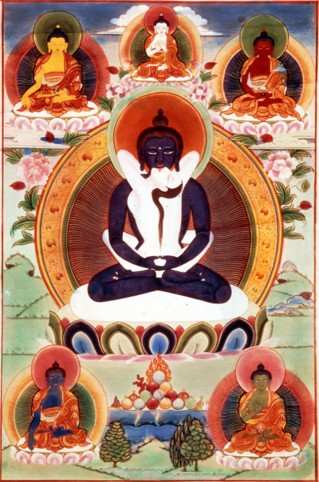
Traditional painted depiction
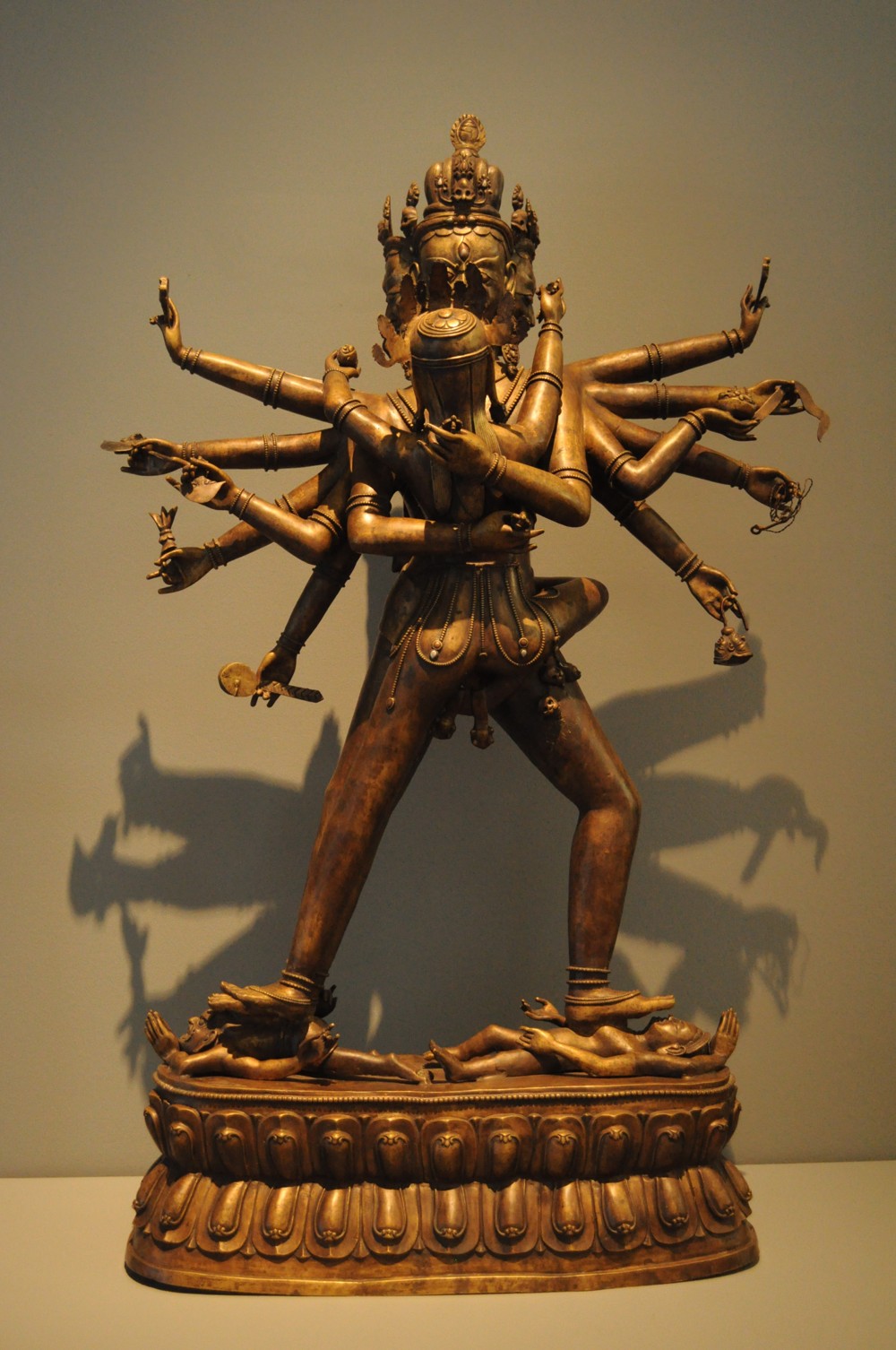
Sculptural representation
- Definition: Yab-yum means “father-mother” and depicts a male and female figure in union.
- Symbolism: The male figure represents method and compassion (upaya), while the female figure represents wisdom and insight into emptiness (prajna).
- Philosophical Meaning: Their union expresses non-duality—the inseparability of appearance and emptiness, compassion and wisdom.
- Practice Context: Primarily symbolic and meditative imagery; not a depiction of ordinary sexuality but a visual teaching about enlightenment.
Awakening requires both compassionate engagement with the world and deep insight into its empty, interdependent nature.