Screen the Film: Life of Buddha
While viewing, track these themes:
- Suffering and its causes
- Renunciation and the spiritual quest
- Awakening and insight
- Compassion for all beings
Gautama's Road to Awakening
The Buddha's awakening (bodhi) means seeing reality clearly
- Not mystical superpowers, but direct insight
- Understanding the nature of suffering and its cessation
- Achieved through meditation and ethical discipline
- Transformation of understanding, not supernatural event
The Buddha's "awakening" (bodhi)—sometimes translated as "enlightenment"—means seeing reality clearly, like waking from a dream. It refers to direct insight into the nature of suffering and its cessation, not mystical superpowers.
The Three Marks of Existence
All conditioned things share three characteristics:
Anicca
Impermanence
Everything changes; nothing lasts forever
Dukkha
Suffering
Life contains inevitable dissatisfaction
Anatta
No-Self
No permanent, unchanging soul or essence
These three insights form the foundation of all Buddhist teaching across every tradition. Understanding impermanence, suffering, and no-self is essential to the Buddhist path.
Core Buddhist Teachings
Universal Concepts Across All Schools
Essential Buddhist Teachings
These appear in ALL Buddhist traditions—Theravada, Mahayana, Vajrayana
Three Jewels (Refuges)
- Buddha – The teacher/example
- Dharma – The teachings/truth
- Sangha – The community
Four Key Concepts
- Dharma – Teaching/truth
- Karma – Action & consequence
- Samsara – Cycle of rebirth
- Nirvana – Liberation
Dharma (Pali: dhamma) has different meanings in different contexts: (1) The Buddha's teaching, (2) Phenomena or elements of existence, (3) Ultimate truth or reality, (4) Duty or righteousness (in Hinduism). Context determines which meaning applies.
Understanding Karma
Karma is NOT:
- Fate
- Punishment
- Cosmic justice
Karma IS:
- Law of cause and effect
- For intentional actions
- Changeable through new actions
Cetana (intention) makes action karmic—you shape your future through present choices
Karma operates through mental conditioning and habit formation, not cosmic bookkeeping. Repeated intentional actions create mental tendencies that shape future experience. Like training—practice anger, get better at anger; practice compassion, get better at compassion.
Four Noble Truths
The Buddha as Physician: Medicine for suffering, not beliefs requiring faith
1. Dukkha (Suffering)
The diagnosis: Life contains inevitable dissatisfaction and impermanence; connects to Three Marks.
2. The Origin
The cause: Suffering is produced by craving, attachment, and the demand for permanent satisfaction.
3. The Cessation
The prognosis: Suffering can be brought to an end; liberation (nirvana) is a realizable state.
4. The Path
The prescription: The Eightfold Path—a practical, systematic method for ethical and mental discipline.
The Four Noble Truths follow a standard Indian medical model: (1) Diagnosis of the illness—suffering, (2) Etiology identifying the cause—craving, (3) Prognosis that a cure is possible, and (4) Prescription—the treatment plan (Eightfold Path).
The Eightfold Path
"Right" (Pali: samma) means "skillful" or "appropriate"—not moralistic

Wisdom (Prajna)
- Right Understanding
- Right Intention
Ethics (Sila)
- Right Speech
- Right Action
- Right Livelihood
Meditation (Samadhi)
- Right Effort
- Right Mindfulness
- Right Concentration
Samma (Sanskrit: samyak) means "complete," "whole," "skillful," or "appropriate"—not morally "right" vs. "wrong" in absolute sense. Better translation might be "skillful" or "appropriate" action that reduces suffering.
The Early Sangha
Community of Buddhist Practitioners
Growth of the Sangha
Monastic Sangha
- Bhikkhus (monks) and bhikkhunis (nuns)
- Full-time practitioners following strict discipline
- Preserve and teach the dharma
Lay Sangha
- Householders supporting monastics
- Follow basic ethical precepts
- Gain merit through generosity
The bhikkhuni (nuns') full ordination lineage died out in Theravada countries centuries ago and has been controversially revived in recent decades. Women's full ordination remains a contested issue in some Buddhist traditions today.
Political and Economic Support
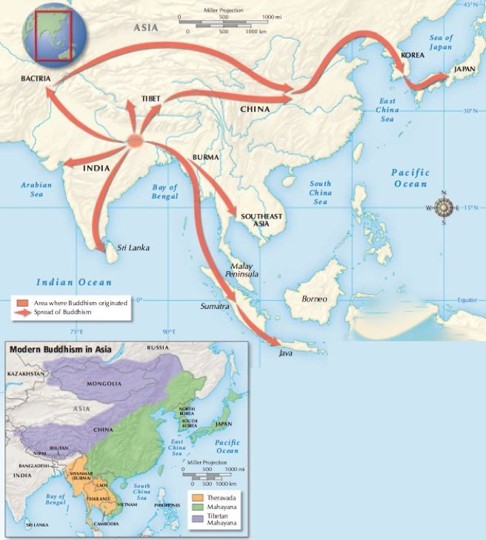
Buddhism’s expansion from India across Asia followed major trade routes over many centuries
- Buddhist movement thrived with support of kings and wealthy merchants
- Patrons contributed land and buildings to the Sangha
- Spread throughout India, then to Central, East, and Southeast Asia
- Followed trade routes and missionary activity
Buddhism as Institution
Sangha becomes powerful landholding institution
Monasteries function as:
- Educational centers preserving knowledge
- Economic hubs managing resources
- Artistic patrons commissioning sacred art
- Political players influencing rulers
Buddhist monasteries, like Christian ones in medieval Europe, accumulated wealth, owned land, educated elites, preserved manuscripts, and sometimes wielded political influence alongside spiritual authority.
Buddhism Goes Global
International Sangha
Regional Adaptations
Tibet: Vajrayāna tradition shaped by landscape, monastic institutions, and ritual practice
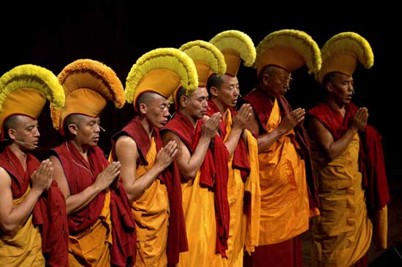
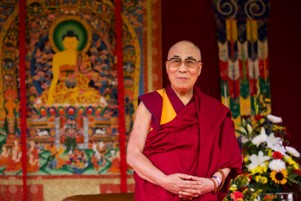
Tibet
- Dalai Lama leadership and reincarnation lineage
- Interaction with indigenous Bön traditions
- Vajrayāna: ritual, mantra, mandala, visualization
Regional Adaptations
Korea & Japan: shared roots, distinctive local forms
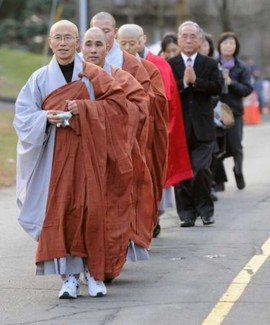
Korea
- Seon (Zen) tradition
- Strong monastic discipline and scholarship
- Integration within Confucian social order
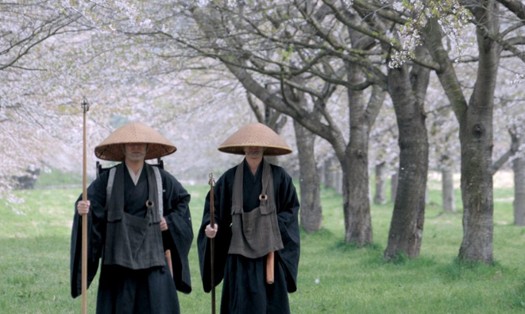
Japan
- Multiple schools and sects
- Zen, Pure Land, Nichiren
- Adaptation alongside Shinto
Global Buddhist Sites
A visual journey through the remarkable diversity of Buddhist architecture.
Major Buddhist Traditions
Beginning with Theravada Buddhism
Theravada Buddhism
The Tradition of the Elders
- Oldest surviving school of Buddhism
- Claims to best preserve early teachings
- Based on Pali Canon texts
- Dominant in Sri Lanka and Southeast Asia
"Teaching of the Elders." Theravada claims to preserve early Buddhist teachings, though all extant texts post-date the Buddha by centuries. The claim is about textual lineage and interpretive approach rather than word-for-word preservation.
Historical Development
Second Council (c. 340 BCE)
- Disputes over monastic discipline
- Split between factions
- Multiple schools emerge
Sri Lankan Development
- Vibhajjavada lineage took root
- Evolved into Theravada over centuries
- Gradual crystallization, not sudden
Emperor Ashoka
3rd Century BCE
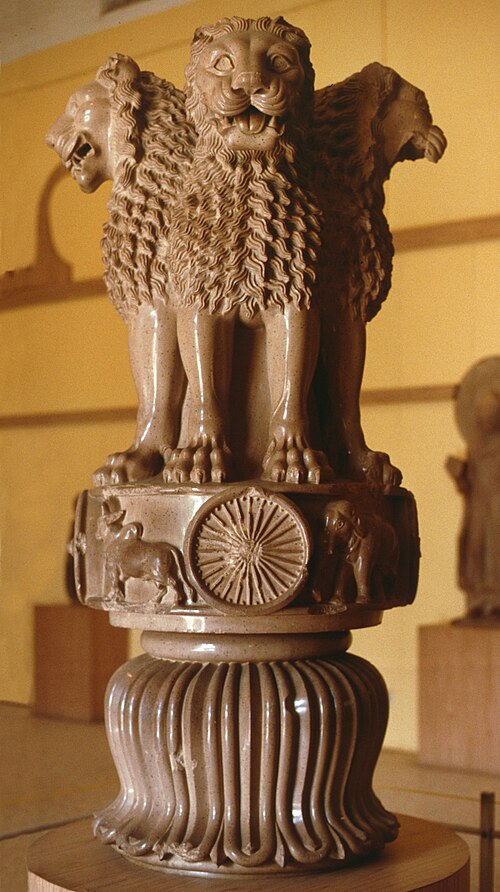
The Lion Capital of Ashoka, now India's national emblem (click image to enlarge)
- Converts to Buddhism after violent Kalinga War
- Sends missionaries throughout Asia
- Son Mahinda brings Buddhism to Sri Lanka
- Rock edicts promote ethical governance
Ashoka promoted "dhamma" (ethical governance) through rock edicts throughout his empire. His dhamma emphasized moral conduct, religious tolerance, and social welfare—broader than strictly Buddhist dharma (teaching).
Fourth Buddhist Council
Preserving the Buddhist Canon
Result: The Tipitaka ("Three Baskets") via oral tradition
Vinaya Pitaka
Monastic rules
Sutta Pitaka
Buddha's discourses
Abhidhamma
Philosophical analysis
Buddhist texts were preserved through oral recitation by specialist monks for centuries before being written down. Different recensions exist in Pali, Chinese, and Tibetan. Modern scholars debate how much variation existed in oral transmission before texts were standardized in writing.
Core Beliefs of Theravada
The Buddha
- Human teacher, not deity
- Showed path to liberation
- Now in final nirvana
Liberation
- Individual effort
- Ethical precepts
- Meditation and wisdom
Monastic Ideal
- Monks/nuns as practitioners
- Laypeople support, gain merit
- Gradual progress over lives
Recent scholarship highlights sophisticated lay Buddhist practice and questions the strict monk/lay hierarchy. Merit-making represents complex soteriology, not just "spiritual consumerism." Lay practitioners can achieve advanced understanding.
The Five Precepts
Right Action for laypeople (monks have 227+ rules)
- Don't kill (practice compassion)
- Don't steal (practice generosity)
- Don't engage in sexual misconduct (practice respect)
- Don't lie (practice truthfulness)
- Don't use intoxicants (practice mindfulness)
Unlike commandments from a deity, Buddhist precepts are training guidelines you voluntarily adopt to reduce suffering for yourself and others. They're undertaken as practice, not obedience to divine law. Violation doesn't incur sin but does create negative karmic consequences.