The Bhagavad Gita and Contemporary Applications
PHIL 210: World Religions
Chapter 3: Encountering Hinduism
Day 3 of 3
⌨️ Keyboard Shortcuts
→ / Space: Next slide
←: Previous slide
S: Speaker notes
F: Fullscreen
O: Overview mode
ESC: Exit/Close popup
The Devotional Period (600 CE–Present)
Islam's Influence and Hindu Response
Early Islamic Contact
- Long-standing trade with Arabia
- Arab traders bring Islam (7th century)
- Delhi Sultanate emerges (1206 CE)
Mughal Dominance
- Mughal dynasty (early 16th century)
- Control entire subcontinent by 1700
- Synthesis of Islamic and Indian civilizations
Dual Influence of Islam
Islam's presence in India encourages both conversion and creative Hindu response.
Islamic Impact
- Conversion to Islam
- Monotheistic emphasis
- Egalitarian ideals
Hindu Response
- Rise of bhakti movements
- Devotion to one chosen deity
- Sant tradition (poet-saints)
- Interfaith dialogue (Kabir, Guru Nanak)
"Loving devotion" to a personal deity. Bhakti movements emphasized emotional connection to God over ritual and caste hierarchy. Open to all regardless of birth—women, lower castes could participate fully.
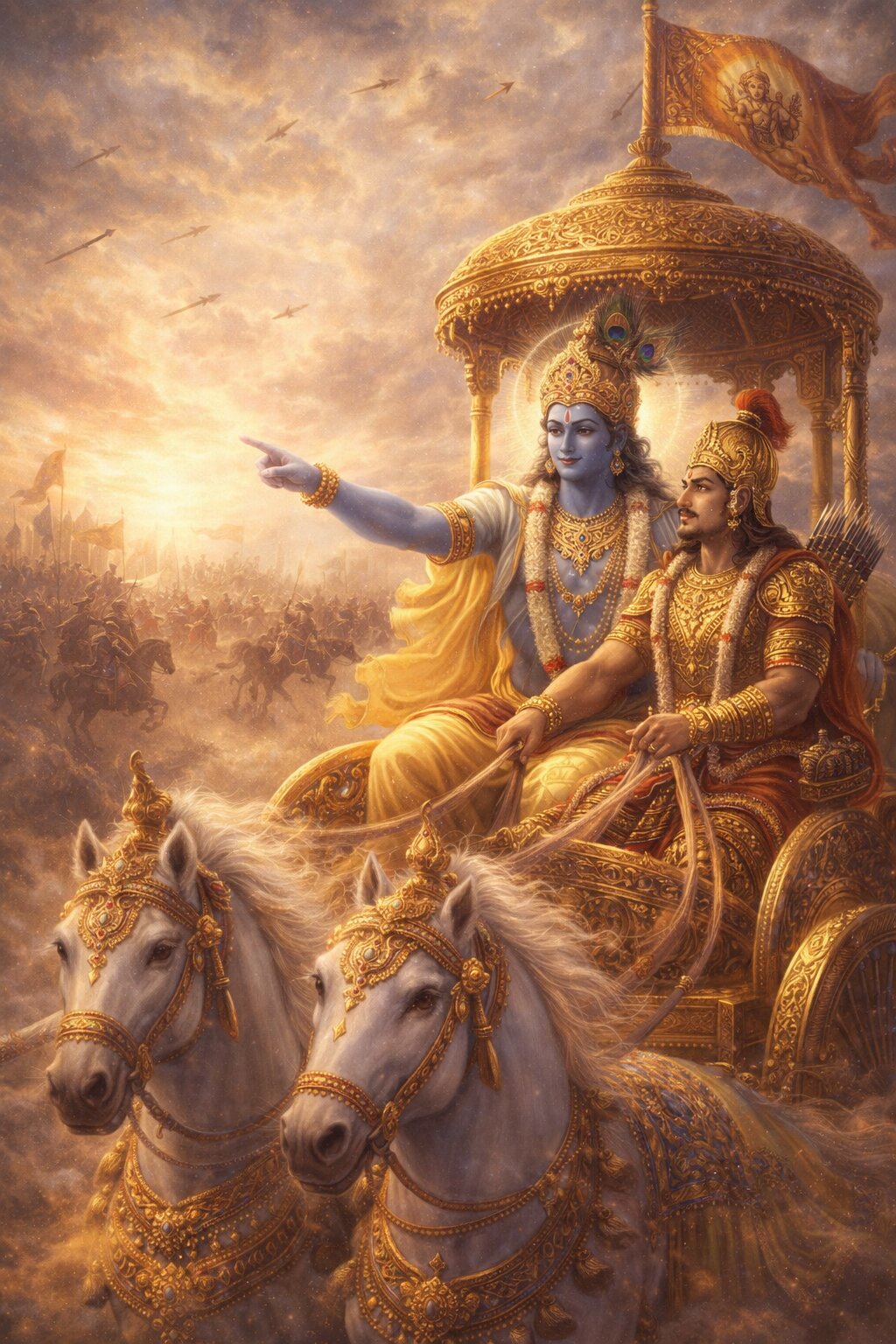
The Bhagavad Gita – Setting the Scene
Scripture as Ethical Guide
- Part of the Mahabharata epic (100,000 verses)
- Dialogue between Prince Arjuna and Krishna
- Set on eve of battle between cousins
- Functions as a "gospel" within the epic
Indian Epics
Mahabharata and Ramayana
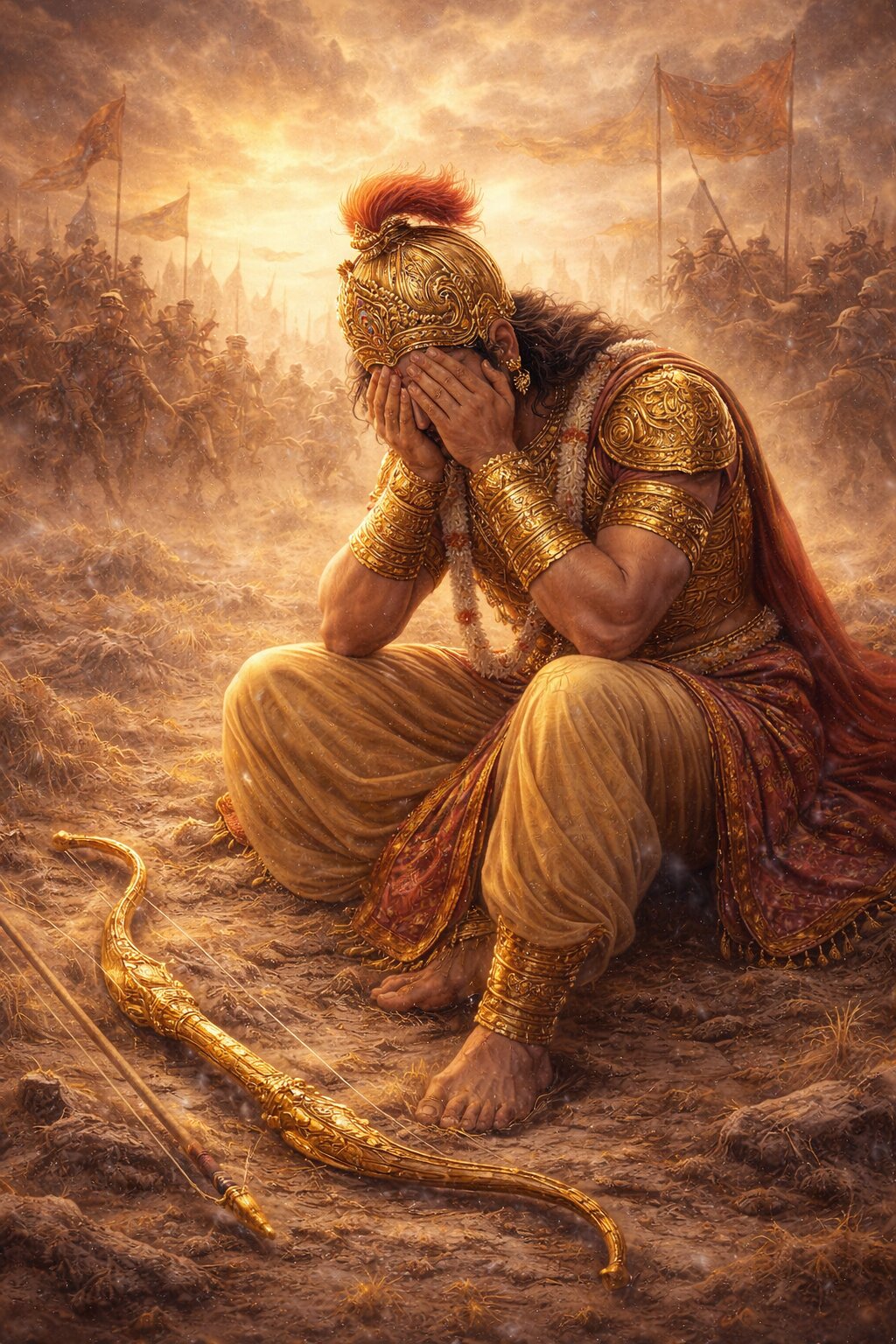
Arjuna's Dilemma
To fight or not to fight?
The Conflict
- Warrior dharma: must fight
- Fighting kin destroys families
- Violates ahimsa (non-harm)
- All choices seem morally wrong
The Paralysis
- "My limbs sink, my mouth is parched"
- "My body trembles"
- "I see no good in killing my kinsmen"
- Prefers to die rather than fight
Have you ever faced a situation where any choice seemed wrong? How did you decide?
Duty, righteousness, cosmic law. In Hinduism, dharma varies by caste, life stage, and situation. A warrior's dharma differs from a priest's dharma. Arjuna's caste duty as kshatriya (warrior) is to fight.
Non-violence, non-harm. Central ethical principle in Hinduism, Buddhism, and Jainism. Extends to all living beings. Gandhi made ahimsa cornerstone of political resistance. Creates tension with warrior dharma.
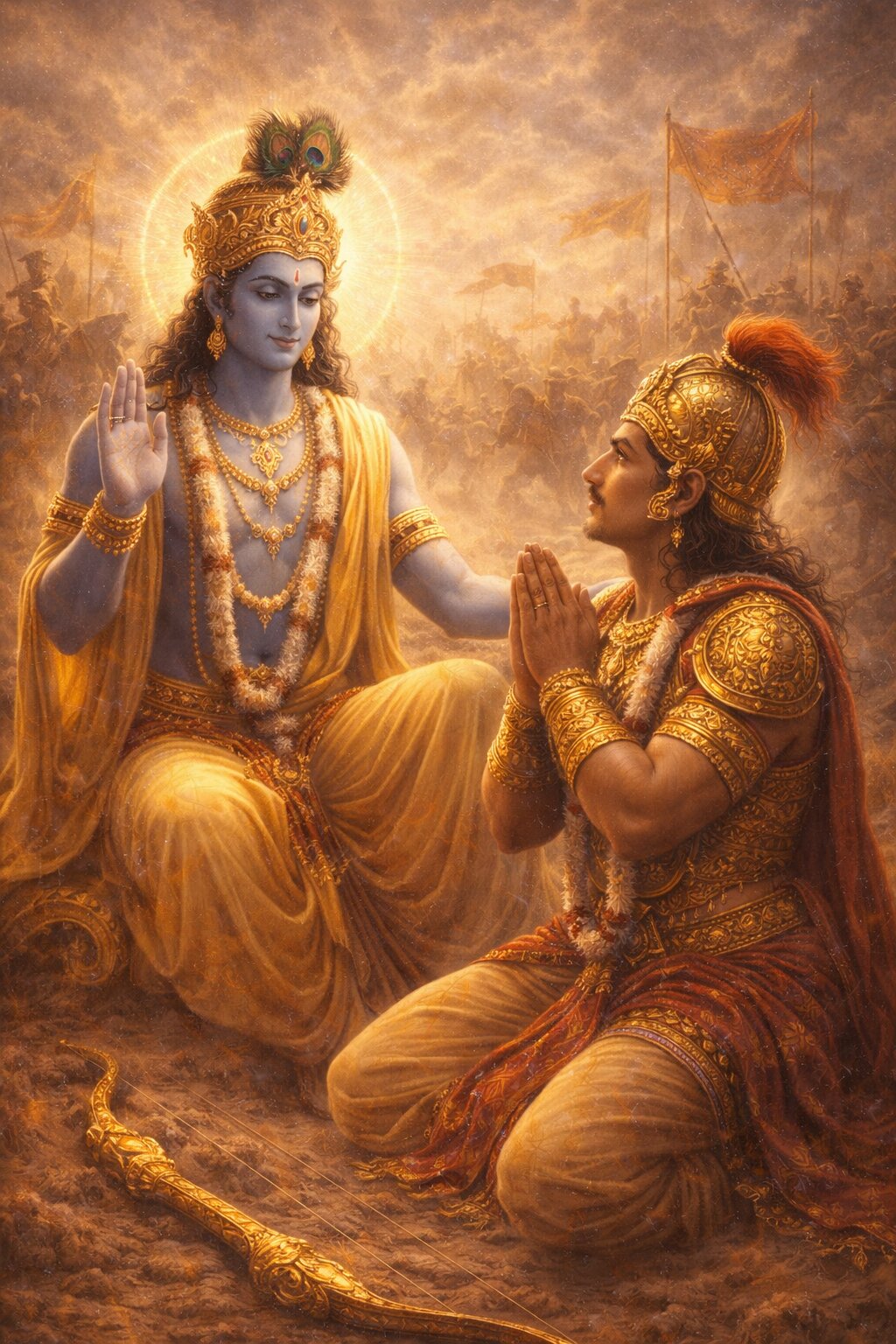
Krishna Instructs Arjuna
Initial Arguments
- Must fulfill warrior dharma (Gita 2:31, 33)
- Running would bring dishonor (Gita 2:3)
- The soul is eternal—killing the body doesn't kill the true self
- Death is like changing clothes for the eternal atman
- "The wise grieve neither for the living nor the dead"
"The eternal in man cannot kill; the eternal in man cannot die. Unborn, eternal, everlasting, this ancient one is not killed when the body is killed."
— Bhagavad Gita 2:19-20
Arjuna's Response: Still unconvinced. Needs deeper teaching.
The eternal Self, soul, or consciousness within each being. Identical with Brahman (ultimate reality). Survives death and transmigrates through samsara. Central teaching of Upanishads: "Atman is Brahman."
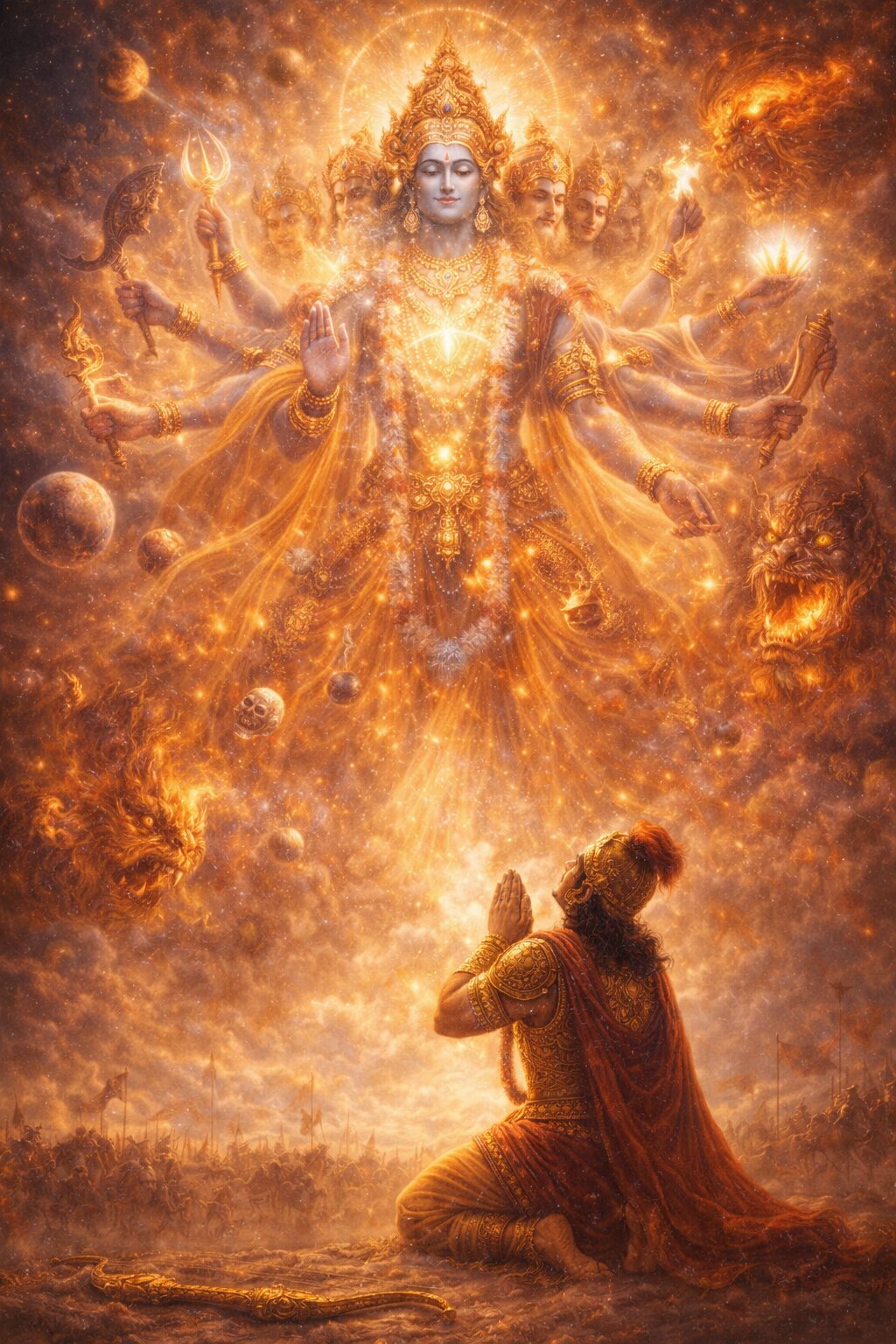
Krishna's Divine Revelation
The Universal Form (Vishvarupa)
Chapter 11: Krishna reveals his cosmic form to Arjuna
- Krishna shows vishvarupa—all gods, worlds, beings in him
- Arjuna sees past, present, future simultaneously
- Vision includes creation and destruction (terrifying and beautiful)
- "I am become Death, destroyer of worlds" (Gita 11:32)
"If the radiance of a thousand suns were to burst into the sky, that would be like the splendor of the Mighty One."
— Bhagavad Gita 11:12
"Universal form" or "all forms." Krishna's revelation of his cosmic nature containing all beings, gods, worlds, and time itself. Theological climax of Gita—proves Krishna is supreme deity (Vishnu/Brahman), not merely charioteer. Overwhelming vision causes Arjuna both terror and devotion.
Theological Significance
What the Vision Reveals
Krishna's True Nature
- Not just human avatar—supreme God
- Contains all gods (Brahma, Shiva, Indra)
- Source of creation and destruction
Arjuna's Response
- Terror: "My mind trembles with fear"
- Awe: Prostrates himself in worship
- Surrender: "Tell me what I must do"
The vision proves Krishna's authority—not philosophical argument but divine self-disclosure. Arjuna must trust God's commands even when reason fails.
Karma Yoga: The Path of Action
Krishna's Solution
Karma Yoga: Act without attachment to results
- Fulfill your dharma (caste duty)
- Act with full effort and skill
- But renounce attachment to outcomes
- Offer all actions to Krishna (devotional surrender)
- Results beyond your control—focus on duty, not fruits
"You have a right to perform your prescribed duty, but you are not entitled to the fruits of action. Never consider yourself the cause of the results of your activities, and never be attached to not doing your duty."
— Bhagavad Gita 2:47
The Logic of Nonattached Action
The Problem
- Attachment creates karma
- Karma binds you to samsara
- Desire for results = bondage
- Even good deeds create karma
The Solution
- Act but without selfish desire
- Perform duty as offering to God
- Accept results with equanimity
- Action becomes worship, not bondage
"The wise see knowledge and action as one; they see truly." (Gita 4:18)
Action and its consequences. The law of cause and effect—every action leaves residue affecting future births. Good karma → better rebirth. Bad karma → worse rebirth. BUT even good karma binds you to samsara. Liberation requires transcending all karma.
The cycle of birth, death, and rebirth. Driven by karma. Characterized by suffering (even pleasant births are temporary). Goal: Escape samsara entirely through moksha (liberation). Shared concept across Hinduism, Buddhism, Jainism.
Critical Analysis of the Gita
Tensions and Problems
- Liberating ethics: Karma yoga offers freedom within duty
- BUT: Also reinforces caste hierarchy and warrior violence
- Krishna tells Arjuna fighting is his dharma as a kshatriya
- Gita explicitly endorses caste system (Gita 4:13, 18:41-44)
- Can liberating philosophy coexist with oppressive social structure?
The Paradox: Most beloved Hindu scripture contains both profound wisdom and troubling social conservatism.
Gandhi's Reinterpretation
Allegorical Reading for Modern Ethics
Traditional Reading
- Literal battlefield—Kurukshetra
- Warrior must fulfill caste duty
- Endorses righteous warfare
- Supports varna system
Gandhi's Reading
- Allegorical—internal spiritual struggle
- Battle = fight against evil within
- Rejects violence, affirms ahimsa
- Universal ethics, not caste-specific
Gandhi: "I do not believe the Gita teaches violence for doing good... Under the guise of physical warfare, it described the duel that goes on in our hearts."
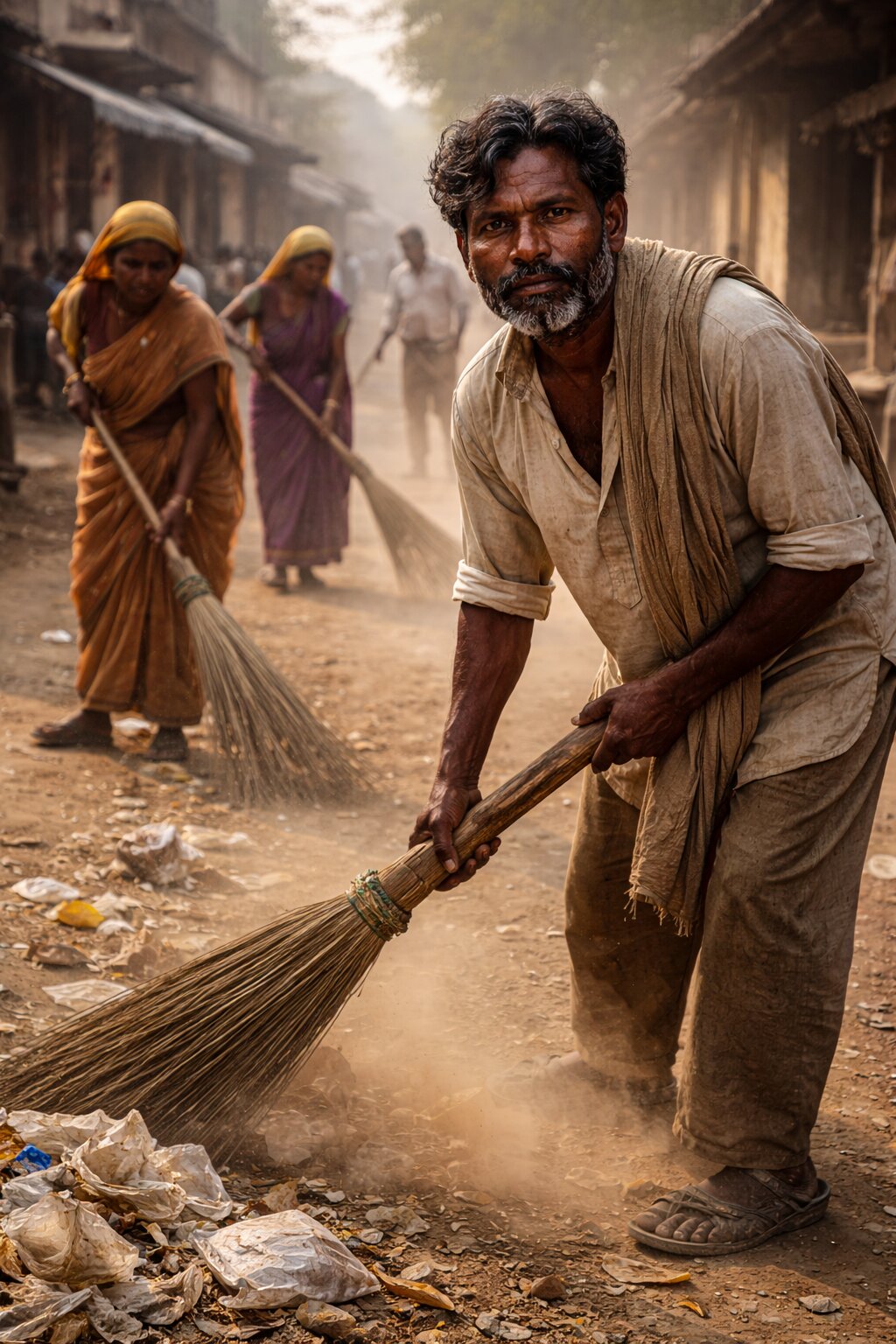
Dalits and “Untouchability”
Caste Outside the Caste System
The term Dalit refers to communities historically treated as “untouchable” — excluded from the four-fold varna system.
- Considered ritually polluting under traditional caste rules
- Forced into stigmatized labor: sanitation, leather work, disposal of the dead
- Denied access to temples, wells, schools, and social equality
- Discrimination enforced through social customs and violence
“Untouchable” is now widely rejected as offensive; Dalit (“oppressed” or “broken”) is the preferred political and social identity.
A modern term of self-identification meaning “oppressed” or “broken.” Refers to communities historically placed outside the caste hierarchy and subjected to systemic exclusion. Today Dalits make up roughly 16–17% of India’s population, though experiences vary widely by region, class, and education.
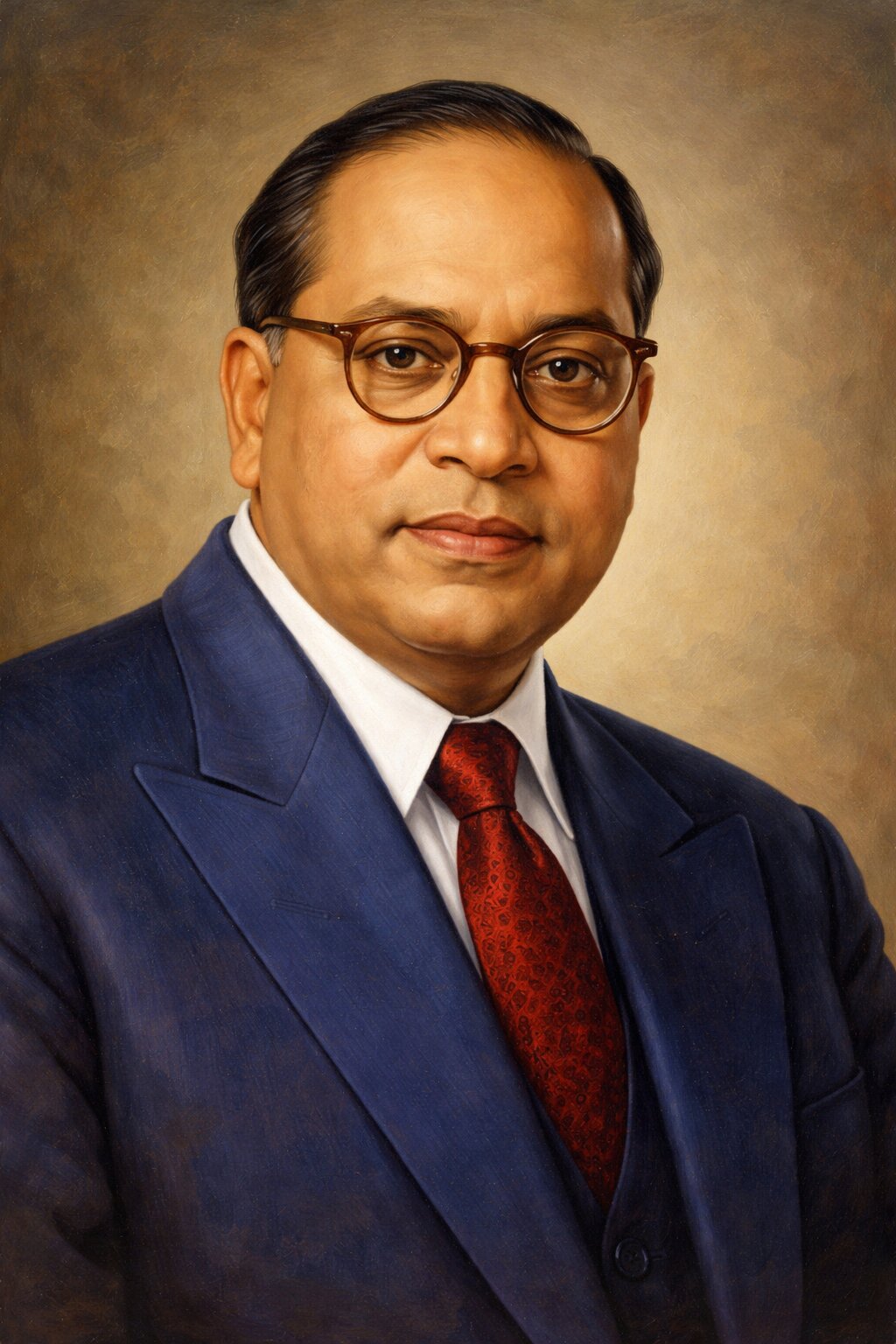
Dalit Resistance: Ambedkar's Legacy
Challenging Caste from Within and Beyond
Dr. B.R. Ambedkar (1891–1956)
- Born Dalit; experienced caste discrimination firsthand
- Earned doctorates abroad (Columbia University, London School of Economics)
- Chief architect of the Indian Constitution
- Fought legally and politically to abolish untouchability
The 1956 Mass Conversion
- Ambedkar and hundreds of thousands of followers converted to Buddhism
- Rejection of Hindu caste hierarchy as religiously embedded
- Marked a major moment of Dalit self-assertion and dignity