Chapter 3: Encountering Hinduism
Core Beliefs and Paths to Liberation
PHIL 210: World Religions
⌨️ Keyboard ShortcutsThe Crisis of Vedic Religion
Vedic religion centered on elaborate sacrifice
- Brahmins monopolize ritual knowledge
- Expensive, complex ceremonies for cosmic order
- External ritual, not internal experience
Growing Problems (ca. 800-600 BCE)
- Exclusivity: Cost and complexity limit access
- Dissatisfaction: Does ritual answer life's deepest questions?
- New ideas: Rebirth/karma concepts emerging
- Alternative seekers: Wandering ascetics, forest hermits
Upanishadic Period (ca. 600–400 BCE)
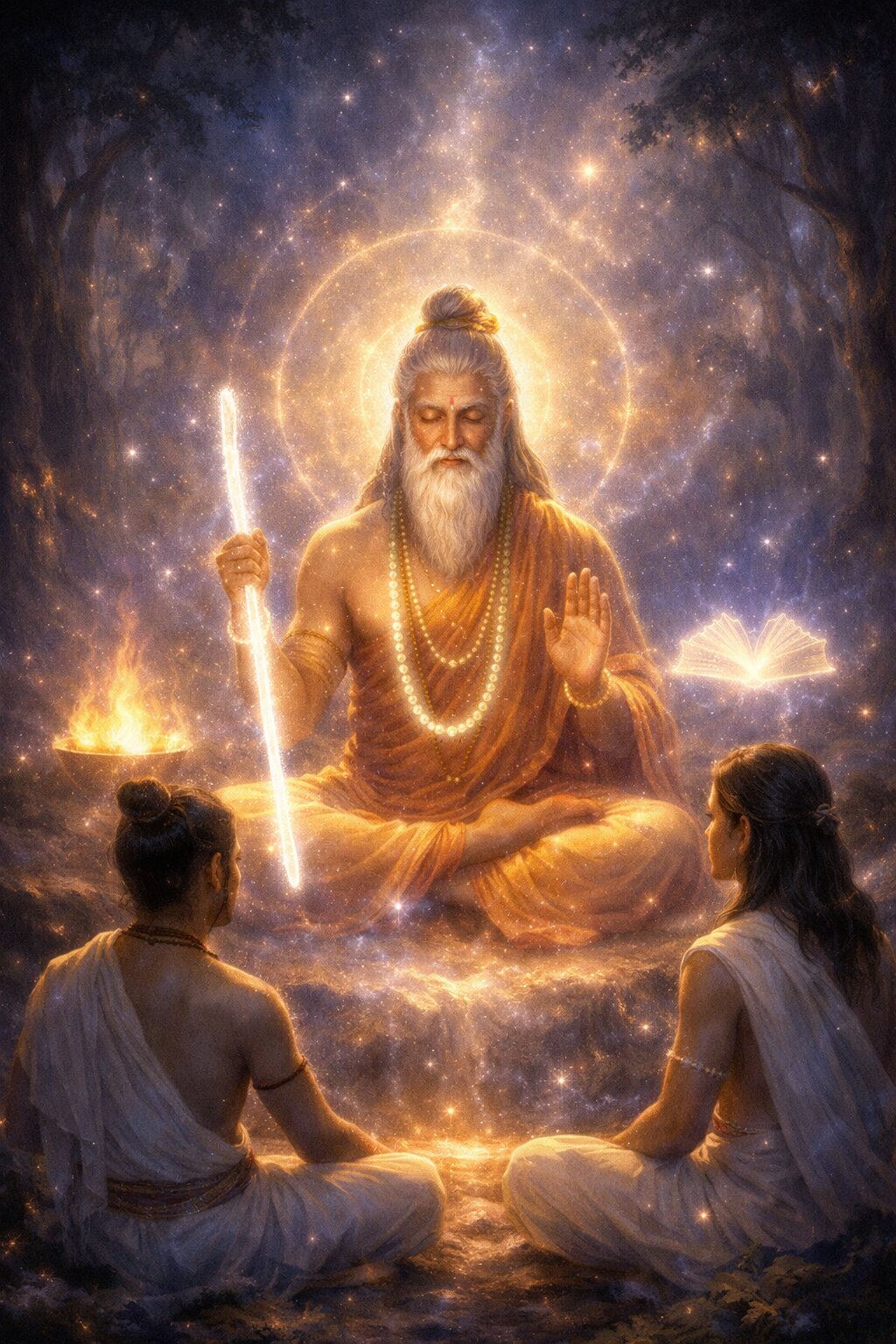
- Brahmin monopoly over ritual alienates other castes
- Dissatisfaction with external ritual leads deeper questions
- New ideas about rebirth and liberation emerge
- Aryan and Dravidian beliefs merge in speculative texts: the Upanishads
The Upanishads
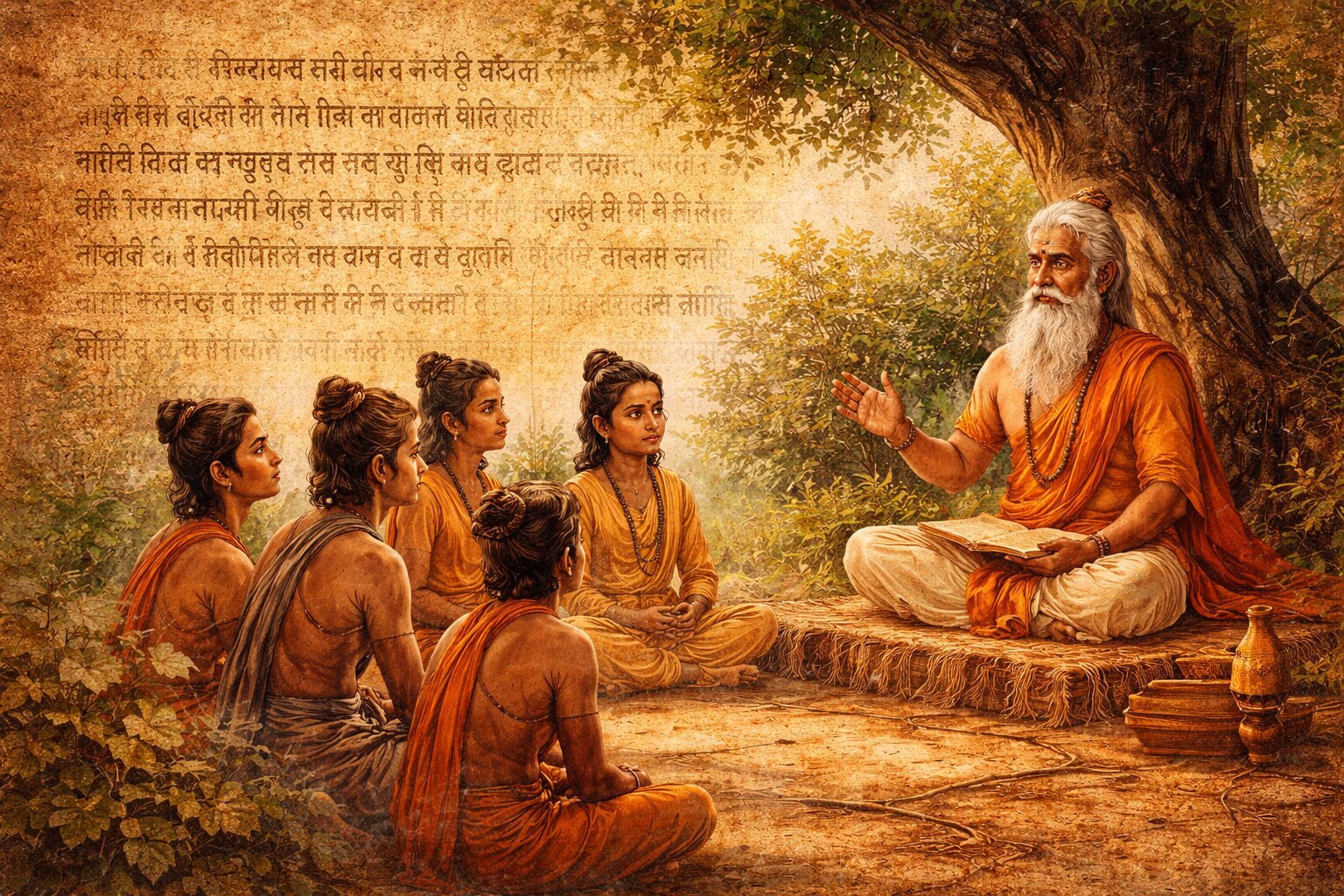
- Philosophical scriptures at the end of the Vedic period
- Structured as dialogues between teacher and student
- Seek sacred knowledge through withdrawal from ordinary life
- Esoteric teaching creates veneration of the guru
- Around 150 texts total: some brief, some lengthy
Literally means "sitting down near" (a teacher), referring to secret teachings passed from guru to student. The Upanishads are philosophical texts that form the concluding portion of the Vedas, exploring the nature of ultimate reality (Brahman) and the self (Atman).
Spiritual teacher or master. Literally "heavy" or "weighty one"—heavy with knowledge. In Hindu tradition, the guru is essential for transmitting sacred wisdom that cannot be learned from books alone.
The Quest for Brahman
Rishis (sages) ponder Vedic hymns, especially the Hymn of Origins
Question: Who is "THAT ONE" by which all things exist?
Brahman
- That which is greatest; than which nothing is greater
- The supreme existence or absolute reality
- Eternal, conscious, irreducible, infinite, omnipresent
- Spiritual core of the universe
- Later summarized as: Sat-Chit-Ananda (Being-Consciousness-Bliss)
"THAT ONE breathed, without breath, by its own impulse; other than THAT, there was nothing at all."
— Rig Veda 10.129
(Hymn of Origins)
The Quest for the Ultimate Self (Atman)
Surface Self
- Body
- Mind/thoughts
- Emotions
- Personality
- Social roles
Atman (True Self)
- Eternal
- Unchanging
- Pure consciousness
- Beyond individual identity
- One with Brahman
Atman is the innermost self—eternal, universal, the life-force within all beings.
The innermost eternal self or soul. Not the ego or personality, but the deepest layer of consciousness that is identical with Brahman. The ultimate agent of human action, directing perception, thought, and knowledge.
Tat Tvam Asi — “That Thou Art”
The Teaching of Uddalaka and Shvetaketu (Chandogya Upanishad)
False Perception
- Pride in ritual education
- Separate, individual ego
- Defined by body/status
- Limited to names/forms
The Ultimate Truth
- One underlying essence
- Subtle, invisible, eternal
- Present in every being
- Atman = Brahman
Uddalaka repeats “Tat Tvam Asi” — teaching that the true self (Atman) is identical with the universal ground of being.
The innermost eternal self. Pure consciousness — identical with Brahman.
Understanding Ultimate Reality
Think-Pair-Share
- How does Atman differ from Western ideas of "soul" or "self"?
- Why might Atman = Brahman be both liberating and challenging?
Quick Write
In your own words, explain the relationship between Brahman (ultimate reality) and Atman (true self).
Samsara and Moksha
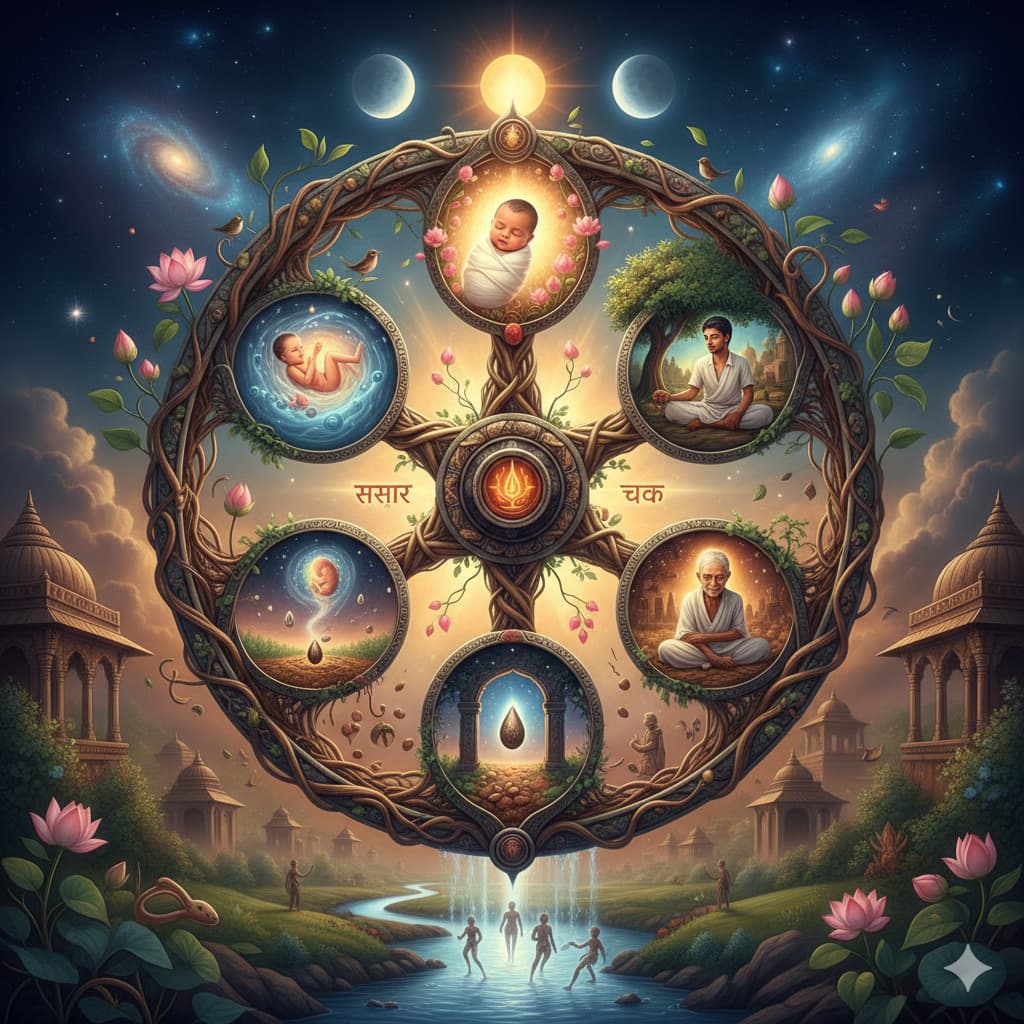
- Atman trapped in endless births/deaths (samsara) due to desire
- Actions (karma) shape future rebirths
- Samsara understood as suffering and bondage
- Religious problem: How to be freed from this cycle?
- Moksha = liberation or release from karma and samsara
Visualizing the Wheel of Birth and Death
Hindu Doctrinal Concepts
- Dharma — Righteousness, law, duty, cosmic order
- Samsara — Cycle of reincarnation
- Karma — Actions and their consequences
- Jiva — Individual soul that gathers karma and is reborn
- Moksha — Liberation from rebirth and samsara
Paths to Moksha — Yoga
Yoga ("to yoke, join") = path or discipline for union with the divine
Jnana Yoga
Path of Knowledge
- Study & Inquiry
- Atman = Brahman
- Intellectuals
Karma Yoga
Path of Action
- Duty without ego
- Selfless service
- Active seekers
Bhakti Yoga
Path of Devotion
- Loving worship
- Surrender/Prayer
- Most popular
Raja Yoga
Path of Meditation
- 8-limbed path
- Mental discipline
- Patanjali's system
Patanjali's system from the Yoga Sutras: Yama (restraint), Niyama (observance), Asana (posture), Pranayama (breath), Pratyahara (senses), Dharana (focus), Dhyana (meditation), Samadhi (absorption).
A Note on Vedanta Schools
Not all Hindu philosophies interpret Brahman/world relationship the same way:
- Advaita (Shankara): Atman and Brahman are identical; world is ultimately maya (illusion)
- Vishishtadvaita (Ramanuja): Souls distinct but dependent on Brahman
- Dvaita (Madhva): Eternal difference between God, souls, and world
Theistic devotional traditions often emphasize relationship with personal God, not identity with impersonal Brahman
Often translated as "illusion," but better understood as the appearance of separation and multiplicity that veils ultimate unity. In Advaita Vedanta, maya is the cosmic power that makes the one Brahman appear as the many diverse phenomena of the world. It is neither fully real nor completely unreal.
Classical Period Context (ca. 400 BCE—600 CE)
Vedic-based religion challenged by Buddhism and Jainism
In response, Hinduism defines itself more clearly
Major Developments
- Upanishads accepted as shruti (revealed scripture)
- Epics (Mahabharata, Ramayana) teach dharma through narrative
- Puranas codify sectarian theologies (Vishnu, Shiva, Devi)
- Local, non-Aryan deities incorporated into wider pantheon
- By 7th century CE, Hinduism returns to dominance
"Ancient stories" containing myths, cosmology, genealogies, and ritual instructions. 18 major Puranas composed 300-1500 CE, classified by which deity (Vishnu, Shiva, or Devi) they glorify. More influential for average Hindus than the Vedas, as stories make dharma accessible to all.
Paths to Liberation Check-In
Small Group Activity
Each group gets one yoga path. Create a poster explaining:
- Main practices
- Who might be drawn to this path
- Advantages and challenges
- How it leads to moksha
Groups present in 2 minutes each
Bhakti Yoga — Path of Devotion
- Path of worship and loving devotion to a personal deity
- Currently the most popular path among Hindus
- Worship at home or in temples
- Challenges Brahmin monopoly—devotion open to all castes, genders
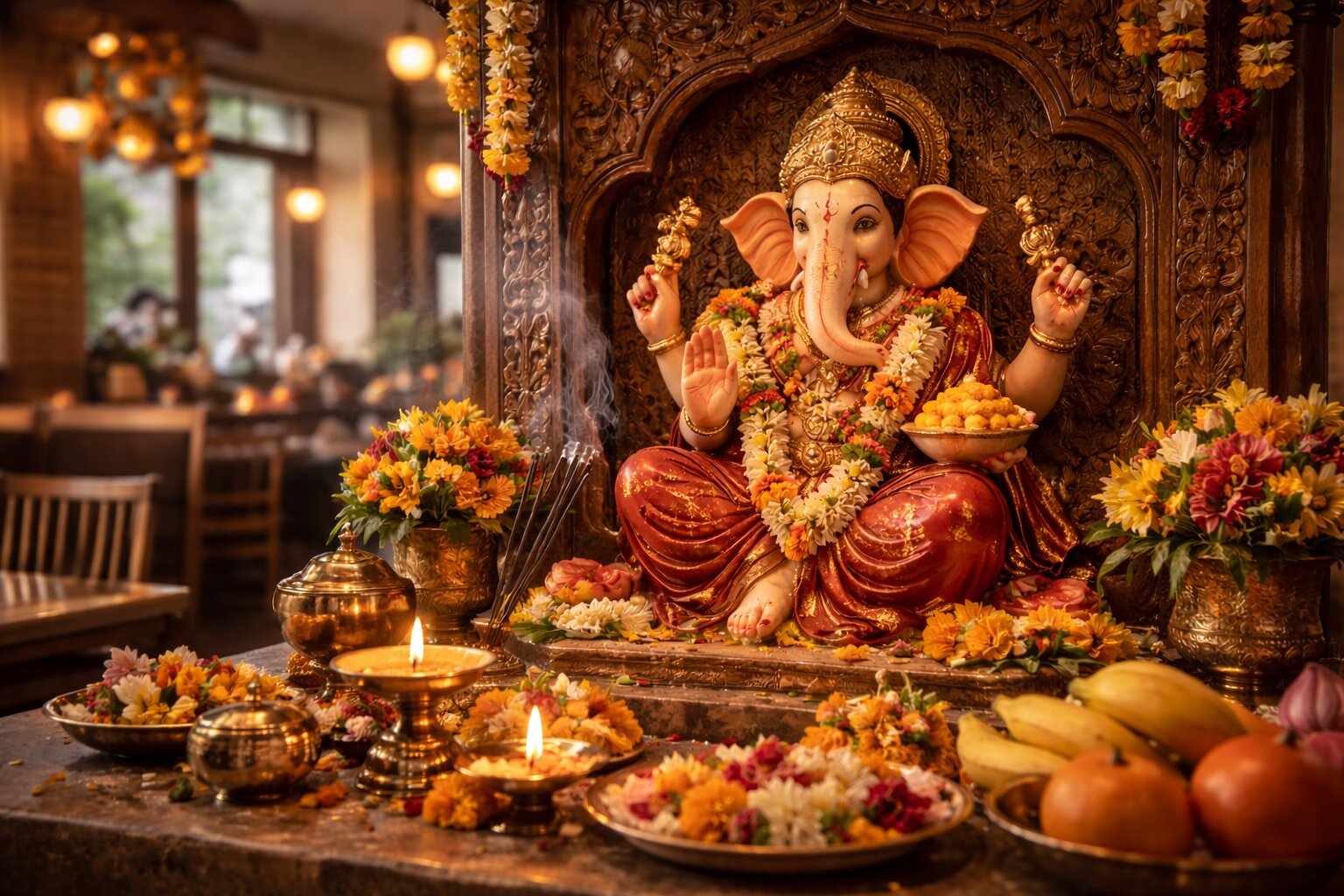
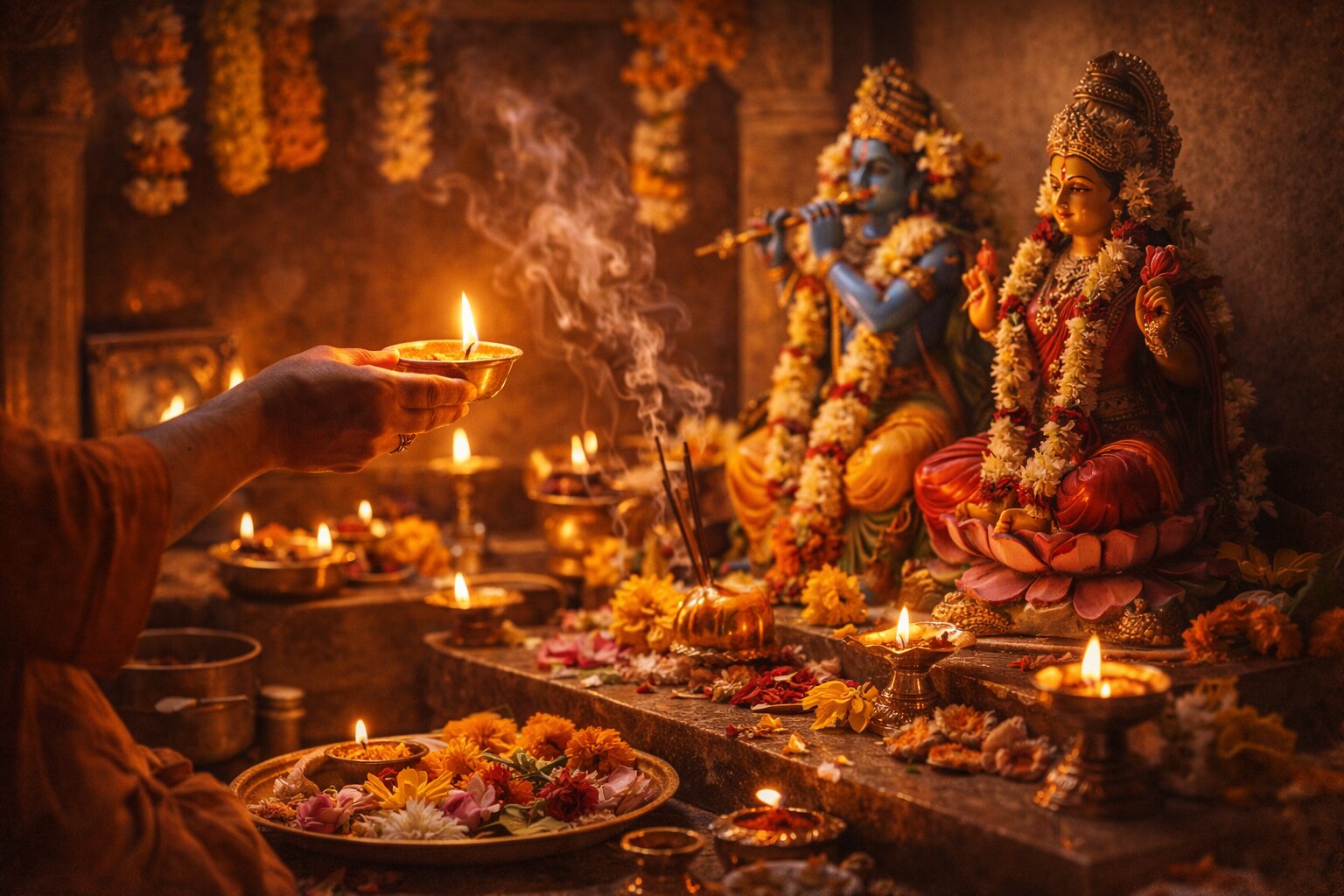
Bhakti in Practice: Puja
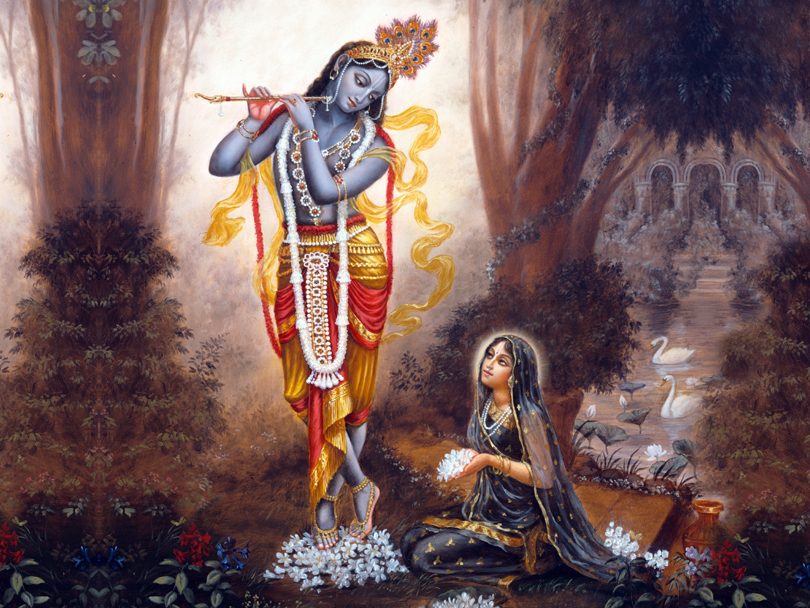
Puja = Worship ritual performed at home shrines or temples
Core Elements
- Darshan — "Seeing and being seen"
- Offerings: Flowers, incense, food, water
- Aarti — Waving oil lamp with songs
- Prasad — Blessed food consumed
- Mantras: Sacred sounds/chants
Home vs. Temple
- Home shrine: Daily personal puja (5–15 min)
- Temple: Elaborate rituals by priests
- Both create direct relationship with chosen deity
"Seeing and being seen" by the deity through the murti (sacred image). Not passive observation but reciprocal exchange of vision. Being beheld by the divine is transformative.
A ritual of worship in which light from wicks soaked in ghee (purified butter) or camphor is offered to one or more deities. It typically involves the clockwise circling of the lamp and is accompanied by songs in praise of the deity.
Literally "grace" or "favor." A material substance (typically food) that is first offered to a deity and then consumed by devotees. It is considered to be imbued with the deity's blessing and power through the act of puja.
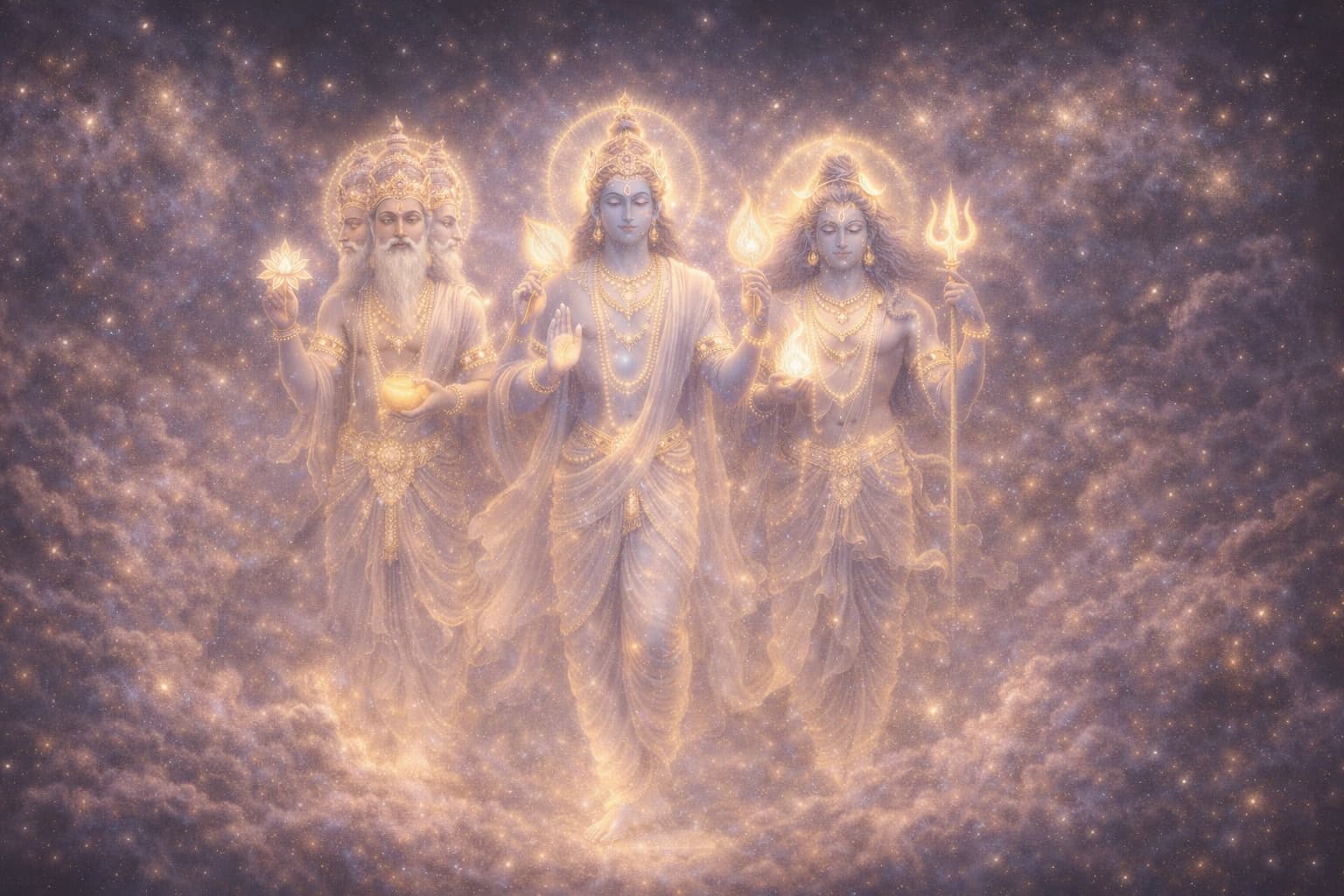
The Trimurti ("Three Forms")
Brahma
Creator
Four faces, lotus, Vedas
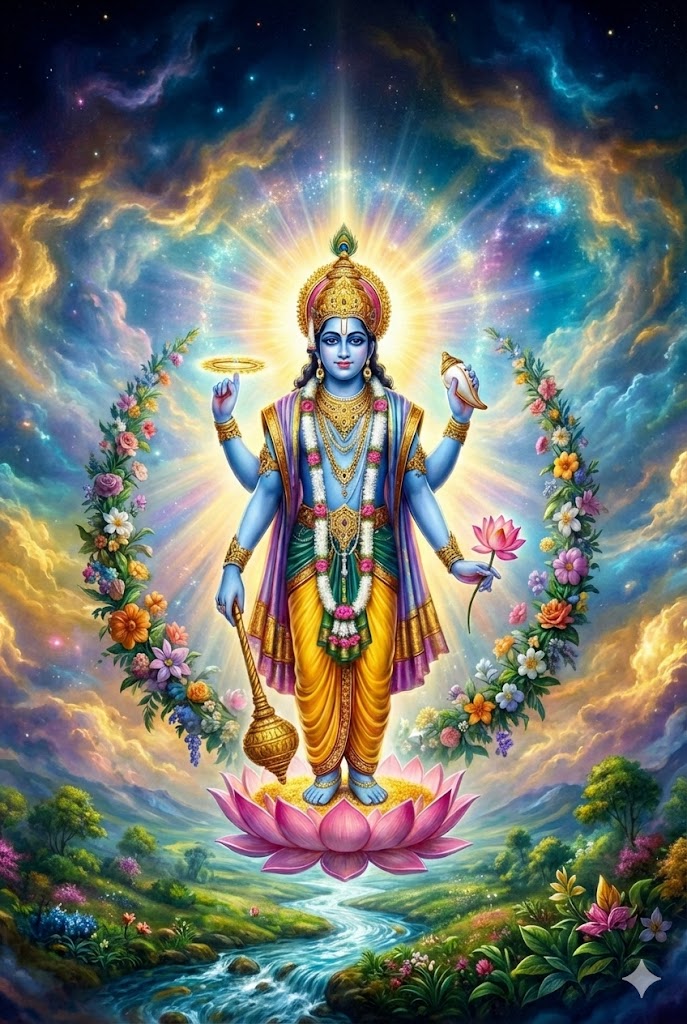
Vishnu
Preserver
Blue skin, discus, conch
Shiva
Destroyer/Transformer
Third eye, trident, dance
Vishnu — God of Life
- Supervises universal order and prosperity
- Protects and preserves the world
- Avatars (incarnations) restore balance
Notable Manifestations
Rama
Ideal King (Ramayana)
Krishna
Divine Teacher (Gita)
Lakshmi
Consort (Prosperity)
Buddha
In some traditions
"Descent" of deity into earthly form to restore dharma when evil threatens to overwhelm good. Vishnu has ten traditional avatars, including Rama, Krishna, and (controversially) Buddha.
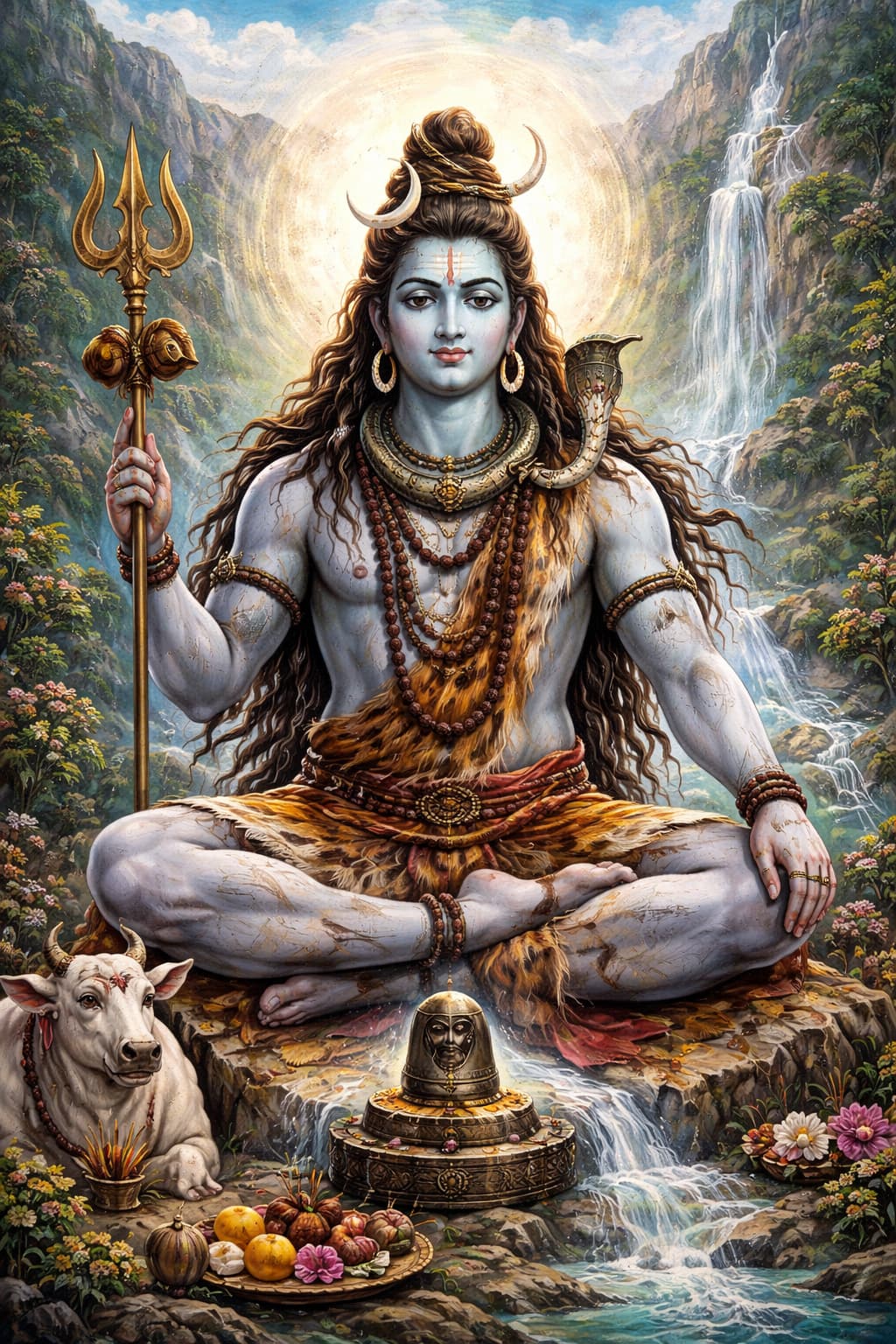
Shiva — God of Destruction and Transformation
- Guides destruction in cosmic cycle of creation, dissolution, re-creation
- Destruction symbolizes removal of obstacles to salvation
- Death as prelude to rebirth therefore Shiva also associated with fertility
- Fertility aspects of older Dravidian gods appear in Shiva
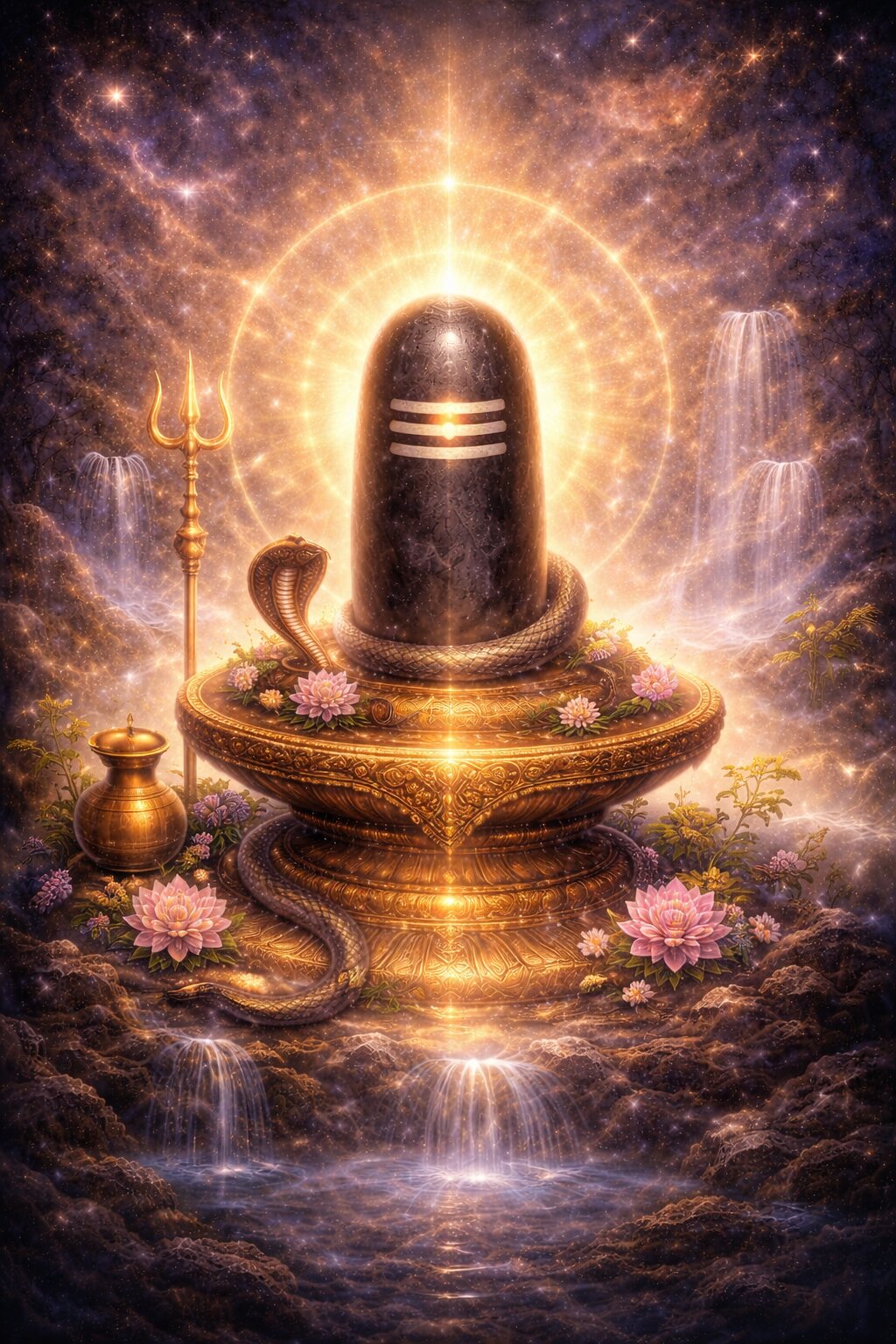
Shiva Lingam — Symbol of Divine Creative Energy
- The lingam is a stylized phallic symbol representing the creative and generative power of Lord Shiva
- Symbolizes cosmic creation, the origin of life, and the masculine principle in the universe
- Almost always paired with the yoni (the circular base or vulva symbol), expressing the sacred union of masculine and feminine energies
- Its abstract, aniconic form points beyond the physical to the infinite, formless nature of the divine
This phallic representation of divine creative energy is one of the clearest and most philosophically developed examples of a symbolic tradition found in many ancient cultures — a tradition we call phallicism.
Phallicism and Phallic Cults
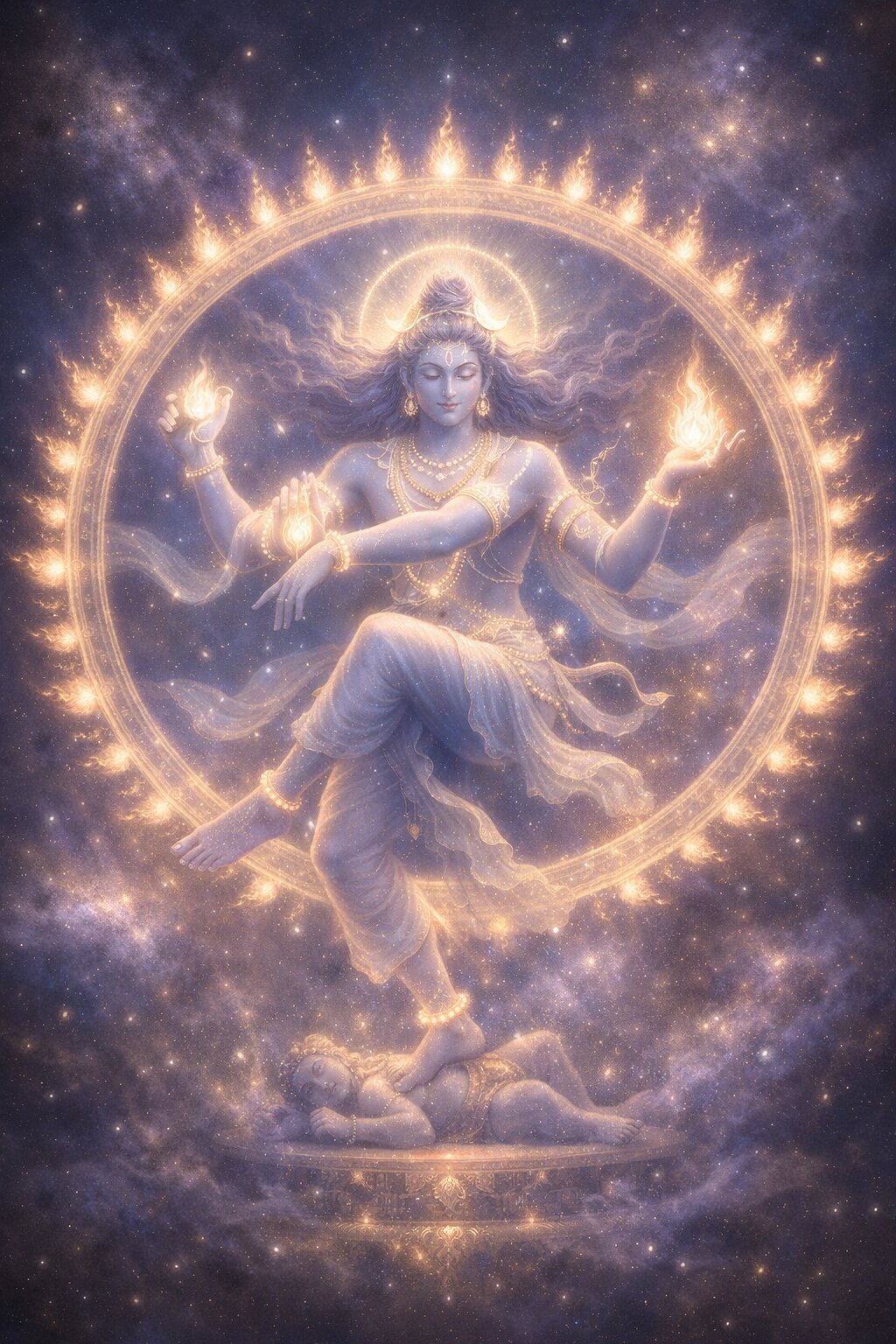
Shiva Nataraja — Lord of the Dance
- Dancing within a ring of fire
- Dance symbolizes cosmic cycles and rhythm of creation and destruction
- One foot raised: liberation of the soul
- One foot planted: engagement with the world
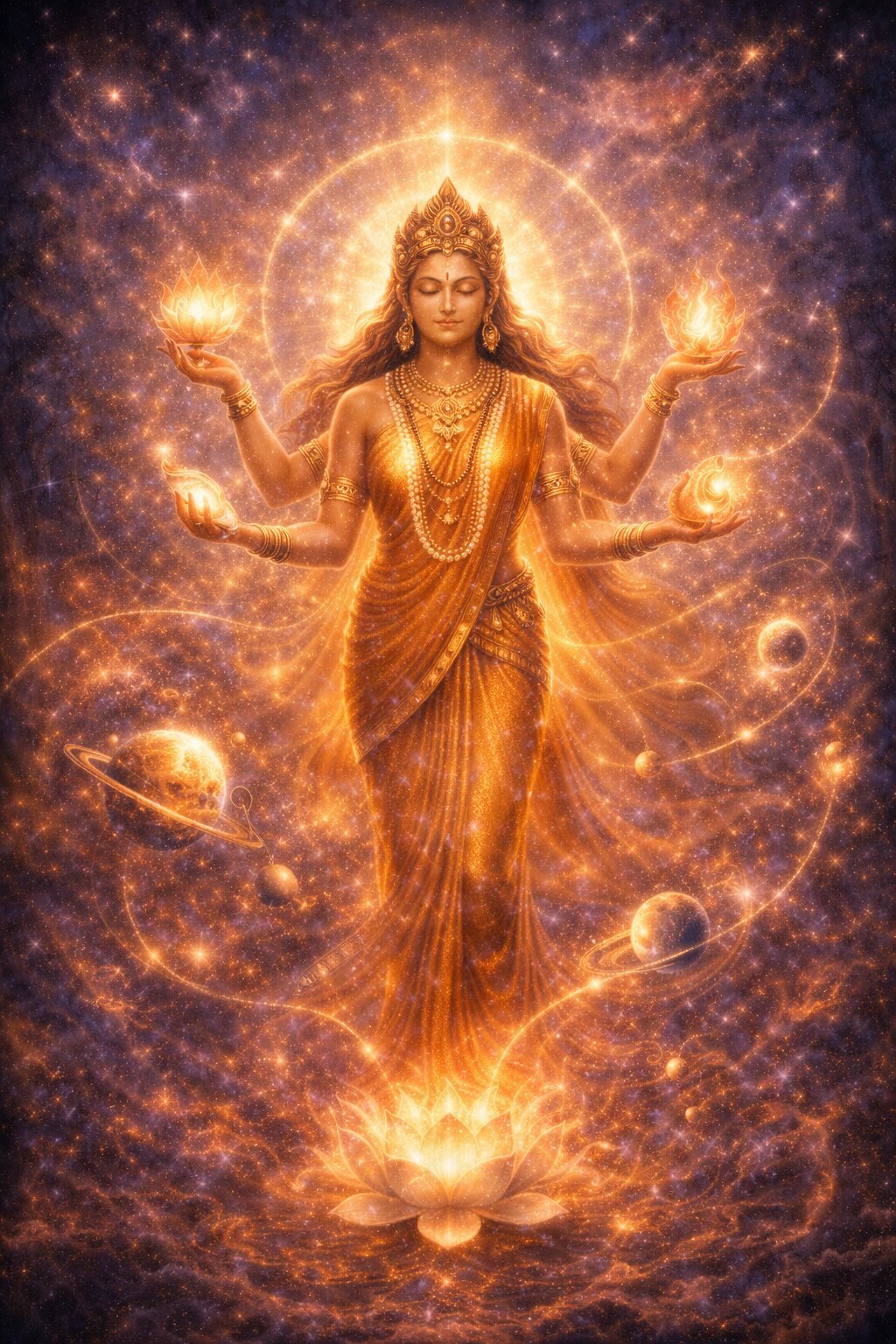
Shaktism — The Goddess Tradition
- Shaktism identifies the Great Goddess (Devi) as the ultimate, primordial reality.
- Recognized as one of the three primary traditions alongside Vaishnavism and Shaivism.
- Shakti is the dynamic energy that animates and sustains the cosmos.
Philosophically, Shaktism asserts that all diverse goddess forms are individual manifestations of the one Mahadevi.
Male deities are considered passive agents until empowered by the Goddess’s primordial energy.
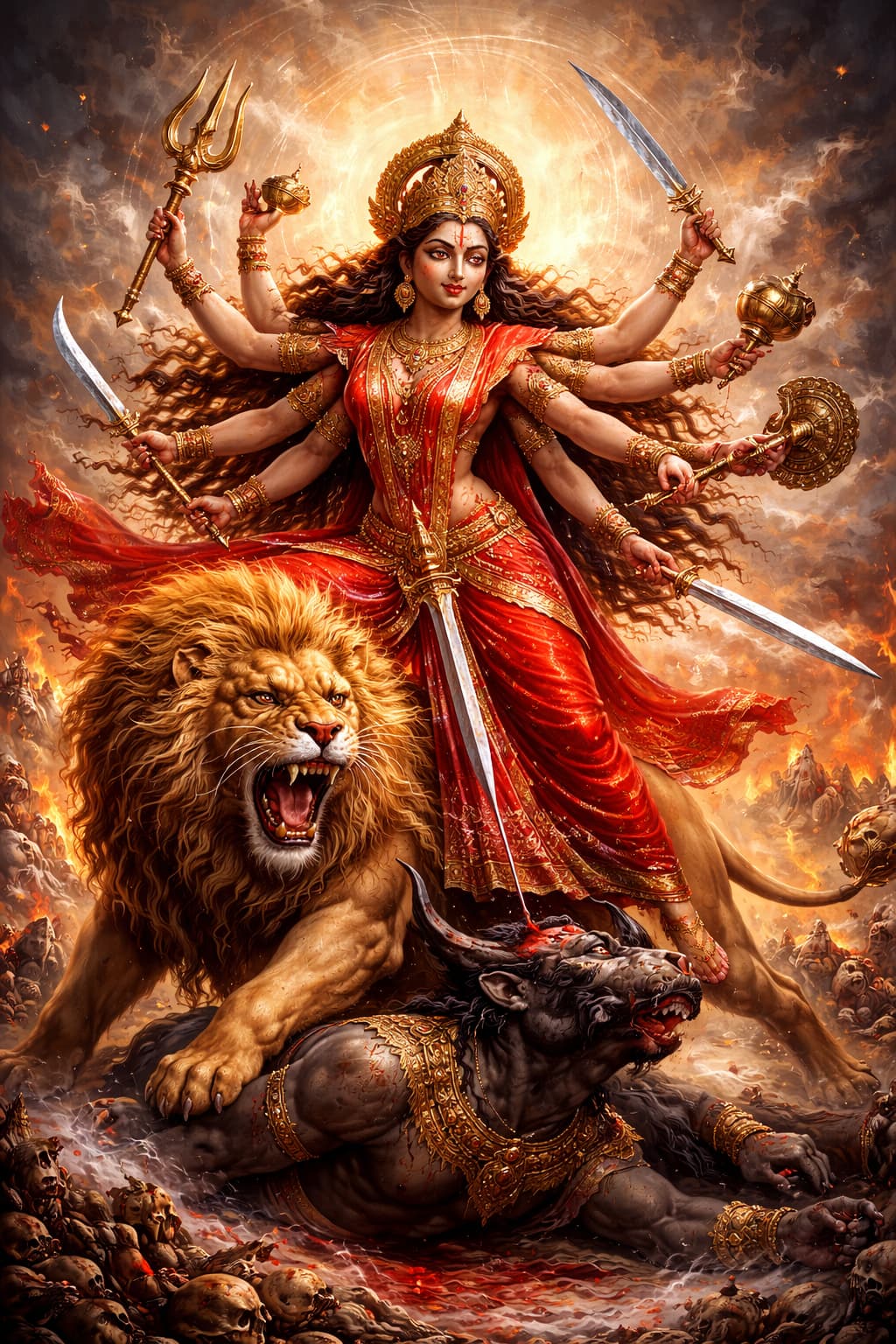
Durga — Divine Warrior and Protector
- Durga — Warrior goddess and defender of cosmic order (dharma)
- Famous for defeating the buffalo demon Mahishasura
- Represents divine strength used to restore balance and justice
- Symbolizes protection, courage, and righteous struggle against evil
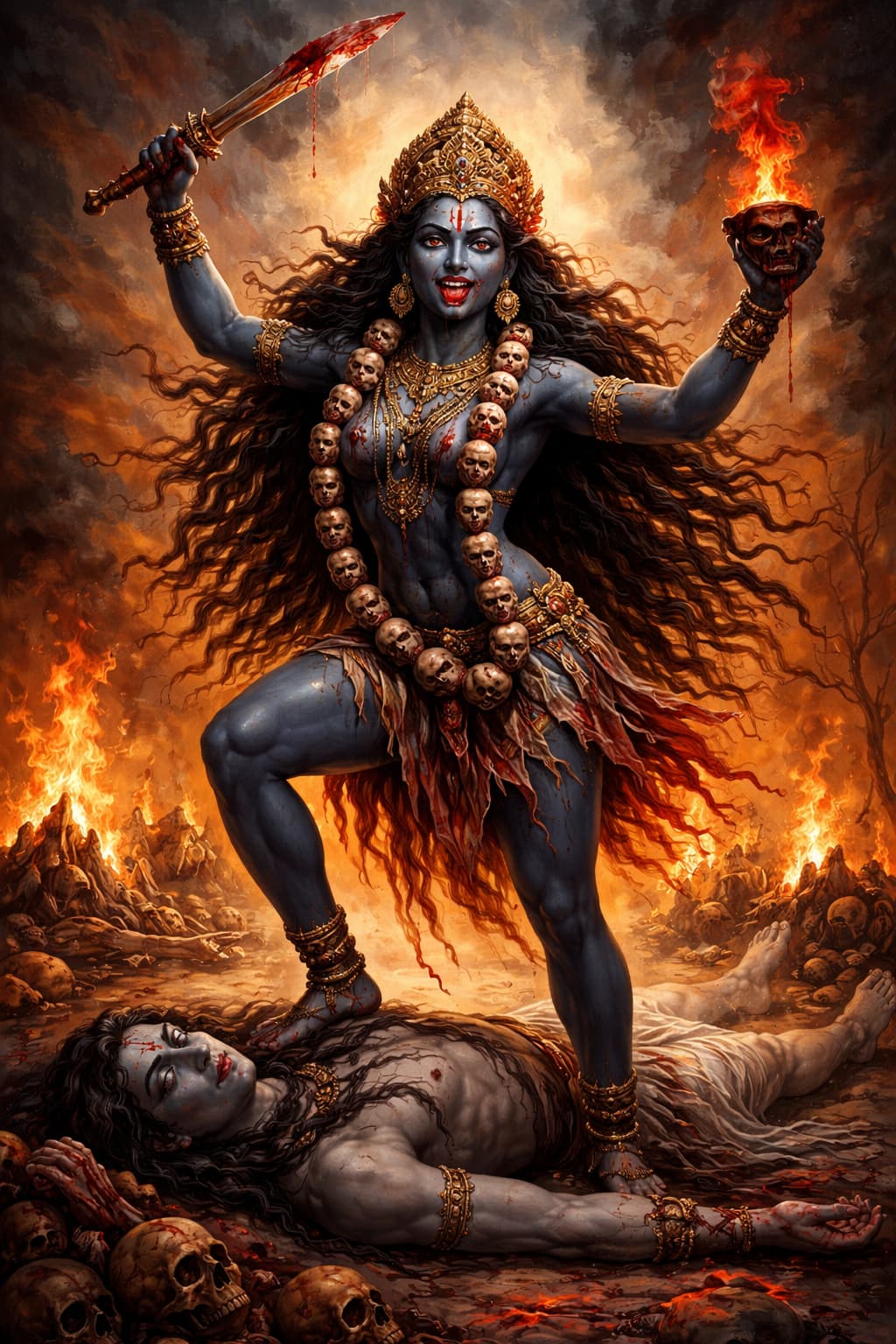
Kali — Time, Destruction, and Transformation
- Kali — Fierce goddess of time and transformation
- Destroys evil, illusion, and ego
- Represents the power of death to clear the way for renewal
- Symbolizes liberation through radical change
Goddess Forms — Nurture, Wisdom, and Devotion
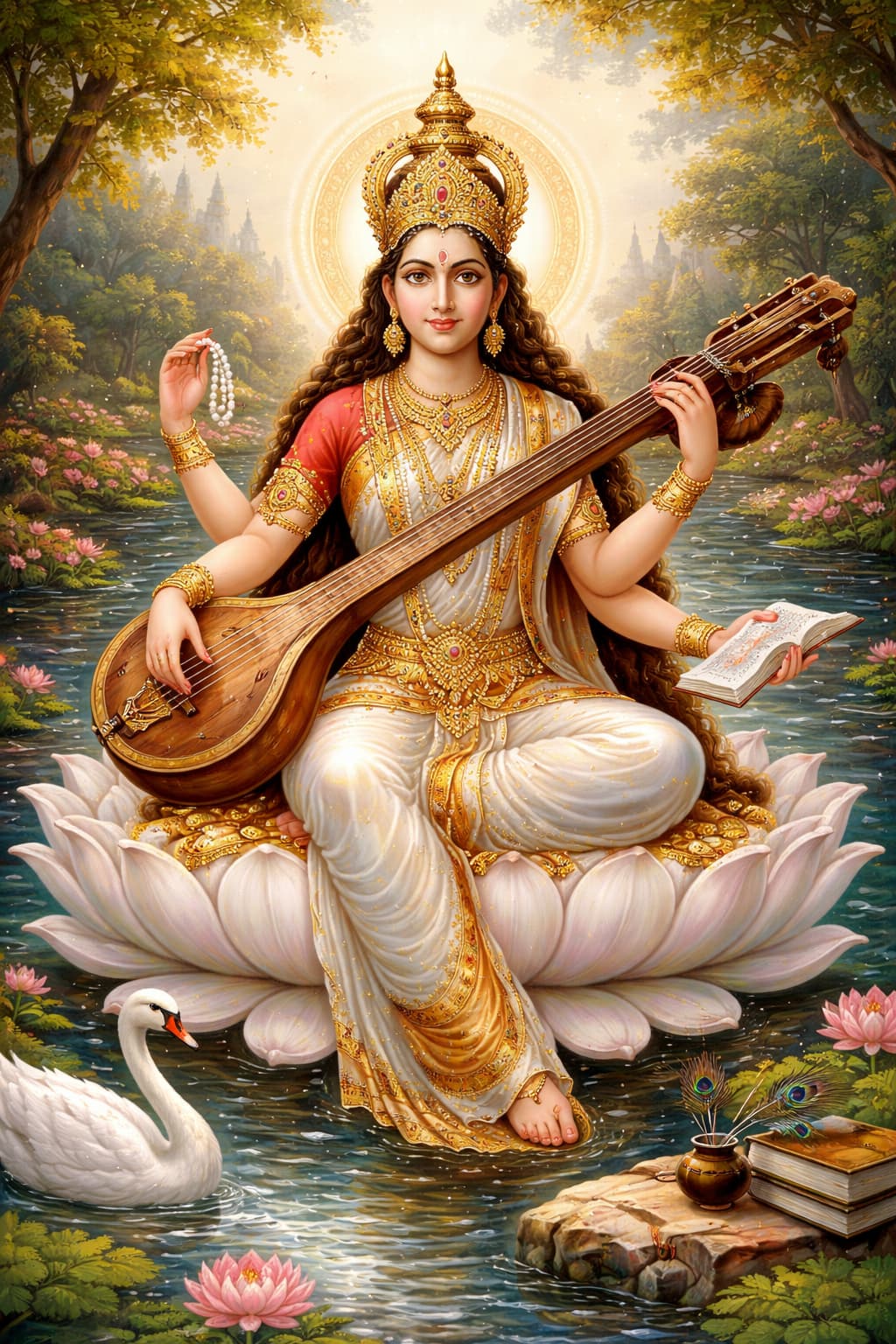
- Lakshmi — Prosperity, abundance, fortune
- Saraswati — Knowledge, arts, wisdom, learning
- Parvati — Shiva’s consort, ideal wife and mother
- These gentler forms express divine care, beauty, and creativity.
Tantra — The Embodied Path
Tantra (lit. "to weave/expand") = A system of Sadhana (practice) that treats the material world and human body not as obstacles, but as the primary vehicles for liberation.
The Radical Shift
- Immanence: Divinity is in the world, not just beyond it.
- Microcosm: The body contains the entire universe; "As above, so below."
- Transformation: Using Kama (desire) and Artha (worldly means) to fuel Moksha.
- Democratization: Open to all castes and genders (unlike early Vedic orthopraxy).
The "Technique"
- Mandala/Yantra — Visual mapping of deity energy.
- Mantra — Sonic vibration to entrain consciousness.
- Kundalini/Chakras — Awakening latent energy through the subtle body.
- Shakti: Emphasis on the active, feminine, creative power of the Absolute.