PART I
Why Start Here?
Before we can think about ethics, we need to understand how we think
The Invisible Framework
Human beings don't meet the world raw.
We meet it already filtered.
Every opinion, every ethical instinct, every "that seems right" or "that seems wrong" sits inside a larger mental framework.
Philosophers call this a worldview.
Fish Describing Water
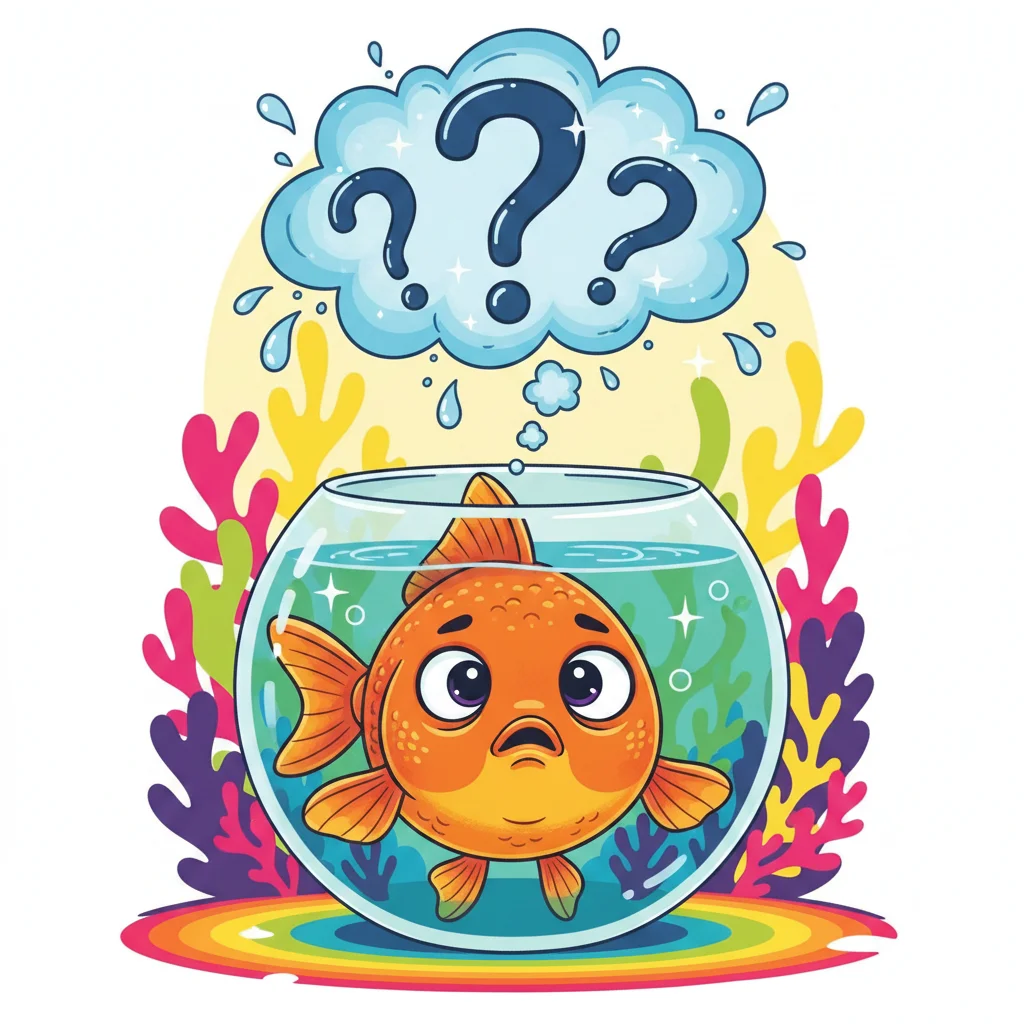
Critical thinking becomes possible only when you become aware that a worldview is operating.
Otherwise we're like fish trying to describe water.
Today's Three Questions
- What is a worldview? And why it's not just intellectual, but rooted in the heart
- What is critical thinking? And why it requires examining your worldview, not just inhabiting it
- Why does this matter for ethics? Why we can't skip this step if we want to think seriously about right and wrong
🤔 Self-Check
Before moving on: Can you think of a belief you hold that you've never really questioned—something that just seems "obviously true"? Hold that in mind as we continue.
PART II
What Is a Worldview?
The operating system of your mind
The Operating System Analogy
Think of a worldview as the operating system of your mind.
- It boots up automatically when you wake
- It runs silently in the background
- It determines how you process everything
The German word is Weltanschauung—a concept with roots in Kant's philosophy.
But you don't need to know that history to feel its effects. You already have one.
Questions Every Worldview Answers
Often subconsciously...
- What is real? Is there a God? Is the universe just matter and energy?
- What counts as evidence? Senses? Reason? Scripture? Tradition? Your gut?
- What is a human being? A soul in flesh? A biological machine? Something else?
- What gives life meaning? Achievement? Relationships? Service? Nothing inherent?
- What is the source of right and wrong? Divine command? Human reason? Social agreement?
Your answers—whether chosen or absorbed—shape how you see everything.
The Heart Dimension
Here's something crucial that's easy to miss:
A worldview isn't just intellectual.
It's rooted in what philosophers call "the heart"—your fundamental orientation, your deepest commitments.
Why Worldviews Feel Personal
Notice that word in Sire's definition: commitment.
A worldview isn't just something you think; it's something you're invested in.
This is why challenging someone's worldview feels personal. You're not just questioning an idea—you're touching something closer to their identity.
Where Worldviews Come From
Students often assume they don't have a worldview because they've never written one down.
But that's like assuming you have no accent because you don't hear yourself speak.
A worldview is built from:
Most of it is inherited, not chosen.
Example: Two People, Two Worldviews
Person A
Raised where moral truth is tightly linked to religious authority. "Right and wrong" are woven into sacred text and traditions.
Person B
Raised in a secular household shaped by Enlightenment rationalism. Moral truth = whatever can be justified through reasoning about human well-being.
Both have worldviews. Neither is neutral.
Each thinks their view is "just common sense."
That's the power and the danger. Worldviews feel natural. They feel inevitable. But they're neither.
The Flashlight Analogy

Walk into a dark room and pick up a flashlight.
The beam illuminates only a slice of the space.
Everything outside that beam still exists, but your worldview determines what gets lit up and what stays invisible.
Critical thinking is the ability to rotate the beam.
The Self-Protection Instinct
Here's the catch: your worldview has a self-protection instinct.
It resists information that threatens it.
Confirmation Bias
We prefer evidence that fits what we already believe.
Motivated Reasoning
We evaluate arguments based on whether we want the conclusion to be true.
The Research
Humans do this:
- Effortlessly
- Automatically
- With absolute confidence that they're being objective
You're not wrong for having a worldview. You'd be unusual if you didn't.
The challenge is learning to see it clearly.
🤔 Self-Check
Think of an issue you feel strongly about.
Can you identify information you might be filtering out because it doesn't fit your view?
PART III
What Is Critical Thinking?
Not being negative—being careful
What Critical Thinking Is NOT
- ❌ Being negative
- ❌ Doubting everything
- ❌ "Poking holes" in arguments
- ❌ Being a contrarian
✓ It IS a disciplined process of evaluating claims based on reason and evidence.
Definitions from the Experts
Strip away the academic language and it's essentially:
"How do I know this is true?"
Three Pillars of Critical Thinking
1. Clarifying the Claim
"What exactly are you saying?" Distinguishing conclusions from arguments, value judgments from factual claims.
2. Examining the Reasons
Are the reasons relevant? Are they true? Do they actually support the conclusion?
3. Considering Alternatives
Your first interpretation might not be the only possible one. This is what distinguishes analysis from dogma.
Skills AND Dispositions
Critical thinking involves both skills and dispositions.
Skills without the right dispositions are useless.
Skills
Analysis, evaluation, inference, explanation, self-regulation
Dispositions
Open-mindedness, humility, courage, perseverance, fair-mindedness
The Dispositions That Matter Most
- Intellectual Humility — Recognizing the limits of your knowledge; accepting you might be wrong
- Intellectual Courage — Willingness to consider uncomfortable challenges to your beliefs
- Intellectual Empathy — Ability to enter imaginatively into perspectives different from your own
- Fair-mindedness — Giving serious consideration to alternatives rather than dismissing them reflexively
Critical thinking is humility in action.
PART IV
How Worldview & Critical Thinking Interact
Bringing the two threads together
The Elephant and the Rider
Psychologist Jonathan Haidt offers a powerful metaphor for why worldview examination is so difficult:

Understanding the Metaphor
🐘 The Elephant
Your automatic processes—intuitions, emotions, gut reactions, quick judgments that arise before conscious thought
🧑 The Rider
Your conscious reasoning—the part that analyzes, plans, and justifies
Here's the uncomfortable truth:
The elephant is far more powerful than the rider.
The Rider's Real Job
The elephant usually determines where you go.
The rider's job, much of the time, is not to steer but to explain why the elephant went that direction—to provide post hoc rationalizations for decisions the elephant already made.
Key Insight
Your worldview shapes the elephant. It forms those automatic intuitions. When you encounter a moral situation, the elephant reacts instantly—"That's wrong!" or "That seems fine"—and only afterward does the rider construct reasons.
Why Smart People Disagree
Two intelligent people can look at the same ethical issue and reach opposite conclusions.
They're not necessarily being irrational.
Their elephants were shaped by different worldviews.
Critical thinking, then, is partly about training the rider to occasionally redirect the elephant—or at least to honestly examine where the elephant wants to go and why.
🤔 Self-Check
Think of a recent moral judgment you made quickly. Can you identify whether your "elephant" reacted first, and your "rider" explained afterward?
The House Metaphor
Imagine a house you've lived in since childhood.
You know the furniture so well you can walk through it in the dark.
One day someone asks you to draw a floor plan.
You suddenly realize you've never looked at the house from above. You've moved through its rooms so automatically that you've never thought about their shape.
Critical thinking is that aerial view.
What Becomes Possible
Once you step outside your worldview—even temporarily, even partially—three things become possible:
1. Awareness of Assumptions
Maybe you assume every dispute has one right side. Maybe you assume morality is primarily about preventing harm. Seeing your assumptions lets you loosen their grip.
2. Understanding Other Worldviews
Disagreement doesn't always mean the other person is irrational. Often they're rational—in the framework of a different worldview.
3. Improving Your Own Thinking
A worldview isn't a prison; it's a starting point. Keep what helps you understand reality; revise what doesn't.
Strong vs. Weak Sense Critical Thinking
Richard Paul makes an important distinction:
Weak Sense
Uses analytical skills selectively—to defend your existing beliefs while failing to apply the same scrutiny to your own assumptions.
This is the lawyer's approach: build the best case for what you already believe.
Strong Sense
Applies the same standards even-handedly to all positions—including your own.
This is harder. It requires intellectual courage to discover you might be wrong.
Only strong sense critical thinking is adequate for genuine worldview examination.
PART V
Why This Matters for Ethics
Arguments don't float in a vacuum
Ethics Sits on Worldview
Ethics is a discipline built on arguments.
But arguments don't float in a vacuum.
They grow out of deeper worldview assumptions.
Example: "Is morality universal or relative?"
This isn't just a logical puzzle. It's tied to worldview commitments about human nature, culture, reason, and authority.
Students often try to jump into ethical disputes without understanding these deeper layers.
It's like trying to repair a building without checking the foundation.
Ethical Theories as Worldview Maps
The ethical theories we'll study this semester are essentially attempts to build clear, systematic worldviews about what matters morally.
Each one makes certain worldview assumptions.
Consequentialism
Including utilitarianism
Key Question
"What produces the best overall consequences?"
Worldview Assumptions
- Human well-being can be compared and aggregated
- Consequences determine rightness
- Impartiality is morally required
These aren't self-evident truths; they're worldview commitments.
Deontology
Kantian ethics
Key Question
"Am I treating people as ends in themselves, never merely as means?"
Worldview Assumptions
- Human rationality is the basis of dignity
- Duty comes before desire
- Moral constraints can be identified through reason
Again—worldview commitments, not obvious facts.
Virtue Ethics
Aristotelian tradition
Key Question
"What would a person of good character do?"
Worldview Assumptions
- Human beings have a natural purpose or telos
- Certain character traits constitute excellence in fulfilling that purpose
- Such excellence is achievable through practice and habituation
If you don't believe humans have a built-in purpose, Aristotelian virtue ethics will seem unmotivated.
The Takeaway

These theories aren't just rule books—they're worldview maps.
Understanding this will help you engage with them more honestly.
A Note on Religious Worldviews
Let me say something directly:
This class will take religious worldviews seriously as genuine intellectual positions—not as relics to be studied from a distance or dismissed as pre-scientific.
Why Take Religious Worldviews Seriously?
- History: Religious worldviews have been the primary vehicles for moral reflection throughout most of human history. Judaism, Christianity, Islam, Hinduism, Buddhism, Confucianism—millennia of careful thinking.
- Your classmates: Many of you hold religious worldviews. A good teacher engages what you actually believe.
- Open questions: Some of the deepest questions in ethics—about moral grounding, human dignity, whether moral facts exist—remain genuinely contested in ways that don't clearly favor secular over religious answers.
The Point
This doesn't mean religious worldviews are true.
It means they deserve engagement rather than dismissal.
The critical thinking dispositions—intellectual humility, empathy, fair-mindedness—require that we give serious consideration to perspectives different from our own.
Including religious perspectives when we are secular, and secular perspectives when we are religious.
PART VI
Practical Skills
Tools you can start using today
Six Skills for Any Ethical Question
Before we close, here are practical tools you can bring to any ethical question:
1. Identify the Worldview Assumptions
Ask: What does this argument assume about people, truth, authority, or morality?
What does it assume about what counts as evidence?
Example
"If I say 'Scripture tells us X is wrong' and you don't accept Scripture as authoritative, we're not just disagreeing about X—we're operating from different epistemologies within our worldviews."
2. Slow the Reasoning Down
Break the argument into steps:
- What is the conclusion?
- What are the reasons?
- Are the reasons actually connected to the conclusion?
Much ethical confusion comes from not knowing precisely what someone is claiming.
3. Check for Internal Consistency
Do your beliefs fit together?
Example
You might believe humans are "just animals" and that humans have unique dignity. Those may be in tension.
Internal consistency checking is crucial for worldview examination.
4. Consider Reasonable Alternatives
If only one explanation seems possible, the flashlight beam is probably too narrow.
Ask: What would someone with a different worldview say?
This is where intellectual empathy becomes essential.
5. Be Willing to Revise
Thinking is not a courtroom where you must defend every belief to the death.
Revision is evidence of growth, not failure.
This requires intellectual humility and courage.
6. Talk to the Elephant, Not Just the Rider
Remember Haidt's insight:
If you want to genuinely understand someone—or change their mind, or your own—you can't just argue with their reasoning.
You have to understand what their intuitions are and where those intuitions came from.
Summary: The Six Skills
- Identify worldview assumptions (including epistemology)
- Slow the reasoning down
- Check for internal consistency
- Consider reasonable alternatives
- Be willing to revise
- Talk to the elephant, not just the rider
🤔 Self-Check
Pick a controversial ethical issue. Can you apply all six skills to your own position on that issue? What do you discover?
CLOSING
Putting It Together
The Foundation
A worldview gives structure to your moral intuitions.
Critical thinking gives you the tools to examine that structure.
Ethics is what happens when those two capacities work together.
What We're Here to Learn
This course is not about memorizing theories—though you'll learn them.
It's about learning to see more clearly—yourself, others, and the world you share.
That sounds harsh, but his point was liberating:
The more aware you are of your worldview, the more freedom you have to think, rather than merely react.
And the more skillfully you think, the more responsibly you can act.
Final Self-Check
🎯 Can You...
▸ Define "worldview" and explain why it includes a "heart" dimension?
▸ Explain the flashlight metaphor and why worldviews are hard to see?
▸ Describe the elephant and rider and what it means for moral reasoning?
▸ Distinguish strong-sense from weak-sense critical thinking?
▸ Identify one worldview assumption in each of the three ethical theories?
▸ List at least three of the six practical skills?
If you're unsure about any of these, use the B key to revisit the Study Buddy notes!
Sources & Further Reading
Ennis, Robert H. "A Taxonomy of Critical Thinking Dispositions and Abilities." 1987.
Haidt, Jonathan. The Righteous Mind: Why Good People Are Divided by Politics and Religion. 2012.
Kunda, Ziva. "The Case for Motivated Reasoning." Psychological Bulletin, 1990.
Mavrodes, George I. "Religion and the Queerness of Morality." 1986.
Naugle, David K. Worldview: The History of a Concept. 2002.
Paul, Richard, and Linda Elder. Critical Thinking: Tools for Taking Charge. 2014.
Sire, James W. The Universe Next Door: A Basic Worldview Catalog. 2009.
Vaughn, Lewis. Doing Ethics. [Course textbook]
For the full scholarly treatment, see the companion essay:
"Worldview and Critical Thinking in Light of Ethics and Morality: A Survey Essay for Ethics Educators"
Social Intuitionist Model
Jonathan Haidt's theory that moral judgments typically come from rapid, automatic intuitions—not careful reasoning. Reasoning usually comes after the judgment, to justify it. Your gut decides; your brain explains.