Empire, Expansion, and Collapse
HIST 270 — Chapter 3, Lecture 3
The Xiongnu Challenge
- Nomadic confederation north of China
- Herding: horses, sheep, cattle, camels
- Lived in felt tents (yurts) — moved with the seasons
- Tribal organization under a chanyu (supreme leader)
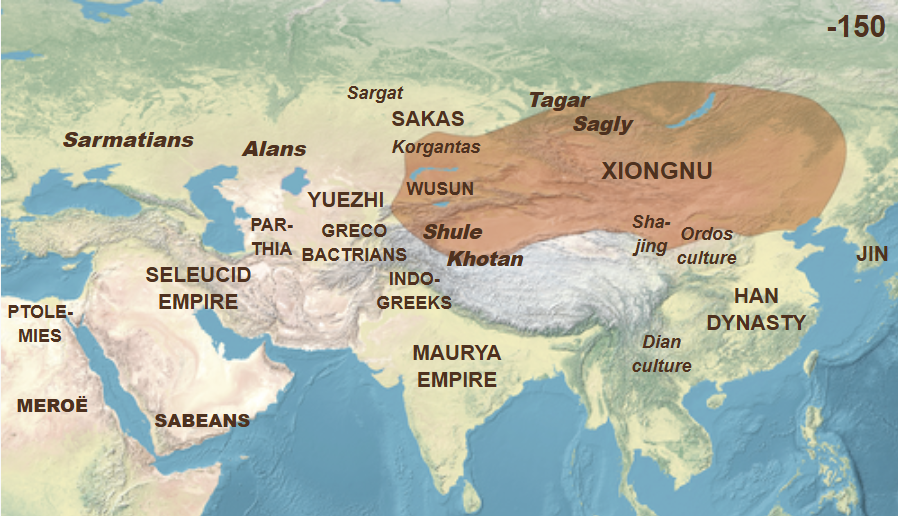
The first great nomadic empire to challenge China:
Rose to power in the 3rd century BCE under Maodun, who united many tribes into a powerful confederation controlling territory from Manchuria to Central Asia. Some scholars believe they may be ancestors of the Huns who later invaded Europe. Their challenge forced China to develop entirely new military and diplomatic strategies.
The title of the Xiongnu ruler. Selected for military prowess, not purely hereditary. Led the confederation in war and peace and received tribute from subordinate tribes — and, for a time, from China itself. The most famous was Maodun (r. ca. 209–174 BCE), who nearly captured the Han founder Liu Bang.
The Xiongnu Military Advantage
- Mounted archery — shooting at full gallop
- Every man a warrior from childhood
- No cities to defend (or capture)
- Could retreat endlessly into the steppe
- Larger population and greater resources
- Infantry, crossbows, and siege weapons
- Fortifications (walls)
- Administrative and logistical capacity
Early Han Policy: Heqin
- Emperor Gaozu (Liu Bang) led army against Xiongnu
- Surrounded by cavalry for seven days
- Barely escaped — humiliating defeat
- Chinese princesses sent to marry the chanyu
- Annual "gifts" of silk, grain, and wine — essentially tribute
- Border markets established for trade
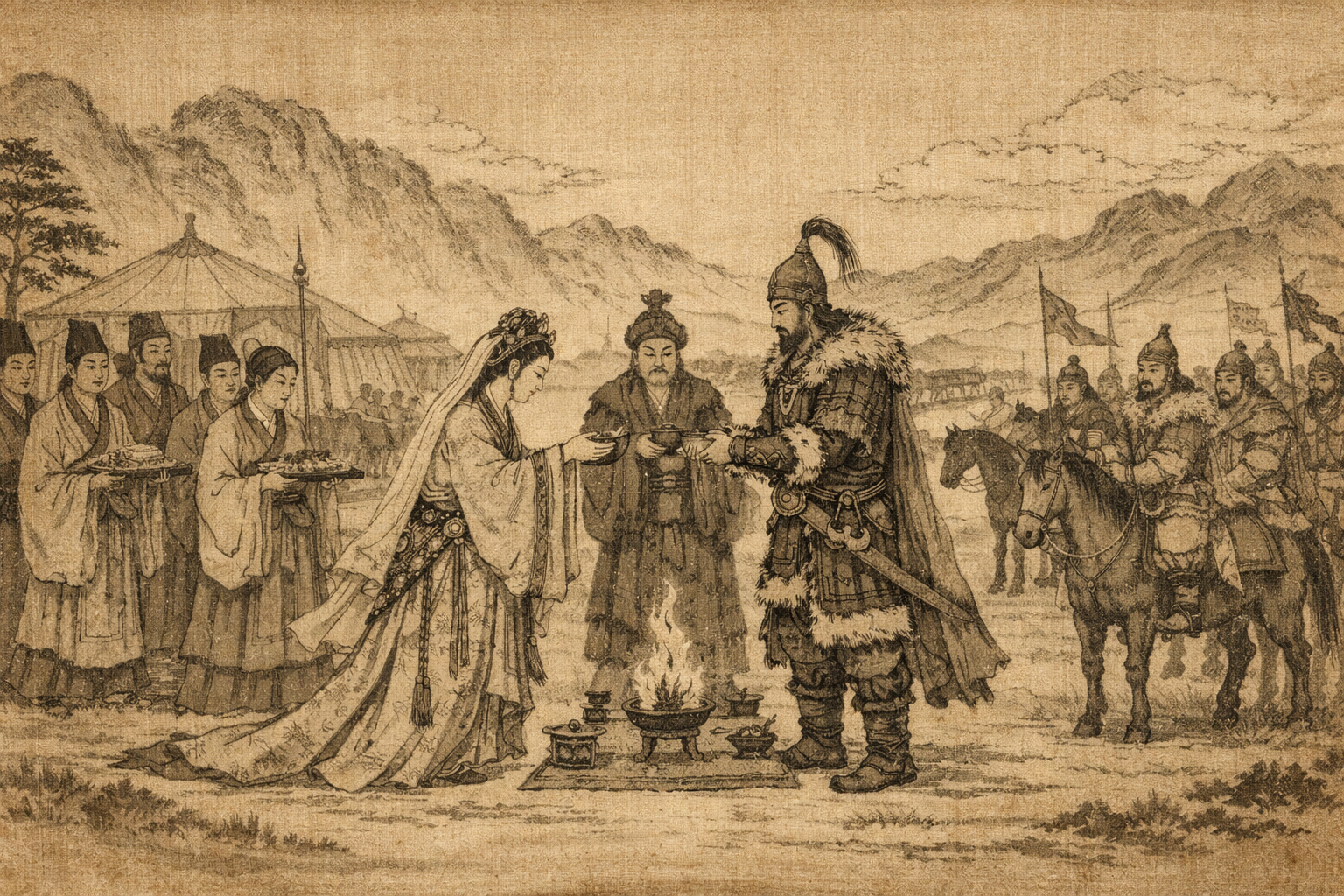
Liu Bang personally led 320,000 troops against the Xiongnu. The chanyu Maodun pretended to retreat, drawing Liu Bang forward, then surrounded him with 400,000 cavalry on a hill called Baideng. Trapped for seven days with no relief, the emperor escaped only through diplomatic trickery (reportedly bribing Maodun's wife). This disaster convinced the Han that they couldn't defeat the Xiongnu militarily.
A diplomatic arrangement that was essentially paying tribute to avoid war. The Chinese viewed it as generous gifts to barbarians with a princess as bride. The Xiongnu viewed it as tribute from a subordinate state. Both sides could interpret it in ways that preserved their dignity. Practically effective — it reduced raiding for decades — but deeply humiliating to Han pride. Emperor Wu would eventually reverse it.
Emperor Wu's Aggressive Turn
- Reversed the heqin policy — no more tribute
- Launched major military campaigns
- Key generals: Wei Qing and Huo Qubing
- Cavalry armies sent deep into the steppes
- Drove Xiongnu out of the Ordos region
- Pushed them north of the Gobi Desert
- Extended Han control into Central Asia
Zhang Qian and the Silk Road
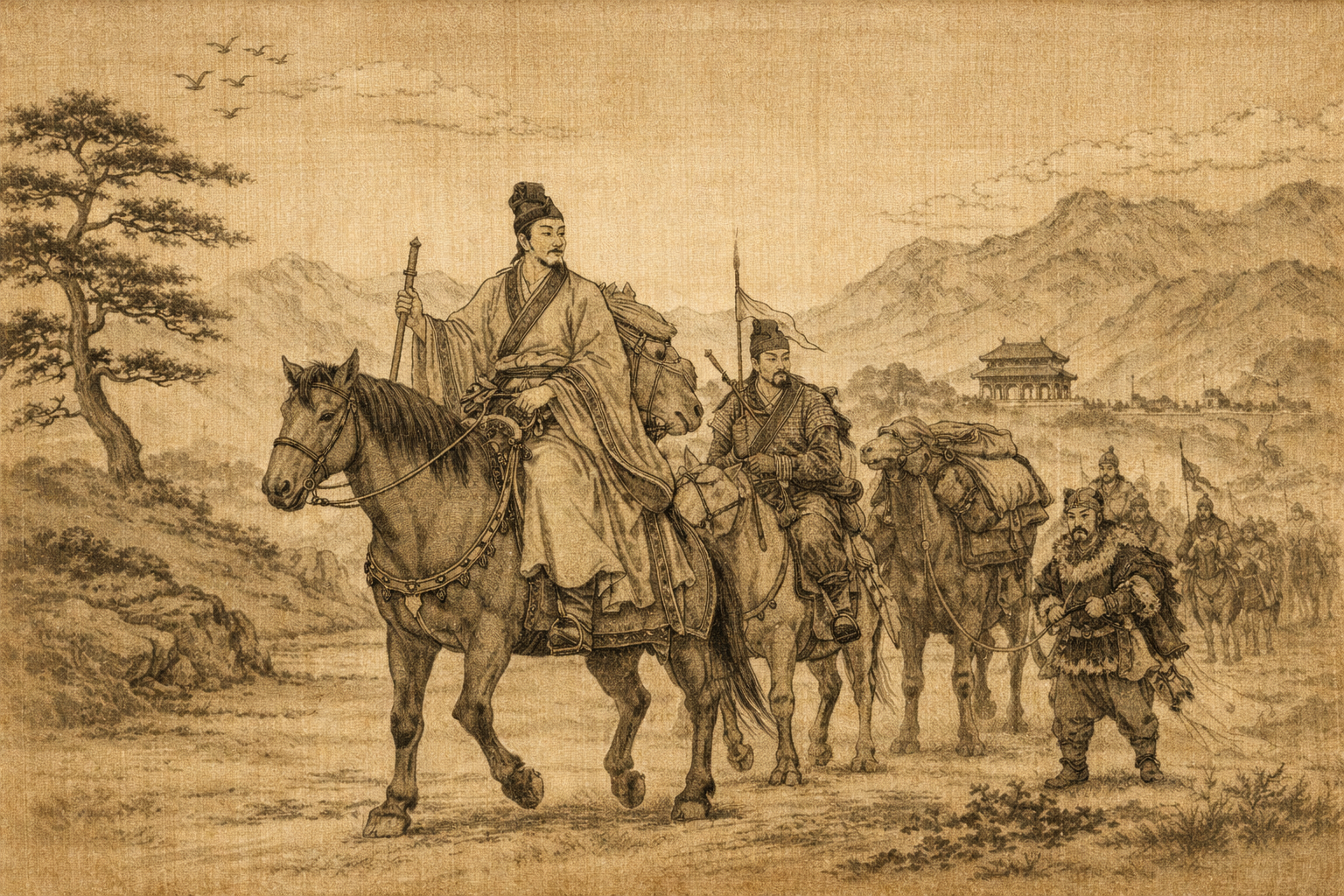
- 139 BCE: Sent west to find allies against the Xiongnu
- Captured for 10 years — escaped and reached Central Asia
- Discovered wealthy states, new trade networks, and superior Ferghana horses
- Returned after 13 years with intelligence that changed Han policy
- Han armies expanded west (104–102 BCE)
- Garrisons secured routes across Central Asia
- A trade network linked China → Central Asia → Persia → Rome
Borderlands and Expansion
- Into what is now southern China and northern Vietnam
- Indigenous peoples conquered and incorporated
- Chinese settlers moved south along rivers
- Garrisons and counties to assimilate frontiers
- 108 BCE: Established commanderies in northern Korea
- Lelang Commandery near modern Pyongyang
- Spread Chinese writing, culture, institutions
- Lasted for over 400 years
A Han outpost near modern Pyongyang that served as the center of Chinese administration in Korea for over 400 years. Archaeological finds show luxury goods imported from China. The commandery spread Chinese writing, bureaucratic practices, and material culture to the Korean peninsula. Korean kingdoms would later adopt Chinese-style government based on this long contact.
Part I
How child emperors created a power vacuum at the heart of the empire
Child Emperors & the Power Vacuum
- Most late Eastern Han emperors ascended as children
- When emperors are minors, power doesn't disappear — it relocates
- Two factions competed to control the boy-emperor
Two Factions, One Palace
- Military connections
- Aristocratic political networks
- Power through marriage alliance
- Lived inside the palace
- Managed the emperor's daily life
- Power through physical proximity
Why Eunuchs Won
- Constant proximity — always with the emperor
- Personal trust — no heirs, no dynastic ambition
- Information control — managed documents and audiences
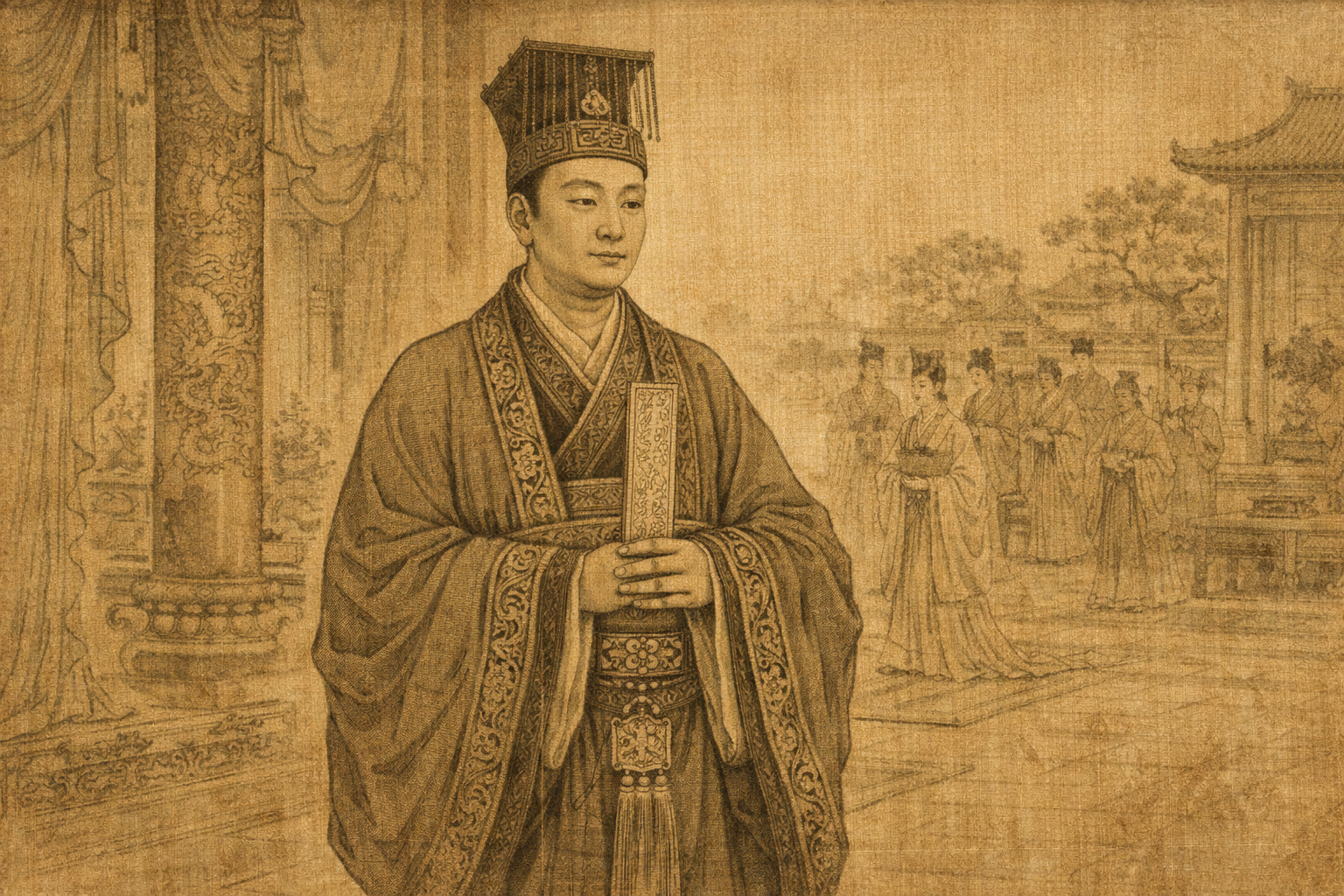
Castrated males who served inside the imperial palace. Because they could never father children or establish their own dynasties, emperors saw them as "safe" — loyal servants with no outside ambitions. Over generations, some eunuch factions accumulated enormous political power by controlling access to the emperor.
A group of powerful eunuchs who dominated the late Eastern Han court. They were accused of selling government offices, manipulating imperial edicts, and enriching themselves through corruption. Confucian officials saw them as a symbol of everything wrong with palace politics.
⏸️ Pause & Process
Think About It
The eunuchs had no armies, no land, and no heirs. Yet they became the most powerful faction at court.
With a partner, identify: What specific type of power did they control, and why was it so effective in this system?
Part II
When the reformers fought back — and lost
The Confucian Counterattack
- Corruption and self-enrichment
- Selling government offices
- Manipulating imperial authority
- Government should be run by morally cultivated gentlemen — not palace servants
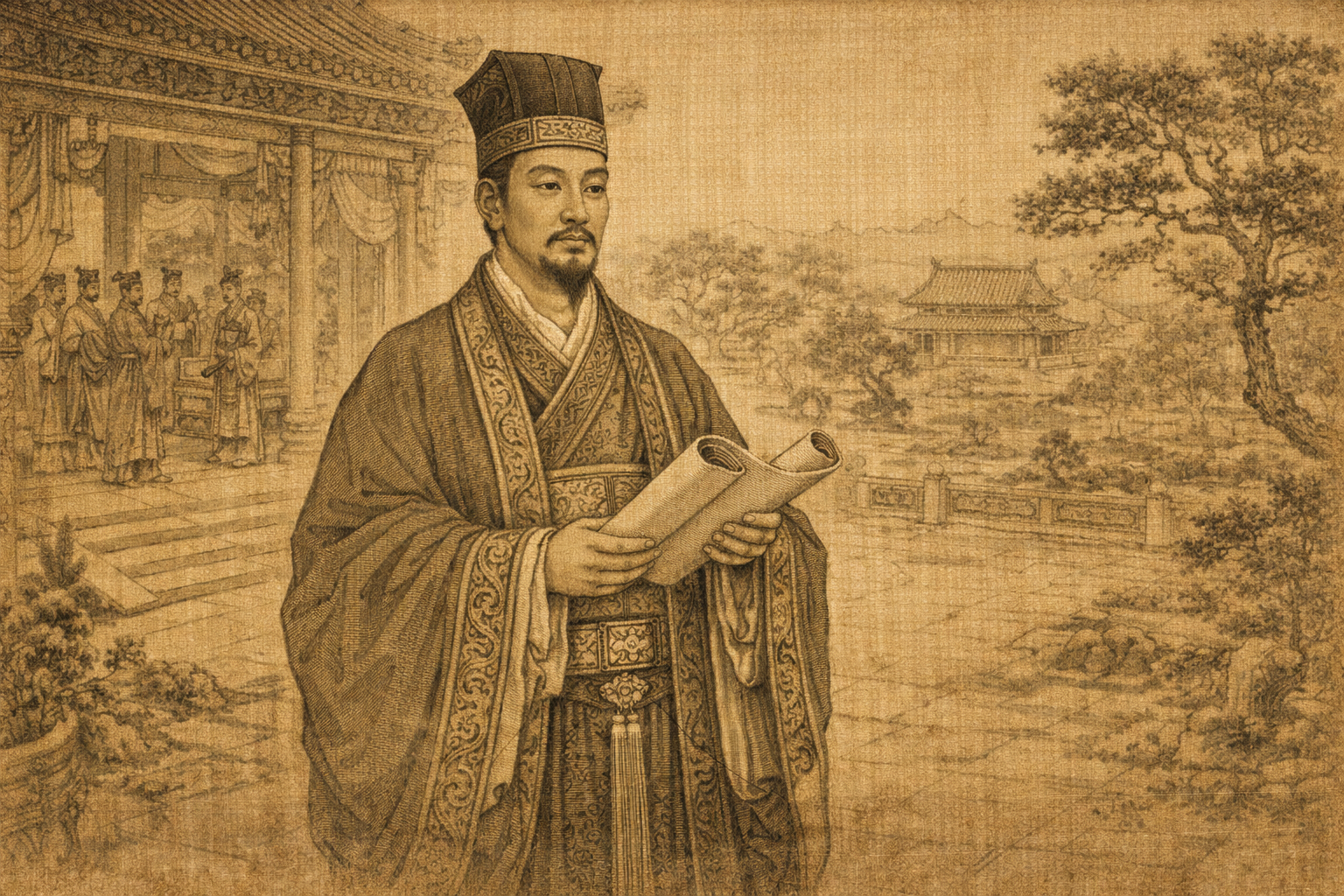
The Partisan Prohibitions
166–169 CE: Eunuchs portray their critics as factional conspirators
The reformers are recast as the threat
The Results:
Hundreds arrested or executed
Thousands banned from office
Reform networks destroyed
A series of political purges in which eunuch factions convinced the emperor that Confucian reform officials were dangerous conspirators. Hundreds were arrested, executed, or permanently banned from government service. The prohibitions destroyed the Han dynasty's reform capacity at a critical moment.
Part III
The empire was breaking while the court fought itself
An Empire in Crisis
- Land concentrated into large estates
- Small farmers fell into debt or tenancy
- Tax burdens increased on those who could least afford it
- Floods and famine displaced populations
- Local administration weakened
- Dynasty's legitimacy eroding far from the capital
The Yellow Turban Rebellion
- Zhang Jue organized a mass movement
- Promised healing and cosmic renewal
- Spread across multiple provinces
- Hundreds of thousands of followers
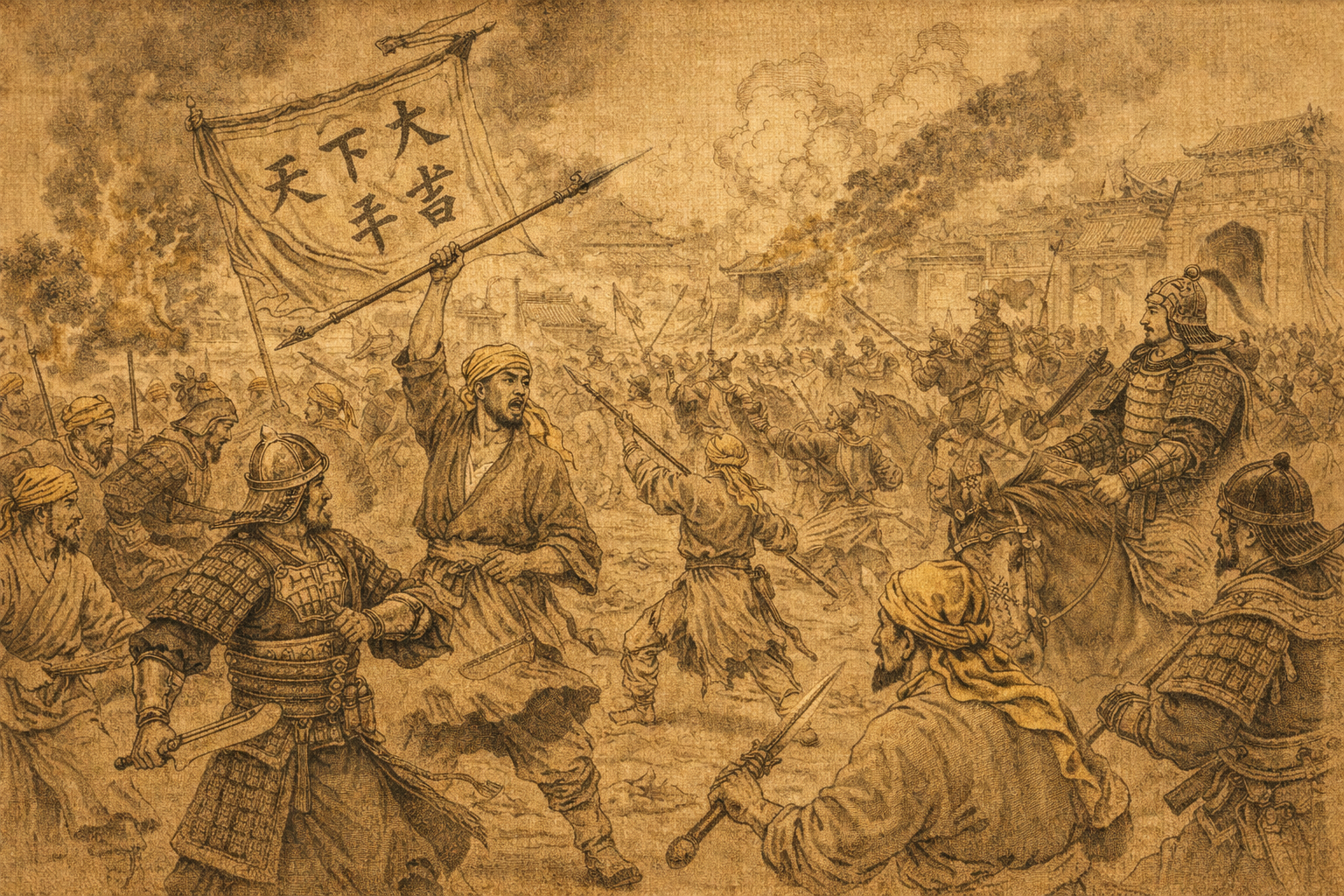
A massive millenarian uprising led by Zhang Jue, a Daoist faith healer. Followers wore yellow turbans to symbolize the element Earth — signaling that a new cosmic era was replacing the Han. The rebellion spread across multiple provinces and involved hundreds of thousands. Though suppressed, the method of suppression fatally weakened the dynasty.
A Daoist healer and religious leader who organized the Yellow Turban movement. He combined faith healing, Daoist cosmology, and anti-government sentiment into a mass movement that challenged the Han dynasty's legitimacy. His slogan: "The Blue Heaven is dead. The Yellow Heaven will rise."
The Yellow Turban Slogan
Not just a rebellion — a cosmic declaration that the Han's time was over
⏸️ Pause & Process
Connect the Chain
We've now seen three links in the chain:
1. Child emperors → eunuch power
2. Eunuch power → Partisan Prohibitions (purge of reformers)
3. Social crisis → Yellow Turban Rebellion
With a partner: How are links 2 and 3 connected? Did the court's internal fighting make the social crisis worse?
Part IV
How suppressing the rebellion destroyed the empire
The Fatal Solution
- Central army too weak to suppress the Yellow Turbans alone
- Authorized regional commanders to raise private armies
- Local elites armed their own forces
- Future warlords gained military authority
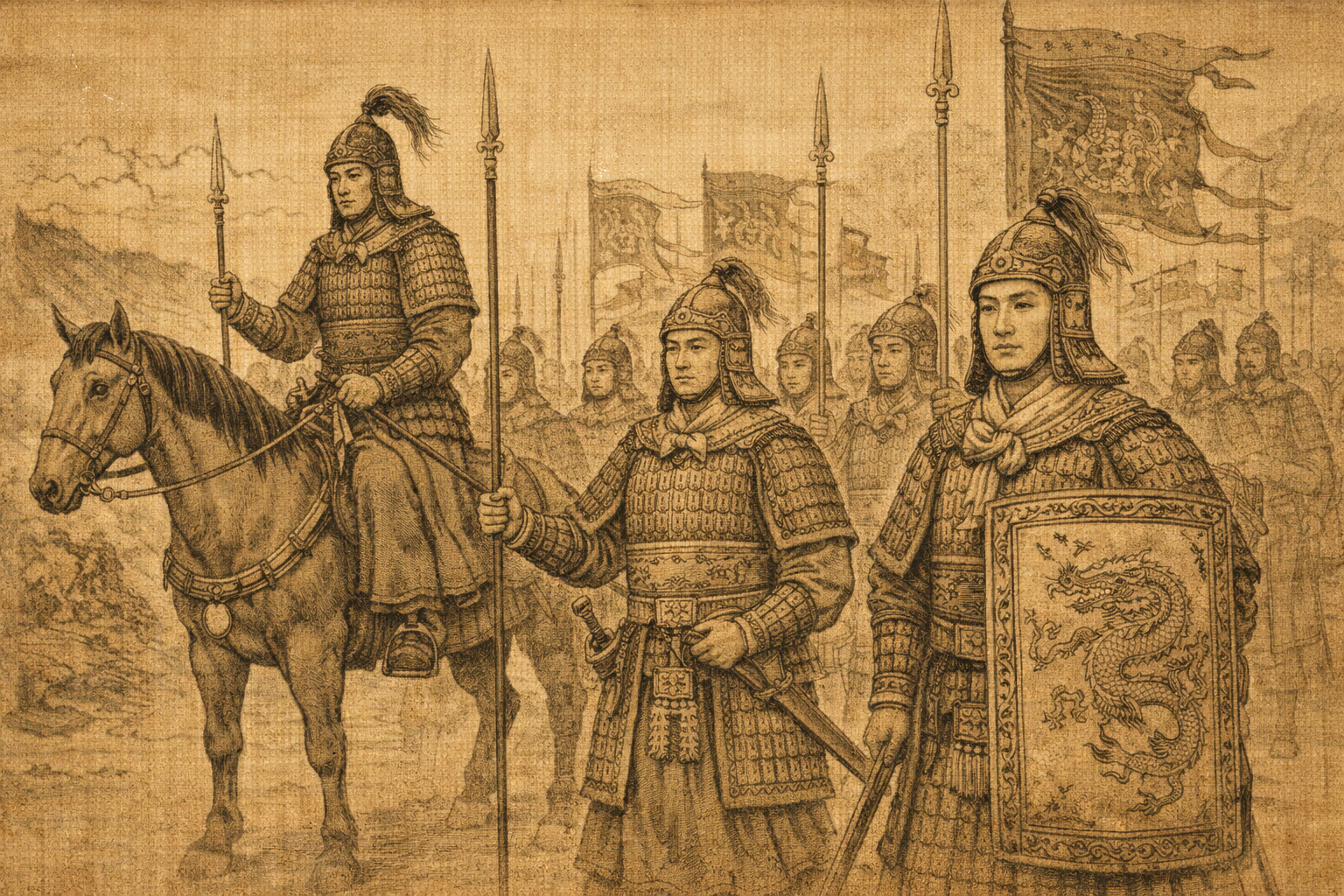
The Crisis of 189 CE
- Emperor Ling dies
- General He Jin plans to eliminate the eunuchs
- The eunuchs assassinate He Jin inside the palace
- He Jin's allies call in regional armies
- Outside troops storm Luoyang — massacre thousands of eunuchs
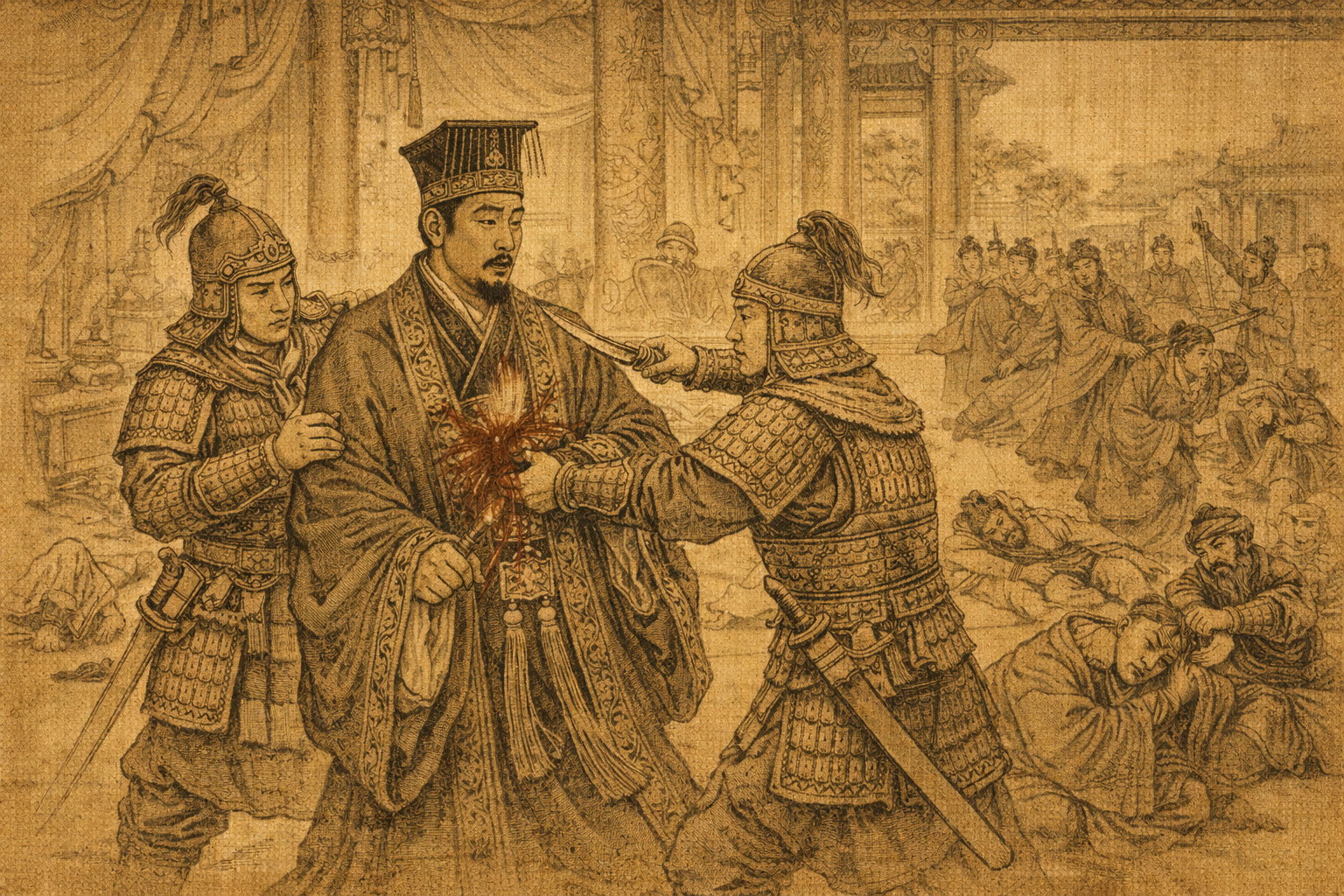
A powerful general and half-brother of Empress He. After Emperor Ling's death, He Jin attempted to purge the eunuch faction from court. He was assassinated by the eunuchs before he could act, triggering a chain of events that brought regional armies into the capital and ended effective Han authority.
Military Power Takes the Center
- Dong Zhuo seized control of the emperor
- Ruled by raw military force
- Burned Luoyang when forced to retreat
- Regional commanders began acting independently
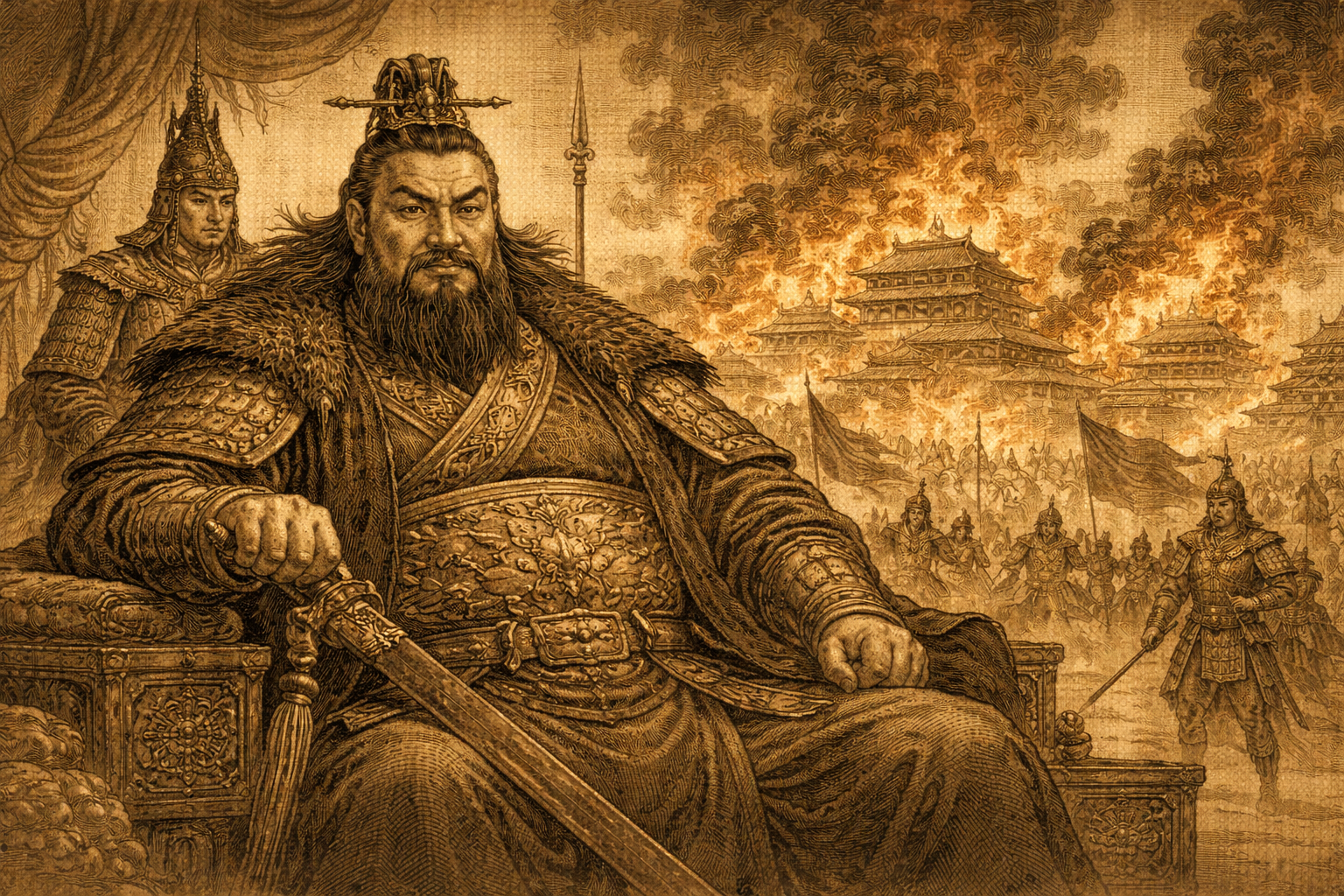
A frontier military commander who seized control of the Han court in 189 CE after the eunuch massacre. He deposed one emperor and installed another as a puppet. When opposition formed against him, he burned the capital city of Luoyang and forcibly relocated the court to Chang'an. He was eventually assassinated, but by then central authority had already disintegrated.
The Decline of the Han
- Land concentration: wealthy families accumulated estates; peasants lost land
- Court factions: eunuchs vs. scholar-officials in bitter struggles
- Weak emperors: often young, manipulated by eunuchs or consort families
- Eroded tax base: powerful families evaded taxes; burden fell on the poorest
Why Did the Han Collapse?
Not one crisis — a chain reaction.
Multiple power centers emerged — palace, bureaucracy, provinces, and military
The imperial system could no longer balance them.
Each crisis created the conditions for the next one
The Structural Chain Reaction
Court factionalism → Partisan Prohibitions
Social crisis → Yellow Turban Rebellion
Rebellion → Provincial militarization
Court power struggle → Eunuch purge
Military intervention → Warlord rule
Warlord rule → End of dynasty (220 CE)
The Recurring Pattern
Child emperors → palace factionalism
Power relocates to whoever controls access
Court purges → institutional weakness
The system loses its capacity for self-correction
Social inequality → mass rebellion
The Mandate of Heaven is challenged
Rebellion → militarization → loss of central control
The cure becomes the disease
The Historical Irony
Confucian officials believed they were purifying the state by eliminating corrupt eunuchs.
They succeeded.
But the real danger was no longer inside the palace.
It was outside the capital — in the hands of generals who no longer needed the court at all.