HIST 270: History of China
Chapter 2, Lecture 3
Daoism, Legalism & The Intellectual Legacy
Radical Alternatives and the Winning Strategy
Dao in Confucian Thought
For Confucians, the Dao is the moral Way of human civilization at its best.
The Way of the Sages
- Modeled on ancient wise rulers
- Preserved through tradition and ritual
- Learned through education and study
A Social and Ethical Path
- Expressed in family roles and duties
- Practiced through Ren and Li
- Creates harmony in society
You walk it by becoming a better person and fulfilling your roles well. The Confucian Dao is built through culture, character, and moral effort.
What Is "Daoism"?
A Complicated Category
Daoism (also spelled "Taoism") includes:
- Philosophical texts (Daodejing, Zhuangzi)
- Religious traditions (priests, temples, rituals)
- Practices (meditation, alchemy, martial arts)
- Folk traditions (gods, spirits, feng shui)
⚠️ Important Corrective:
Western scholars once separated "philosophical Daoism" from "religious Daoism." Current scholarship sees these as intertwined aspects of one tradition.
Laozi — The Old Master
A Legendary Figure
- Name means "Old Master" — possibly a title, not a name
- Traditional story: archivist who left civilization
- Historical person? Probably not — or a composite
- What matters: the Daodejing, not the biography
Legend says Laozi wrote the Daodejing at the western border before disappearing from history.
According to tradition, Laozi was a royal archivist who, disgusted with civilization's corruption, rode west on an ox. A border guard asked him to record his wisdom before leaving. The result: the Daodejing. Historically dubious, but a great story.
Click for the full legend →
The Daodejing (道德經)
Classic of the Way and Virtue
- Compiled 4th–3rd century BCE (not by one author)
- About 5,000 Chinese characters — very short
- 81 brief chapters of poetry and paradox
- Most translated Chinese text after the Bible
Key insight: This isn't a philosophical treatise. It's poetry. It's meant to unsettle, not explain.
Dao (道) = Way/Path
De (德) = Virtue/Power
Jing (經) = Classic/Scripture
Sometimes written as one word: Daodejing. Older books use Wade-Giles romanization: Tao Te Ching.
What does the title mean? →
Reading the Daodejing
Expect Paradox
"The Dao that can be spoken is not the eternal Dao.
The name that can be named is not the eternal name."
— Daodejing, Chapter 1
This isn't mystical obscurantism. It's making a point: ultimate reality exceeds language.
The moment you define the Dao, you've limited it. The moment you think you've grasped it, it's slipped away.

The Dao as cosmic order—fluid, ever-changing, and interconnected
Dao (道) — The Way
The Dao is the fundamental pattern of the universe:
- Source and sustainer of all things
- Ineffable—transcends human comprehension
- Total spontaneity and incessant transformation
- Not a god to worship, but a way to align with
- Underlying unity of all existence
"There was something formless yet complete, that existed before heaven and earth... I do not know its name; I call it Dao."
— Daodejing, Chapter 25
De (德) — Virtue/Power
The Second Key Term
De is often translated as "virtue" but means something specific:
- The Dao as expressed in individual things
- Each thing's natural potency or power
- What makes something authentically itself
Think of it this way:
Dao = the ocean | De = the wave's particular shape
A tree's De is expressed when it grows naturally. Forced into an unnatural shape, its De is damaged.
Same character as Confucian "virtue" but different meaning. For Confucians, De is cultivated through education. For Daoists, De is innate — you access it by removing artificial obstacles, not by adding knowledge.
Compare to Confucian De →
Wu-Wei (無為) — Non-Action
The Central Practice
Wu-wei = "non-action"
Does NOT mean:
- Laziness
- Doing nothing
- Resignation
DOES mean:
- No forcing
- Effortless effort
- With the grain
🏊 The Swimmer
Works WITH the current, not against it.
🔪 The Butcher
Cuts along natural joints—knife never dulls.
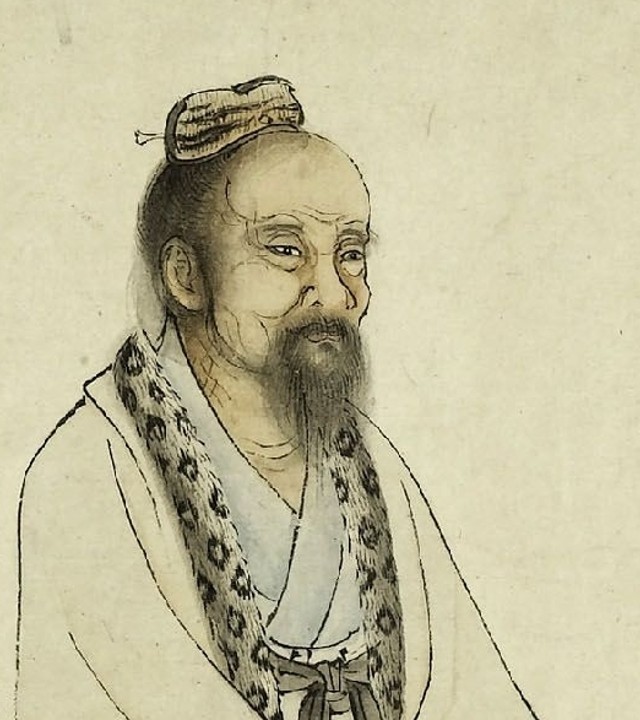
Zhuangzi (莊子)
The Second Voice of Daoism
Zhuangzi (traditionally 369–286 BCE):
- Anecdotes indicate he was unpredictable and eccentric
- Profound influence on Daoist thought and Chinese culture
- More playful than the Daodejing
- Uses stories, parables, humor
- Radical perspectivism — reality looks different from different viewpoints
- Celebrates spontaneity and freedom
Like the Daodejing, the book Zhuangzi is composite. The "Inner Chapters" (1–7) are considered most authentically his; "Outer" and "Miscellaneous" chapters are later additions by followers.
Zhuangzi’s Way of Thinking
Relativity of Perspectives
- Right and wrong depend on point of view
- Human judgments are limited and partial
- Wisdom requires openness and flexibility
Freedom from Constraints
- Rigid rules trap the mind
- Let go of status and ambition
- Avoid artificial distinctions
The Ideal Person
- Moves easily through change
- Does not cling to fixed identities
- Responds naturally rather than forcing outcomes
Wisdom is learning to wander beyond narrow viewpoints.
Zhuangzi’s Butterfly Dream
Zhuangzi dreamed he was a butterfly, happily fluttering about. When he woke up, he was Zhuangzi again. But then he wondered: was he Zhuangzi who had dreamed of being a butterfly, or a butterfly now dreaming he was Zhuangzi?
What It Suggests
- Reality may not be as solid as we assume
- Identity is fluid, not fixed
- Distinctions we trust may be uncertain
Philosophical Point
- Challenges confidence in our perspectives
- Encourages humility about what we “know”
- Invites us to relax rigid boundaries between self and world
Zhuangzi teaches through wonder, not certainty.
Zhuangzi's Dream Unveiled
Daoist Philosophy Meets Descartes & Kant
Sunzi’s Art of War
5th century BCE (traditional dating)
War as Intelligence
- Know yourself and know the enemy
- Victory depends on information and planning
- Shape what the enemy believes
War as Strategy
- Avoid direct, costly confrontation
- Exploit weakness rather than display strength
- Preparation matters more than bravery
The best generals win with their minds before the battle begins.
Sunzi in the World of Chinese Thought
Adaptation
- Strategy should be “like water”
- Adjust to terrain and conditions
- Rigid plans lead to failure
Winning Without Fighting
- Best victory avoids battle
- Disrupt plans and alliances
- Force is a last resort
Philosophical Connections
- Resonates with Daoist flexibility and flow
- Anticipates Legalist focus on method and control
- Strategy becomes a form of practical philosophy
Sunzi turns survival strategy into a philosophy of action.
Legalism: Philosophy of Winners
Context: Qin state in the west
- Considered "barbarian" by eastern states
- But getting STRONG
- Adopting Legalist policies
- By 3rd century: conquering neighbors
法家 Legalism
"School of Law" - not modern "rule of law" but ruler's law as tool of state power. Key figures: Lord Shang (d. 338 BCE), Han Feizi (d. 233 BCE), Li Si (d. 208 BCE).
Legalism is the philosophy of the state that WINS. By 221 BCE, Qin conquers all.
Han Feizi 韓非子
d. 233 BCE
- Student of Xunzi (human nature is bad)
- Died in prison - possibly murdered by rival
- Writings became Qin handbook
Legalist Principles
Laws, Not Exemplars
- Clear, public, strict laws
- No exceptions - even nobles
Rewards & Punishments
- Automatic rewards
- Severe punishments
- So terrible no one dares violate
Distrust everyone: Ministers betray. Family seeks power. Only the SYSTEM can be trusted.
Goal: State Power
- Centralized bureaucracy replaces hereditary lords
- Officials appointed, serve at ruler's pleasure
- All power flows from center
- Individual happiness irrelevant
⏸ Pause & Process
Quick Write
You are a Warring States ruler. Which philosophy?
- Confucian (virtue, ritual)
- Mohist (universal love)
- Daoist (do nothing)
- Legalist (laws, punishments)
Write 90 sec, then show of hands
What Actually Happened
- 221 BCE: Qin uses Legalism to unify China
- Qin Dynasty brutal and brief (221–206 BCE)
- People hate Qin's harshness
- 206 BCE: Han Dynasty overthrows Qin
- Han adopts Confucianism as state ideology
Legalism wins short-term. Confucianism wins long-term.
Why Did Confucianism Win?
- Offered moral legitimacy to rulers
- Educated elite preferred it
- Flexible enough to incorporate other ideas
- Daoism remained spiritual alternative
- Legalist methods quietly used but not credited
For 2000+ years: Confucian rhetoric, Legalist methods.
Why These Debates Still Matter
Is human nature good or bad?
Can virtue govern, or do we need force?
Should government be active or minimal?
These questions shaped Chinese civilization - and ours today.
Next: Qin Dynasty
- Legalism in action
- Conquering all rivals
- Brutal policies, standardization
- Great Wall, burning books
- Empire collapses in 15 years - why?
Key Terms
- Dao 道 - The Way
- Wu-wei 無為 - Non-action
- Laozi / Daodejing
- Zhuangzi
- Legalism 法家
- Han Feizi
- Sunzi / Art of War
- Yin-yang / Five Phases