Part I
Ideology & Distortion
How beliefs shape what we see in the past
What is Ideology?
A collection of beliefs, values, and ideas that shape how individuals or groups interpret the world, often influencing political, social, or economic views.
It serves as a framework for understanding reality and guiding actions—like a mental map that helps people navigate complex issues in society.
How Ideology Distorts History
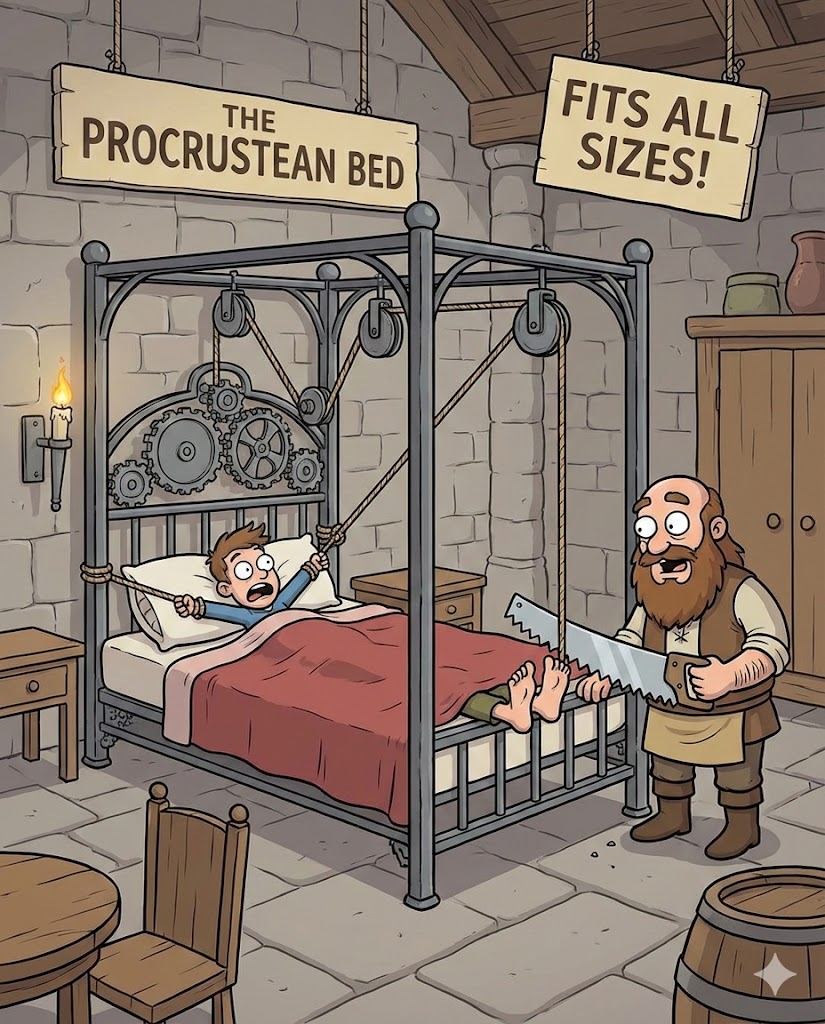
The Procrustean Bed
⚠️ Warning Signs
- Ideology is the driving force of bias in history
- Forces facts to mesh with your ideology
- Leaves out pertinent data
- Overemphasizes certain facts
The Procrustean Bed
In Greek mythology, Procrustes was a rogue smith who had an iron bed. He would invite travelers to sleep in it, then stretch short guests or cut off the legs of tall ones to make them fit exactly.
A "Procrustean bed" is a metaphor for forcing facts to fit a predetermined framework—cutting off evidence that doesn't fit, stretching interpretations that are too limited.
Part II
Marxism as Framework
Class conflict as the engine of change
Marxism & Historical Materialism
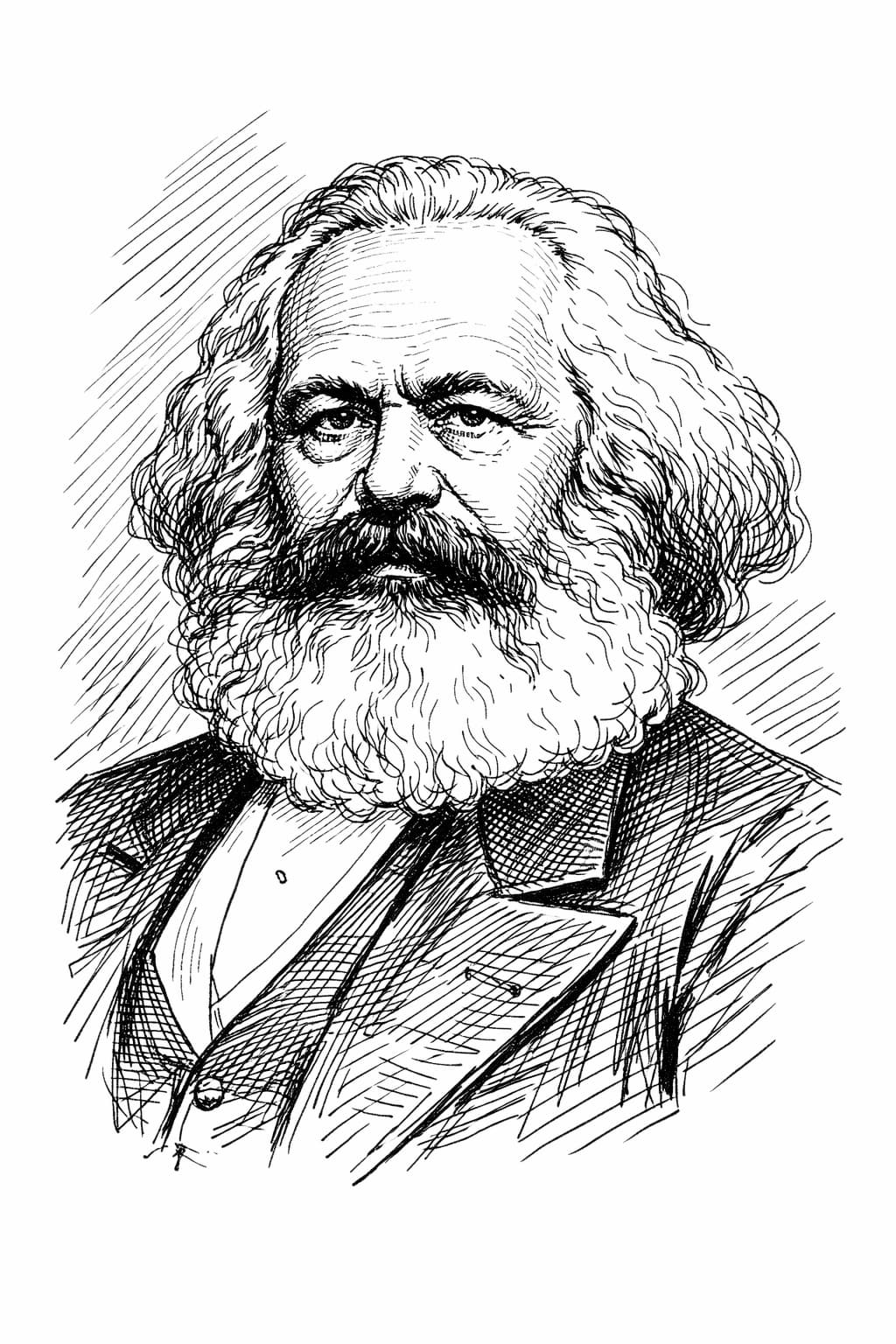
"Workers of the World, Unite!"
— Communist Manifesto, 1848
The Conflict Model
Material conditions (how we produce goods) shape the legal, political, and religious "superstructure" of society.
- Class Conflict: History is not shaped by "great men," but by the struggle between those who own the means of production and those who sell their labor.
- Structural Revolution: The internal contradictions of capitalism lead to inevitable systemic collapse and the rise of a socialist state.
Critique of Marxist History
⚠️ Common Criticisms
- Distorts by slanting — sees everything through class conflict
- Overemphasizes economic factors — neglects culture, religion, ideas
Even critics acknowledge Marxism's contributions: attention to economic structures, analysis of power, and "history from below."
📝 Check Your Understanding
Quick Question
According to Marxist theory, what is the primary "engine of change" in history?
- Great leaders and their decisions
- Class conflict and economic relations
- Religious beliefs and cultural values
- Geographic and environmental factors
Part III
Nationalism
The making of the modern nation-state
What is Nationalism?
Nationalism: Loyalty and devotion to a nation-state; a sense of national consciousness exalting one's nation above all others
Nation
A group of people who share the same history, traditions, and language
State
An organized political community under one government
Nationalism in Historical Perspective
- One of the most powerful forces in modern history
- Often mistakenly thought to be permanent and natural
- Prior to the 18th century, modern nationalism did not fully exist
- Many pre-modern empires claimed universal legitimacy
Universal Legitimacy
Pre-modern empires often claimed authority over all people, not just a specific nation. The idea that political boundaries should match ethnic/linguistic ones is distinctly modern.
Before Nationalism
- Civilization linked to Religion, not nation
- One language of culture (Latin in Europe, Arabic in Islamic world)
- Allegiance to other forms of political organization:
City-State
Athens, Venice
Feudal Lord
Personal loyalty
Dynasty
Habsburgs, Bourbons
Religious Group
Christendom, Ummah
Rise of the Nation-State
- Growing sense of National Consciousness ("American-ness")
- Emergence of the Public Sphere — space for political debate
- Common Cultural Heritage — shared language, stories, symbols
- Infrastructure that linked regions: print, roads, armies
The Public Sphere
Definition: That area of social life where public opinion is formed; where people freely discuss societal problems and influence political action.
Three Key Characteristics:
- Egalitarian — status didn't determine who could speak
- Common concern — focused on issues affecting everyone
- Founded on reason — arguments won by logic, not authority
Examples: Newspapers, coffeehouses, Franklin's Junto, town meetings, salons
The "Imagined Community"
Imagined
You'll never meet most nationals
Community
Deep horizontal comradeship
Limited
Has finite boundaries
Sovereign
Claims ultimate authority
Nationalism as Ideology
- Justifies Power — the "people" or "nation" legitimize the state
- Implies each nation should have their own state
- Assumes deep horizontal comradeship
- People willing to kill and die for the patria (fatherland)
Nationalist Tools
- Nationalist Rhetoric — appeals to shared identity and destiny
- Use of symbols, art, and music
- History used to demonstrate primordial unity
Primordial Unity
Nationalist ideologies often claim that the nation has always existed—that today's political boundaries reflect ancient ethnic or cultural divisions. Historians now recognize this as largely myth.
History in Service of Nationalism
⚠️ Warning Signs
- Glorification of the nation-state
- Hero building — creating national icons
- Minimizing national crimes and failures
- Emphasizing national victimhood
Critique of Nationalist History
⚠️ Common Criticisms
- Distorts by slanting — presents biased national narratives
- Xenophobic — promotes fear or hatred of other nations
- Fallacies of hero worship — oversimplifies complex figures
📝 One Minute Paper
Written Reflection
Define Nationalism and discuss its historical development.
You have one minute to write your response.
Key Takeaways
- Ideology shapes how historians interpret evidence
- Marxism emphasizes class conflict and economic structures
- Nationalism is a modern phenomenon, not permanent
- The public sphere helped create national identities
- Both frameworks can illuminate and distort
Discussion Time
💭 Reflection Questions
- How do you see nationalism operating in contemporary politics?
- What are the benefits and dangers of nationalist thinking?
- Can history ever be written without ideological bias?
Reserved time for video and class discussion