What Was the Great Society?
Definition
President Johnson's 1964–1968 expansion of federal domestic programs — premised on the belief that centralized expert planning could eliminate poverty and transform American society.
The largest peacetime expansion of the federal government in American history.
In His Own Words
Section I
What was market-driven progress actually producing — before the Great Society intervened?
Start Here: A Number
- 40-point reduction in 20 years
- Achieved under legal segregation
- No War on Poverty, no Great Society
- Driven by: family stability, the Great Migration, Black entrepreneurship, education
In 1960: 78% of Black children lived in two-parent households
The Eisenhower Record
- Real wages rose steadily through the decade
- Homeownership: 55% → 62% (1950–1960)
- Poverty rates dropped for all Americans: 32% → 22% (1950–1960)
- Driven by wages, education, internal migration — not federal redistribution
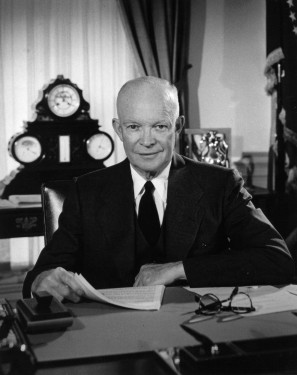
Eisenhower: budget discipline, targeted federal action
Governing by Restraint
- Balanced the budget 3 of 8 years
- Federal spending below 19% of GDP
- Used federal power surgically: Interstate Highway System, Little Rock
- Pay-as-you-go — no structural deficit spending
The contrast with Johnson: LBJ launched the Great Society at 4.5% unemployment during strong growth. No crisis. No emergency.
Eisenhower was warning — in 1961 — against exactly what the Great Society would become.
The Knowledge Problem
Friedrich Hayek, "The Use of Knowledge in Society" (1945):
- Millions of everyday decisions by families, businesses, and communities contain more useful information than any government expert can collect or process
- When planners substitute their blueprint for those decisions, they replace real knowledge with guesswork dressed up as expertise
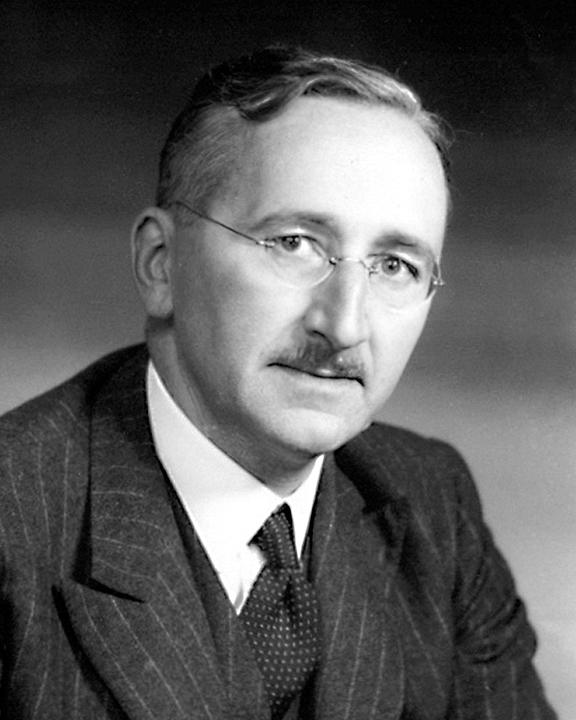
Hayek's 1945 warning: the epistemic case against central planning
The Great Society would test this warning at massive scale.
Civil Society and Pre-1964 Progress
Before 1964, poverty was falling for all Americans — and not by Washington. The stable foundations that made it possible:
- Family
- Church
- Voluntary association
- Local community
The Great Society's architects bypassed these structures entirely — substituting federal programs for the institutions that were already supporting measurable progress. Tocqueville had warned about this tendency in American democracy more than a century earlier.
⏸ Pause & Reflect
Black poverty fell from 87% to 47% between 1940 and 1960 — before the Civil Rights Act and before the Great Society.
What forces drove that progress — and what does that trajectory imply about the role of government in lifting people out of poverty?
Section II
Why act in a time of prosperity — and what, exactly, was built?
Why Act When Things Were Good?
Five converging motivations — politicians, ideologues, and organized interests used prosperity as cover to build it:
Michael Harrington: America is "prosperous enough to afford a vast experiment such as socialism." Abundance — not emergency — was the precondition.
Defeated Nazi Germany and Imperial Japan. Eliminating poverty? A "mopping up action." — Norman Podhoretz, writing in retrospect with sharp irony — exposing the hubris, not endorsing it.
Progress felt partial and slow. Birmingham. Freedom Rides. King's "fierce urgency of now." Eisenhower-era restraint read as moral insufficiency.
Johnson's "Skinny Dip Session" with Goodwin and Moyers: "a Johnson program, different in tone, fighting and aggressive." Racing to construct a legacy — not responding to social conditions.
Programs were structured to generate organized political support for their own survival — creating professional advocacy classes, maximizing enrollment, and building constituencies that made the programs nearly impossible to dismantle.
→ See: The Political Logic: Constituency-Building
Manufacturing Urgency
Roosevelt had not manufactured crisis — it came to him. Johnson had to construct the rhetorical equivalent of a burning building in a neighborhood where the smoke was clearing on its own.
- "Unconditional war" elevated gradual improvement into an emergency
- Set a maximalist victory condition: end poverty, not reduce it
- Made opposition rhetorically untenable — to argue restraint was to advocate surrender
Wars have victory conditions. Johnson announced his — and that word unconditional would haunt every evaluation that followed.
What Was Built — Part 1 (1964)
Key question for each program: cash transfer or service?
Economic Opportunity Act
- Umbrella legislation; created the Office of Economic Opportunity (OEO)
- Sargent Shriver's command center
- No direct cash — funds programs below
→ See: The Bureaucratic Record
Job Corps
- Residential vocational training for disadvantaged youth
- Remove young men from poor environments; teach skills
- Small stipends — limited cash transfer
Community Action Programs
- Block grants to local anti-poverty organizations
- "Maximum feasible participation" mandate
- Services, not cash
→ See: The Bureaucratic Record
What Was Built — Part 2 (1965)
Head Start
- Pre-K education, ages 3–4
- Services, not cash
- Targeted children from low-income families before formal schooling
Medicare & Medicaid
- Medicare (Title XVIII): health coverage, age 65+, universal
- Medicaid (Title XIX): joint federal-state, low-income, means-tested
- Eligibility and benefit levels set by states within federal minimums
Legal Services & ESEA
- Legal Services: federally funded lawyers to represent the poor in civil matters
- ESEA: first large-scale federal K–12 funding
- Authors pledged: no federal curriculum involvement
→ See: The Bureaucratic Record
The Cash Transfer Programs
Food Stamps (1964 →)
- Near-cash transfer: substitutes dollar-for-dollar for food expenditure
- Federally funded vouchers redeemable at participating retailers
- Expanded steadily through the Johnson years and beyond
AFDC
- Direct cash to single mothers with dependent children
- Originated 1935; dramatically expanded under Johnson
- "Man in the house" rules: able-bodied male present = family disqualified from benefits
- Unmarried mother: receives check — same woman living with children's father: does not
→ See: Moynihan's Warning → Not a Racial Story
The Architecture: Not a Unified System
Each program reflected a different theory of poverty's cause:
- OEO/Job Corps → skills deficit
- Community Action Programs → political powerlessness
- Head Start → developmental disadvantage
- AFDC/Food Stamps → income insufficiency
The result: a bureaucratic archipelago — programs operating with minimal coordination, overlapping constituencies, and independent political durability.
⏸ Pause & Reflect
Johnson declared an "unconditional war on poverty" when unemployment was below 5% and the poverty rate had been falling for fifteen years.
What are the political advantages of war rhetoric for a domestic policy agenda — and what are its long-term costs for honest evaluation of outcomes?
Section III
What did fifty years of government spending and federal programs actually produce?
Reading the Poverty Rate Correctly
The claim: poverty rate fell 19% → 11% between 1964–1973. Evidence the programs worked.
Rebuttal 1: This decline occurred during extraordinary economic growth — GDP above 4%/year. The pre-1964 trend was already in motion. Programs cannot claim credit for a trajectory that predated them.
Rebuttal 2 — the more damning one: After the early 1970s, poverty reduction stalled. The rate has oscillated between 11–15% for five decades. It never returned to the secular decline visible before 1964.
The Family Structure Catastrophe
The Great Society's most durable indictment — and its most carefully contested data.
- Collapse begins sharply mid-1960s, accelerates through 1970s
- Timing coincides precisely with AFDC expansion
- Non-marital birth rate, Black Americans: 24% (1965) → ~70% (recent)
The mechanism: AFDC "man in the house" rules actively penalized intact families. Correlation is not causation — but the theoretical mechanism was articulated before the data confirmed it.
Moynihan's Warning — 1965
Written as a warning to the Johnson administration — suppressed through political pressure rather than empirical rebuttal.
→ Independent Study: Full account of Moynihan's argument and its consequences

Daniel Patrick Moynihan, Assistant Secretary of Labor, 1965
Not a Racial Story — A Policy Story
- Same incentive structure → same behavioral response
- White non-marital birth rates and single-parent rates rose on the same post-1965 trajectory
- Most visible in Appalachian and deindustrializing rural communities: Eastern Kentucky, Ohio River valley, Morgantown, WV — documented in J.D. Vance's Hillbilly Elegy (2016)
- Fatherless households, welfare replacing wages, community institutions hollowed out
Charles Murray, Losing Ground (1984) and Coming Apart (2012):
Murray focused on white Americans specifically to isolate the policy effect from the racial variable — and found the same result.
The variable was not race.
It was poverty plus the incentive structure.
The public narrative racially coded welfare dependency. The data across both communities makes that dismissal impossible.
The Bureaucratic Record
- OEO alone: 2,000+ employees, $1B+ budget by late 1960s
- Community action agencies: organizational dysfunction, political patronage, outright corruption in several cases
- Legal Services litigation expanded welfare rolls beyond legislative intent
⏸ Pause & Reflect
The man-in-the-house rules produced the same family structure damage in majority-white Appalachian communities as in Black urban ones.
If the damage was the same across racial lines, what does that tell us about the real cause of the family structure collapse Moynihan documented in 1965?
Section IV
The epistemic problem — and the 1996 experiment that confirmed it
The Knowledge Problem, Applied
↑ Review: The Knowledge Problem — Slide 7
- Dispersed local knowledge cannot be collected or centralized — planners always work with a simplified model of reality
- The price system transmits this information without requiring anyone to possess it all at once
- Central planning substitutes the planner's abstract model for reality
Community Action Programs — what actually happened:
- Washington sent federal money directly to local activist organizations — bypassing city hall entirely
- These organizations used "maximum feasible participation" to challenge elected mayors, sue city agencies, and run candidates against machine politicians — all on federal funds
- Democratic mayors — Johnson's own political base — went to the White House to complain that Washington was funding a war against their city governments
- Washington had no way to anticipate this — it did not know the local political landscape it was financing
- Political backlash was severe enough that Nixon dismantled the OEO entirely by 1973
Hayek had said exactly this in 1945. Nobody in the OEO had read him.
Mistaking the Symptom for the Cause
Once poverty was defined in terms of income thresholds, the obvious solution was to transfer income.
This made poverty measurable in accounting terms. You could track whether transfers moved people above the threshold. You could demonstrate progress.
But income transfers address the symptom, not the cause. The actual causes of persistent poverty include:
- Family instability
- Barriers to labor market participation
- Inadequate education
It transferred income.
It moved the metric.
It did not eliminate poverty.
And through AFDC's man-in-the-house rules, it actively worsened the family instability that is the single most reliable predictor of intergenerational poverty.
Two Critiques of the Same Failure
The Epistemic Critique
Central planners cannot possess the dispersed local knowledge needed to engineer social outcomes. The price system and decentralized decisions outperform any planner's model.
— The argument from economics
The Institutional Critique
The Great Society bypassed the mediating structures — family, church, neighborhood, voluntary association — that actually do the work of social integration. Federal programs did not build through these institutions. They substituted for them.
— The argument from sociology and political theory
⏸ Pause & Reflect
The 1996 reform replaced unconditional cash entitlement with work requirements, time limits, and block grants.
Caseloads fell 60%. Black child poverty dropped 11 points in six years. Why did outcomes respond so quickly? What does this tell us about the relative importance of incentive design versus broader economic or cultural forces?
Closing: The Costs of Hubris
The Costs
- $22 trillion spent — poverty rate essentially unchanged since 1973
- Family destruction — two-parent households collapsed among the poor across racial lines
- Inflation and stagflation — deficit spending and entitlement expansion contributed to the economic stagnation of the 1970s
- Political lock-in — organized interest groups made meaningful reform nearly impossible for thirty years
- Urban decay — public housing concentrated poverty and stripped communities of the mixed-income fabric that had sustained them
- Erosion of work — welfare disincentives rewarded dependency over labor force participation
Final Discussion
Return to the opening number: Black poverty fell from 87% to 47% between 1940 and 1960 — 78% two-parent households — all before the Great Society.
Did federal expansion under Johnson accelerate or impede that momentum?
Defend your position with specific evidence from: poverty rates • family structure data • the 1996 reform outcomes
Independent Study
The 1996 reform • Murray on outcomes • Moynihan on norms • Civil society theory • Tocqueville on voluntary associations
Moynihan's Warning — 1965
Daniel Patrick Moynihan, Assistant Secretary of Labor — The Negro Family: The Case for National Action (1965)
- Not an argument about culture or character
- An argument about policy incentive structures punishing intact families
- Pilloried by civil rights leaders and liberal academics as "blaming the victim"
- Treating the analysis as racist rather than engaging its empirical substance

Moynihan: trying to save the Great Society from its own unmodeled consequences
The Policy Made Physical
Pruitt-Igoe, St. Louis — built under the Housing Act of 1949, completed 1955–56. Not a Great Society program. But the story of what happened there is inseparable from what the Great Society's welfare incentives did to it.
- 2,870 units, 33 towers — designed to replace inner-city slums
- AFDC's man-in-the-house rules operating inside: fathers absent, female-headed households concentrated at scale
- Mixed-income neighborhood fabric stripped; community norms that had sustained the old neighborhood did not transfer
- Demolished 1972–1976 — less than 20 years after opening
Chicago. Newark. Baltimore. Philadelphia. The pattern repeated wherever the same combination of concentrated poverty and welfare incentives operated.

Pruitt-Igoe demolished, 1972–1976 — less than 20 years after opening
The Political Logic: Constituency-Building
The Great Society's programs were not only designed to reduce poverty — they were structured to generate organized political support for their own survival:
- Community Action Programs sent federal money directly to local activist organizations, creating a class of professional poverty workers whose jobs depended on keeping the programs alive and growing
- Legal Services attorneys sued to expand welfare eligibility in court, producing larger rolls and larger organized groups of beneficiaries who would defend the programs politically
- AFDC was designed with low barriers and easy enrollment, maximizing the number of recipients and the size of the constituency
- Head Start established parent advisory councils in communities nationwide, turning program participants into local political advocates
The 1996 Natural Experiment
PRWORA (1996) replaced AFDC with TANF:
- Work requirements — conditionality replaces entitlement
- Time limits on benefits
- Block grants to states — local flexibility
- The entitlement structure in place since 1935 was dismantled
Results — Rapid and Dramatic
Six years. Eleven-point drop in Black child poverty. The War on Poverty took a decade to produce comparable movement — driven by economic expansion, not program design.
Murray: What the Data Said
Losing Ground (1984) — the systematic statistical case:
- Across every major social indicator — poverty, family structure, crime, educational attainment — conditions worsened during and after Great Society expansion
- The programs did not merely fail to help. In key areas they made outcomes worse by altering the incentive structures that had previously produced improvement
- Murray isolates the policy variable from race by tracking white working-class communities — and finds the same deterioration
Coming Apart (2012) extends the argument: white working-class family structure, civic participation, and work ethic collapsed on the same post-1965 timeline as Black communities — same mechanism, same incentive architecture.
Murray's methodology has been contested. His data have not.
Moynihan: Defining Deviancy Down
In 1993 — nearly thirty years after his suppressed 1965 report — Moynihan published "Defining Deviancy Down" in The American Scholar.
His argument: when social pathology becomes sufficiently widespread, society redefines normal downward to accommodate it — rather than confronting the behavior as deviant and addressing its causes.
- What was once understood as family breakdown, crime, and welfare dependency requiring urgent intervention became normalized — simply how things are in certain communities
- The redefinition protected the programs that had produced the pathology from accountability
- Once deviancy is defined down, the political will to reverse the incentive structures that caused it dissolves
Civil Society: The Institutional Alternative
To Empower People (1977) — the communitarian post-mortem on the Great Society:
- Mediating structures — family, church, neighborhood, voluntary association — are the institutions through which people find meaning, identity, and community
- They are not deficiencies awaiting correction by federal programs. They are the primary engines of social integration
- Public policy should work through mediating structures — not bypass or replace them
- When federal bureaucracies substitute for mediating structures, the structures weaken — and the dependency that follows is not just economic but social and moral
Liberty, on this account, is not merely the absence of state coercion. It is the presence of vital intermediate institutions — the associations, churches, and communities that give freedom its substance.
Tocqueville and the Art of Association
Alexis de Tocqueville observed American democracy in the 1830s and identified voluntary association as its defining feature and its greatest strength.
- Americans solved collective problems through voluntary organizations — not through government, not through aristocracy, but through free citizens choosing to associate
- These associations trained citizens in self-governance, built trust across communities, and produced the civic habits that democratic life requires
- Tocqueville's warning: a benevolent centralized power could make these associations unnecessary — reducing citizens to "timid and industrious animals, of which government is the shepherd"