Section I
Did television make democracy shallower — or more visible?
The Central Question
How did the rise of television spread and amplify the prosperity, family values, and democratic accountability of the Eisenhower era — while also beginning to reshape what Americans expected of their leaders?
Two Readings of Early Television
- Television homogenized culture and suppressed dissent
- Advertising manufactured "pseudo-events" — not reality
- Visual grammar incompatible with rational argument
- Style inevitably triumphed over substance
- Early TV amplified the era's dominant values — family, faith, order
- Three-network system served a culturally coherent mass audience
- Eisenhower used TV effectively — without sacrificing substance
- Erosion came later, when the culture changed — not the technology
Lecture Arc
- The Adoption Curve: How television conquered American households in twelve years
- The Golden Age: Programming that modeled the confident republic
- Political Accountability: Eisenhower and the professional deployment of the medium
- The 1960 Debates: Visibility, composure, and democratic judgment
- Long-Term Consequences: From norm amplifier to adversarial medium
⏸ Pause & Reflect
Critics like Neil Postman argued that television is structurally incompatible with serious democratic deliberation. Based on what you know of the 1950s, do you think the medium or the culture shapes what appears on screen?
Section II
Zero to ninety percent in twelve years
How Television Was Born
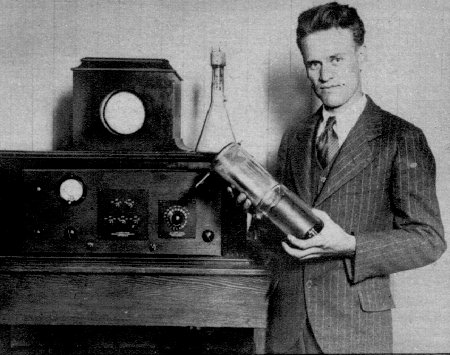
- 1927: Philo Farnsworth — a 21-year-old Idaho farm boy — transmits the first fully electronic television image in his San Francisco laboratory
- 1930s: David Sarnoff of RCA pours millions into parallel research, battles Farnsworth for patents, and positions NBC to own the commercial future
- 1939: RCA debuts television to the American public at the New York World's Fair — President Roosevelt becomes the first president broadcast on TV
- 1941-1945: FCC freezes commercial TV licenses during World War II — the technology waits
- 1948: The freeze lifts — commercial broadcasting launches at scale. The age of television begins.
Early television demonstration | c. 1939 | Public Domain
The Fastest Adoption in History
Why Did Adoption Happen So Fast?
- Rising real wages put discretionary income in working-class hands for the first time
- Falling prices — sets went from weeks' wages to days' wages as production scaled
- Consumer credit made large purchases accessible without cash upfront
- Extraordinary value — news, entertainment, sports at home, for one purchase price

American family, television · c. 1958 · Public Domain · Wikimedia Commons
The Three-Network System
- NBC, CBS, ABC — competing for the same mass audience
- FCC licensing required serving "the public interest"
- Commercial logic: reach the broadest possible demographic
- Result: content calibrated to mainstream American values
- Niche, adversarial, or ideologically targeted content was commercially inadvisable
- Networks gave audiences what audiences wanted — not what critics preferred
- Produced a shared informational and cultural commons for all Americans
Television and the National Public Sphere
- Newspapers created the first shared public sphere — strangers reading the same words at the same moment
- Print made it possible to imagine belonging to a national community you could never fully see or know
- But print reached only the literate, only those who could afford it, only those in range of distribution
- Not just the same text — the same image, the same voice, the same moment
- 70 million people watching the same broadcast simultaneously — across every region, class, and education level
- The largest, most inclusive shared public sphere in human history — built in twelve years
One Nation, One Screen
- Distinct regional accents, music, storytelling traditions, and pace of life
- Local radio personalities, regional newspapers, traveling tent shows reinforced local identity
- A Mississippi farmer and a Pittsburgh steelworker lived in recognizably different cultural universes
- Cronkite's flat midwestern accent became the sound of authoritative American English
- Beaver's suburban California became the visual template for normal family life — nationwide
- Ed Sullivan brought New York entertainment into rural Tennessee every Sunday night
- Regional distinctiveness became a choice rather than a given
⏸ Pause & Reflect
The three-network system produced culturally homogeneous programming — but was that homogeneity imposed from above, or was it a commercial system faithfully reflecting what a culturally coherent audience actually wanted? Does your answer change how you evaluate the content itself?
Section III
Modeling the confident republic
The Family Sitcom as Social Architecture
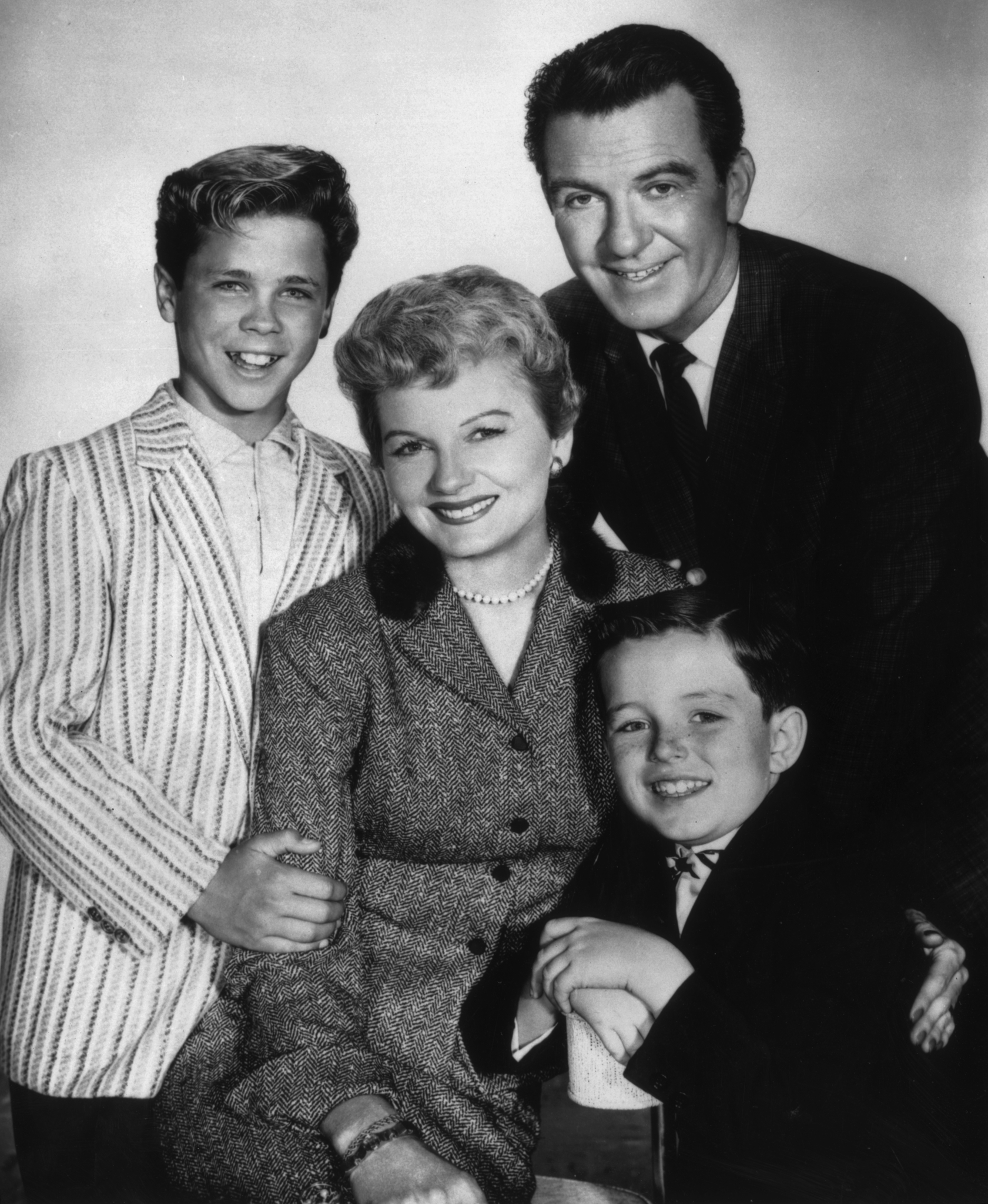
- Leave It to Beaver, Father Knows Best, Ozzie and Harriet, The Donna Reed Show
- Not documentaries — models of how families could function
- Demonstrated: parental authority with warmth, honest communication, community accountability
- The modeling function of popular culture is real — social science documents it
Leave It to Beaver · CBS, 1957–1963 · Promotional still
The Western and the Heroic Tradition
- Gunsmoke, Have Gun – Will Travel, The Rifleman
- Dominant genre of 1950s prime time
- Consistent moral architecture across shows
- Self-reliant individual applies force justly in defense of community
- Legitimacy from competence and moral clarity — not institutional rank
- Retires from power once the threat is resolved
- Weekly rehearsal of democratic values — not escapism
Religious Broadcasting and the Civic Gospel
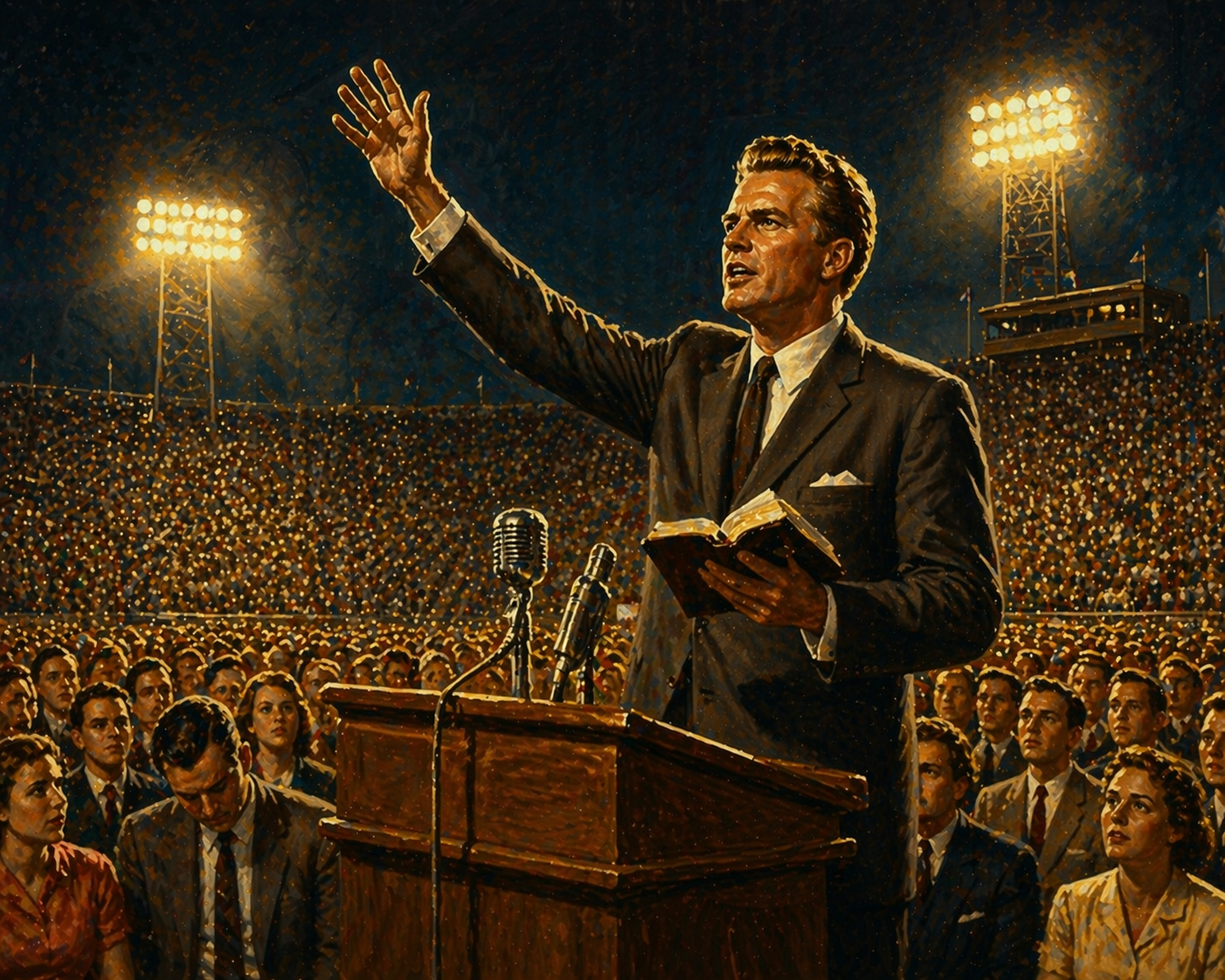
- 1957 New York crusade: ~6 million viewers per night on ABC — religious television at a scale never before possible
- TV amplified the decade's high church attendance into a shared national experience
- Graham linked personal moral transformation to the health of the republic — faith as civic obligation
- Religious content was popular — networks scheduled it willingly because audiences wanted it
Billy Graham Crusade, 1957 | AI-generated illustration
Advertising and the Aspirational Loop
- Television advertising tied economic aspiration to family life — not mere consumption for its own sake
- Kitchens, cars, and appliances shown in suburban family settings — the same settings the sitcoms modeled
- The loop was self-reinforcing: the economy made goods attainable, sitcoms provided the domestic context, advertising showed they were within reach
- Aspiration felt credible because the economy was actually delivering
Westinghouse Range TV Commercial, c. 1950s
What Programming Was Actually Doing
⏸ Pause & Reflect
Critics call 1950s programming "conformist." Defenders call it "norm-modeling." Is there a meaningful difference between those two descriptions — or are they just different political valuations of the same observation?
Section IV
Visibility is a form of accountability
The 1952 Campaign: TV Enters Politics
- Eisenhower (R) vs. Adlai Stevenson (D) — the first presidential race in which television played a decisive role
- Hired actor-director Robert Montgomery as television consultant
- Eisenhower Answers America — short spots with ordinary citizens asking questions
- Direct communication with mass audiences — no party machinery required
Eisenhower Answers America · 1952 · Eisenhower Presidential Library
The Critique — and Its Assumption
- Stevenson's critique assumed democratic legitimacy resided in print and the educated reader
- A medium accessible to everyone was, by that logic, inherently inferior
- But voters who watched Eisenhower and concluded he was trustworthy were making accurate assessments
Television and the Cold War Showcase
- Nixon and Khrushchev at the American National Exhibition in Moscow
- Nixon pointed to a model American kitchen — fully equipped, within reach of ordinary workers
- The kitchen as argument: which system delivers for ordinary people?
- American TV showed ordinary families with modern appliances and suburban homes
- Directly contradicted Soviet propaganda about oppressed American workers
- Television made the American case in ways diplomacy and deterrence could not
⏸ Pause & Reflect
Stevenson accused Eisenhower's campaign of treating voters "like consumers." Is there a meaningful distinction between communicating competence through television advertising and communicating it through a policy speech? What does your answer imply about who democracy is for?
Section V
Visibility, composure, and democratic judgment
The Kennedy-Nixon Debates, 1960
- ~70 million viewers — largest political TV audience in history to that point
- First fully televised presidential debates
- Four debates total; the first was decisive
- Kennedy vs. Nixon: similar policies, dramatically different presentation

Kennedy-Nixon Debate · September 26, 1960 · Public Domain · Wikimedia Commons
What Viewers Saw
- Tanned, rested — had campaigned outdoors in California
- Refused makeup — and didn't need it
- Appeared relaxed and entirely at ease under the lights
- Projected what can only be called executive composure
- Recently hospitalized — had lost weight
- Refused professional makeup over his staff's objections
- Appeared pale, perspiring, visibly uncomfortable
- Five o'clock shadow accentuated by high-contrast cameras
Composure Is Information
- The standard reading: television introduced frivolous criteria — physical appearance — into democratic evaluation
- The more precise reading: composure under pressure is not a trivial quality in an executive
- A candidate who appears rattled in a televised debate is communicating real information about temperament
- Kennedy's relaxed confidence was evidence of executive poise — not mere aesthetics
Nixon in Retrospect
- Nixon did not claim Kennedy won because he was better-looking
- He acknowledged that he failed to prepare for a medium that required it
- Eisenhower had prepared in 1952 — and communicated effectively through the same medium
What the Debates Actually Decided
- Kennedy won by ~112,000 votes out of 69 million cast — 0.17%
- Multiple factors: Catholic turnout, mild recession, Eisenhower's late campaigning
- Whether the debates were decisive is genuinely uncertain
- The age of retail politics was ending
- One broadcast evening reached more voters than a lifetime of whistle-stops
- A reorganization of democratic communication — not its corruption
⏸ Pause & Reflect
Nixon's aides urged him to wear makeup for the first debate. He refused. Kennedy's team prepared his appearance carefully. Was this difference in preparation a substantive distinction in how each candidate understood democratic communication — or purely cosmetic? What does your answer imply about what voters are entitled to evaluate in a leader?
Section VI
From norm amplifier to adversarial medium
The Phase Transition
- Served a culturally unified, consensus audience
- Programming reinforced family norms, civic faith, anti-communist resolve
- News delivered with calm institutional authority
- Assumed governmental good faith as a baseline
- Served a fragmented, questioning audience
- Programming challenged norms — All in the Family, Smothers Brothers
- News shifted from transmission to interrogation of institutions
- Permanent posture of institutional suspicion
The Adversarial Turn: Vietnam and News
- 1963: CBS and NBC expand evening news to thirty minutes — reach grows dramatically
- Feb. 1968: Walter Cronkite returns from Vietnam, declares the war a "stalemate" on air
- 1968: LBJ reportedly says: "If I've lost Cronkite, I've lost Middle America"
- 1970s: Adversarial posture generalizes far beyond Vietnam — becomes the news division's identity
The Structural Legacy: Fragmentation
- Three networks competing for the same broad audience
- Shared informational environment for all Americans
- Democratic deliberation anchored in common facts
- Cable, streaming, digital — hundreds of audience niches
- Viewers choose sources that confirm existing beliefs
- Shared informational commons ceases to exist as a meaningful category
⏸ Pause & Reflect
Early network television created a shared informational commons that no longer exists. Is the loss of that commons a problem for democratic deliberation — or is the variety of today's media landscape a gain worth the tradeoff?
What Television Proved About Culture and Technology
- Next lecture: Within this era of achievement and visibility, civil rights advanced through constitutional process, grassroots courage, and federal enforcement