The Core Argument
Proven Soviet espionage inside the U.S. government undermined containment abroad
The anti-communist response was rational — not mere hysteria
The domestic front both strengthened and complicated the containment consensus
Venona decrypts and Soviet archives later validated the core concerns
Section I
Who built the domestic security apparatus — and when?
Ideology Over Allegiance
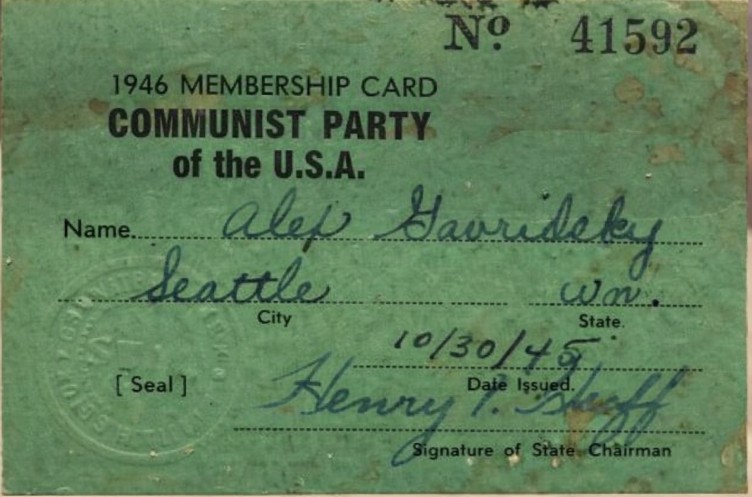
- CPUSA members placed Party discipline above U.S. loyalty
- Not a paranoid inference — a structural reality
- Operated under Comintern discipline until 1943
- Maintained clandestine Soviet intelligence ties afterward
HUAC and the Smith Act
- HUAC established 1938 — under Democratic Congressman Martin Dies
- Mandate: investigate both Nazi and Communist subversion
- Smith Act (1940) — banned advocacy of violent overthrow of government
- Passed by Democratic Congress; later used against Communist Party leadership

Rep. Martin Dies (D-TX) · HUAC Chairman, 1938 · Public Domain
The 1945 Revelations
- 1945: Elizabeth Bentley defects — names 80+ government contacts as Soviet sources
- 1945: Amerasia Journal raid — hundreds of classified State Dept. and naval documents recovered; documents passed to editor Philip Jaffe by China Hand John Service
- 1945: Igor Gouzenko defects in Canada — exposes North American Soviet spy network
Truman's Loyalty Program
- Created Federal Employee Loyalty Board
- Barred Communist Party members and front-group affiliates from federal employment
- Applied systematic security screening across federal workforce
- New Deal permissiveness had been a security liability
- A Democratic president conceded the problem existed
- Applied to "security risks" — including those susceptible to blackmail
⏸ Pause & Reflect
HUAC was created by a Democrat in 1938. The Truman loyalty program was created by a Democrat in 1947. What does the bipartisan origin of domestic anticommunism tell us about whether the concern was genuine?
Section II
What does it mean to testify against a system you once served?
Whittaker Chambers
- Joined CPUSA in 1920s; recruited as GRU courier by early 1930s
- Operated at the center of Soviet Washington networks — not a peripheral figure
- Broke with the Party in 1938 — a moral and spiritual reckoning
- September 1939: warned Adolf Berle — named Hiss and others

Whittaker Chambers · HUAC Testimony, 1948 · Public Domain
Witness (1952)
- Framed Cold War as civilizational struggle — not merely geopolitical competition
- Communism appealed to idealists — then enslaved them to an inhuman system
- Drew conservative intellectual tradition: Buckley, National Review, Russell Kirk
Credibility vs. Truth
- Account was retrospective, initially uncorroborated
- He had been a committed communist operative
- Psychologically complex, personally unconventional
- His factual claims were accurate in their essential outlines
- Acheson, Frankfurter, Conant dismissed him — and were wrong
- Elite social solidarity overrode evidentiary assessment
⏸ Pause & Reflect
The liberal establishment dismissed Chambers because he was complicated and ideologically inconvenient. Later evidence vindicated him. What does this teach us about how institutional confidence can substitute for evidence?
- Elite credentials guarantee analytical accuracy
- Social solidarity can override honest assessment of facts
- Defectors are inherently unreliable witnesses
- Political inconvenience makes a claim more likely to be true
Section III
Pumpkin Papers, perjury, and elite denial
Who Was Alger Hiss?
- Harvard Law graduate; clerk to Justice Oliver Wendell Holmes
- Senior State Department official — organized Dumbarton Oaks and San Francisco conferences (UN)
- Participant in the Yalta Conference, February 1945
- Recruited into Soviet intelligence network in the early 1930s

Alger Hiss · State Dept. Official · Yalta Participant · Public Domain
HUAC, 1948
- August 1948: Chambers accuses Hiss before HUAC of passing classified documents in the 1930s
- Hiss denied charges — liberal establishment rallied to his defense
- Truman called the hearings a "red herring"
- Rep. Richard Nixon (CA) pursued physical corroboration despite institutional skepticism
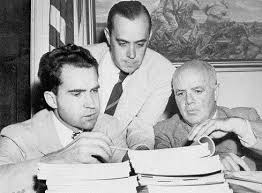
Rep. Richard Nixon (R-CA) · HUAC · Alger Hiss Trial · Public Domain
The Pumpkin Papers
- November 1948: Chambers produces microfilm from a hollowed-out pumpkin on his Maryland farm
- State Dept. cables from 1937–38 — some in Hiss's handwriting
- Others typed on the Hiss family's Woodstock typewriter — FBI forensic match
- Statute of limitations on espionage had run → Hiss charged with perjury
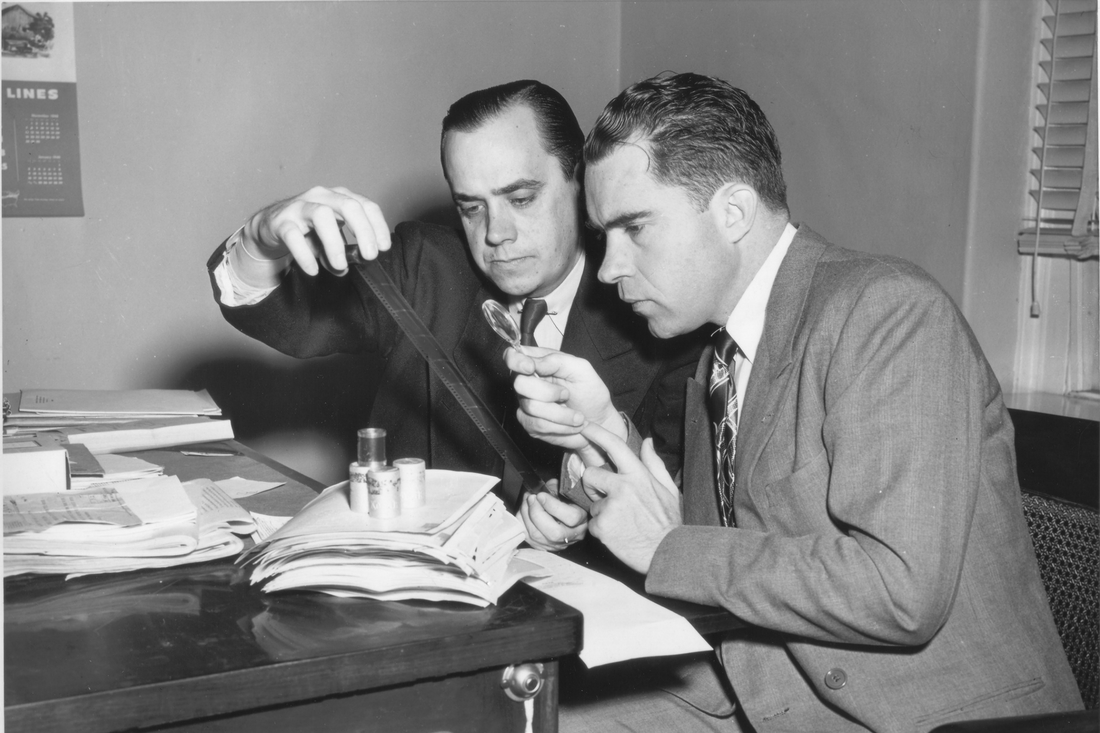
The Pumpkin Papers · November 1948 · Public Domain
Venona — Later Confirmation
- Venona Project decrypts declassified 1995 — March 1945 cable identifies agent "Ales"
- "Ales" attended Yalta, traveled to Moscow afterward, worked for GRU since 1935
- Biographical details match Hiss with near-precision
- Bipartisan Moynihan Commission (1997): strong corroboration Hiss was a Soviet agent
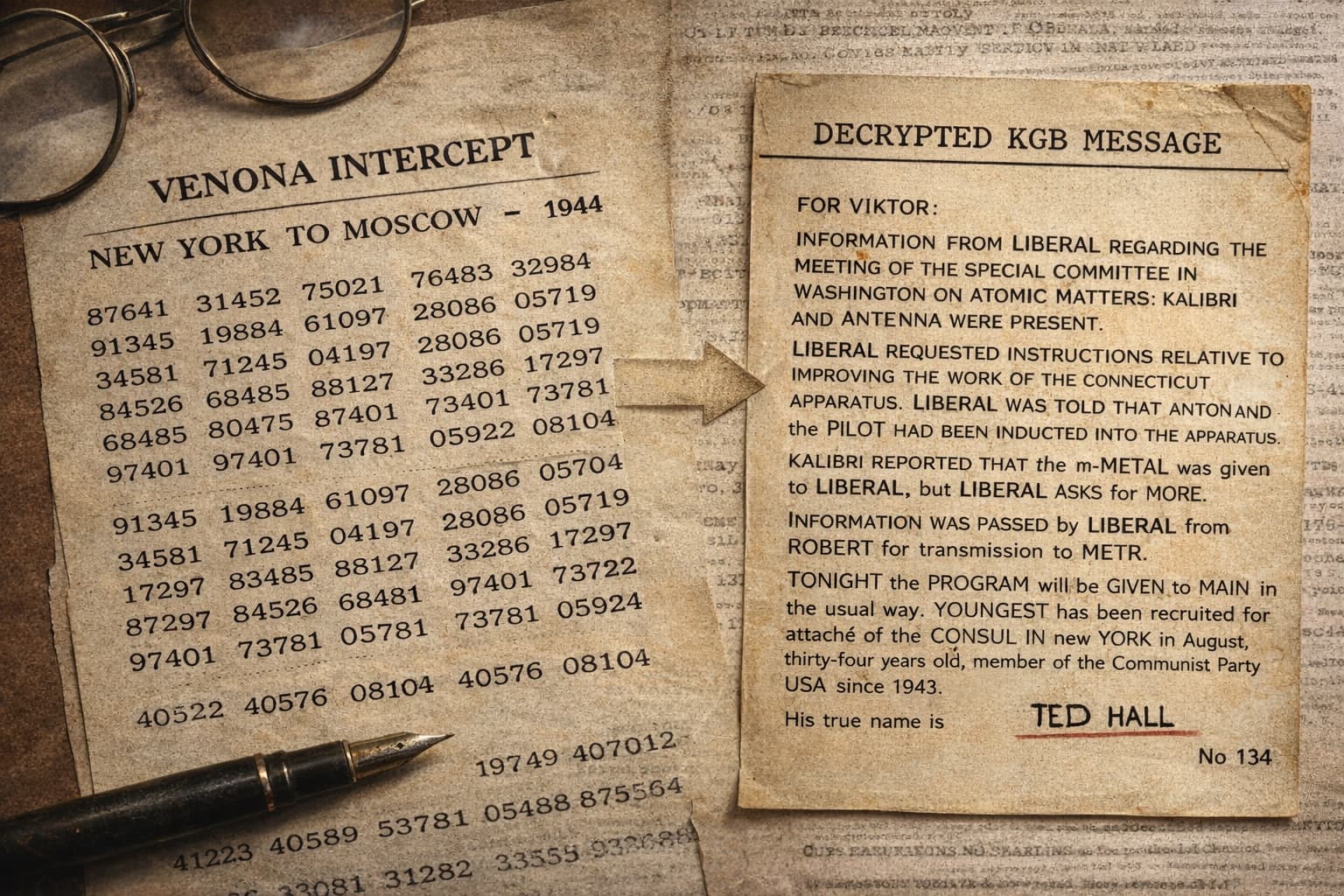
Venona Project intercept · NSA declassification, 1995 · Public Domain
⏸ Pause & Reflect
Hiss helped organize the United Nations and participated in Yalta. If he was a Soviet agent, what does his position tell us about the structural vulnerability of American diplomacy at its most consequential moment?
Section IV
The China Hands, the China Lobby, and the policy consequences of perceived subversion
China, 1945–1949
- Marshall mediation mission (1945–47) — failed to broker coalition govt.
- Aid to Nationalists cut off Jan. 1947 – Nov. 1948
- Steady stream of State Dept. assessments recommended accommodation with CCP
- USSR transferred captured Japanese equipment from Manchuria to CCP
- Provided advisers and logistical support throughout
- Mao proclaimed People's Republic of China, October 1, 1949
The China Hands
- Foreign Service officers with deep China expertise: Service, Vincent, Davies
- Accurately diagnosed Chiang's corruption and military failures
- Consistently recommended reduced or terminated support for Nationalists
- Owen Lattimore — called "top Russian spy" by McCarthy; charges ultimately dismissed

Owen Lattimore · Far Eastern specialist · 1950 · Public Domain
The China Lobby
- American advocates with personal, business, or missionary ties to Nationalist China
- Lobbied against PRC recognition; pressed for support of Chiang on Taiwan
- Term "China Lobby" coined by pro-communist sources as a pejorative
- Strategic case: Mao was a Soviet client — recognition rewarded aggression

Chiang Kai-shek · Nationalist China · 1945 · Public Domain
The Conservative Interpretation
- Better American commitment might have altered the military balance
- Communist victory emboldened further probes — including Korea
- Domestic outrage over China fueled support for stronger anti-communist foreign policy
- China policy debate exposed the political consequences of analytical failure
⏸ Pause & Reflect
The China Hands were not necessarily wrong about Chiang's weaknesses. The conservative critique is that their recommendations served Soviet strategic interests regardless of intent. Does it matter whether the harm was deliberate or not?
Section V
Right about the target. Wrong about the rifle.
Wheeling, February 9, 1950
- Number later revised to 57 in the Senate — then changed again
- Immediate institutional response: Tydings Committee (1950)
- Context: Soviet bomb, fall of China, Hiss conviction — public primed for alarm
The Tydings Committee: Immediate Response (1950)
- Democratic-controlled subcommittee chaired by Sen. Millard Tydings (D-MD)
- Formed specifically to investigate McCarthy's charges; focused on ~9 publicly named cases
- Majority report (July 1950): called McCarthy's accusations a "fraud and a hoax"
- Vote on the report split strictly along party lines
- Republicans called it a partisan whitewash
- Even McCarthy critic Sen. Margaret Chase Smith faulted it for "subjectively attempting to discredit McCarthy rather than objectively investigating his charges"
- Prioritized attacking the messenger over examining security files or policy influence
The McCarran Committee: A Deeper Investigation
- Chaired by Sen. Pat McCarran (D-NV), a conservative Democrat
- Longer, document-heavy hearings (1951–1952)
- Focus: Institute of Pacific Relations (IPR) and its influence on U.S. Far East policy
- Examined files, correspondence, and testimony in systematic detail
- IPR had been "heavily infiltrated" and served as a vehicle for orienting U.S. Far East policy toward Communist objectives
- Owen Lattimore: "a conscious, articulate instrument of the Soviet conspiracy"
- Certain China Hands had shifted U.S. policy in ways favorable to the CCP
- Recommended perjury charges against Lattimore — he was later indicted
The Verdict
- Fluctuating numbers undercut credibility
- Confrontational style; disregard for due process
- Blurred lines between spies and communist sympathizers
- Lax security was real
- State Dept. vulnerabilities confirmed by Hiss
- Fellow-traveler influence in policy was documented

Sen. Joseph McCarthy (R-WI) · Public Domain
"Anti-Anti-Communism"
- Equated all security concerns with McCarthyite hysteria
- Truman: HUAC hearings = "red herring"
- Dismissed critics as extremists rather than engaging the evidence
- Klaus Fuchs — passed atomic bomb designs to Soviets
- Julius Rosenberg — recruited network; executed 1953
- Soviet archives confirmed Rosenbergs' guilt
The Rosenberg Case
- Julius Rosenberg — central recruiter and handler for atomic espionage network
- Ethel Rosenberg — convicted of conspiracy to commit espionage
- Exposed via Fuchs confession; convicted 1951; executed June 1953
- Post-1991 Soviet archives: confirmed Julius's central operational role

Ethel & Julius Rosenberg · Death house photograph · Public Domain
⏸ Pause & Reflect
McCarthy was often wrong in his specific claims but directionally right about the scope of Soviet recruitment. Can a political argument be right in general and wrong in particular — and if so, does the imprecision ultimately serve the cause or damage it?
Bringing It Together
- Soviet espionage: confirmed by Venona, defectors, Soviet archives
- Agents in positions of policy influence — Hiss at Yalta
- Atomic secrets passed — Fuchs, Rosenbergs
- McCarthy's imprecision gave opponents a permanent escape hatch
- Liberal "anti-anti-communism" served Soviet interests
- Both sides avoided the substantive question
Looking Ahead: Korea
These domestic tensions made the Korean War politically explosive
Who lost China? Then who sent American boys to die for a stalemate?
Calls for victory clashed with Truman's limited-war containment strategy
MacArthur vs. Truman: the military, political, and constitutional stakes