Section I
History is not a morality play — it is a stress test
The Story You've Heard
- Hoover was heartless and inactive
- Watched the nation suffer and did nothing
- Caused the Great Depression
- FDR saved the nation
- The New Deal ended the Depression
- Bold action = recovery
The Governing Premise
- The Depression was a stress test of governing assumptions
- Both men inherited philosophies built for different eras
- Neither fully understood the crisis they inhabited
- Our goal: replace moral judgment with historical understanding
What the Standard Story Gets Right
- Banking reform — FDIC ended the bank-run terror; no Depression-scale failures since
- Infrastructure — TVA, Hoover Dam, roads, bridges, rural electrification still in use
- Social Security (1935) — America's first federal old-age pension; permanent safety net
- Federal responsibility — "Washington must act" became the new American consensus
But — Then Test It
- What were the actual economic results?
- Where did programs contradict each other?
- Who paid the political price for the coalition?
- What finally ended the Depression — and when?
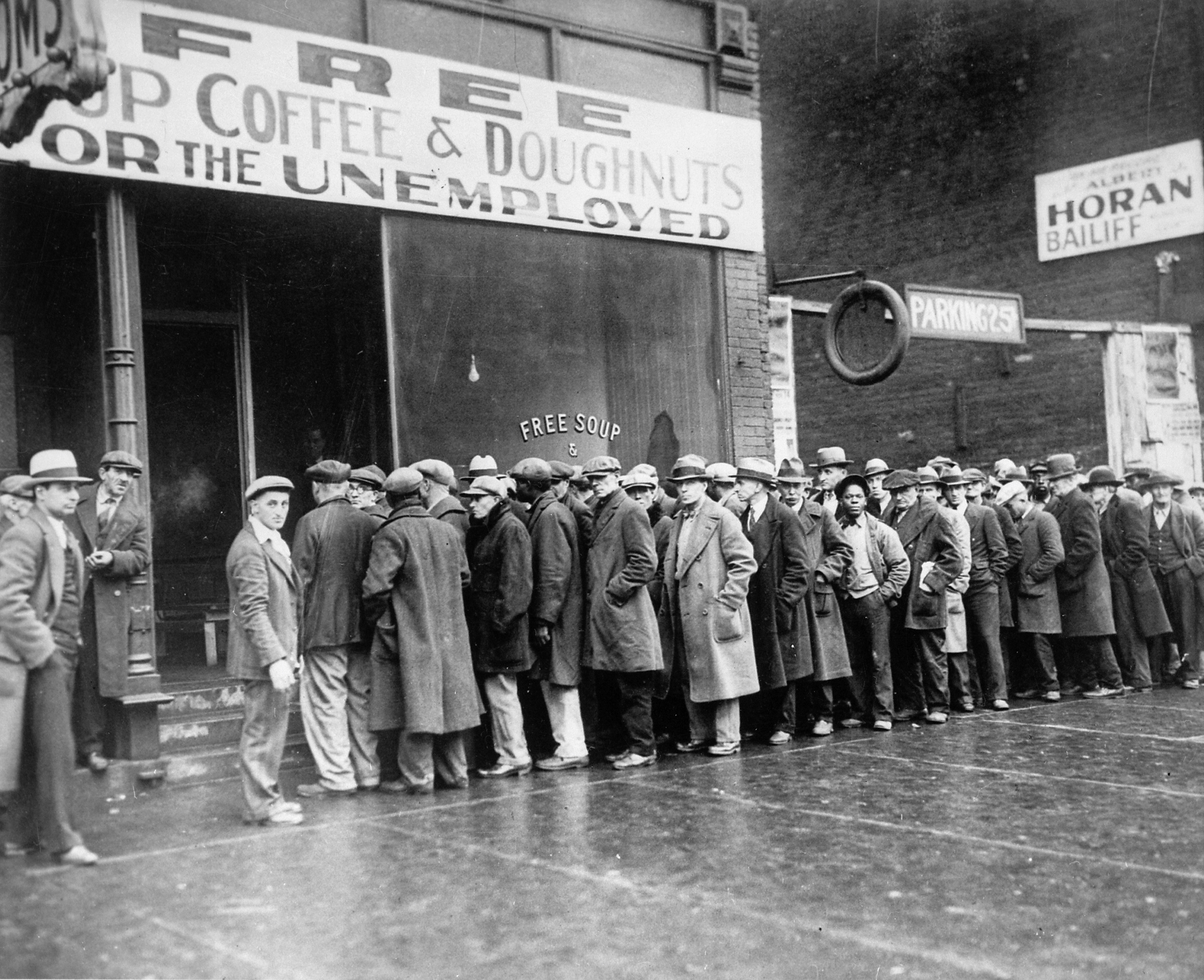
Chicago soup kitchen · February 1931 · NARA
⏸ Pause & Reflect
If a policy creates lasting structural reforms but does not end the crisis it was designed to solve — does it succeed or fail?
What would "success" even mean here?
Section II
The Last President of the Old Moral Economy
Who Was Herbert Hoover?
- Born 1874 — Quaker family, orphaned at 9
- Made a fortune in global mining engineering
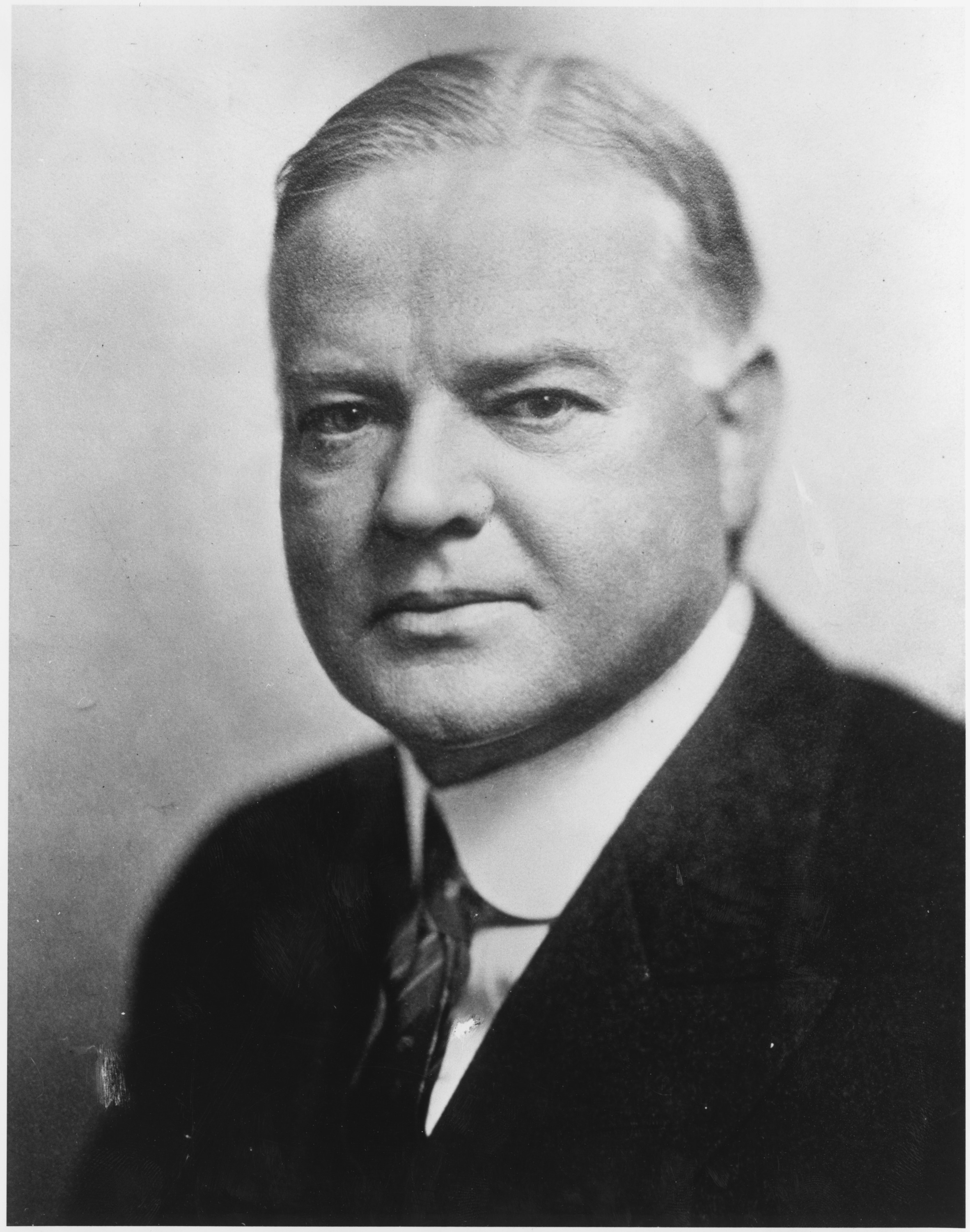
Herbert Hoover · c. 1928 · NARA · Public Domain
Hoover's Social Thought
- Directed the American Relief Administration — 4 million tons to 23 countries
- Wilson's war-team — absorbed philosophy of forceful government planning
- "The Great Engineer" — the most admired man in the world, 1920
- Commerce Secretary under Harding and Coolidge — transformed a backwater agency into Washington's most dynamic department

U.S. Food Administration · 1917 · Public Domain · Wikimedia Commons
Hoover's Governing Philosophy
- Voluntarism — cooperation, not coercion
- Associationalism — business, government, civic bodies working together
- Cash relief to individuals would corrupt self-reliance — loans to banks and public works did not
- Democratic citizenship required self-reliance
- These were mainstream progressive ideas of the 1910s–20s
The Wall Street Crash, 1929
- Easy credit through the 1920s — artificially low interest rates
- Stock bought on margin — up to 90% borrowed
- Consumer spending slows → margin calls → forced selling
- Self-reinforcing collapse through October–November 1929
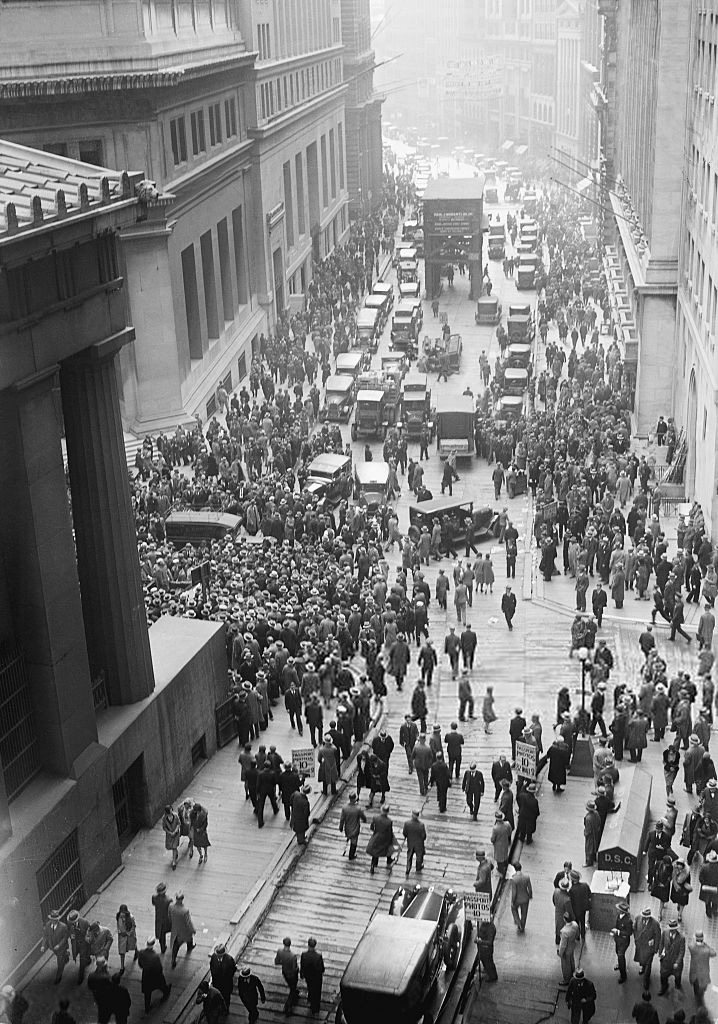
Wall Street, October 1929 · Public Domain
Hoover's Response
- Rejected Mellon's "liquidationist" advice
- Called business leaders to White House — secured voluntary wage pledges
- Ran a $2.7 billion peacetime deficit — largest in American history to that point
- The Depression of 1920–21 self-corrected — without federal intervention
- Mellon: liquidate, let prices find bottom — both Hoover and FDR refused
- Whether 1929 would have self-corrected we cannot know
Hoover's New Deal
- Created the Federal Farm Board
- $500 million in federal money to stabilize farm prices
- Bought surplus crops to support prices
- Largest federal intervention in agriculture to that point
- $1.2 billion in loans to banks, railroads, insurance companies
- Institutional relief — not individual — consistent with Hoover's principles
- FDR kept it and expanded it after 1933
- $2 billion to state and local governments for job-creating public works
- $750 million in loans to businesses
- Passed July 1932 — Hoover's most direct relief measure
Hoover's Public Works Legacy
- Hoover Dam — authorized and begun under Hoover
- San Francisco–Oakland Bay Bridge — funded under Hoover
- Los Angeles Aqueduct expansion
- Agricultural Marketing Act — hundreds of millions for farmers
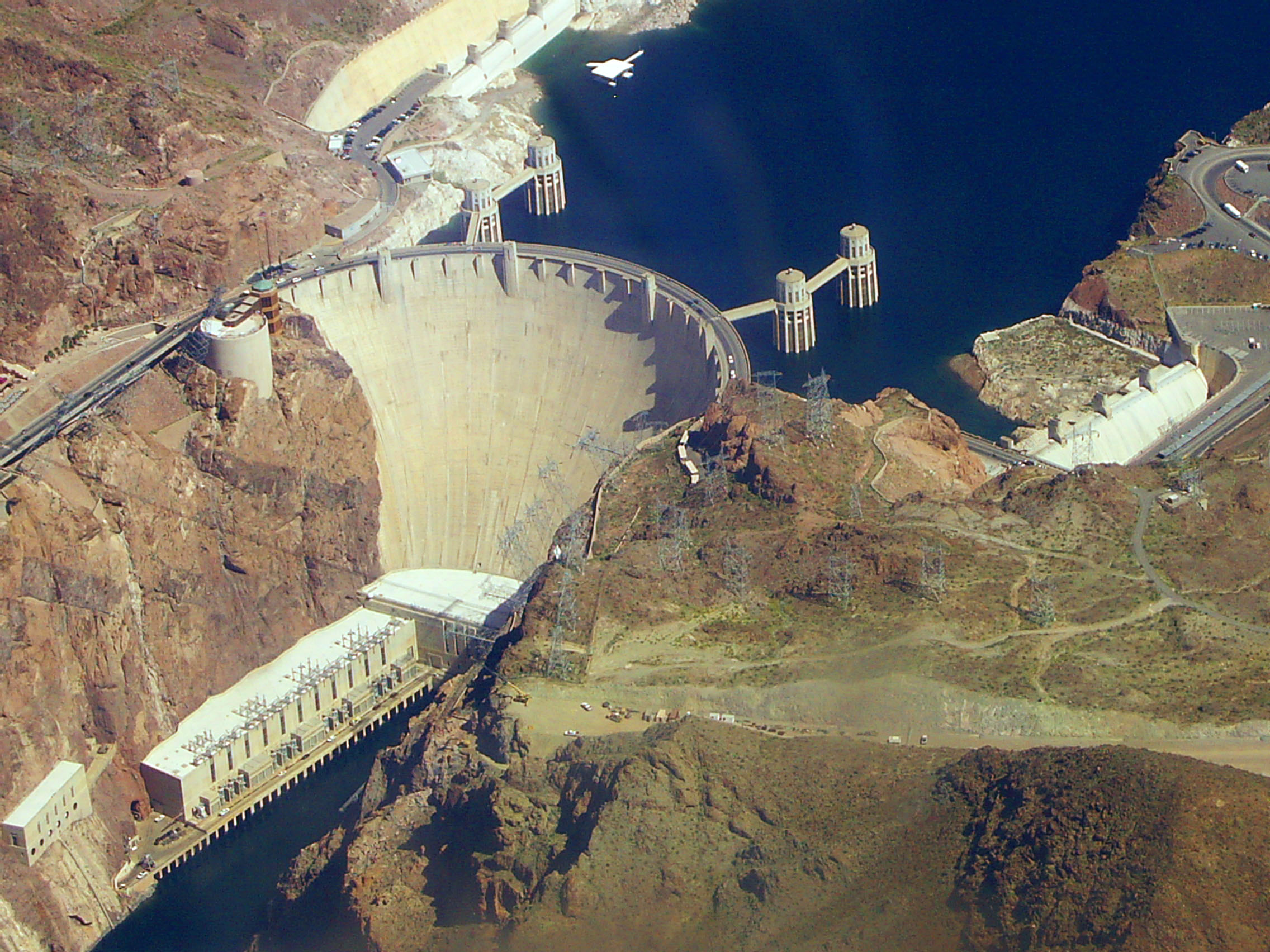
Hoover Dam · Begun 1931, completed 1936 · Public Domain
Walter Lippmann, 1935
How Hoover Made It Worse
- Highest import rates in American history — over 20,000 goods
- Over 1,000 economists signed a public petition urging a veto
- Trading partners retaliated — American exports collapsed 61% by 1932
- Converted a domestic financial crisis into a global trade catastrophe
- Top income rate: 25% → 63% — largest peacetime tax hike in American history
- Logic: balanced budgets inspire investor confidence
- Result: austerity layered on top of freefall
- Withdrew purchasing power exactly when the economy needed expansion
⏸ Pause & Reflect
Hoover ran the largest peacetime deficit in U.S. history, built more public works than any prior president, and created the RFC.
Why does the "do-nothing" myth persist — and what does its persistence tell us about how we remember the Depression?
Section III
Confidence Before Solutions
Hoover Becomes the Depression
- Hoovervilles — shantytowns in every major city, named with bitter contempt
- Hoover flags — empty pockets turned inside out; Hoover blankets — newspapers slept under
- The Bonus Army — WWI veterans camped in Washington; dispersed by the U.S. Army
- FDR and the New Dealers weaponized the myth of a do-nothing Hoover to justify radical intervention


Hooverville · Seattle, Washington · 1933 · Public Domain · Wikimedia Commons
The Watershed Election of 1932
- FDR ran on "bold persistent experimentation"
- Simultaneously attacked Hoover for spending too much and doing too little
- Won 42 states, 57% of the popular vote
- Ended Republican dominance that had held since the Civil War

Franklin D. Roosevelt · 1933 · Library of Congress · Public Domain
FDR's Clearest Success: The Bank Holiday
- March 6, 1933 — declared a national bank holiday; all banks closed
- Emergency Banking Act drafted, passed, and signed within hours
- Sound banks reopened with implicit federal guarantees
- Deposits flooded back in — the panic that had run for three years stopped overnight
The Pattern of Failure
- Meddlesome activism impeded natural recovery — deflation was doing its work
- Policies were confused and contradictory — RFC loans while tax hikes drained purchasing power; crop destruction while people went hungry
- Attacked business and Wall Street — then expected private investment to drive recovery
- Politics infused every policy — programs designed around coalition maintenance, not economic need
- Relief and public works money channeled away from the poorest
- AAA payments to landowners — Black sharecroppers evicted
- NRA codes protected large firms — crushed small competitors
The National Recovery Administration
- Competition was driving wages and prices into a deflationary spiral
- Fix prices from above — restore producer profitability
- Profitable producers would then rehire workers
- Struck down by the Supreme Court in 1935 — Schechter Poultry v. United States
- Suspended antitrust law — industries allowed to collude legally
- Industry codes set minimum prices — illegal to sell below the fixed rate
- Companies required to cut output to maintain price floors
- Wagner Act boosted union power — wages pushed above market-clearing levels
What the NRA Actually Did
- Higher prices reduced purchasing power — exactly when it needed to expand
- Output restrictions blocked firms from hiring and expanding
- Small competitors crushed — large firms wrote the codes that governed them
- Raised the cost of employing a worker — fewer workers employed
- Unskilled workers priced out — employers chose mechanization over hiring
- NRA codes set lower wage floors for "Negro occupations"
- Union closed shops excluded Black workers from entire industries
- The workers most in need of employment were the first displaced
The Agricultural Adjustment Administration
- Farm prices had collapsed because supply was too high
- Reduce supply → raise prices → restore farm income
- Farmers with income would spend into the broader economy
- Paid farmers to destroy crops and reduce acreage
- 10 million acres of cotton plowed under
- 6 million pigs slaughtered
- Struck down by the Supreme Court in 1936 — United States v. Butler
What the AAA Actually Produced
- AAA paid landowners, not tenants — mechanization replaced sharecroppers; an estimated 500,000 Black workers displaced
- Raised food prices — consumers were worse off, including the farmers who bought everything else
- Food destroyed while people were starving
- Subsidies flowed to large landowners and swing states — a patronage operation, not an economic rescue
- A transfer of wealth from the rural poor to the rural landed class — by design

Arthur Rothstein · FSA · Oklahoma, 1936 · Library of Congress · Public Domain
FDR Tripled the Tax Burden
- After Prohibition repeal — heavy excise taxes on liquor, tobacco, gasoline (regressive)
- Revenue Act of 1935 ("Wealth Tax") — top income rate raised to 79%
- Undistributed-profits tax (1936) — taxed companies for retaining earnings needed for investment
- Corporate investment — already weak — was further discouraged when it needed to grow
What High Taxes Actually Did
- Excise taxes on liquor, tobacco, gasoline hit working-class spending hardest
- Less money in household budgets — purchasing power contracted further
- Every dollar taxed was a dollar not spent into a demand-starved economy
- 79% top rate signaled profits were politically suspect
- Undistributed-profits tax penalized firms for retaining earnings needed to hire and expand
- Investment — the engine of job creation — was taxed into paralysis
The Roosevelt Recession, 1937–1938
"apparent recovery"
after FDR cut spending
- FDR cut federal spending sharply — balanced-budget orthodoxy
- Social Security payroll tax began collecting — withdrew purchasing power
- Fed tightened monetary policy simultaneously
- Result: industrial production fell 33% in thirteen months
Section IV
And what that tells us about the limits of peacetime policy
What Actually Ended the Depression
- ~10% of GDP at maximum
- Unemployment still 14.6% in 1940
- A decade of programs — insufficient scale
- ~40% of GDP at peak
- Unemployment below 2% by 1943
- Industrial production more than doubled, 1940–1944
The New Deal's Deepest Legacy
- Before 1933: federal government had no role in fighting recessions
- After 1933: "Washington must act" became permanent American consensus
- Every subsequent recession has been met with federal fiscal and monetary response
- This consensus survived every conservative resurgence — 1950s, 1980s, 2010s
⏸ Pause & Reflect
If the scale of spending required to end the Depression was only possible under wartime conditions — what does that tell us about the structural relationship between democracy and economic catastrophe?
Is this a failure of policy — or an inherent limit of democratic governance in peacetime?
Race and the New Deal's Blind Spots
- Black Americans: 18–20% of the rural poor the FSA was nominally designed to assist
- AAA crop payments benefited white landowners — Black tenants were simply evicted
- NRA codes established separate, lower wage floors for "Negro occupations"
- Social Security (1935) excluded domestic workers and agricultural laborers — 65% of Black Southern workers
The Verdict
- Hoover: intervened actively — then destroyed his own program with Smoot-Hawley and the Revenue Act
- FDR: enlarged Hoover's interventions — added confused, contradictory, politically captured programs that prolonged unemployment
- The war ended the Depression — at fiscal scale neither man would permit in peacetime, and for reasons neither could claim credit for
- The New Deal's most durable product was not recovery — it was the story of recovery