The War That Didn't End
HIST 102 · Chapter 22 · Lecture 2
Today's Questions
- What did Filipinos expect from American arrival — and why?
- What tactics did the U.S. use in the Philippines, and what was their human cost?
- How did Americans justify sustained colonial violence — and believe it?
- Who said no — and what was their argument?
December 10, 1898
The Treaty That Made America an Empire Overnight
- Spain surrenders Cuba — U.S. takes temporary control
- Spain cedes Puerto Rico and Guam to the United States
- Spain cedes the Philippine Islands to the United States
- The U.S. pays Spain $20 million
- Transferred sovereignty over 8 million Filipinos from one empire to another
- Extinguished the Philippine Republic that Aguinaldo had declared in June 1898
- Transformed the United States from a continental republic into a Pacific colonial power
- Created a legal fact — but not a political one
The War America Didn't Call a War
- February 4, 1899 — Filipino and U.S. troops clash outside Manila
- Washington called it an "insurrection" — not a war
- Over 125,000 U.S. troops deployed — more than the entire Spanish-American War
- Conventional fighting lasted three years; armed resistance continued for fourteen
- ~4,200 U.S. soldiers killed in combat
- ~20,000 Filipino combatants killed
- 200,000–600,000 Filipino civilians dead — combat, famine, and disease
- The war Spain lost in 109 days took a generation to suppress
Section I
The Philippines did not enter history in 1898.
An Independence Movement in Progress
- The Katipunan launched armed revolt against Spain in 1896 — two years before any American arrived
- Not primitive insurgency — organized movement with political leadership, newspapers, ideology
- June 1898: Aguinaldo declared Philippine independence
- January 1899: Philippines ratified a constitution — the Malolos Republic
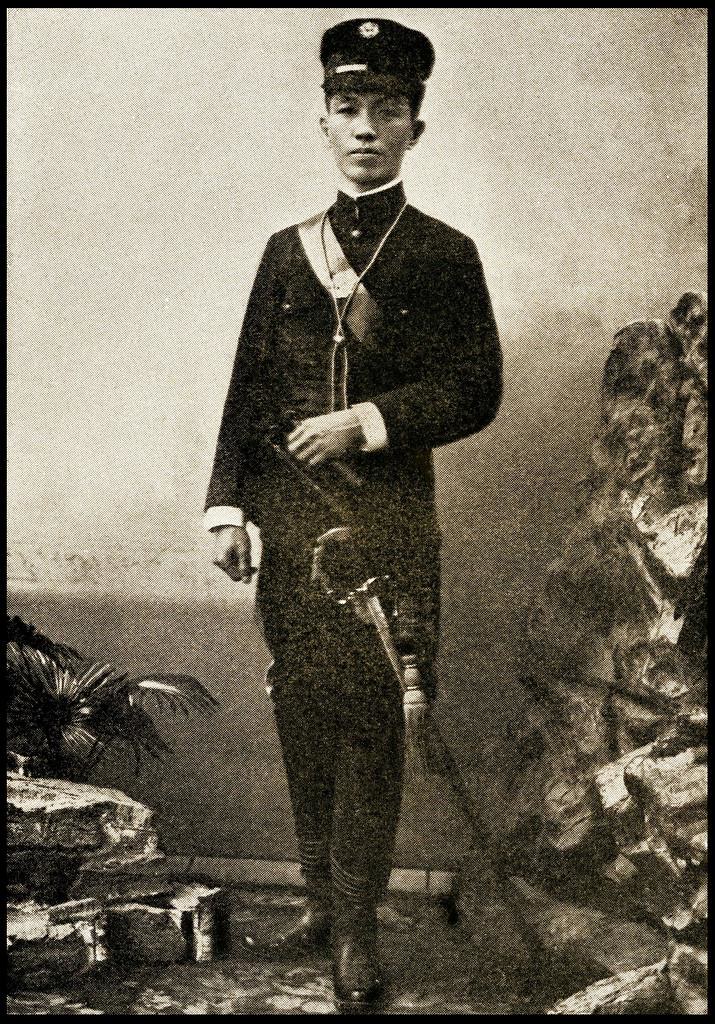
.jpg)
Emilio Aguinaldo · c. 1898 · Public Domain · Wikimedia Commons
Aguinaldo's Argument
Incompatible Assumptions
- Filipinos not ready for self-rule
- U.S. control would be temporary and benevolent
- Independence to follow — eventually
- Resistance = ingratitude
- Independence would follow Spain's defeat
- American officers had implied support
- Republic already established
- Resistance = self-determination
⏸ Pause & Reflect
By January 1899, the Philippines had a constitution, a president, and a functioning government.
On what grounds did the United States claim the authority to govern them anyway?
Section II
The Philippine-American War begins with incompatible visions of freedom.
February 4, 1899
- American sentries shoot two Filipino soldiers near Manila — fighting erupts within hours
- U.S. government refuses to call it a war — officially: a "pacification campaign" against "insurgents"
- Initial Filipino strategy: conventional warfare — set-piece battles
- Result: decisive American victories — industrial firepower overwhelms conventional resistance by mid-1899
- Filipino response: shift to guerrilla warfare
The Logic of Counterinsurgency
- You cannot defeat guerrillas without separating them from the civilian population
- That separation requires controlling civilians
- Controlling civilians at scale requires coercion
- This logic is militarily rational
- It is also humanly catastrophic
⏸ Think First
Before the next slide —
If you were commanding an army fighting guerrillas supported by the civilian population, what options do you have?
What would actually separating fighters from civilians require?
Section III
The documented record — tactics, scale, consequences.
The Scale
Majority from famine & disease — caused deliberately by U.S. military strategy
Battlefield combat
U.S. Counterinsurgency Tactics
- Village burning
- Population relocation into reconcentration zones
- Destruction of food supplies and livestock
- Water cure torture
The Water Cure
- Not a rogue practice — widespread enough to generate Senate hearings, press coverage, official investigations
- Soldiers testified matter-of-factly — some defended it as effective
- Officers who ordered it: received minimal consequences
In the Public Record
Samar: The Balangiga Attack
- War of Attrition: Gen. Hughes implemented "scorched earth" policies to isolate guerrillas from their food supply.
- Port Blockades: U.S. forces seized all coastal trade, causing widespread hunger to force a civilian surrender.
- The Infiltration: Local laborers and guerrillas (disguised as funeral mourners) smuggled bolos into town in small coffins.
- The Signal: On Sept 28, the church bells rang, signaling a coordinated strike on American troops at breakfast.
- The Massacre: Armed only with bolos and kitchen knives, Filipinos killed 48 soldiers in the deadliest U.S. defeat of the war.
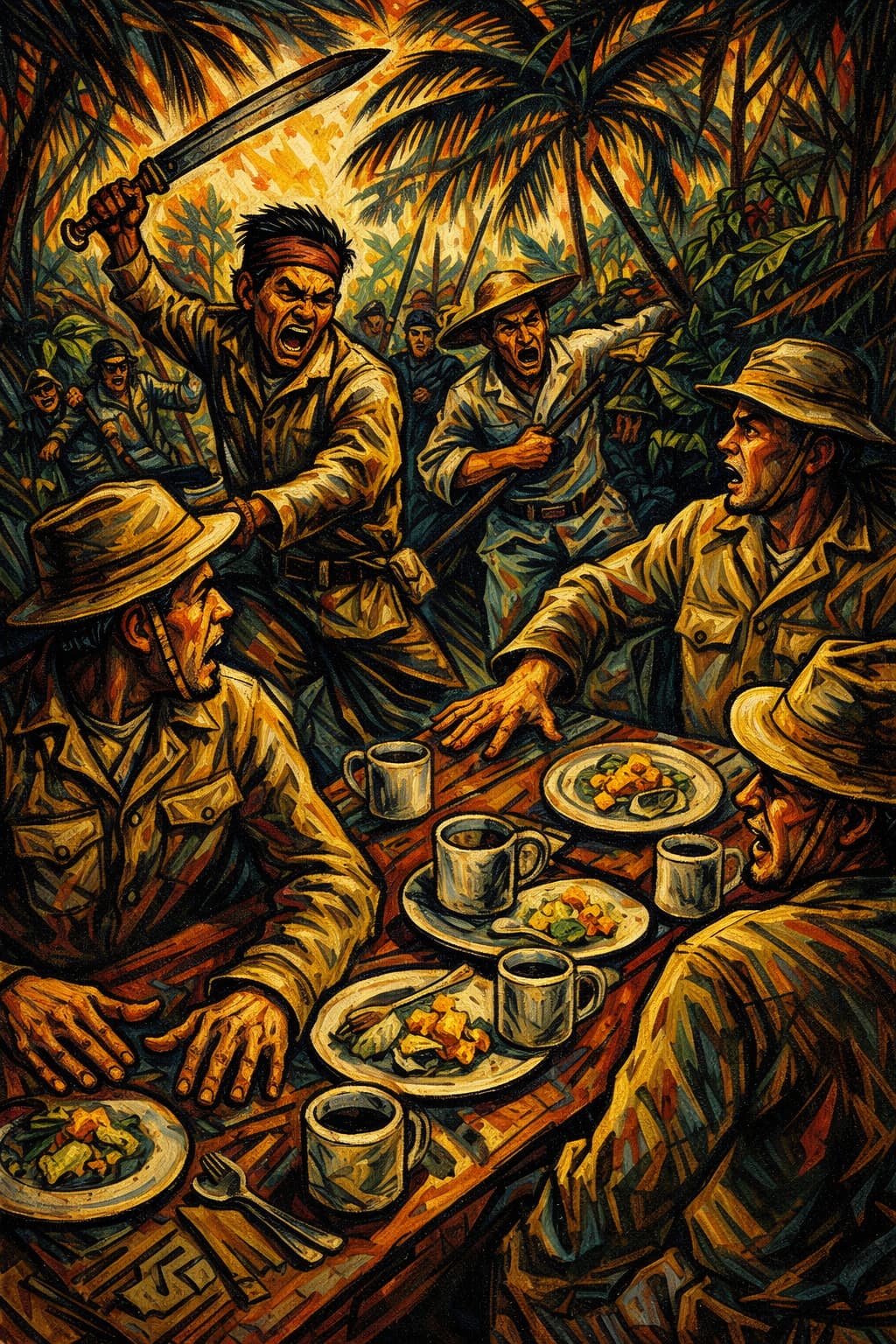
Visualizing the morning of Sept 28: A coordinated strike during the morning meal.
The Samar Campaign: Retaliation
- Commander: Brig. Gen. Jacob H. Smith (“Hell Roaring Jake”)
- Orders: “I want no prisoners. I wish you to kill and burn... the more you kill and burn, the better.”
- “Howling Wilderness”: Orders to kill everyone “capable of bearing arms” (ten years and above)
- Tactics: Systematic village burning and population displacement
- Result: Interior devastated; Smith court-martialed but retired with full honors
Filipino Atrocities
- Documented Torture: Beatings, hot irons, burial alive, and use of anthills on U.S. prisoners.
- Mutilation: Ears, noses, and genitals removed as trophies; systematic desecration of remains.
- Zero-Quarter Policy: Execution of captured soldiers; very few U.S. prisoners were taken alive.
- Balangiga (Sept. 1901): Wounded Americans were hacked and mutilated with bolos during the surprise strike.

The bolo: A primary agricultural tool repurposed for lethal close-quarters combat and post-mortem mutilation.
⏸ Pause & Reflect
The U.S. condemned Spain for reconcentration in Cuba in 1898 — then used it in the Philippines in 1901.
What does this tell us about how imperial powers understand their own actions?
Section IV
Making violence sound reasonable — and believing it.
The Ideas That Made Empire Feel Righteous
- Races ranked on a pseudoscientific hierarchy of civilization
- "Survival of the fittest" applied to nations and peoples
- Empire as natural selection at civilizational scale
- Kipling, 1899 — written about the Philippines
- Empire reframed as self-sacrifice, not exploitation
- The colonizer suffers; the colonized is saved
- Salvation and sovereignty arrived together
- McKinley: God called him to "uplift, civilize, and Christianize"
- Protestant missionaries followed the flag
God Told Him To
The vast majority of Filipinos were already Christian.
McKinley apparently did not know this.
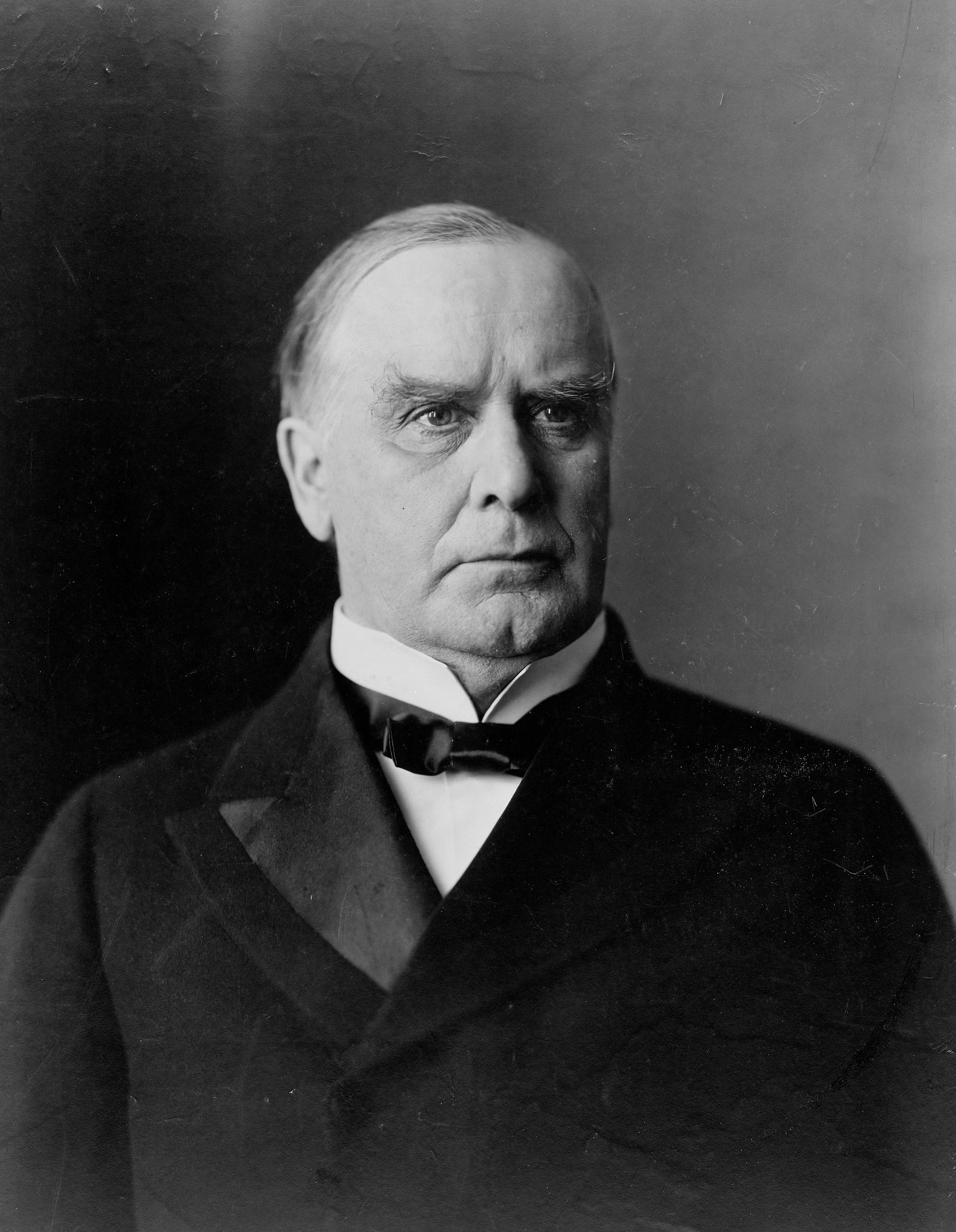
The Same Event, Two Descriptions
Race, Civilization, and Genuine Belief
- Beveridge believed in both democracy and civilizational hierarchy — simultaneously
- Empire was not cynical cover — it was genuine moral conviction
- Many American Progressives agreed
.jpg)
"Our little brown brothers" — William Howard Taft, Governor-General of the Philippines, 1900. The cartoon depicts Uncle Sam as schoolmaster, with the new colonial subjects as children requiring American instruction before they could be trusted to govern themselves.
The Connected Color Lines
- Racialism ranked peoples on a hierarchy of civilizational fitness
- Social Darwinism made that hierarchy feel like natural law
- Some peoples were simply "not yet ready" for self-government
- Jim Crow — Black Americans supervised, disenfranchised, denied full civil participation
- Vocabulary: "not ready," "requires guidance," "prone to disorder"
- Enforced by law, custom, and sanctioned violence
- Philippines — Filipinos governed, pacified, denied independence
- Same vocabulary, new geography
- Racial hierarchy lowered the threshold for acceptable violence
Roosevelt's Position: "Liberal Imperialism"
- Liberty requires order
- Order requires force
- Force in service of freedom: regrettable but necessary
- Resistance to benevolent rule is criminal, not political
The timeline can always be extended. "Not yet" can last forever.
When Democratic Institutions Corrected Imperial Logic
- Jones Act — Congress declares Philippine independence the explicit goal of U.S. policy
- Grants Filipino men the right to vote and establishes a bicameral legislature
- Fourteen years after Roosevelt's speech — the limiting principle arrives from Congress
- Tydings-McDuffie Act — sets a concrete date: independence by 1944
- Establishes the Philippine Commonwealth as a transition government
- "Not yet" finally has a deadline
- July 4 — the United States grants full Philippine independence
- Delayed two years by World War II — honored nonetheless
- Voluntary, peaceful, and without war — historically rare
⏸ Pause & Reflect
Which is more dangerous to democracy?
- Cynics who do wrong while knowing it's wrong
- True believers who do wrong while convinced they're right
- Institutions that normalize both
- Citizens who don't ask
Section V
Empire was contested at home — seriously, publicly, by people whose names you know.
The Anti-Imperialist League
- Mark Twain
- Andrew Carnegie
- Former President Grover Cleveland
- Booker T. Washington
- Ida B. Wells
- Empire violates republican principles
- Governing without consent corrupts the democracy doing it
- The act of empire endangers liberty at home
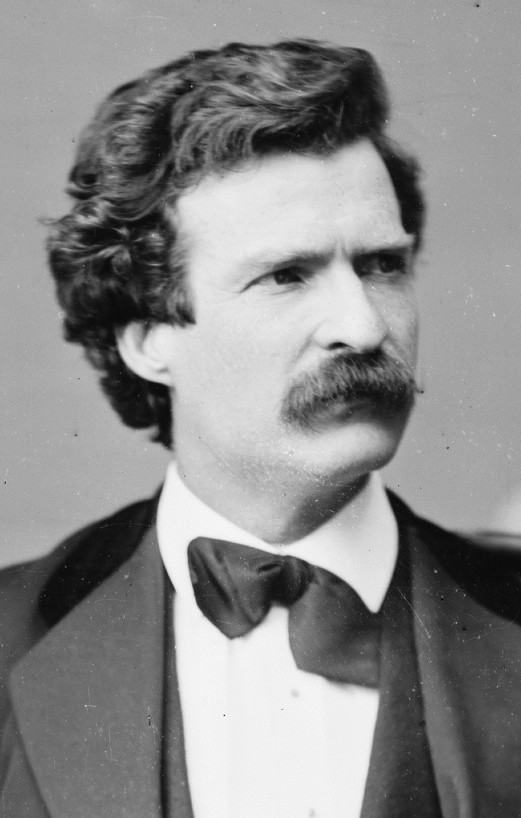
Mark Twain · 1871 · Brady-Handy Collection · Public Domain
The Black Critics' Specific Argument
- The racial logic used to justify ruling Filipinos was the same logic used to justify Jim Crow
- Black soldiers in the Philippines — 9th and 10th Cavalry — were not blind to the parallel
- David Fagen — Black corporal — crossed over, fought with Aguinaldo's forces for nearly two years

Ida B. Wells · c. 1920 · Public Domain · Wikimedia Commons
Twain's Satire: Taking It at Its Word
⏸ Pause & Reflect
The anti-imperialists argued that governing without consent corrupts the democracy doing the governing — not just the people being governed.
Do you think they were right? What evidence from this lecture would support or challenge that claim?
Section VI
This is synthesis — not optional.
Four Questions — No Easy Answers
- Can liberty be postponed? If so, who has the authority to postpone it?
- Who decides when order is sufficient for freedom to begin?
- How long does "temporary" rule usually last?
- When soldiers commit atrocities within a system that institutionally tolerates them — where does individual moral responsibility end and structural responsibility begin?
What Occupation Reveals About Empire
- Empire requires sustained coercion at scale
- Moral language does not eliminate violence — it makes violence administratively normal
- Democratic states can practice colonial rule while genuinely believing they are doing good
- Colonial wars brutalize all participants — because brutalization is structural, not merely individual
- Wars for liberation can become wars for control without anyone formally deciding to change course
Looking Ahead: Lecture 3
- Roosevelt the president — spectacle meets governing philosophy
- The regulatory state, conservation, the Panama Canal, the Roosevelt Corollary
- If empire was the laboratory — domestic Progressivism was the experiment running simultaneously
- What's the connection between the man who ordered the Philippines pacified and the man who busted the trusts?
📝 Optional Extension
Primary Source Comparison — same operations, two descriptions:
An official Army report on Batangas vs. Senate testimony from the same operations.
Question: If you were an American senator in 1902 reading both documents, what would you need to believe to vote against investigating further?
→ / Space: Next | ←: Previous | S: Notes | F: Fullscreen | O: Overview | ESC: Close popups
Kataastaasang, Kagalanggalangang Katipunan ng mga Anak ng Bayan — "Supreme and Venerable Society of the Children of the Nation." A secret Filipino revolutionary organization founded in Manila in 1892 that launched armed revolt against Spanish colonial rule in 1896. Led by Andrés Bonifacio and later associated with Emilio Aguinaldo, the Katipunan represented the organizational backbone of the Philippine independence movement and predated any American involvement by years. Its existence refutes any argument that Filipinos required American guidance to pursue political self-determination.
The First Philippine Republic, established under the Malolos Constitution ratified in January 1899. The constitution provided for a unicameral legislature, separation of church and state, and civil liberties. Emilio Aguinaldo served as president. The republic had functioning governmental institutions before the Philippine-American War began. Its existence is historically significant because it demonstrates that the American argument — that Filipinos were "not ready for self-government" — was refuted by events before the war started. The republic was fighting for survival, not aspiring toward some future capacity.
A counterinsurgency tactic used by U.S. forces in the Philippines — particularly in Batangas and Samar — in which the civilian population of a region was forcibly relocated into controlled zones, leaving the surrounding area subject to systematic destruction. Food supplies, crops, and livestock outside the zones were destroyed to deny resources to guerrilla fighters. The tactic caused massive civilian deaths from disease and starvation in the camps. The United States had used Spanish General Weyler's identical reconcentration policy in Cuba as a major justification for the Spanish-American War in 1898 — branding it the work of a "butcher." The American use of reconcentration in the Philippines just three years later is one of the clearest documented examples of the gap between imperial rhetoric and imperial practice.
A torture technique used by U.S. forces during the Philippine-American War to extract information from prisoners. The procedure involved forcing large quantities of water — sometimes contaminated — into a restrained prisoner's mouth and throat until the abdomen distended, then applying compression or beating to expel the water, and repeating the process. It was not a rogue practice: it was widespread enough to generate Senate hearings in 1902, extensive press coverage, and official military investigations. Soldiers who testified about it in Senate hearings described it matter-of-factly, and some defended it as effective. The officers who ordered it generally received minimal or no punishment. The Senate hearings produced a public record but resulted in no systematic accountability.
On September 28, 1901, Filipino fighters launched a coordinated surprise attack on Company C of the U.S. 9th Infantry at Balangiga on the island of Samar, killing 48 American soldiers — the deadliest Filipino attack of the war. The American response, ordered by General Jacob Smith, was the systematic devastation of Samar's interior. Smith's documented orders specified killing all males over age ten, leaving no prisoners, and turning Samar into a "howling wilderness." The campaign killed an undetermined number of civilians through direct violence, displacement, and starvation. Smith was court-martialed, received a mild reprimand, and was allowed to retire with full honors. The three church bells from Balangiga were taken as war trophies and held by the U.S. Army for over a century; they were returned to the Philippines in 2018 after decades of Filipino requests.
A framework for justifying colonial rule that argues coercion in the short term serves freedom in the long term — with the imperial power alone deciding when conditions are sufficient for self-governance to begin. Associated with Roosevelt's public defense of Philippine occupation: liberty requires order; order requires force; force in service of eventual freedom is regrettable but necessary. Critics identified the framework's fatal flaw immediately: it has no internal limiting principle. The timeline for "eventual freedom" can always be extended; the threshold for "readiness" can always be raised. What Roosevelt's logic could not self-correct, democratic institutions eventually did — through congressional legislation rather than imperial goodwill.