Four Models, One Strategy
Between 1898 and 1904, the United States pursued empire four different ways — simultaneously.
1899–1902
1903–1914
1904
1899–1901
Face I: Territorial Empire
You already know this one — and that's the point.
The Cost of the First Face
- Formal annexation — American flags, American governors
- Standing army required to hold the territory
- 200,000 to 600,000 Filipino civilian deaths
- Decade-long counterinsurgency — still ongoing in 1902
Face II: Infrastructure Empire
Control the chokepoint. No occupation required.
The Two-Ocean Problem
- Two coastlines means strategic weakness without a canal
- Atlantic and Pacific fleets: effectively separate
- Moving a battleship east to west required 8,000 extra miles
- Only option: sail around Cape Horn (approximately 2 months)

USS Oregon, c. 1898 · Public Domain · Wikimedia Commons
Alfred Thayer Mahan
- Great powers win through sea lane control, not army size
- Commerce follows trade routes
- Routes run through chokepoints
- Control chokepoints to project power without owning territory
- Gibraltar · Suez
- Strait of Malacca
- Cape Horn
- Panama, the missing link
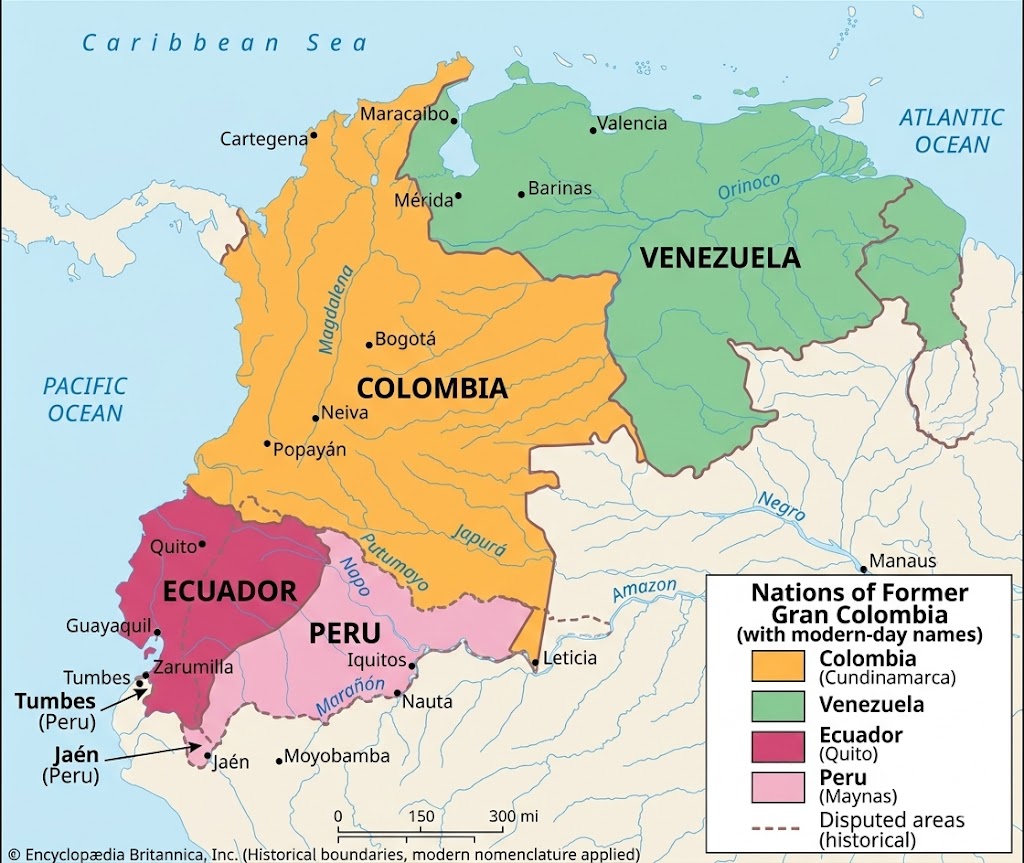
The Colombia Problem
- 1903: Panama was a province of Colombia — not an independent country
- Jan 1903: Hay-Herrán Treaty — 99-year lease, $10M plus $250K per year
- Aug 1903: Colombian senate rejected it unanimously
- Colombia wanted more money and more sovereignty protection
A Revolution in Three Days
- Nov 2, 1903: USS Nashville arrives at Colón, Panama
- Colombian troops arrive the same day — Nashville blocks their movement
- Nov 3: Panamanian revolution — zero combat
- Nov 6: U.S. recognizes Panama — fastest recognition in American history
- Signed by Philippe Bunau-Varilla — a French engineer, not a Panamanian
- Panamanian diplomats racing to Washington — arrived too late
- Terms: sovereign control of a 10-mile strip, in perpetuity
- Duration: 1903 to 1999 — ninety-six years
In His Own Words

Theodore Roosevelt, c. 1904 · Public Domain · Wikimedia Commons
The Gold Roll and Silver Roll
- White Americans and some Europeans
- Paid in gold dollars
- Superior housing, cafeterias, medical care
- Black workers from Caribbean (esp. Barbados)
- Paid in Panamanian silver at lower rates
- Separate, inferior housing and medical attention
Solving the French Problem
- Engineers, not doctors, ran the effort
- Hospital flower pots were mosquito nurseries
- Better patient care meant faster disease spread
- Death toll suppressed to protect investors
- Physician in charge before first shovel of dirt
- Yellow fever eliminated from the Zone by 1906
- Sanitation was operational, not humanitarian — keep the workforce alive long enough to finish

Dr. William Crawford Gorgas, U.S. Army Surgeon · Public Domain
The Eighth Wonder of the World
- 51 miles of canal through jungle, swamp, and the Continental Divide
- 175 million cubic yards of earth and rock excavated
- 56 steam shovels working simultaneously at peak construction
- 10 years of construction — completed ahead of schedule, 1914
- The Culebra Cut — 9 miles through the Continental Divide; constant landslides
- Three sets of locks to lift ships 85 feet above sea level and lower them back down
- Gatun Lake — largest man-made lake in the world at the time, created by damming the Chagres River
- Disease environment conquered before construction began
Empire Without Annexation
- American courts, laws, and currency
- Segregated schools, company stores
- Panamanians inside: limited rights, subject to U.S. jurisdiction
- Inside their own country
⏸ Pause & Reflect
The United States didn't formally conquer Panama. It didn't annex it. What did it actually do?
- Liberated Panama from Colombian oppression
- Engineered a revolution, then signed away the new nation's territory through a non-Panamanian representative
- Pursued a mutually beneficial treaty that Panama freely accepted
- Exercised legitimate strategic necessity under international law
Face III: Doctrinal Empire
Improvisation becomes doctrine. Doctrine outlasts the improviser.
Six Years of Improvisation
- Cuba, 1898: "Liberate the oppressed"
- Philippines, 1899–1902: "Temporary stewardship" — "Order before liberty"
- Panama, 1903: "Civilization requires it" — "However reluctantly"
This nation cannot govern itself. We must step in. This will be temporary.
December 1904: Roosevelt writes it into doctrine.
The Roosevelt Corollary (1904)
Read every word slowly. Each one is doing work.
The Corollary in Action
- Debt crisis: European creditors threaten warships
- Roosevelt alarmed: European ships near his canal
- U.S. takes over Dominican customs collection
- Pays creditors directly, removing the European justification
- Nicaragua, 1912: U.S. Marines occupy the country — stay until 1933
- Haiti, 1915: U.S. occupation begins — lasts until 1934
- Dominican Republic, 1916: Full military occupation — lasts until 1924
- Nicaragua again, 1926: Marines return to suppress another rebellion
⏸ Pause & Reflect
Which is most dangerous to democracy in the long run?
- Leaders who openly pursue empire
- Leaders who pursue empire while insisting they are reluctant
- Doctrines that survive the leaders who write them
- Infrastructure that generates its own logic for maintenance
Face IV: Commercial Empire
No flags. No governors. Just insistence — and bayonets when refused.
The Open Door Notes, 1899–1900
- Qing dynasty weakening — European powers and Japan carving out spheres of influence
- The U.S. arrives late — no sphere, no foothold
- 400 million potential customers — and no guaranteed access
- Secretary of State John Hay sends diplomatic notes to the imperial powers
- Demand: equal commercial access for all nations in all spheres
- No annexation, no sphere, no administration
- Just: the door must stay open
The Boxer Rebellion, 1900
- Chinese nationalist uprising against foreign presence — missionaries, merchants, diplomats
- Boxers besiege the foreign legation quarter in Beijing for 55 days
- Qing government sides with the Boxers — declares war on the foreign powers
- U.S. citizens trapped in Beijing
- Open Door policy meaningless if Americans cannot safely operate in China
- Hay's diplomatic notes had no enforcement mechanism
- Commercial empire required military force to defend it
The Eight-Nation Alliance
American Troops March Into Beijing, August 1900
- U.S. forces join Britain, France, Germany, Russia, Japan, Italy, Austria-Hungary
- Beijing captured, legations relieved, city looted
- Boxer Protocol (1901): China pays $333 million in indemnities
- Foreign troops permanently garrisoned in Beijing
- U.S. did not demand a sphere of influence or territorial concession
- Returned its share of the Boxer Indemnity — used to fund Chinese students studying in America
- Presented as proof of American benevolence
- Critics noted: the indemnity should not have been imposed in the first place
⏸ Pause & Reflect
The Open Door Notes claimed to defend Chinese sovereignty.
American troops then marched into Beijing.
Is there a meaningful difference between
commercial empire and territorial empire?
Or does commercial empire simply defer the moment
when force becomes necessary?
The Four Faces Together
Roosevelt didn't choose between them. He pursued all four simultaneously.
Four Faces, One Logic
Flags · Armies · Governors
Highest cost, highest visibility
Chokepoint control
No occupation required
Justification pre-written
Next president inherits it
No territory needed
Force when diplomacy fails
The Three-Lecture Arc
Empire as spectacle
Mass media, emotional mobilization, Roosevelt as hero
Empire as coercion
Occupation, atrocity, the gap between what war promises and what empire requires
Empire as systems
Four models built simultaneously — territorial, infrastructure, doctrinal, commercial
The Question That Follows You
Or does the infrastructure itself generate the logic that justifies maintaining it?
Once you've built the canal, written the Corollary, established the base network — do you still have a choice? Or does the infrastructure make the choice for you?
Where to Go Next
- Julie Greene — The Canal Builders (2009) · Labor and race in the Canal Zone
- David McCullough — The Path Between the Seas (1977) · Standard narrative; engineering and political story
- Walter LaFeber — The Panama Canal (1979) · Panamanian resistance; transfer politics
- Paul Kramer — The Blood of Government (2006) · Jim Crow as imperial system
- Alfred Thayer Mahan — The Influence of Sea Power (1890) · Read what Roosevelt read
- Roosevelt Corollary (1904) · Miller Center Presidential Speeches archive
- Michael Conniff — "Panama Since 1903," Cambridge History of Latin America
- Marixa Lasso — "Race and Ethnicity in the Construction of the Panama Canal," JLAS