⌨️ Keyboard Shortcuts
Keyboard Shortcuts
| → or Space | Next slide |
| ← | Previous slide |
| S | Speaker notes view |
| O or Esc | Slide overview |
| F | Fullscreen |
| B or . | Pause/black screen |
| Alt + Click | Zoom in |
| Esc | Close popups |
Click dotted underlined terms to open definition popups.
What This Lecture Is NOT
- A battle-by-battle history of the "Indian Wars"
- A story of inevitable progress
- Frontier romance or mythology
What it IS: An analysis of how conquest functioned in practice
Guiding Question
Key premise: Battles matter as moments that reveal larger strategies—but policy, environment, law, and culture ultimately proved more decisive.
Part I
Native Nations Before Conquest
Political, Social, and Economic Systems
Political Organization
- Plains nations functioned as sovereign political communities
- Authority rested in councils and recognized chiefs/headmen
- Decision-making emphasized consensus over coercion
- Effective for mobile societies—but vulnerable to centralized nation-states
Sovereign Political Communities
Native nations governed themselves independently with their own laws, leadership structures, and diplomatic relations. They made treaties as equals with European powers and the U.S. government—evidence that even the U.S. recognized their political legitimacy.
Key point: U.S. officials often misread decentralized authority as political weakness rather than structural difference.
Economic Systems
Plains economies organized around:
- Buffalo hunting as the economic foundation
- Seasonal migration following resources
- Regional trade networks spanning thousands of miles
Wealth and status tied to kinship, mobility, and animals—NOT land ownership
The Buffalo Economy
The buffalo provided virtually everything Plains peoples needed:
- Food: Meat, both fresh and preserved as pemmican
- Shelter: Hides for tipis
- Clothing: Leather, fur, and wool
- Tools: Bones, sinew, horns
- Spiritual meaning: Central to religious ceremonies
This is why destroying the buffalo was such an effective weapon of conquest.
Gender Roles and Power
Men's Roles
- Hunting
- Warfare
- Diplomacy
- Political/military authority
Women's Roles
- Food processing
- Shelter construction
- Clothing production
- Control of household resources
Women exercised substantial influence through kinship networks and marriage alliances
The Challenge for Conquest
To dismantle these societies, the United States did not simply need military victory—it needed to undermine the ecological, economic, and social foundations of Native autonomy.
This explains why conquest took so many forms beyond battlefield combat.
Part II
Violence and Conquest
When Battles Matter—and When They Don't
Why Battles Aren't the Center
- Hundreds of armed conflicts occurred across the West
- Focusing on tactics obscures:
- Structural power imbalances
- Demographic pressure
- Industrial capacity
- Long-term policy outcomes
Native resistance failed not due to lack of courage—but due to asymmetries in logistics, population, and environmental control.
Two Battles That Matter Symbolically
Battles punctuate the story, but policy finishes it.
Battle of the Little Bighorn (1876)
On June 25–26, 1876, Lakota, Northern Cheyenne, and Arapaho forces defeated the U.S. Army’s 7th Cavalry under Lt. Col. George A. Custer near the Little Bighorn River in present-day Montana.
The battle grew out of the Great Sioux War (1876–77), sparked in part by U.S. efforts to force Lakota people onto reservations and seize the Black Hills after gold was discovered there.
Why it shocked Americans: Custer and over 200 soldiers were killed—an unexpected defeat that dominated national headlines.
Historical significance: The victory demonstrated the real strength of Indigenous resistance, but it also helped justify a major U.S. escalation—more troops, intensified campaigns, and increased pressure that pushed many Native communities onto reservations within a few years.
Wounded Knee Massacre (1890)
On December 29, 1890, U.S. soldiers massacred approximately 250-300 Lakota men, women, and children at Wounded Knee Creek, South Dakota.
The Lakota were being disarmed after practicing the Ghost Dance—a spiritual movement promising renewal. The military interpreted religious practice as military threat.
Historical significance: Marks the violent end of organized armed resistance on the Plains and coincides with intensified assimilation efforts.
Part III
Buffalo Destruction
Economic and Ecological Warfare
Buffalo Destruction
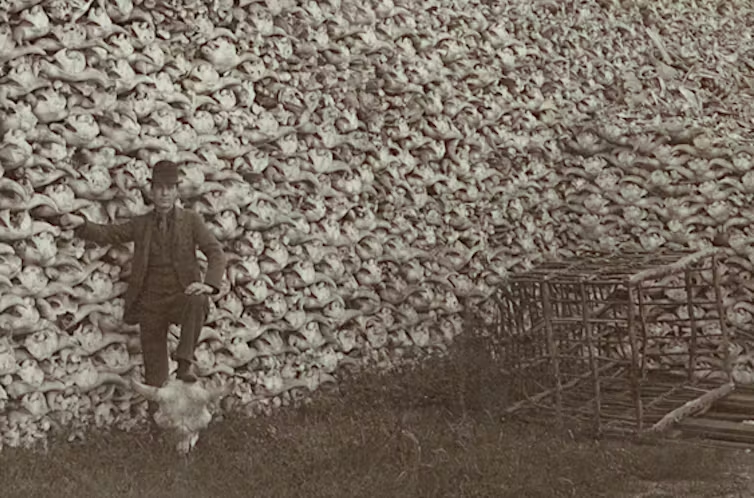
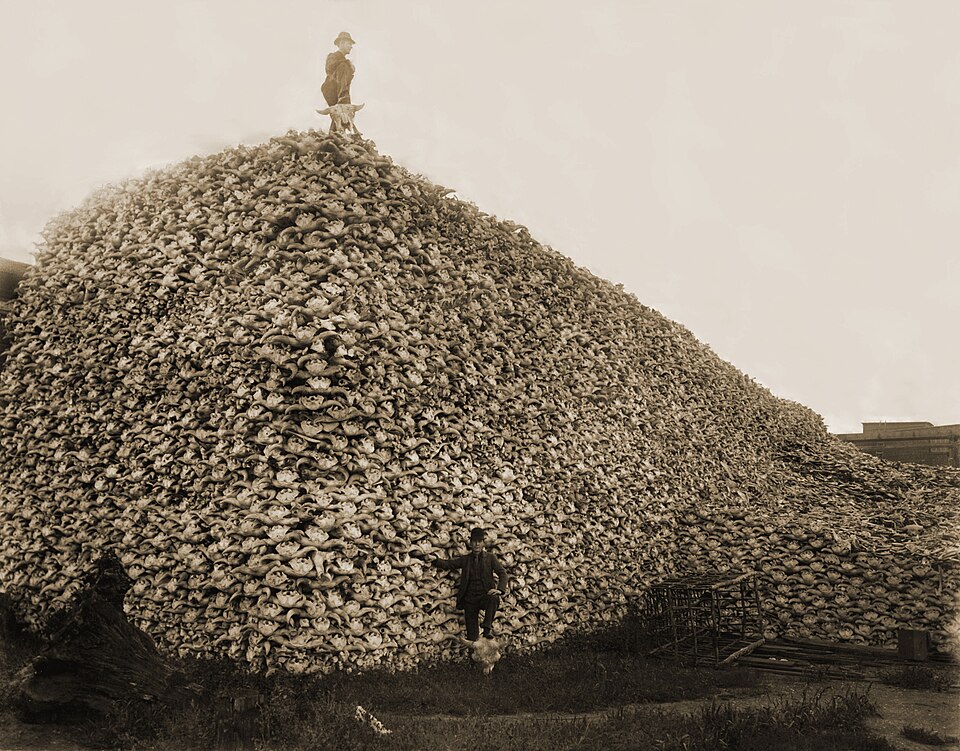
Destruction driven by:
- Railroad expansion
- Commercial hide markets
- Deliberate military strategy
The acknowledged logic:
Destroy the buffalo → Force dependence → Eliminate autonomy
Three Forms of Warfare
Economic
Destroyed the foundation of Plains economies
Ecological
Transformed the Great Plains environment
Cultural
Eliminated sacred and ceremonial center of life
Where military conquest proved costly or incomplete, environmental destruction succeeded.
Regional Variation: California
The Logic of Elimination
- Gold Rush (1849) created immediate settler pressure
- Minimal treaty-making or reservation planning
- Native peoples viewed as obstacles, not populations to manage
Forms of Violence
- Vigilante campaigns
- State-funded killing
- Federal inaction
Interpretation
Many historians describe this as genocide
Genocide in California
Historian Benjamin Madley documents that California's Indigenous population fell from approximately 150,000 in 1846 to 30,000 by 1873—an 80% decline in less than 30 years.
This included:
- State-funded militia campaigns
- Bounties for Native scalps and heads
- Enslavement under indenture laws
- Deliberate starvation
Madley's book is titled An American Genocide (2016)—the scholarly consensus increasingly supports this characterization.
📝 Check Your Understanding
Quick Question
Why did U.S. officials and commercial interests systematically destroy the buffalo herds?
- To clear land for railroad construction
- To force Native peoples into dependency on reservations
- To supply the commercial hide market
- All of the above
Part IV
The Reservation System
Containment and Dependency
The Reservation System
- Reservations as tools of spatial and political control
- Fixing mobile peoples in place enabled:
- Surveillance
- Ration-based coercion
- Administrative oversight
- Traditional authority eroded under federal agents
Dependency was not an accident but a structural feature. Reservations were designed to manage Native peoples, not preserve Native cultures.
Allotment: The Dawes Act (1887)
What It Did
- Broke up communal landholding
- Assigned individual plots (160 acres)
- Declared "surplus" land open to whites
Underlying Goals
- Dismantle communal sovereignty
- Impose private property norms
- Restructure family/gender relations
Results: Native land holdings fell from 138 million acres in 1887 to 48 million acres by 1934
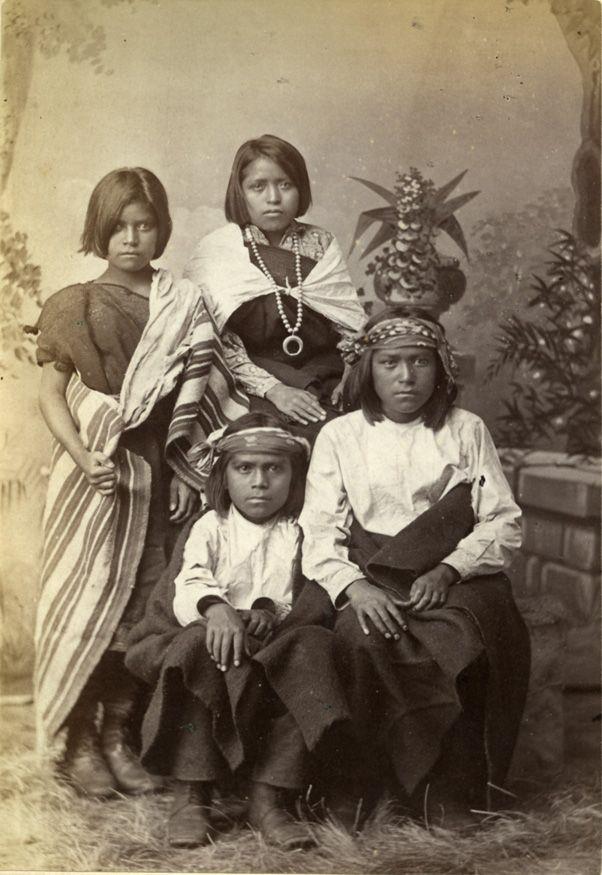
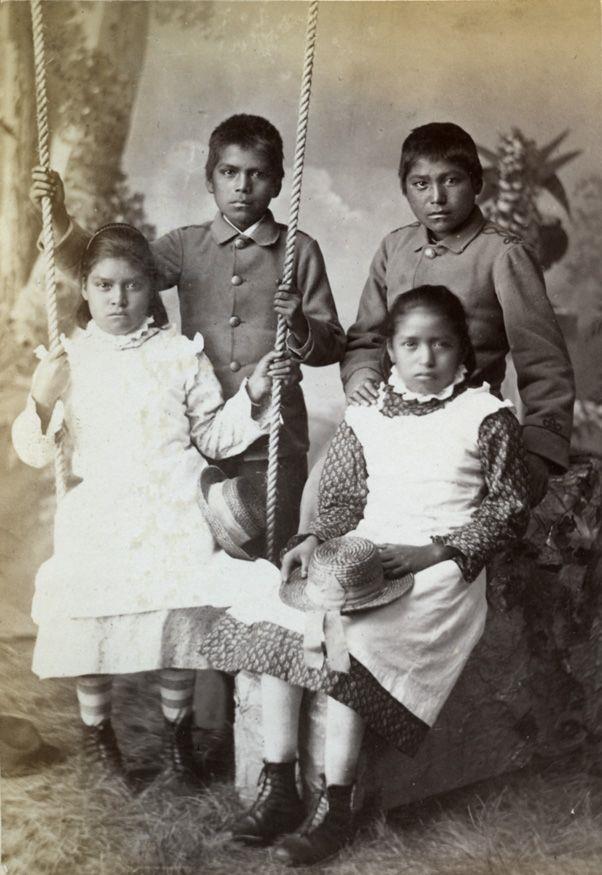
Boarding Schools
Conquest Across Generations
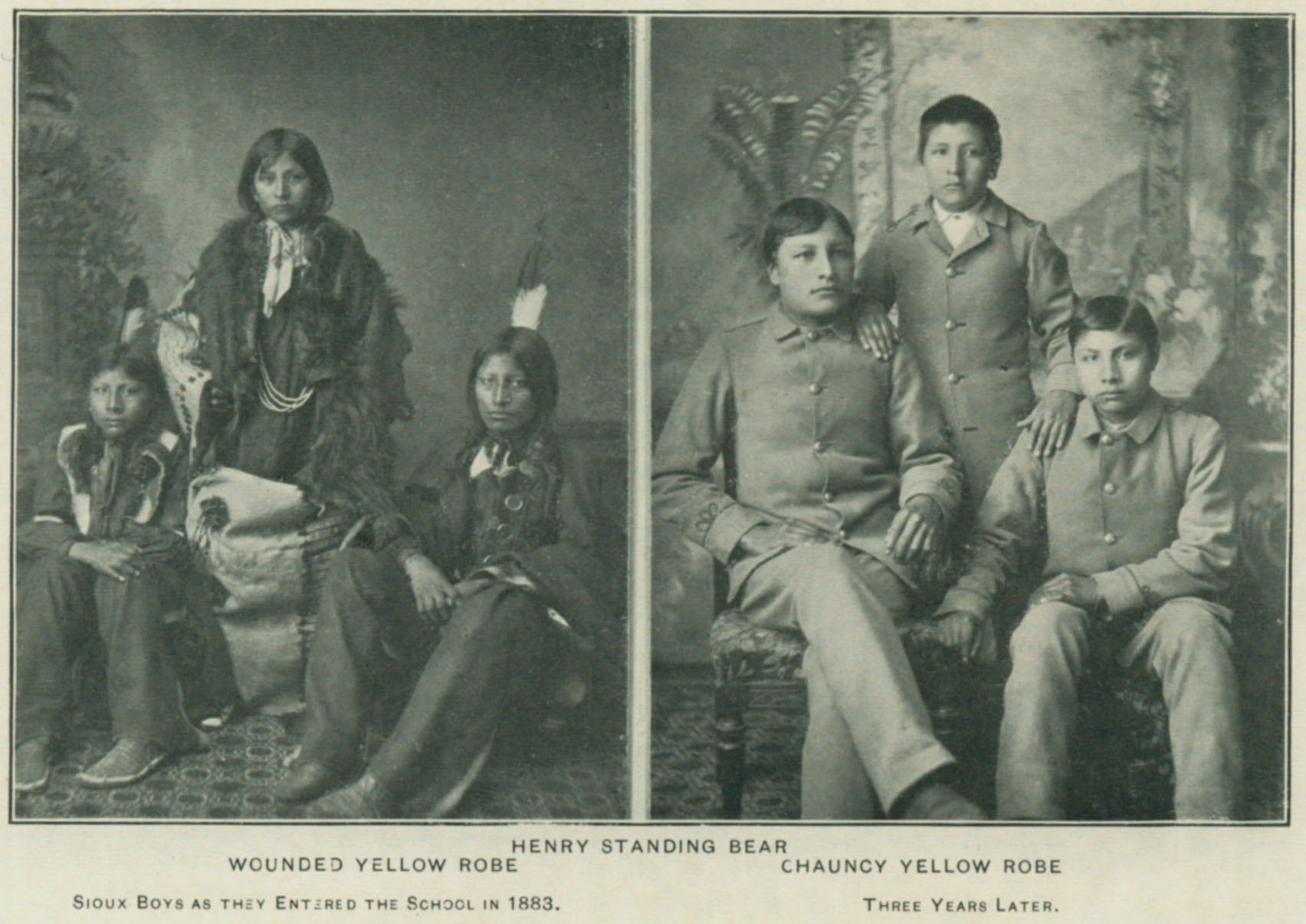
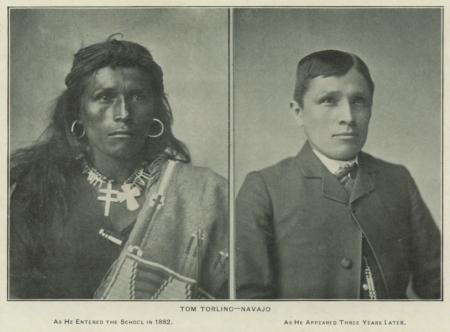
- Forced removal from families
- Suppression of language and religion
- Renaming, uniforms, discipline
- Cultural erasure as explicit goal
"Kill the Indian, save the man"
— Capt. Richard Henry Pratt, founder of Carlisle
Resistance and Survival
Ghost Dance and Wounded Knee
- The Ghost Dance: spiritual movement emphasizing renewal and hope
- Not inherently violent—rooted in belief and meaning-making
- U.S. officials interpreted religious practice as military threat
The Ghost Dance Movement
Founded by the Paiute prophet Wovoka around 1889, the Ghost Dance spread rapidly among Plains peoples experiencing devastation from conquest.
Core beliefs:
- Faithful dancing and moral behavior would bring renewal
- Ancestors would return
- The buffalo would come back
- White settlers would disappear or leave
This was a peaceful religious movement—the violence came entirely from the U.S. military's response.
Conclusion: Mechanisms of Conquest
Conquest operated through multiple mechanisms:
- U.S. Indian policy was adaptive, not uniform
- Native survival occurred under conditions of extreme coercion
Coming Next: The Mythic West
how to remember what they had done,
and how to transform violence into national memory.
Lecture 2 examines how the "Wild West" became American mythology.