Gothic Science
Phrenology, Mesmerism, and Monster Shows in Antebellum America
"The boundary between science and spectacle, reason and the uncanny"
Frankenstein's America
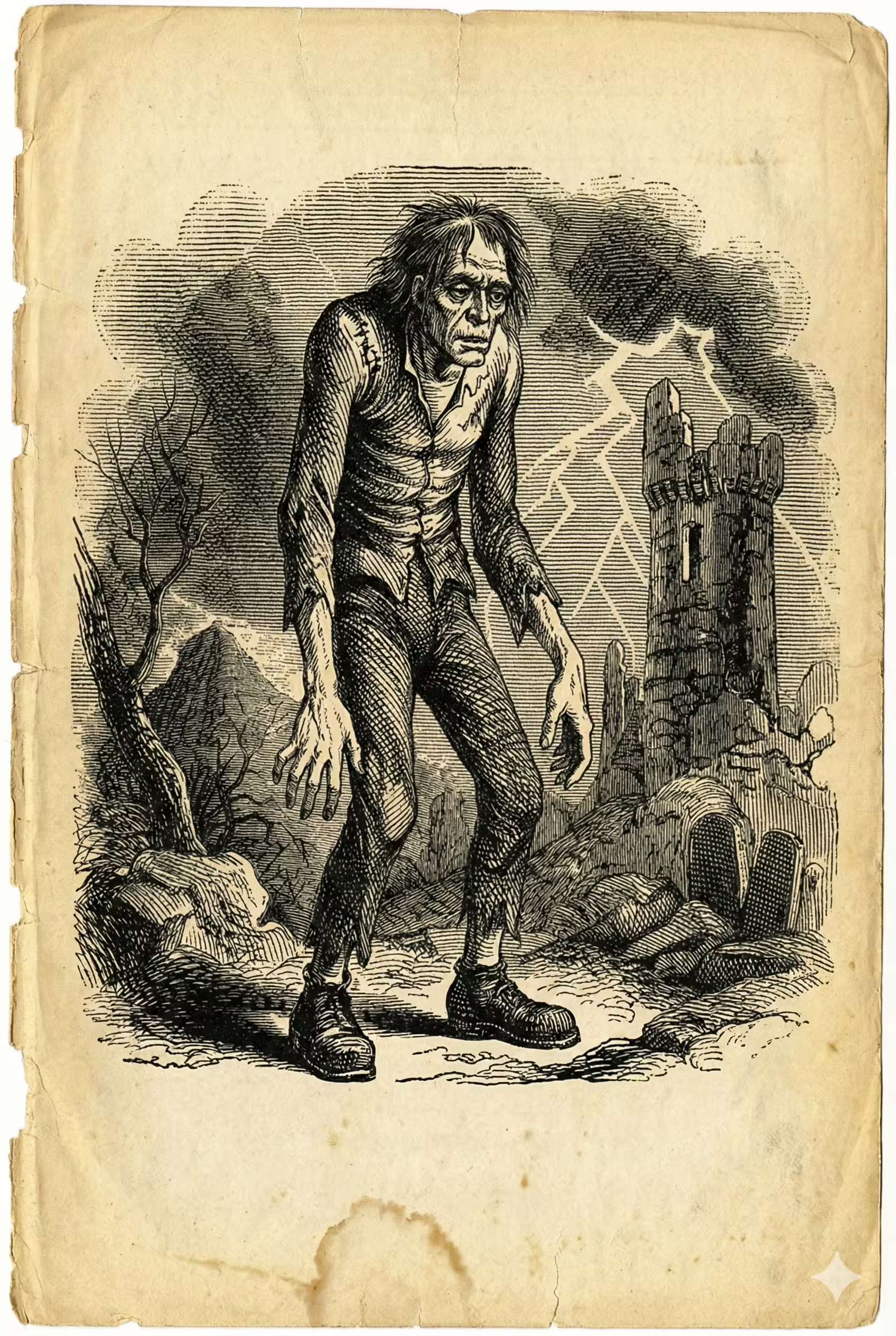
- A galvanic demonstration (frog legs twitching with electricity)
- A mesmerist's trance show
- A "monster" exhibit of preserved anatomical curiosities
To the antebellum audience, Gothic literature and scientific spectacle were not separate—they were part of the same search for hidden forces, forbidden knowledge, and uncanny truths.
Frankenstein
Frankenstein; or, The Modern Prometheus (1818) by Mary Shelley. A novel about a scientist who creates a living creature from dead body parts, only to be horrified by what he's made.
By the 1850s, Frankenstein had been adapted into popular stage plays, making the monster a household image and priming Americans to see scientific demonstrations as potentially dangerous glimpses into nature's secrets.
Galvanism
The use of electrical current to stimulate muscle contractions. Named after Luigi Galvani, who discovered that dead frog legs would twitch when exposed to electricity.
This phenomenon inspired Mary Shelley's Frankenstein and became a popular public demonstration in the 1840s.
Setting the Stage: A Nation in Flux
The Media Landscape
The Penny Press blurred the line between science and hoax
Example: The "Great Moon Hoax" of 1835 claimed astronomers discovered bat-winged humanoids on the moon—and thousands believed it!
Technological Vertigo
- Railroads collapsed distance
- Telegraphs collapsed time
- Cities exploded in size
- Immigration reshaped society
The Void
Institutional science was weak. Medicine lacked germ theory. Psychology didn't exist. Religious certainty was fragmenting.
When technology raced ahead of understanding, spectacle-science filled the void.
Penny Press
Cheap newspapers that cost only one cent, making news accessible to working-class Americans for the first time. Started in the 1830s with papers like The New York Sun.
These papers prioritized sensational stories over accuracy, conditioning the public to accept "scientific marvels" that sounded like fiction.
Phrenology
Mapping the Gothic Self
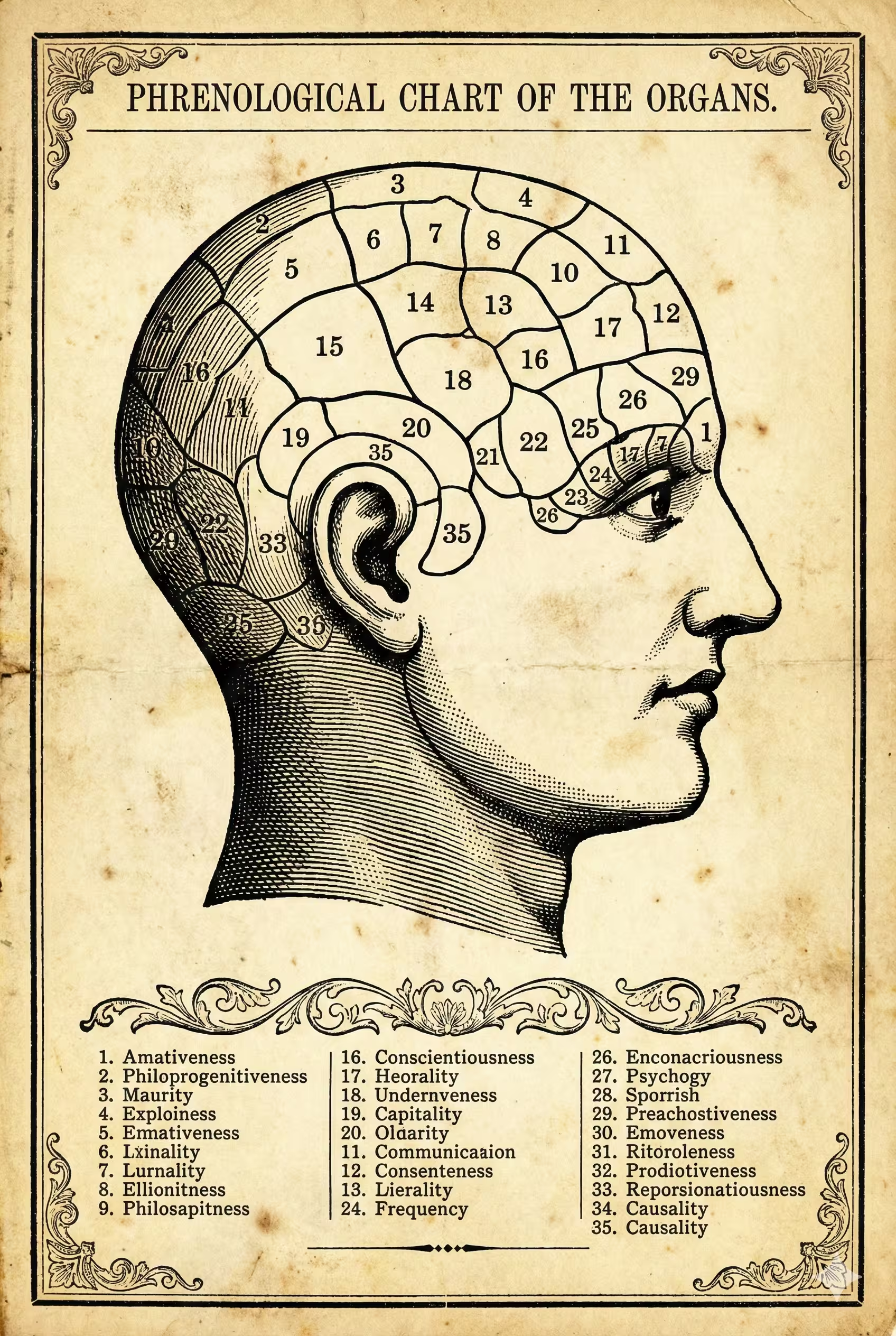
The Core Idea: A Gothic Map of the Mind
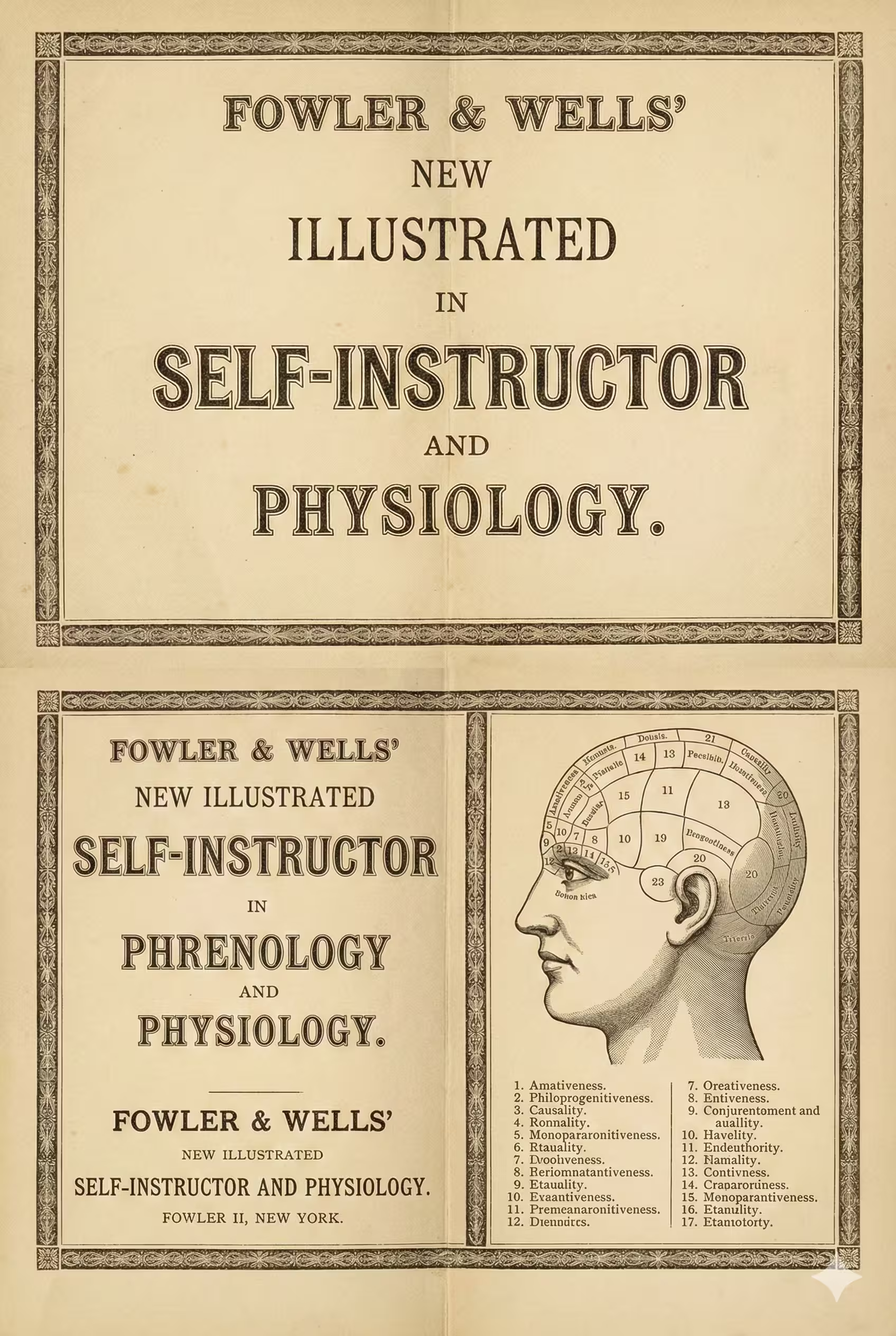
The Theory
The skull's shape reflects hidden "organs" of character. Traits like amativeness (romance), combativeness, and acquisitiveness (greed) are measurable.
The Gothic Map: The self has hidden chambers the skull betrays. The body becomes a legible text—outer bone revealing inner monstrosity or virtue.
Amativeness
In phrenology, the faculty of romantic and sexual love. Located at the base of the skull at the back of the head.
Combativeness
In phrenology, the propensity for conflict, courage, and defensive resistance. Located above the ears on both sides of the head.
Acquisitiveness
In phrenology, the desire to possess and accumulate property. Located on the sides of the head above the temples.
The Experience: Visiting the Fowlers
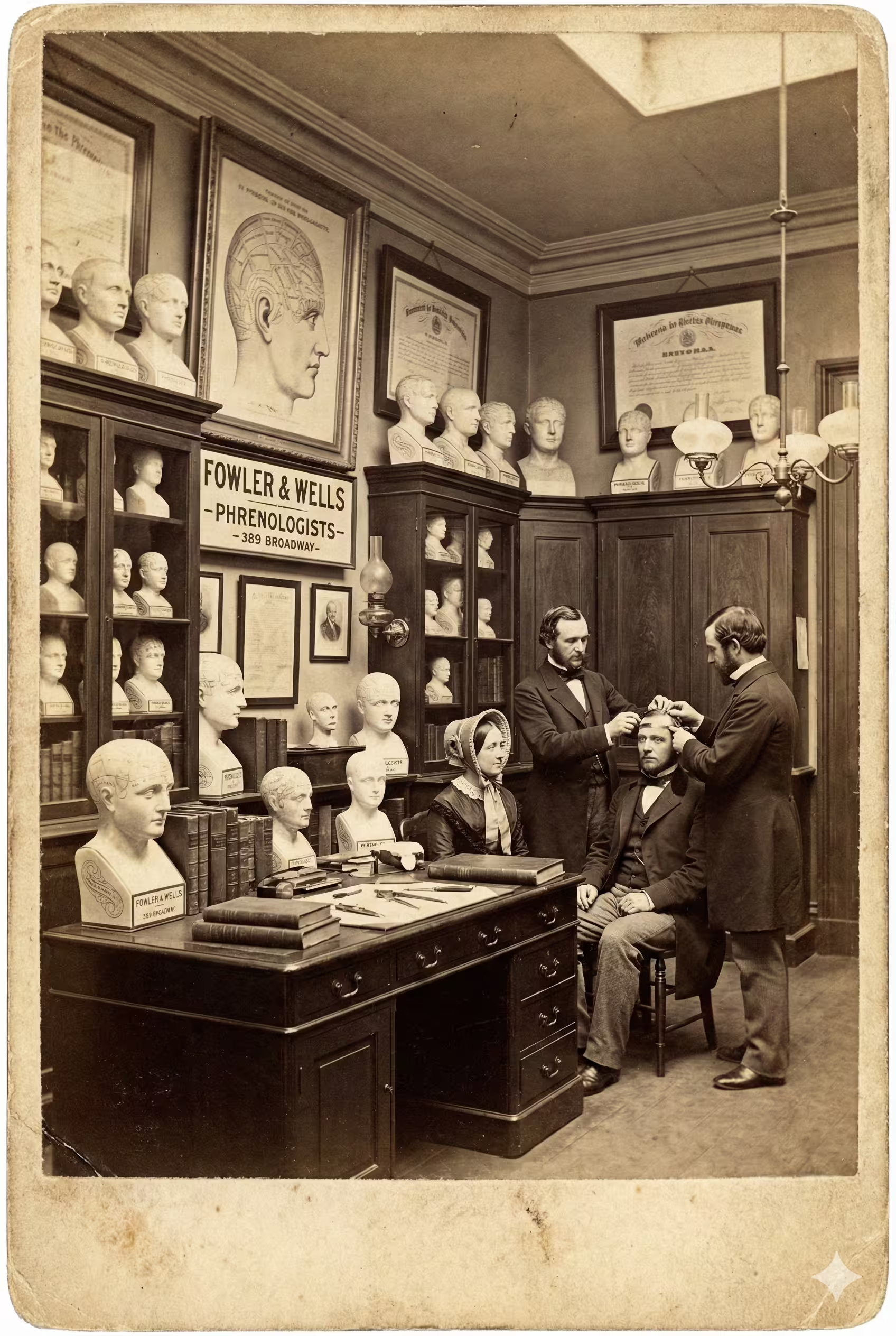
The Fowler Brothers
Orson and Lorenzo Fowler turned phrenology into big business in 1830s-50s New York.
The Reading Process:
- Straight-backed chair in intimate room
- Examiner's hands glide over scalp
- Running commentary on bumps and depressions
- Discussion of moral strengths and dangerous tendencies
Cost: 25¢ per reading, $3 for a printed chart
Why Phrenology Became a National Craze
Democratic
Anyone could learn the system—not reserved for elites
Practical
Used for hiring, courtship, child-rearing, career choice
Objective-Seeming
Gave scientific authority to intuition about character
Comforting
Imposed order on inner chaos; first mass-market personality system
America's first scientific self-help movement
Literary & Cultural Echoes
The Gothic Writers
Edgar Allan Poe & Nathaniel Hawthorne:
- Hidden compulsions
- Psychological doubling
- Concealed sin
- The layered,unstable self
Phrenology provided the "technology" for reading the darker psyche
The Optimist
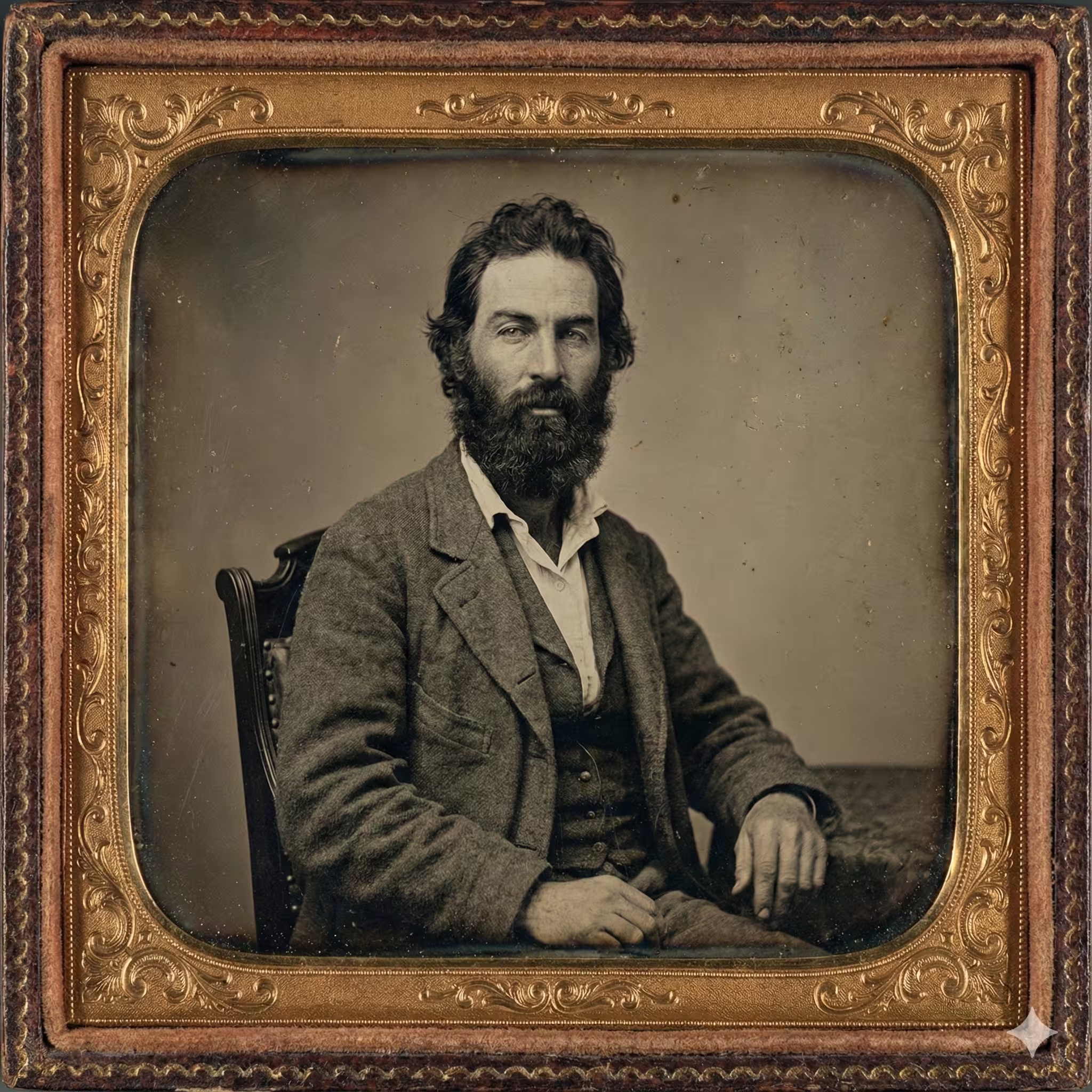
Walt Whitman:
Saw phrenology as democratic proof of human potential. Published his own phrenological chart in Leaves of Grass (1855).
"This science could be sunny as well as spooky"
The Darkest Turn: Scientific Racism
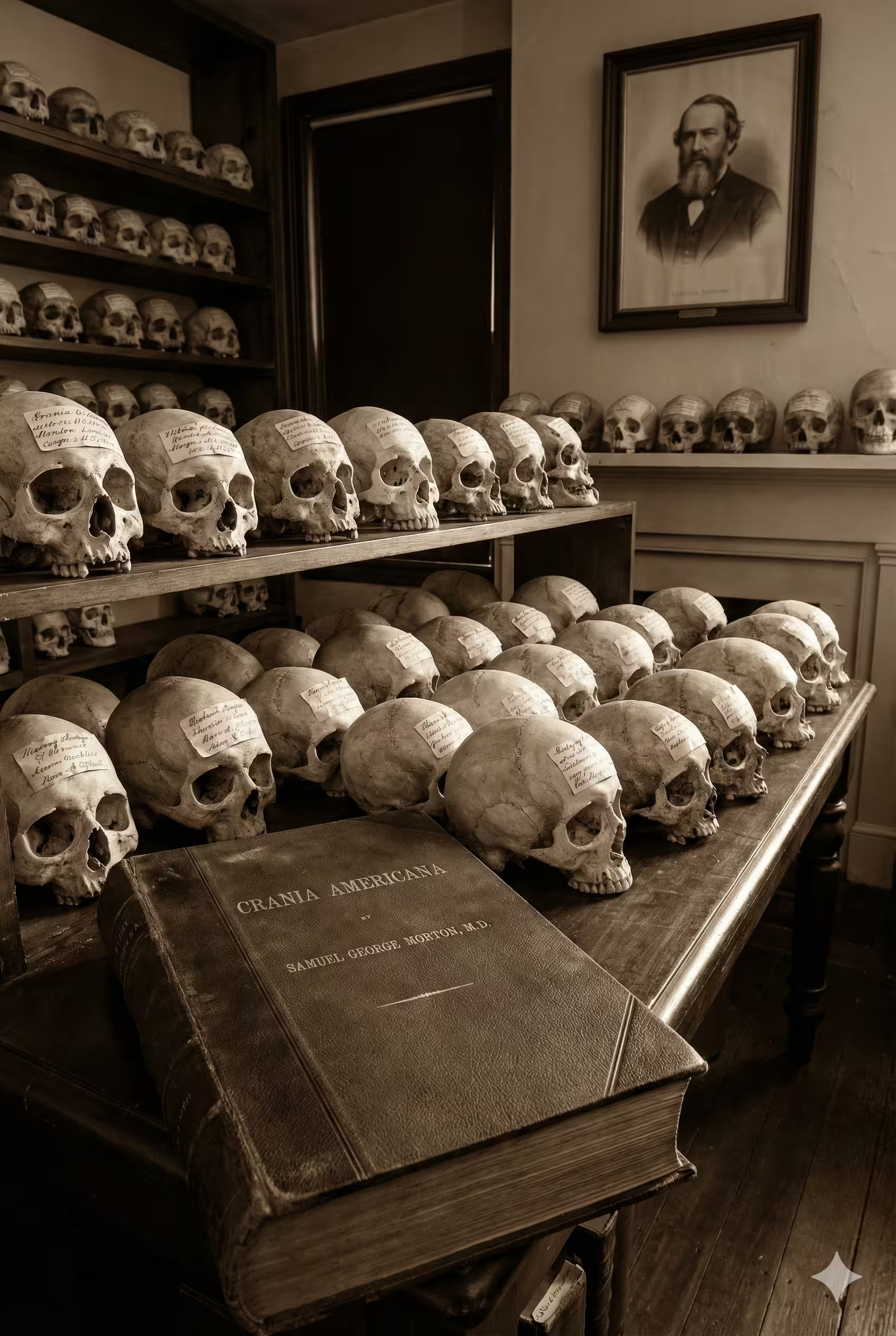
Samuel Morton's Crania Americana (1839)
Morton collected over 1,000 skulls to rank races "scientifically"
The Shift
Phrenology moved from self-help to oppression
- Used to justify slavery
- Used to justify Native American removal
- Used to justify anti-immigrant prejudice
Legacy: Laid groundwork for Social Darwinism, eugenics, and racial anthropology
Samuel George Morton (1799-1851)
Philadelphia physician who collected over 1,000 human skulls and measured their internal capacity (cranial volume) to argue that different races had different intellectual capacities.
His work was later proven to be based on flawed measurements and racist assumptions, but it was highly influential in the 1840s-50s.
Mesmerism
The Gothic Spirit on Stage
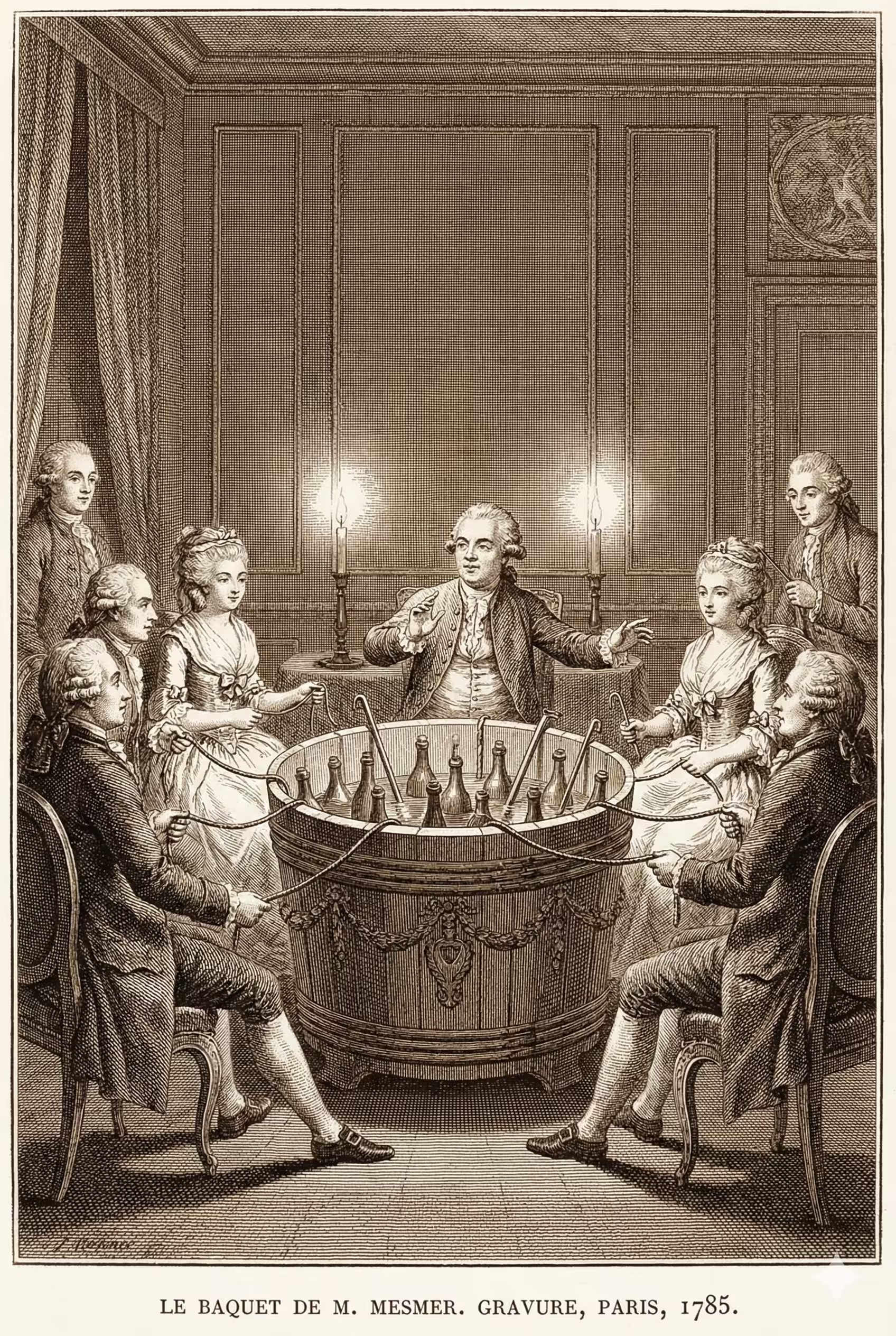
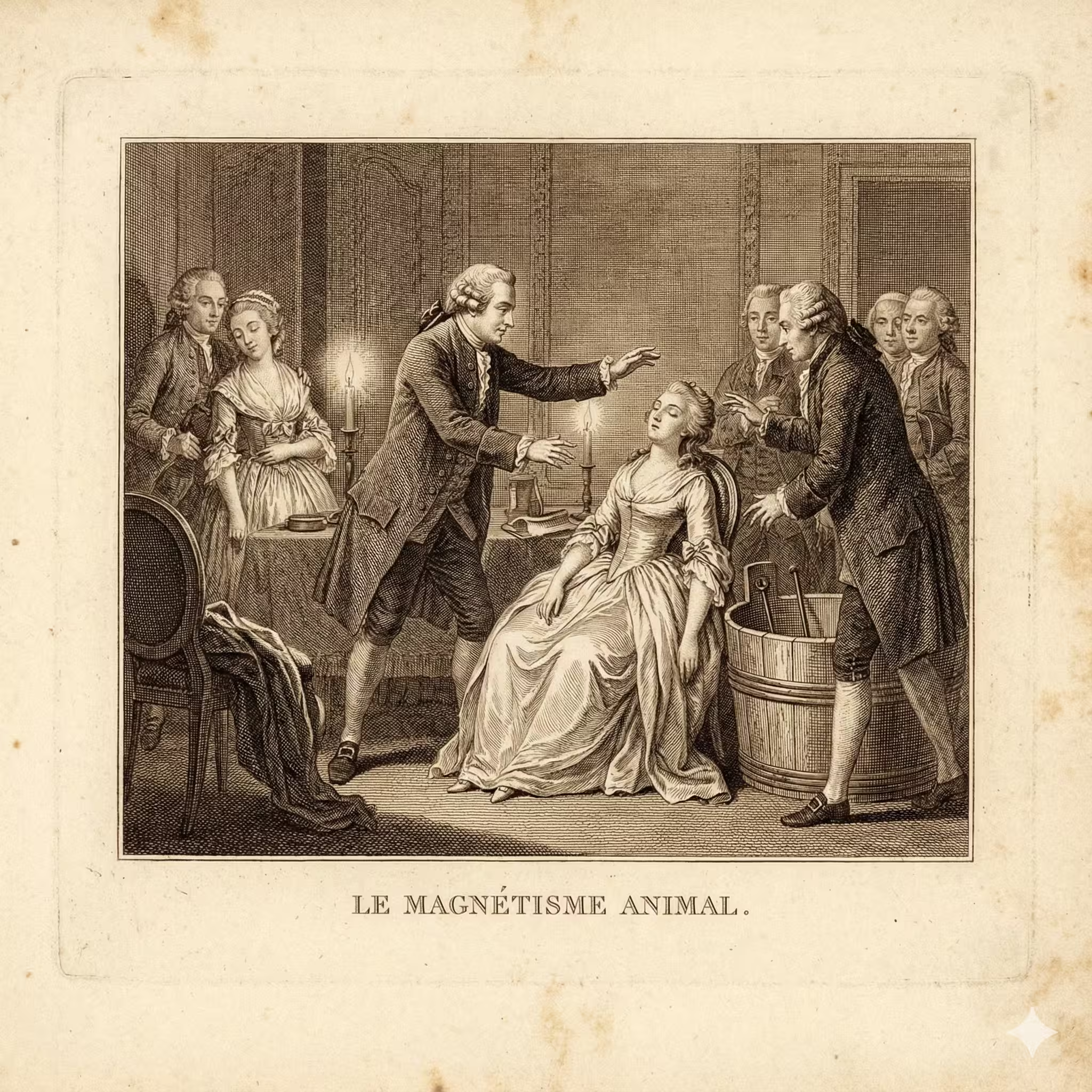
Animal Magnetism: The Theory
The Claim
An invisible magnetic fluid flows through all living bodies. An "operator" can manipulate this fluid using will and rhythmic hand passes.
The Promise
- Unlock clairvoyance
- Suppress pain
- Release trapped emotions
- Master unseen forces
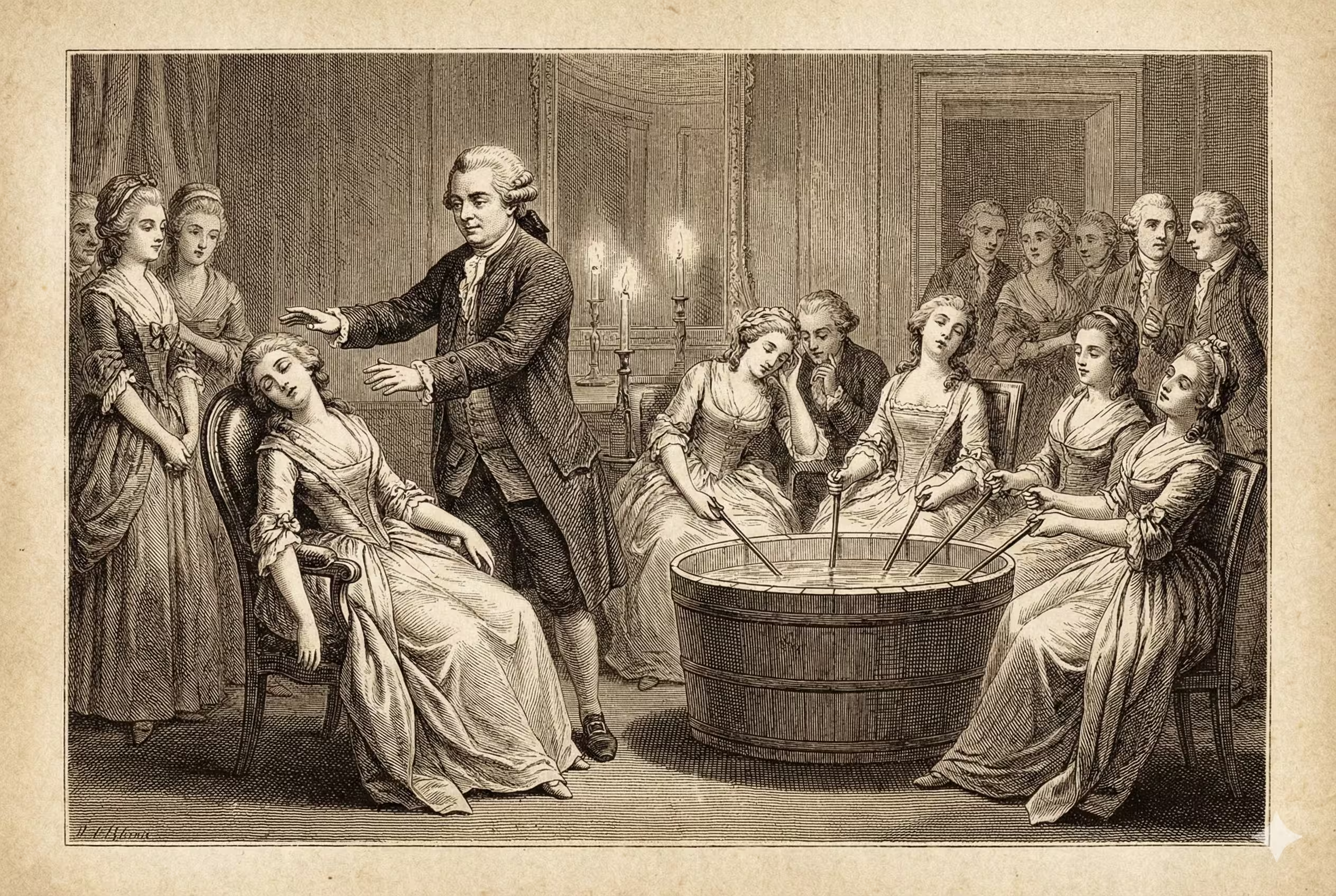
Magnetic Fluid / Animal Magnetism
An invisible, universal force that Franz Anton Mesmer (1734-1815) believed flowed through all living things. He thought this "fluid" could be manipulated to restore health and that blockages in its flow caused disease.
The fluid was later proven not to exist, but the psychological effects of mesmerism were real—leading to the development of hypnosis.
Clairvoyance
The supposed ability to perceive things beyond normal sensory perception—to "see" events happening far away, read sealed letters, or perceive the future.
Mesmerists claimed their subjects, when in a trance, could develop clairvoyant powers.
The Performance: Theatre of the Trance
The Setting
Dimly lit lyceums or parlors. Usually a male mesmerist operating on a young female subject (reinforcing gender norms of women as "natural" mediums)
The Tests
- Cold reading sealed envelopes
- Exhibiting pain resistance
- Describing distant events
- Speaking in languages never learned
Phreno-Mesmerism: The Hybrid Spectacular
The Demonstration
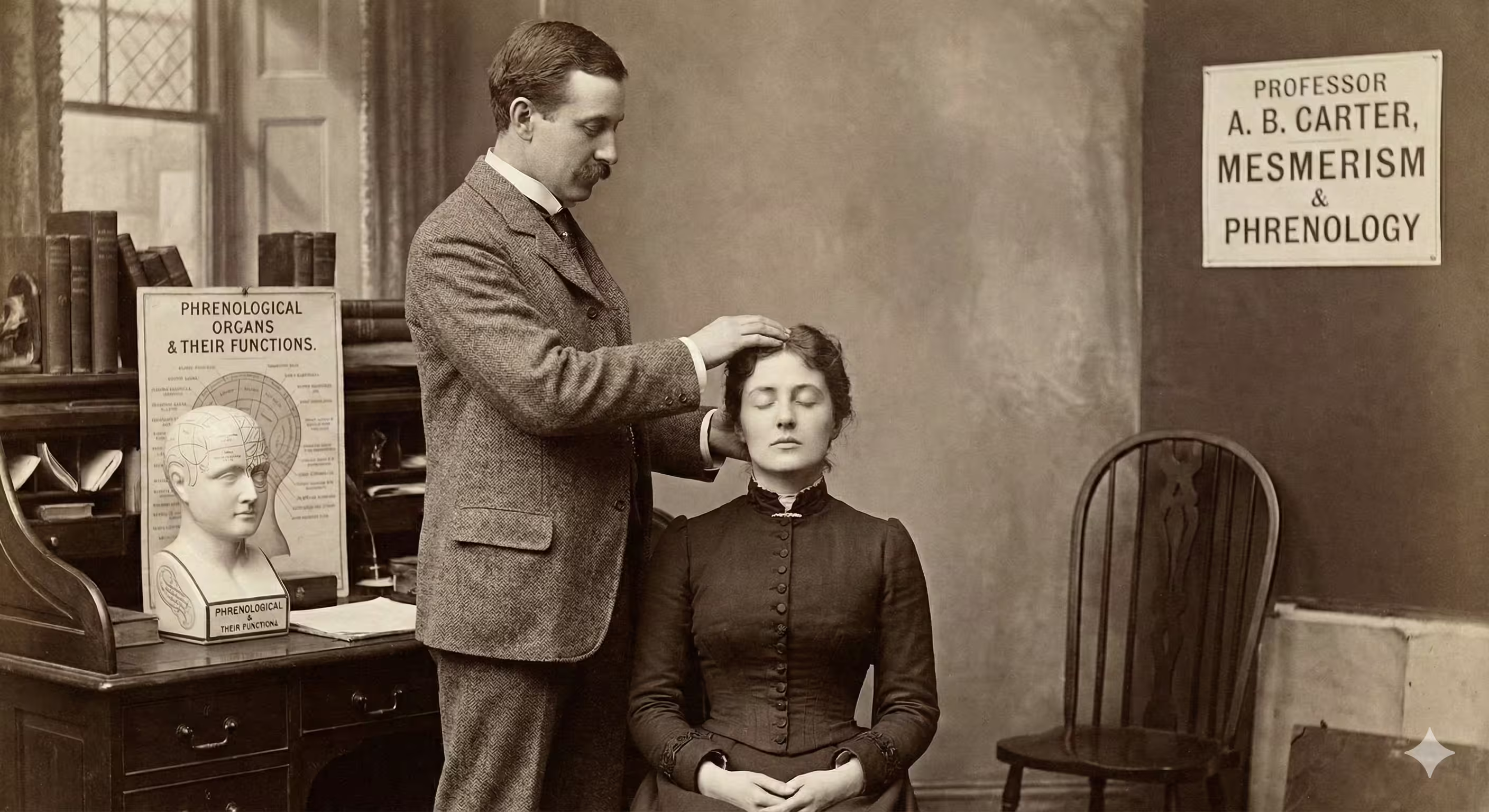
A subject is entranced, and the mesmerist touches specific phrenological bumps to elicit instant reactions:
Touch "benevolence" produces tenderness
Touch "combativeness" produces aggression
Touch "amativeness" produces flirtation
Touch "veneration" produces reverence
Touch "mirthfulness" produces laughter
Why It Was Compelling
- Gave phrenology "experimental proof"
- Made mesmerism more "scientific"
- Spectacular entertainment
What Was Really Happening
Pure suggestion. The mesmerist's touch combined with expectation and the subject's understanding equals convincing performance
The Ultimate Gothic Vision: Edgar Allan Poe
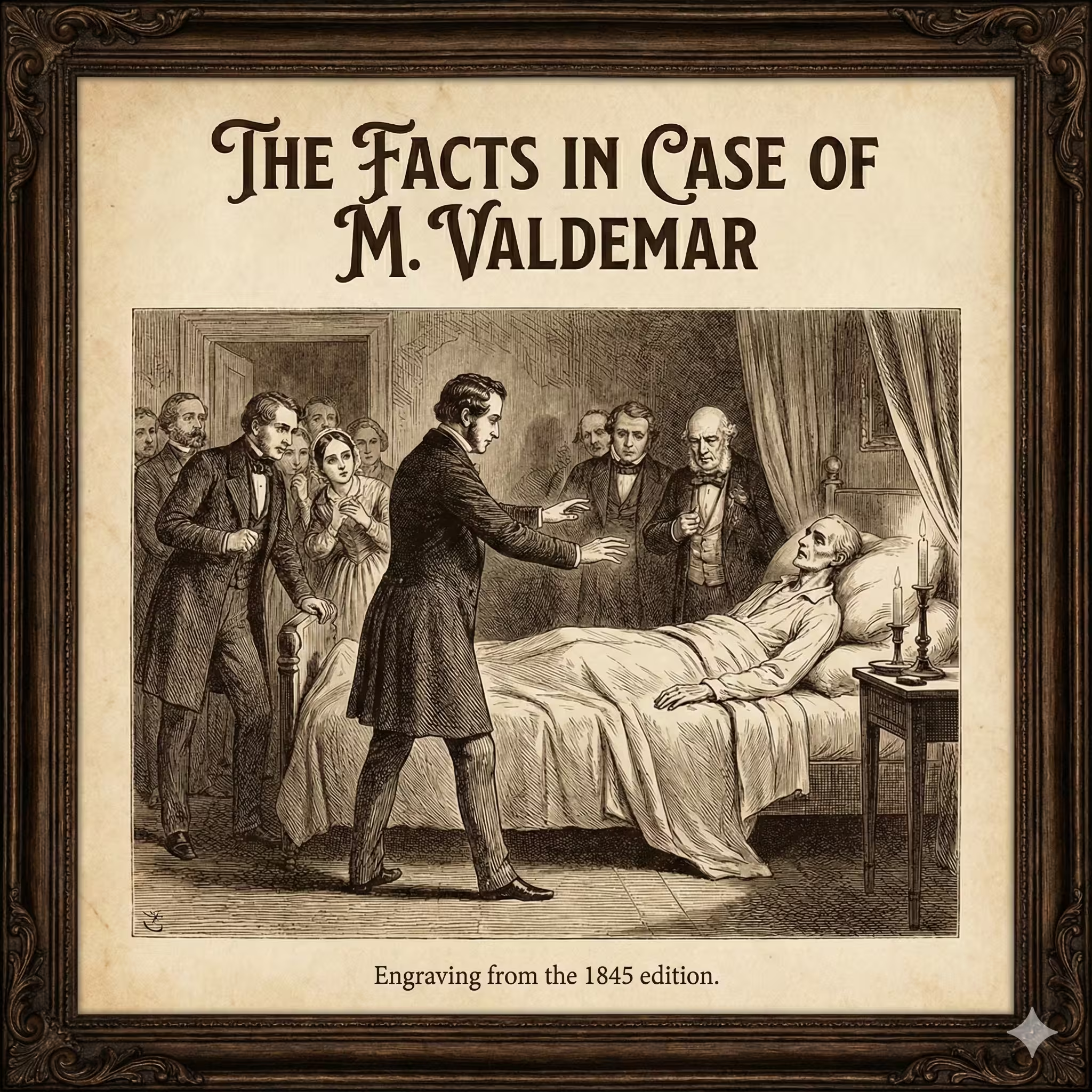
Poe's story: A mesmerist hypnotizes a dying man, suspending him at the exact moment of death for months—a "living corpse" trapped by science.
When finally awakened, Valdemar's body instantly dissolves into "a nearly liquid mass of loathsome—of detestable putridity."
Significance
This is the ultimate proof text for mesmerism as a "Gothic" bridge between life and death.
Poe takes mesmerism to its logical, terrifying extreme: humans tampering with invisible, dangerous forces—echoing Frankenstein's warnings.
From Science to Religion: The Birth of Spiritualism (1848)
The Connection
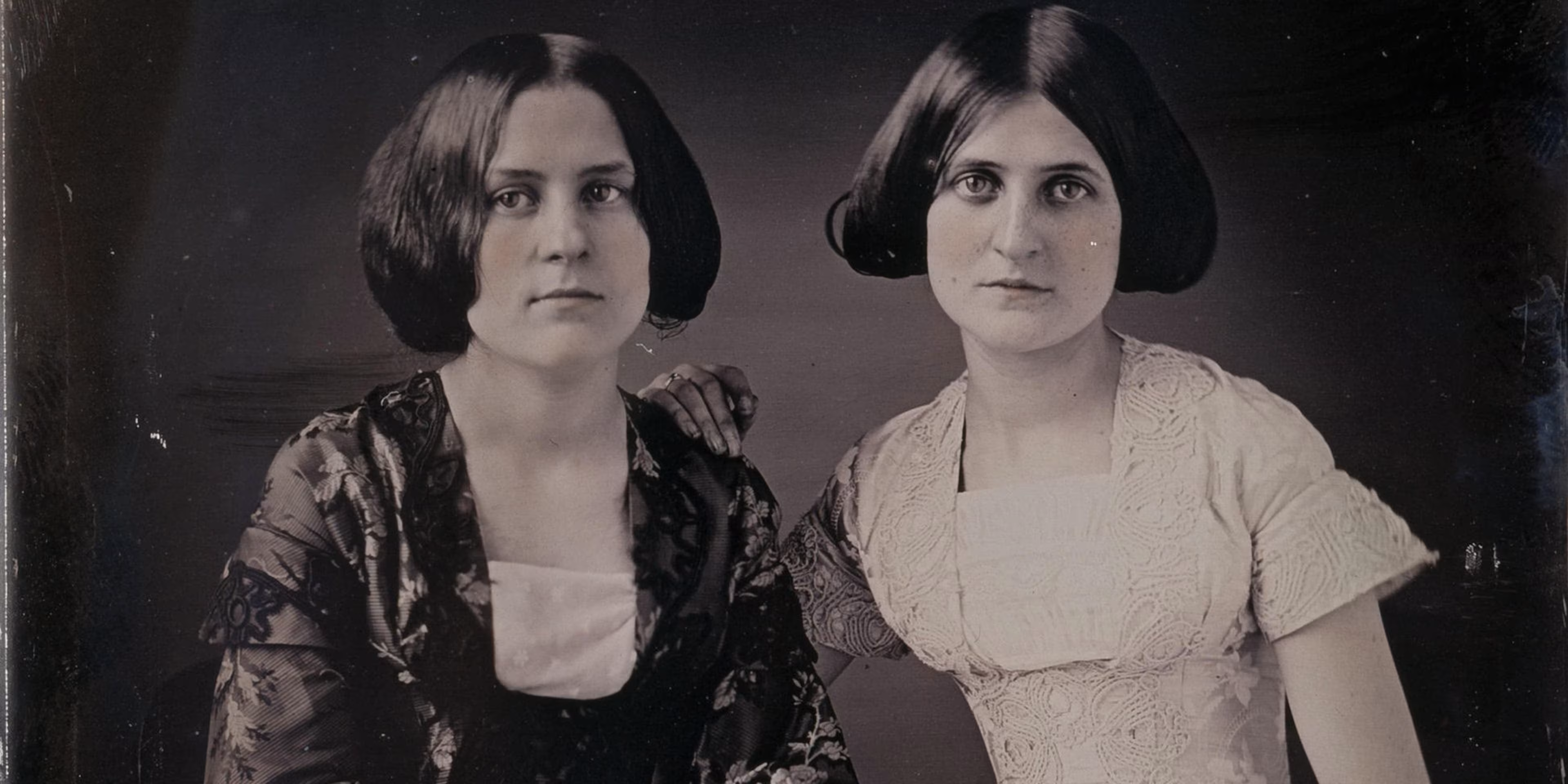
Mesmerism prepared the public to believe in "invisible telegraphs" between minds.
The Fox Sisters simply extended the line from the living to the dead.
Significance
Gothic Science becomes American Religion
By 1855, an estimated 2 million Americans considered themselves Spiritualists. The movement merged science, religion, and spectacle.
Monster Shows
Nature's Secrets in Jars
The Exhibits: Organizing the Grotesque
What Audiences Saw
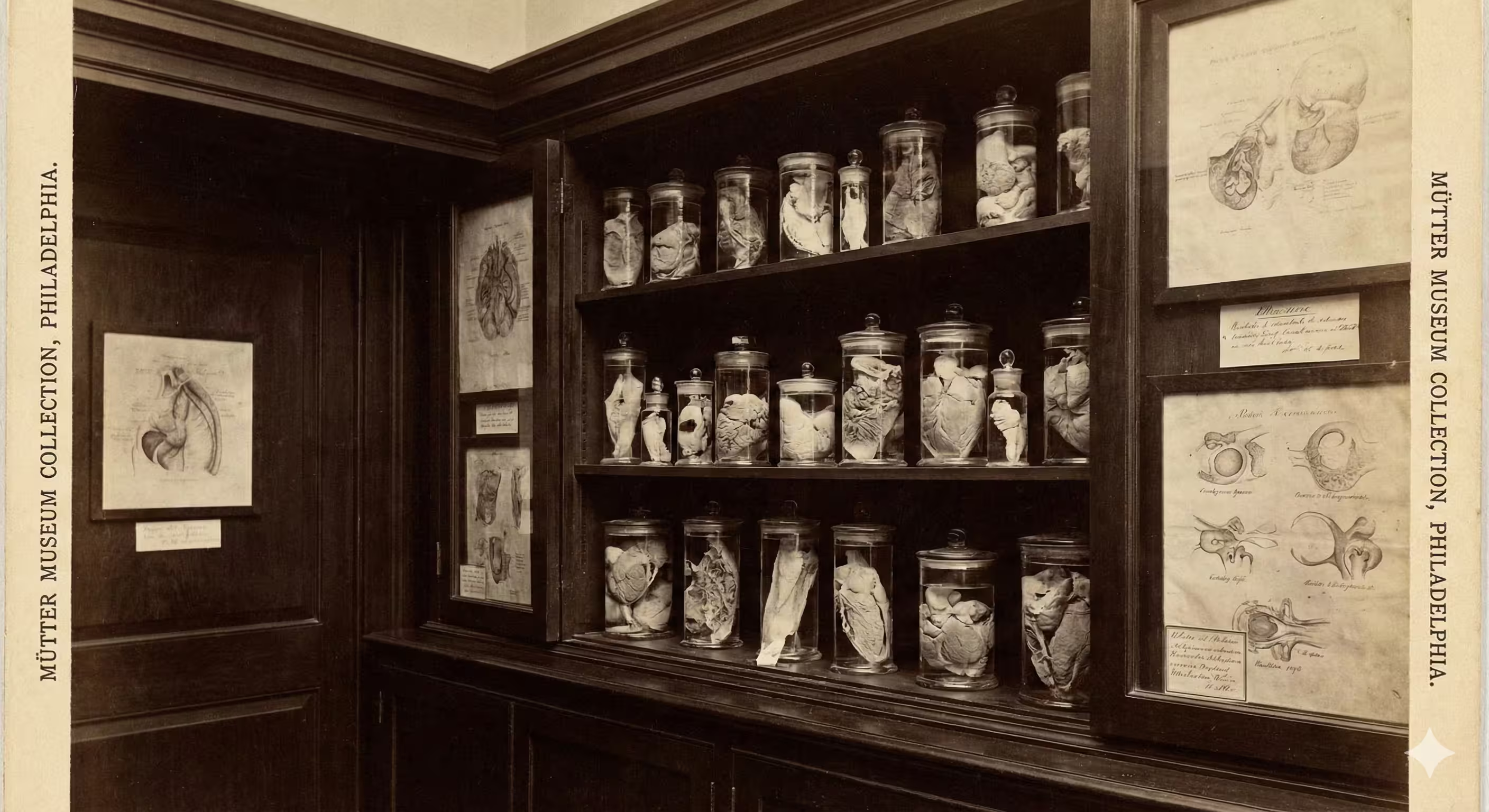
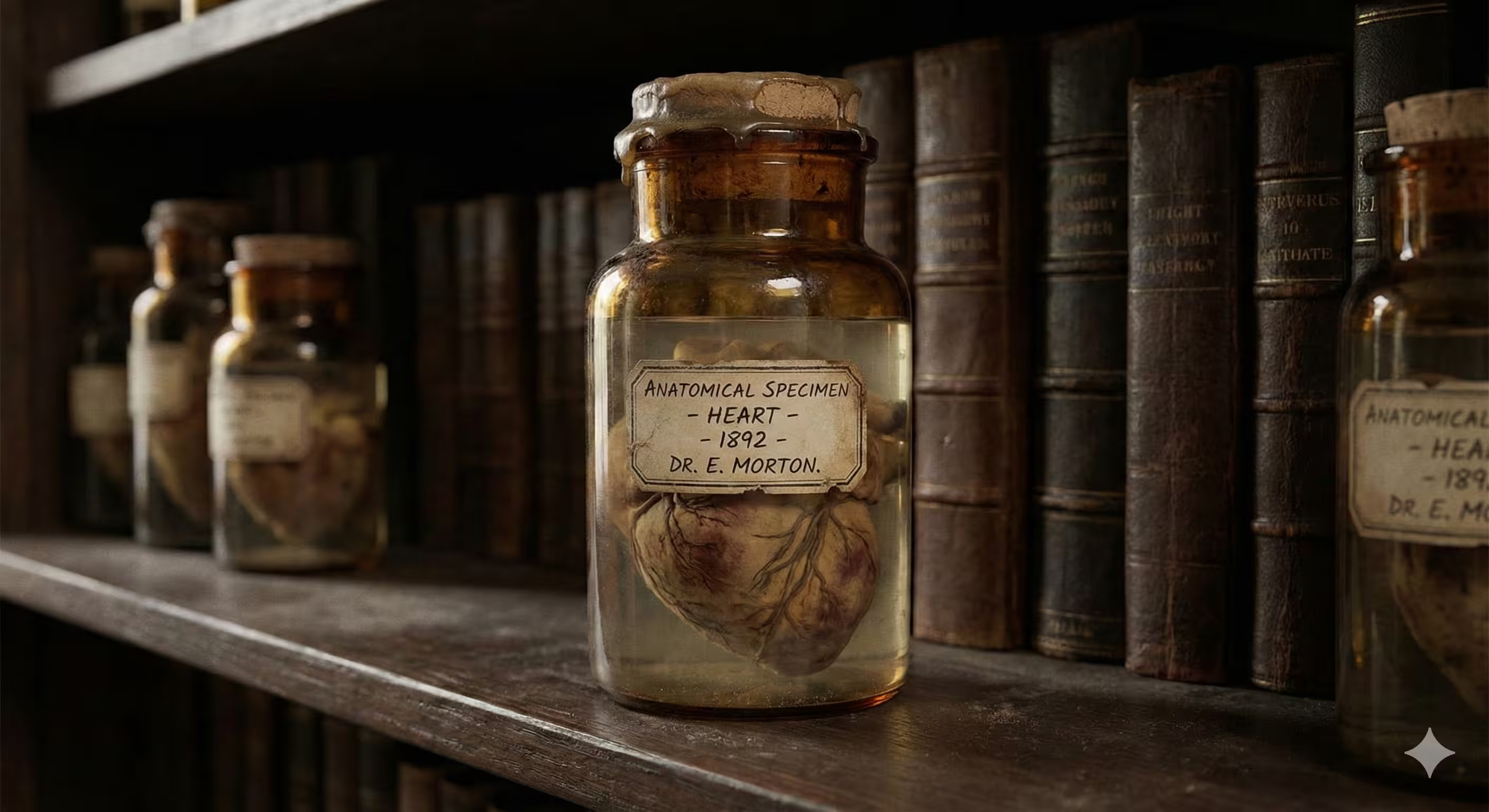
- Jars of preserved organs, tumors, diseased tissue
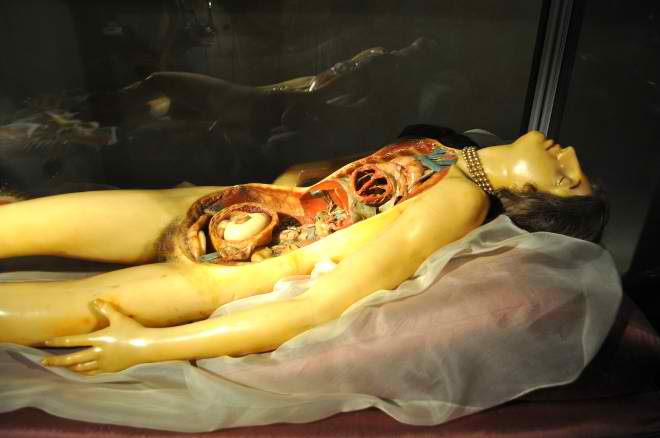
- Wax models of burns, skin diseases, STDs
- Congenital anomalies: conjoined twins, hydrocephalus
- "Two-headed calves" and animal deformities
- Pathological specimens labeled as "clues to nature's exceptions"
The Narrative
Lecturers blended moral instruction with spectacle, framing anomalies as warnings about sin, chance, or heredity
Darkened lighting, dramatic handling of specimens, scientific language legitimizing voyeurism
Human Exhibitions & Dime Museums
The Darkest Chapter: Living "Exhibits"
Dime museums featured living performers alongside anatomical specimens
Showmen used phrenology to classify performers as "missing links" or "primitives"
Exploitation
- Measuring heads on stage
- Pseudoscientific measurements
- Claimed "educational value"
- Actually entertainment and sensationalism
Gender and Power
- Male lecturers controlled interpretation
- Women rarely speaking
- Displays of "female disorders"
- Voyeuristic dynamics under guise of education
The line between education and exploitation was razor-thin
Bringing the Threads Together
Phrenology
Mapped hidden chambers of personality
Mesmerism
Explored hidden forces of the mind
Monster Shows
Exposed hidden vulnerabilities of the body
Together
They formed a Gothic Scientific Culture where spectacle and truth blurred
- Phrenology gave mesmerism credibility
- Phrenology gave monster shows a classification system
- All three made Gothic fears measurable and "scientific"
Conclusion: The Gothic Scientific Culture
These practices reveal deep Antebellum anxieties about boundary breakdowns:
- Science vs. Religion
- Civilized vs. Savage
- Male vs. Female
- Surface vs. Depth
- Life vs. Death
Modern Echoes
The blurring of entertainment and education, the spread of medical misinformation, and the long shadow of scientific racism all find their roots in this era where truth competed with spectacle.
"The boundary between science and spectacle, reason and the uncanny"