African Roots, American Soil: The Birth of Slave Religion
Middle Passage as Cultural Crossing
Enslaved Africans brought languages, music, and sacred ideas—people are not “blank slates.”
Survival through Adaptation
Traditions changed under slavery but survived—new practices grew from old ones.
Encounter with Christianity
Introduced by slaveholders, Christianity became a language of hope and justice for the enslaved.
Cultural Fusion
Call‑and‑response, ring shouts, and spirituals braided African rhythm with Bible stories.
Key Framing
“The enslaved did not merely adopt Christianity; they transformed it.”
— after Albert J. Raboteau
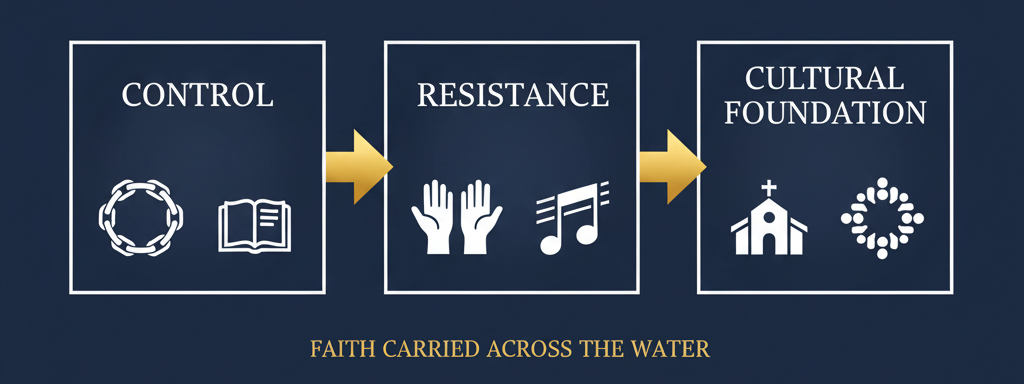
White Religious Control
From Withholding the Gospel to Weaponizing It
Early reluctance: Some planters feared baptism meant manumission (legal freedom), so they avoided conversions.
Revival shift: The Great Awakening taught that conversion could “improve morals,” so religion was rebranded as discipline.
“Civilizing” talk: Missionaries promised Christianity would make enslaved people obedient workers.
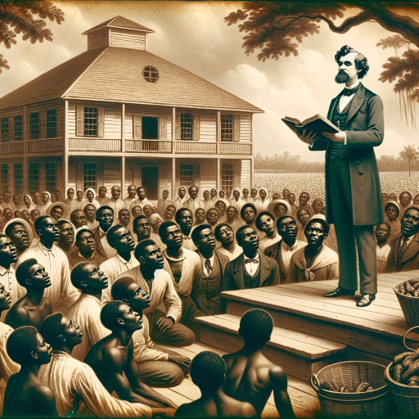
Controlled speech: Black preachers were allowed under surveillance and expected to preach submission.
Outcome: Religion became part of the system that justified slavery.
Christianity as Social Discipline
Selective scripture: Passages like “Curse of Ham” and “Slaves obey your masters” were emphasized; liberation stories were minimized.
Instruction manuals: Charles Colcock Jones’s catechisms centered on obedience, not Exodus-style freedom.
Supervised worship: Plantation services had white oversight; messages were filtered.
Purpose: Make slavery look God‑approved and prevent collective organizing.
Slave Catechism
“Who gave you a master and a mistress?”
“God gave them to me.”
— Slave Catechism
African Retentions & Syncretism
Transforming Christianity from Within
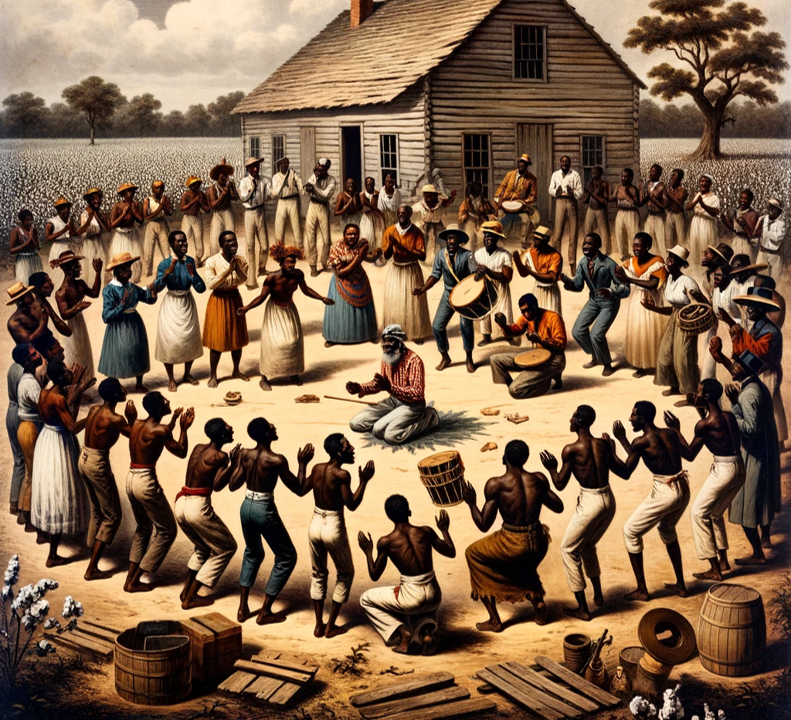
Ring shout, call‑and‑response, spirit possession—worship with movement and rhythm.
Rootwork & Hoodoo used alongside crosses, prayers, and Psalms.
Syncretism means blending: African cosmologies + Christian beliefs → a new faith.
“The slaves made Christianity their own, turning the religion of their masters into an instrument of deliverance.” — Albert J. Raboteau, Slave Religion
Slave Theological Resistance
Reading Scripture from Below
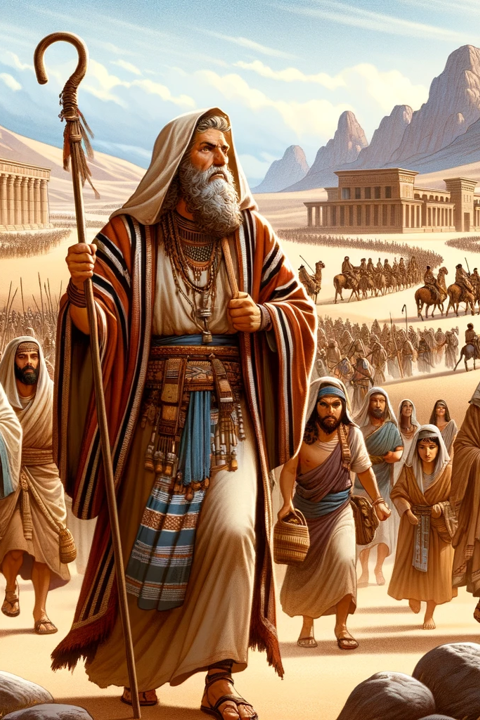
Exodus: God frees slaves—Pharaoh is like the master class; “Let my people go.”
Jesus’ suffering: God knows pain and promises justice (suffering servant lens).
Creation: All people bear God’s image—slavery violates that truth.
Prophets: God sides with the oppressed; injustice will be judged.
Hope: “Great gettin’ up mornin’” = resurrection/justice to come.
The “Invisible Institution”
Hidden Religious Life
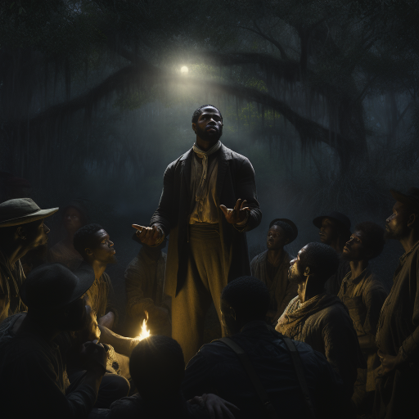
Hush harbors & brush arbors: worship beyond white oversight.
Technique: an overturned pot over a fire or doorway helps absorb and muffle sound.