New York City in the 1880s: A Crisis of Density
By the late 1880s, New York's Lower East Side had become the most densely populated place on Earth:
- 290,000 people per square mile in the Tenth Ward
- Families of 7-10 people living in 2-3 room apartments
- Interior rooms with no windows, no ventilation, no light
- Thousands sleeping in hallways, basements, on roofs
- No parks, playgrounds, or public spaces
The Limits of Individual Rescue
By the 1880s, charitable organizations existed:
- Society for the Prevention of Cruelty to Children (1874) — rescued abused children
- Children's Aid Society — placed orphans with families
- Settlement houses — provided services in poor neighborhoods
But they couldn't change the structural conditions creating poverty...
Charities could rescue individual children from dangerous situations. They couldn't fix the tenement system, regulate child labor, create parks, or force landlords to provide ventilation.
The environment remained toxic for all children in these neighborhoods.
Jacob Riis: From Immigrant to Reformer
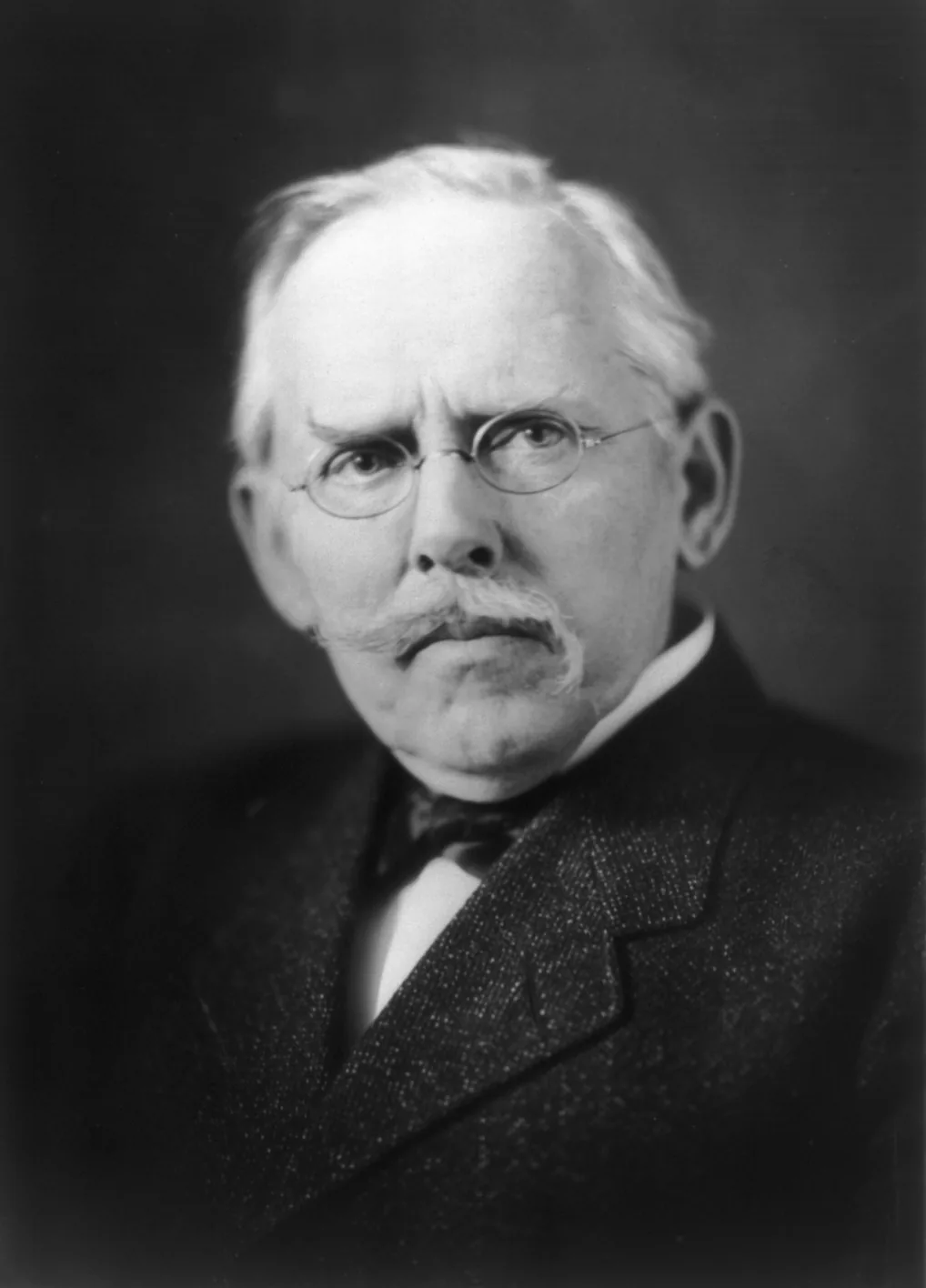
Jacob August Riis (1849–1914)
- Born: Ribe, Denmark (third of fifteen children)
- 1870: Emigrated to America at age 21, no money, no plan
- 1870-1877: Grinding poverty, homeless periods, slept in police lodging houses
- 1877: Became police reporter for New York Tribune
- 1887-88: Began photographing tenements with flash powder
- 1890: Published How the Other Half Lives
Revolutionary Technology: Flash Powder
The Technology
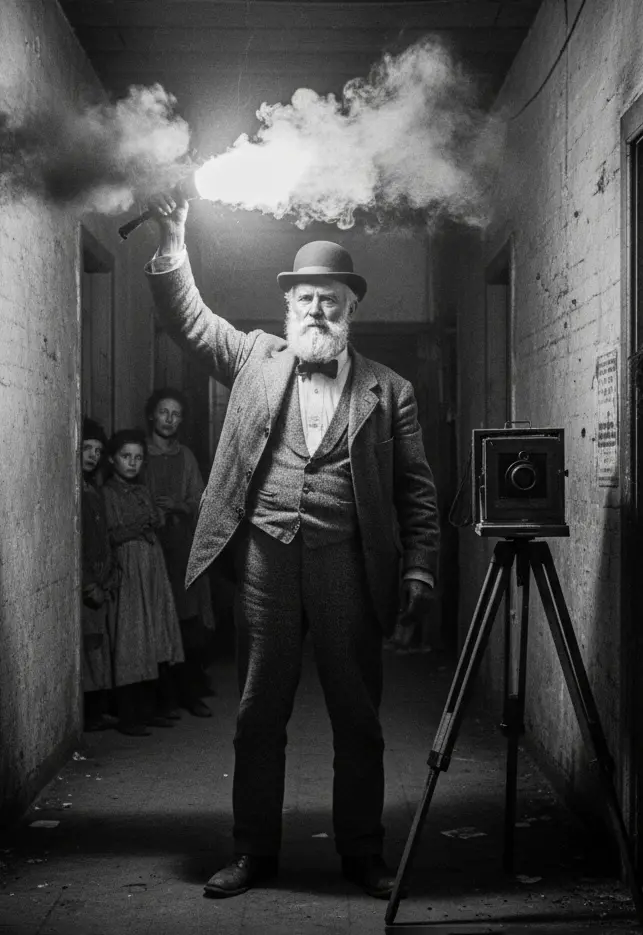
- Flash powder = magnesium + potassium chlorate
- Ignited by match → explosive flash, choking smoke
- Available only since mid-1880s
- Required 50+ lbs of equipment hauled into tenements
The Danger
- Set at least 2 documented fires
- Blew out windows, terrified residents
- Sometimes chased from buildings
- Police lodging house residents fled, thinking it was a raid
For the first time, interior rooms without windows could be photographed. The worst conditions—airless sleeping quarters, basement workshops, overcrowded night rooms— had literally never been seen by the public. Reform began when darkness became evidence.
Strategic Deployment: Magic Lantern Lectures
Riis didn't just take photographs—he performed them in strategic venues:
- Magic lantern shows — projected glass slides in darkened halls
- Target audience: middle-class and wealthy New Yorkers with political power
- Churches, civic clubs, reform organizations
- Narrative + visual evidence — names, ages, addresses, stories
- Strategic timing: built momentum for specific reform campaigns
The goal: make comfortable audiences see what their comfort concealed.
Riis's Radical Reframing
"Long ago it was said that 'one half of the world does not know how the other half lives.' That was true then. It did not know because it did not care."
— Jacob Riis, How the Other Half Lives (1890)
Old Question
"Which parents are neglecting their children?"
→ Individual moral failure
New Question
"How can ANY parent raise children in these conditions?"
→ Structural systemic failure
Concrete Reforms: Changing the System
Direct Legislative Outcomes:
- Tenement House Act (1901) — mandated ventilation, sanitation, fire safety
- Small Parks Act (1887) — created parks in tenement districts
- School expansion in Lower East Side neighborhoods
- Child labor momentum — built political will for regulation
Political Alliances:
- Theodore Roosevelt — then NYC Police Commissioner, read How the Other Half Lives and volunteered to help
- Settlement house workers — adopted Riis's documentation methods
- Progressive reformers — used photography as evidence in campaigns
Roosevelt later said Riis was "the best American I ever knew."
Documentary Authenticity
Scholars have documented that many of Riis's most famous photographs were posed or arranged. This raises important questions about documentary evidence, authenticity, and the relationship between truth and method.
The Evidence of Staging:
- Subjects positioned deliberately for dramatic composition
- Some scenes reconstructed after the fact — heard about situations, returned with equipment to recreate them
- "Lodgers in a Crowded Bayard Street Tenement" — subjects arranged for maximum visual impact
- Technical necessity: slow cameras + flash powder required subjects to hold still
The Key Question:
- Not: "Did he lie?" But: "What truth was he trying to tell?"
- The conditions depicted were real — families did live in such spaces
- The staging made those conditions visible and emotionally accessible to middle-class viewers
- Arrangement served documentary purpose: showing the truth of children's experience in tenements
- The photographs didn't lie — they told the truth about systemic conditions
The Sophisticated Position: Riis understood that the camera doesn't simply record reality; it constructs arguments about reality. His staging didn't fabricate false conditions — it dramatized real ones. The photographs were simultaneously genuine evidence of how families lived AND carefully constructed to generate emotional responses that would drive reform. Both truths coexist.
Riis's Legacy: The Foundation for Progressive Reform
Riis established the Progressive reform template:
- Investigate — enter spaces elites never see
- Document — create undeniable visual evidence
- Expose — strategic public presentations
- Demand structural change — legislation, not charity
Direct influence on later reformers:
- Lewis Hine (1908-1924) — child labor photography for NCLC
- Settlement houses — Hull House, Henry Street Settlement
- Muckraking journalists — Ida Tarbell, Lincoln Steffens
- Documentary tradition — Dorothea Lange, Gordon Parks
Making the Invisible Visible: Power and Limits
"The half that was on top cared little for the struggles, and less for the fate of those who were underneath, so long as it was able to hold them there and keep its own seat."
— Jacob Riis
Riis proved that photography could be a tool for structural reform—not just documentation, but evidence deployed strategically to generate political pressure.
His work helped shift American reform from individual charity to systemic intervention. The question changed from "which people are failing?" to "which systems are failing people?"
But visibility alone wasn't enough—it required sustained organizing, political alliances, and legislative campaigns. And even successful reforms carried the limitations of their advocates' vision.
The fundamental question remains: Who is doing this work today? Who is making invisible problems visible in our time?