HIST 270 · Chapter 18 · Self-Strengthening Workshop · Teaching Page
Li Hongzhang
General of the Huai Army, governor-general of Zhili, builder of arsenals and a navy
李鴻章 1823–1901
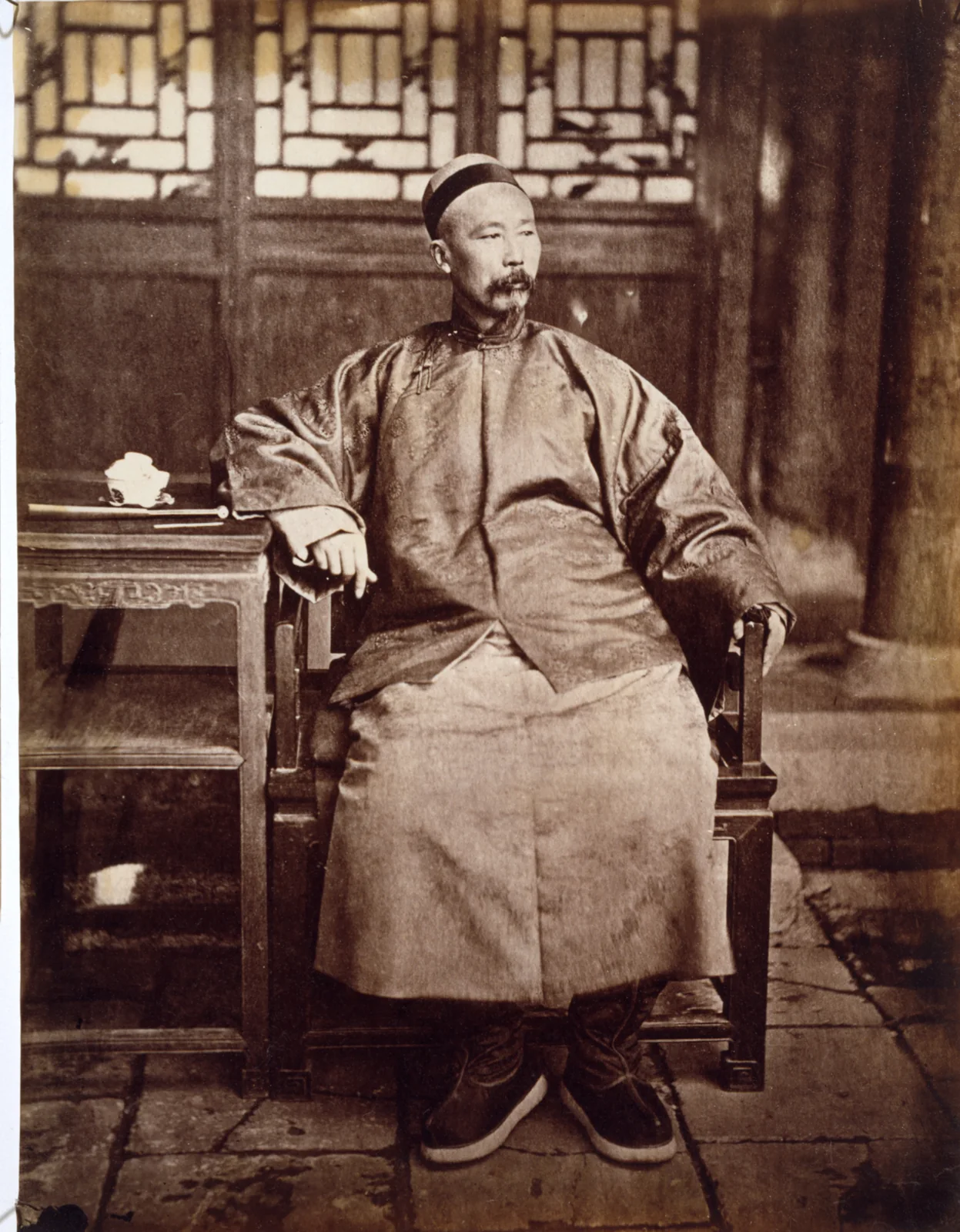
Your job today: you are the class expert on Li Hongzhang. Nobody else in the room has read this page.
- Read (about 10 minutes): his story, the project or event he is tied to, and two short documents. Underline the one sentence you would most like to read aloud.
- Prepare (about 5 minutes): fill in boxes 1–5 at the bottom of this page. Short notes are fine.
- Teach (about 4 minutes): tell the class who he was and what happened, read your sentence aloud, explain why it matters, and ask your question.
- Exit ticket: answer question 6, then export your work and upload it to Canvas.
Who He Was
Li Hongzhang was younger, sharper and more impatient than the other reformers. He passed the highest examination in 1847, and in 1858 he joined Zeng Guofan's staff as his secretary. Zeng taught him how to run an army and a government.
In 1862 Zeng sent Li to Shanghai with a new army raised in Li's home province of Anhui, the Huai Army. His soldiers went down the Yangzi past the Taiping lines on steamers hired from foreigners. In Shanghai Li fought alongside British and French troops and the foreign-officered “Ever-Victorious Army,” and he saw what Western guns could do. He became governor of Jiangsu, bought foreign guns, and hired foreign instructors. Then he started making the guns himself.
In 1870 the throne made Li governor-general of Zhili, the province around the capital, and he moved to Tianjin. He held that post until 1895, and again in 1900–1901. After Zeng's death in 1872 he was the leading Chinese political figure of his time (Ebrey, p. 323).
His Project: Arsenals, Shipyards and a Navy
- 1862–1865Gun factories at Shanghai (1862) and Suzhou (1864), a foreign-language school in Shanghai (1863), the Jiangnan Arsenal with Zeng (1865), and an arsenal at Nanjing in 1865 (your textbook's table says 1867).
- 1866Another reformer, Zuo Zongtang, founded the Fuzhou Navy Yard. From 1867 Shen Baozhen ran it, with French advisers and a naval school attached.
- 1872In January the court official Song Jin asked the throne to stop building steamships at Shanghai and Fuzhou: they cost too much, he said, and China's ships would never match the foreigners'. Zeng (days before his death), Zuo, Shen and Li all objected. Li answered with the memorial in Document A (June 20, 1872), and that summer the court dropped the idea and kept the yards open.
- 1874After Japan sent troops to Taiwan, Li wrote the long memorial on coastal defense in Document B (December 1874).
- 1872–1885Your textbook's table of Li's projects adds a steamship company (1872), the Kaiping coal mines (1877), a cotton mill in Shanghai (1878), a naval academy in Tianjin (1880) and a military academy with German teachers (1885).
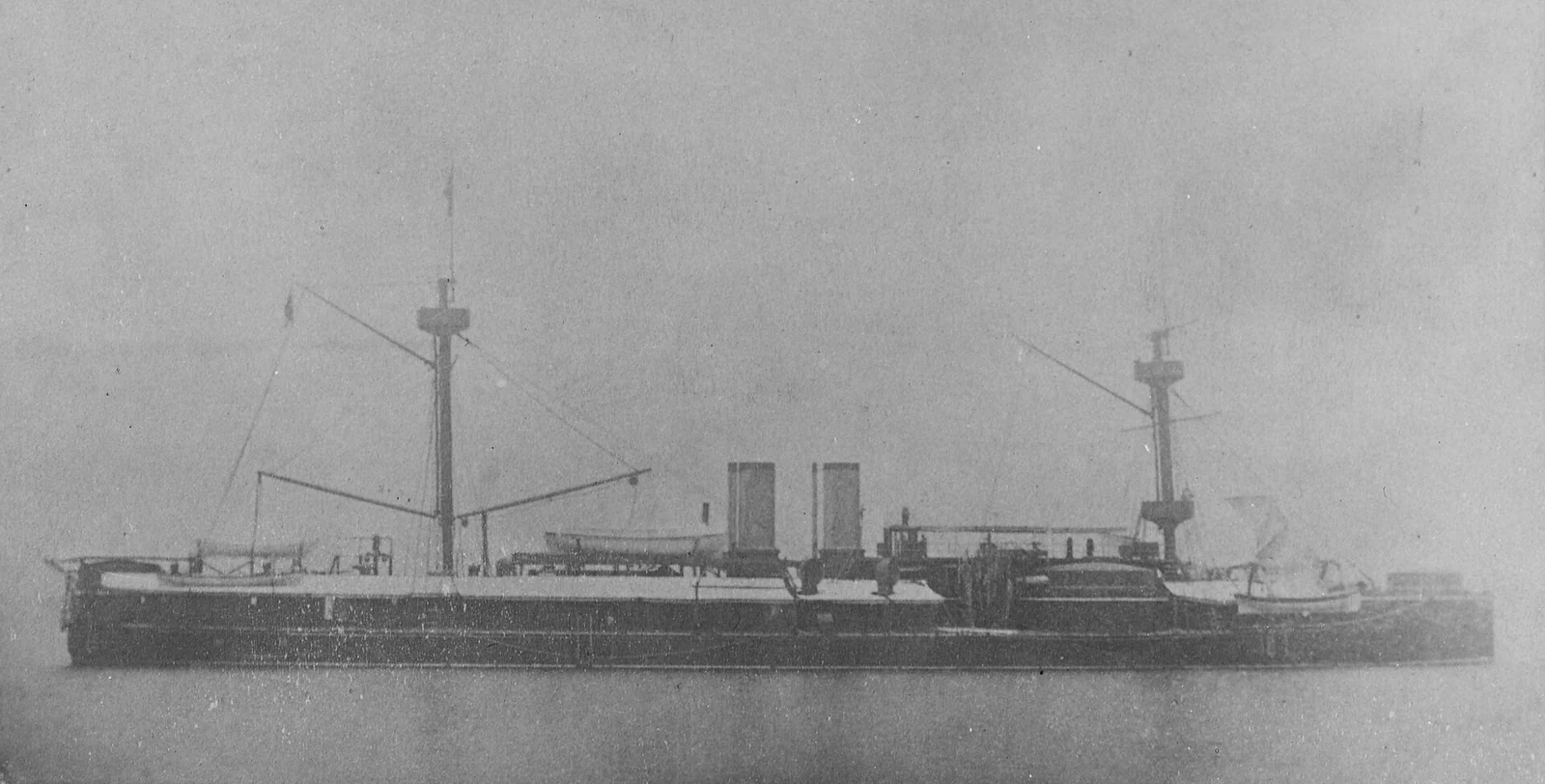
- 1888The Beiyang (Northern) Fleet was formally established. Its two biggest ships, the battleships Dingyuan and Zhenyuan, were built in Germany.
- 1894–1895China and Japan went to war over Korea. On September 17, 1894, off the mouth of the Yalu River, the Japanese navy defeated the Beiyang Fleet, and early in 1895 its remaining ships were trapped and surrendered at Weihaiwei. In the Treaty of Shimonoseki China gave up Taiwan and paid Japan 200 million ounces of silver.
Sources: Hummel, “Li Hung-chang,” “Shên Pao-chên”; Ebrey, pp. 323, 325 (tables); Lin Yingyao, Yanhuang zongheng (2020), for Song Jin.
The Reading
Document A is part of Li's answer to Song Jin, in 1872. Document B is from a longer memorial he wrote two years later, in December 1874, after Japan sent troops to Taiwan. Notice how Li describes the times he is living in. A memorial is a formal written report or proposal sent to the throne.
Document A · "Steamship Building Must Not Be Abandoned," 1872
Your servant humbly reflects that over the past hundred years and more, the nations of Europe have come from India to the Southern Seas, and from the Southern Seas up to the northeast. They have pushed into China's frontiers and heartland, something no earlier history records and no earlier age ever knew, and every one of them has knocked at our gates demanding trade. His Majesty, with a generosity as wide as Heaven, has made treaties of trade with them all in order to keep them in hand. Now all the lands of the globe, east, west, north and south, ninety thousand li around, gather in China. This is a great change, one not seen in more than three thousand years.
The Westerners rely on the precision and power of their guns and steamships, and that is how they can run wild in China. The bows, spears, small guns and native cannon China has always used are no match for their breech-loading rifles and cannon; our sailing junks and rowed gunboats are no match for their steam warships. That is why we are controlled by the Westerners. To talk today of "expelling the barbarians" and driving them out of the country is empty nonsense. Yet even if we only want to keep the peace and hold our territory, we cannot do it without the means. . . .
Our scholar-officials are shut up in the study of phrases and sentences, and are blind to a great change unseen in several thousand years. They cling to the comfort of the moment, and so they forget why we were so deeply wounded these last twenty or thirty years, and how we must keep order at home and control the outsider for the centuries to come. That is where this proposal to stop building steamships comes from. In my foolish opinion, every other expense of the state may be cut, but the money to maintain troops, build defenses, train with guns and build warships must never be cut. If we save money by throwing everything out, the country will have nothing to stand on, and it will never become strong.
Li Hongzhang, "Chouyi zhizao lunchuan wei ke caiche zhe" (Memorial on why steamship building must not be stopped), 15th day of the 5th month, 11th year of Tongzhi (June 20, 1872), in Li Wenzhong gong quanji, Zougao, juan 19, pp. 44–50. Chinese text checked against the full memorial (reprinted in the Chinese edition of Teng and Fairbank, Doc. 29) and Liang Qichao, Li Hongzhang (1901), chap. 6. Also translated in Teng and Fairbank, China's Response to the West, Doc. 29. New translation for this class.
Document B · Memorial on Coastal Defense, December 1874
Our southeastern coast stretches more than ten thousand li. The nations come and go as they please to trade and to preach; they crowd into the capital and into the provinces of the interior. Outwardly they speak of friendship; secretly they plan to swallow us. When one country makes trouble, the others all stir it up. This is truly a change unknown in several thousand years. Steamships and the telegraph cross a thousand li in an instant; their weapons and machines are a hundred times more powerful; their shells smash every defense, and no barrier on water or land can hold them back. This, too, is an enemy unknown in several thousand years. . . . And yet we still want to control them with our old methods. It is like a doctor who treats every illness, whatever it is, with the ancient prescriptions. No one has ever seen that work. . . .
Unless the court leads the way in opening men's minds, breaks our old habits and seeks what will really win, the danger to the empire will become too great to withstand, and the shortage of able men will be even worse than today. For a country as great as China to have no time when it is strong and stands on its own feet is not only worrying. It is shameful.
Li Hongzhang, "Chouyi haifang zhe" (Memorial on coastal defense), 2nd day of the 11th month, 13th year of Tongzhi (December 10, 1874), in Li Wenzhong gong quanji, Zougao, juan 24, pp. 10–25. The last paragraph comes from the part of the memorial on finding able men. Chinese text checked against the full memorial and Liang Qichao, Li Hongzhang (1901), chap. 6 (Liang misdates it to 1875). New translation for this class.
Words to Know
Questions to Think About as You Read
- What is the “great change, one not seen in more than three thousand years”? Put it in one sentence of your own.
- Why does Li call “expelling the barbarians” “empty nonsense”? Who in the 1860s and 1870s might still have believed in it?
- Explain the doctor comparison. What are the “ancient prescriptions,” and what is the new illness?
Your Work Today
Prepare to Teach Li Hongzhang
Your draft saves in this browser as you type, on this device only. When you finish, click Export to .txt and upload the file to Canvas. If the download does not work, click Copy all and paste into the Canvas text box.
Exit Ticket
Answer this after everyone has taught. There is no single right answer; just give your reason.