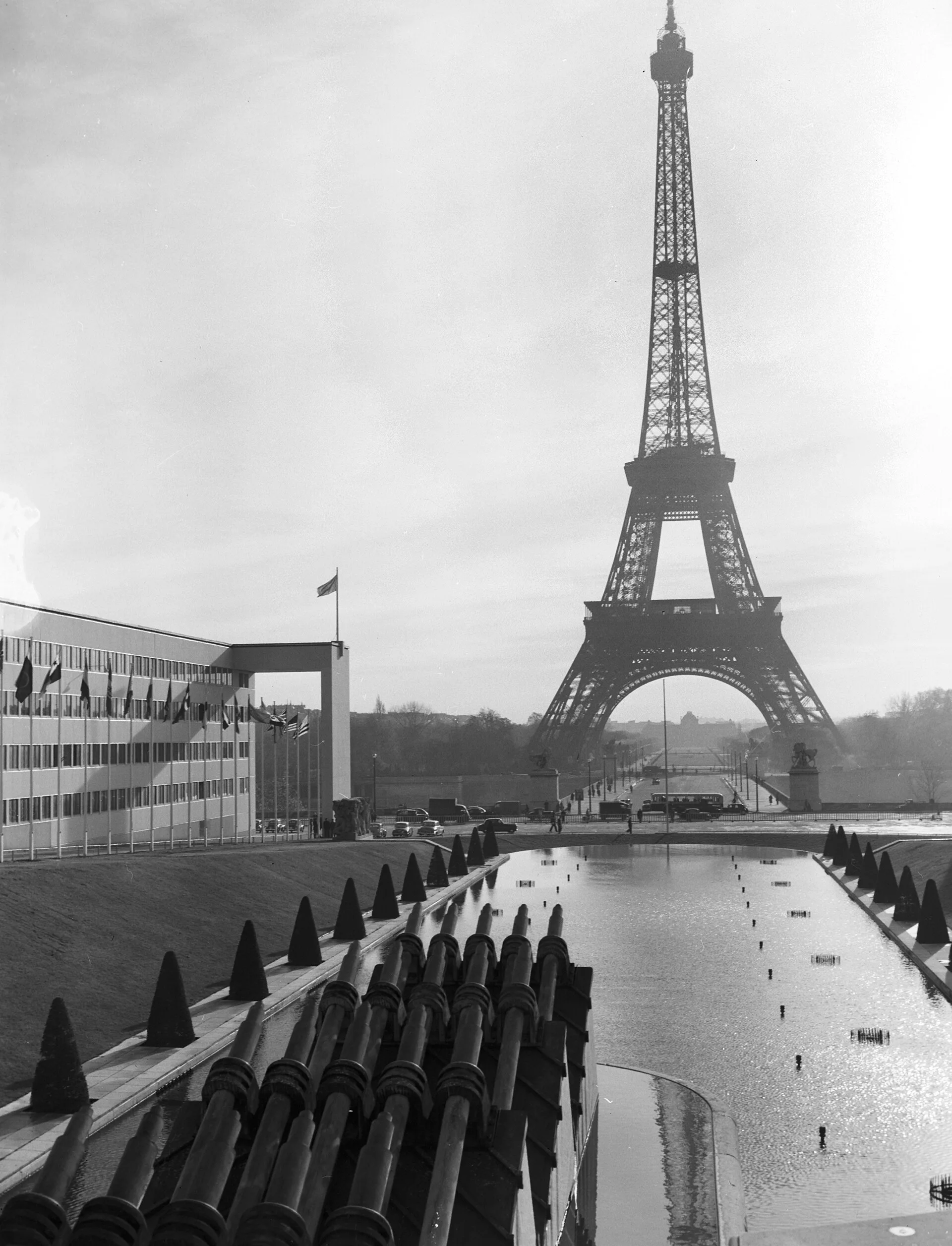
Paris, France · December 9, 1948
The United Nations made genocide a crime in international law.
- The UN General Assembly adopted the Convention on the Prevention and Punishment of the Crime of Genocide.
- It came one day before the Universal Declaration of Human Rights.
- Its Article II is still the legal definition of genocide.
The Palais de Chaillot, Paris, France, where the UN General Assembly met (photograph undated). Department of State. Agency for International Development. 1961-10/1/1979 · Public domain.

Definition · Genocide Convention, Article II (1948)
“genocide means any of the following acts committed with intent to destroy, in whole or in part, a national, ethnical, racial or religious group, as such:
- Killing members of the group;
- Causing serious bodily or mental harm to members of the group;
- Deliberately inflicting on the group conditions of life calculated to bring about its physical destruction in whole or in part;
- Imposing measures intended to prevent births within the group;
- Forcibly transferring children of the group to another group.”
Two features of the definition
Genocide is defined by intent, and only four kinds of group are protected.
- Intent, not numbers. Genocide is the aim to destroy a group “as such,” not a count of the dead.
- A short list. National, ethnical, racial, religious. Political groups and social classes are not on it.
- Early drafts included them; the Soviet delegation and several others objected, and they were dropped.
- The law has a hole exactly where the Soviet and Cambodian killing of “class enemies” falls.
Definition · Nuremberg, Germany · 1945–1946
Mass murder outside the definition is called a crime against humanity.
Crimes against humanity
Lawyers’ name for mass murder that falls outside the genocide definition: people killed as “class enemies,” as prisoners, as “enemies of the people.”
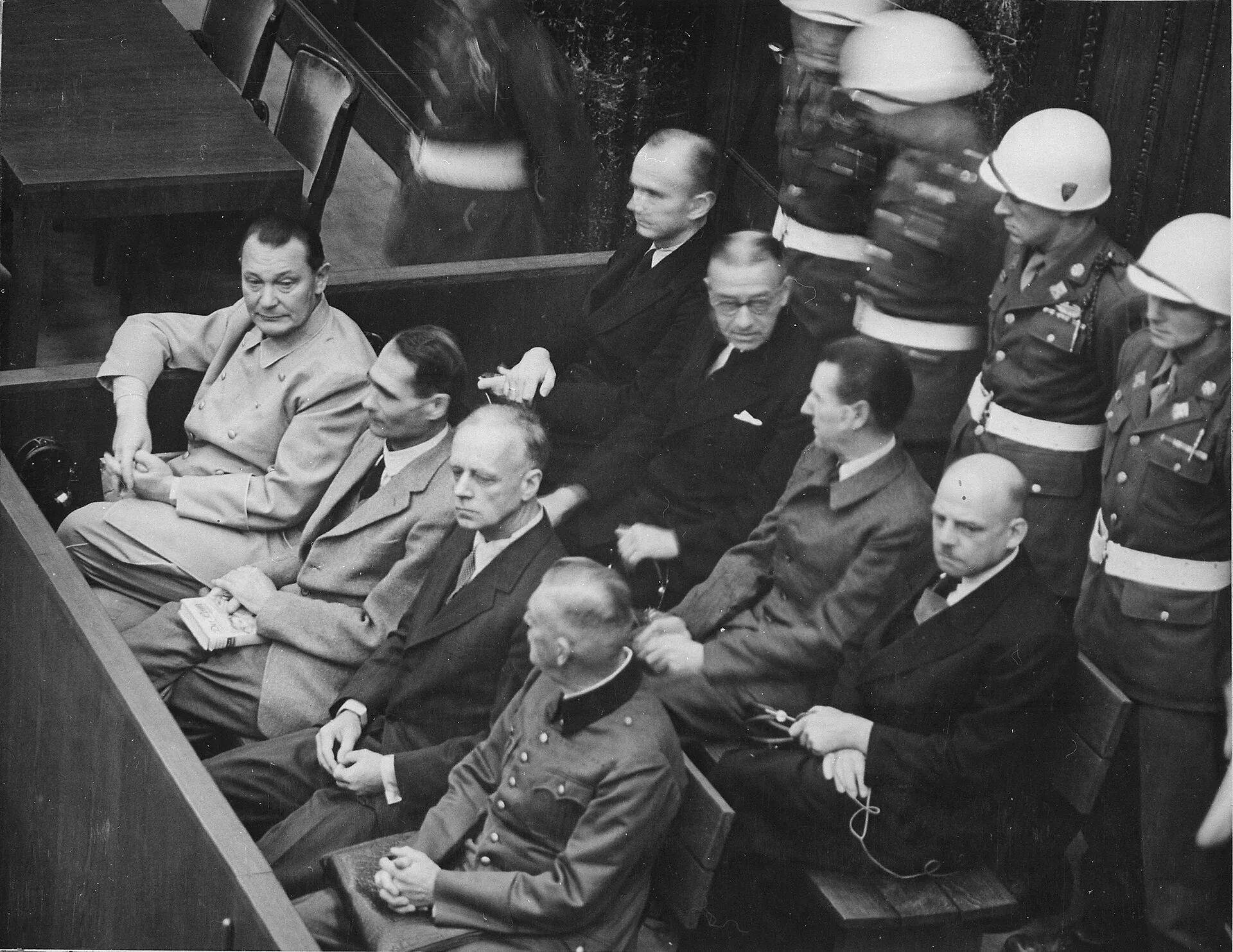
- The Nuremberg tribunal had already used the category in 1945–1946.
- The moral question is the same under either name.
- A crime against humanity is not a lesser evil, only a different legal description.
Defendants in the dock at the International Military Tribunal, Nuremberg, Germany, 1945–1946. Work of the United States Government · Public domain.
Ottoman Empire · 1915–1916
The Ottoman government destroyed its own Armenian Christians.
- Some 1.5 to 2 million Armenians, an ancient Christian people, lived in this Muslim empire before 1914.
- Three men of the Young Turks ran it: Talaat, Enver, Cemal. After defeat by Russia in the winter of 1914–15 they blamed the Armenians as an “internal enemy.”
- Armenian men were rounded up and killed; women, children, and the elderly were driven toward the Syrian desert.
- Hundreds of thousands died of massacre, starvation, thirst, and exhaustion.
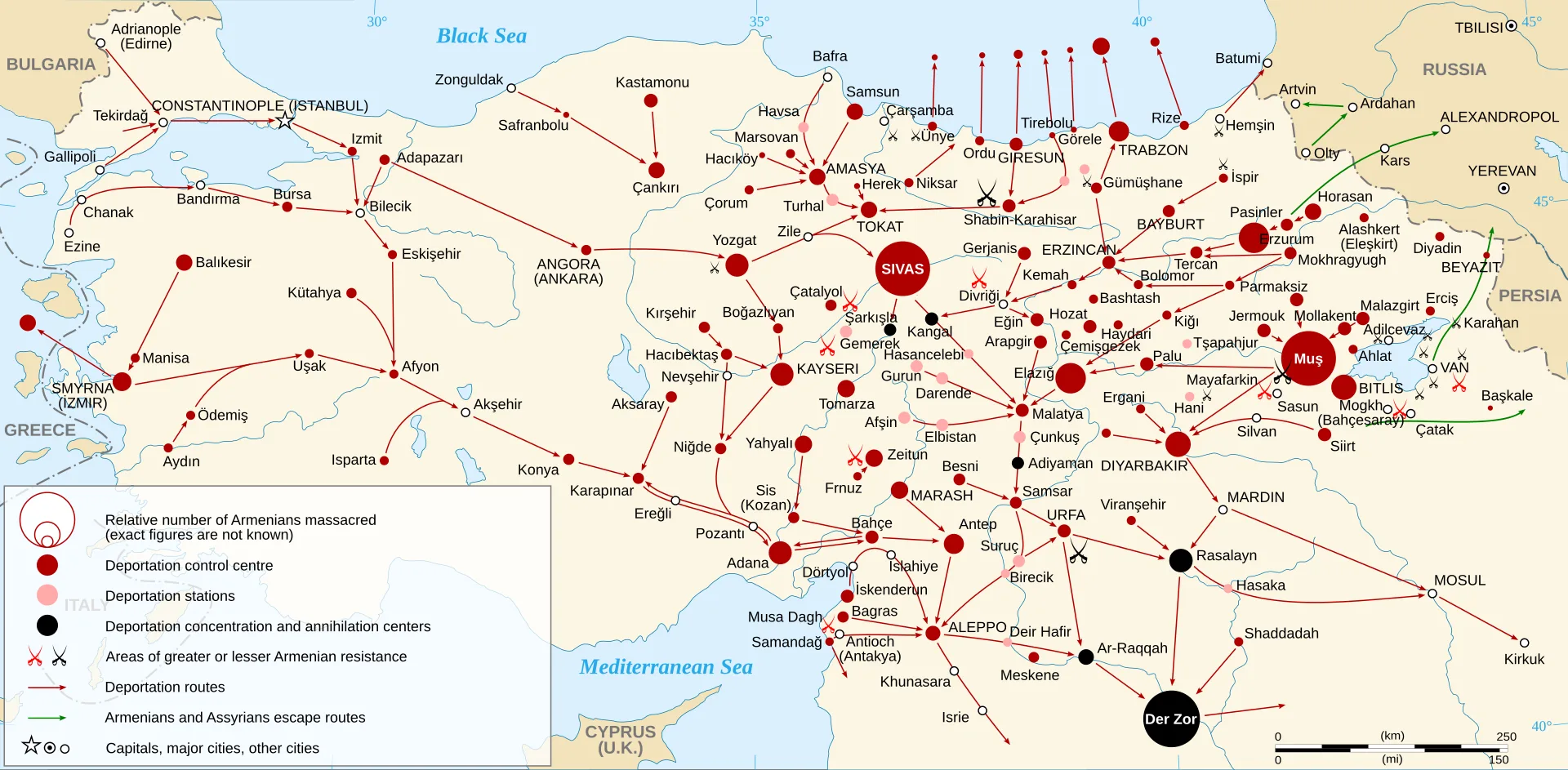
Map of the Armenian Genocide: deportation routes, killing sites, and camps, 1915–1916. Sémhur · CC BY-SA 3.0.
Constantinople (Istanbul, today in Turkey) · April 24, 1915
In one night the police arrested the Armenians’ leaders.
- Ottoman police arrested some 235 to 270 Armenian community leaders.
- Writers, editors, physicians, lawyers, members of parliament, clergy.
- Most were deported to the interior and murdered in the following months.
- Armenians remember April 24 as the beginning of the genocide.
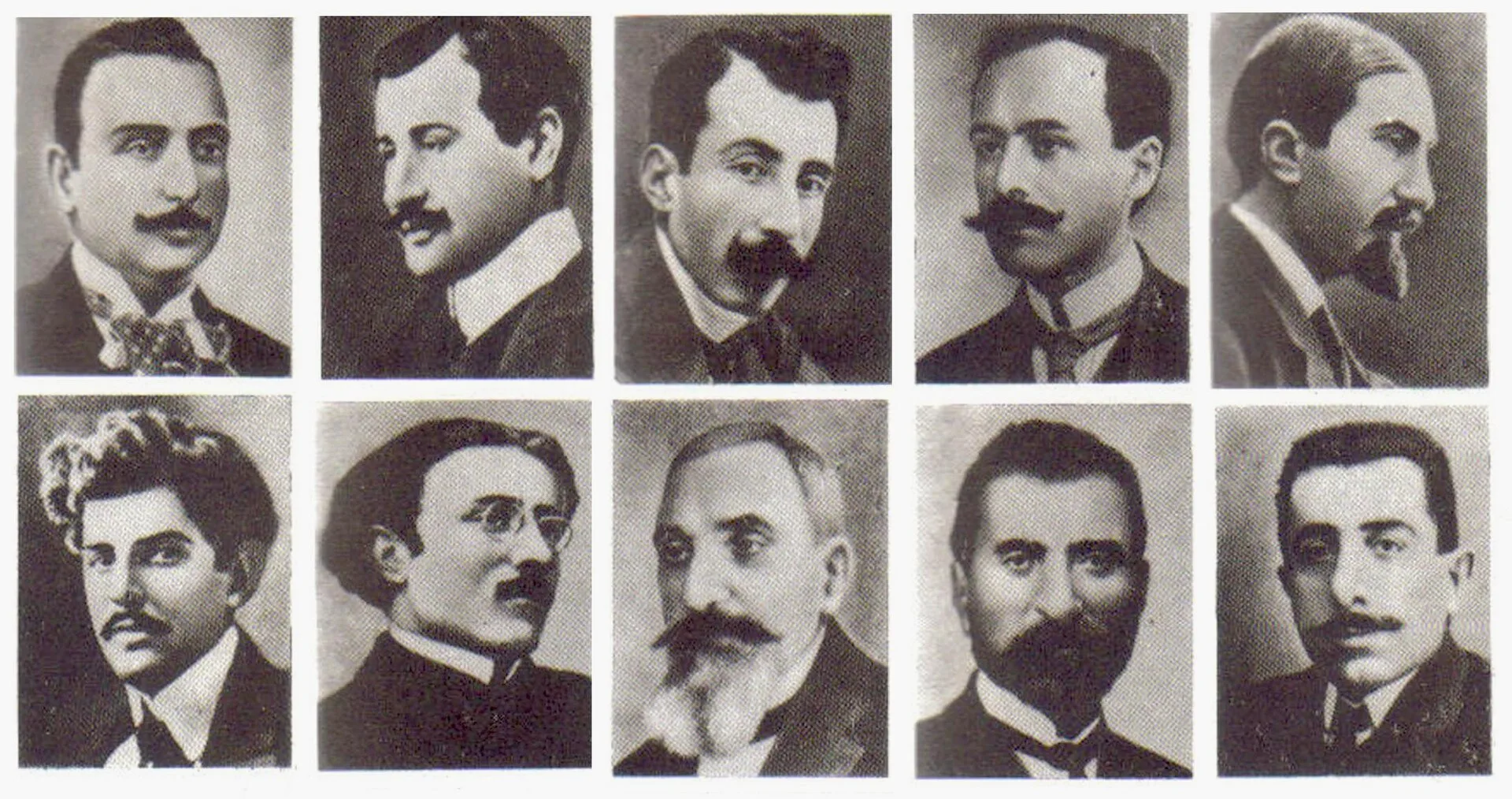
Armenian writers and leaders arrested on April 24, 1915, and later killed. Unknown photographer · Public domain.
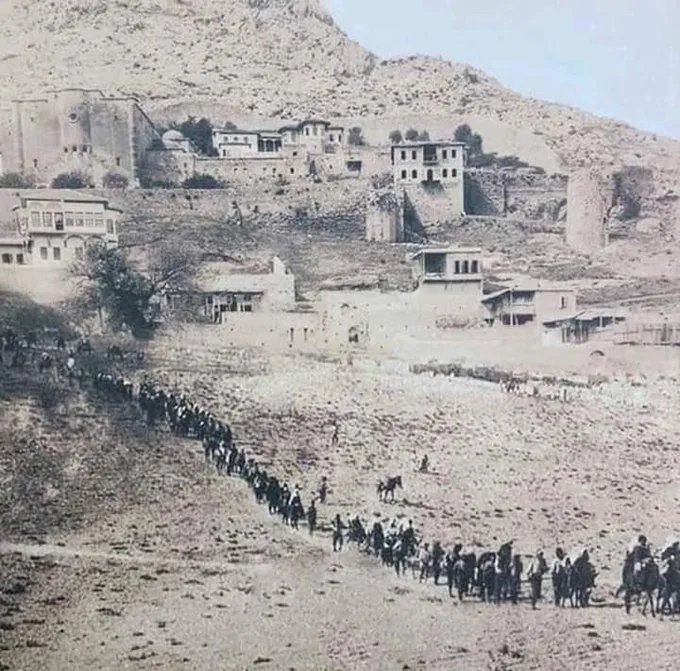
Anatolia to Aleppo and Deir ez-Zor (today in Syria)
First they killed the men; then they marched everyone else toward the desert.
- The men first. Armenian soldiers were disarmed, put into labor battalions, and killed in batches; townsmen were marched out and shot.
- Then the deportations. Women, children, the elderly: “relocation” on a few days’ notice, marched for weeks without food or water.
- Women and girls were raped, abducted, or sold; children were taken into Muslim households and converted.
- Many massacres were done by the Special Organization. In 1916 a second wave killed most survivors at Deir ez-Zor.
Deportation of Armenians from Kozan, Adana province, Ottoman Empire, 1915. Unknown photographer · Public domain.
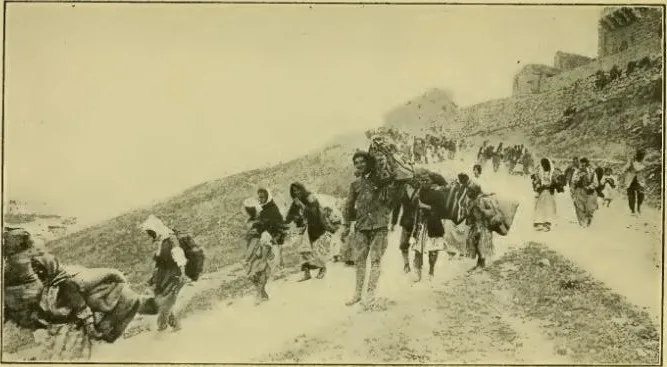
Anatolia to the Syrian desert · 1915–1916
The horrors: Armenia
- Men were shot, bayoneted, or hacked to death outside their towns; villagers were burned alive in barns or drowned in rivers and the sea.
- On the roads, deportees were robbed of money, clothing, and food, denied water, and driven on; the weak were killed or left where they fell.
- Women and girls were raped, abducted, or sold; children were taken from their mothers and raised under new names and a new faith.
- In camps along the Euphrates, from Meskene to Deir ez-Zor, tens of thousands died of hunger and typhus.
- The killers were gendarmes, officials, released convicts, and local tribesmen and villagers who joined in the plunder and the killing.
Armenian deportees leave their city for the desert; in the foreground a gendarme carries rugs taken from them. Unknown photographer; published in Ravished Armenia (1918) · Public domain.
Soviet Ukraine · 1932–1933
Stalin’s government took the villages’ food and sealed them in.
Holodomor: “death by hunger”
Ukrainians’ name for the famine of 1932–1933.
- Joseph Stalin’s government seized the grain, and then the other food, of the villages of Soviet Ukraine.
- It sealed the republic’s borders so that starving peasants could not leave to look for bread.
- Millions died.
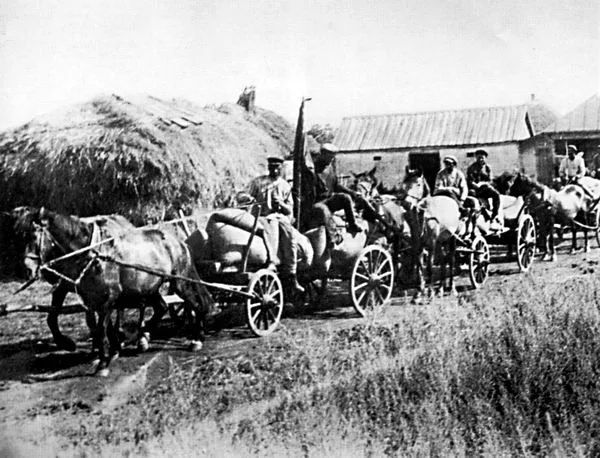
A “Red Train” of carts carries a collective farm’s first grain to the state, Oleksiyivka, Kharkiv region, Soviet Ukraine, 1932. Unknown photographer · Public domain.
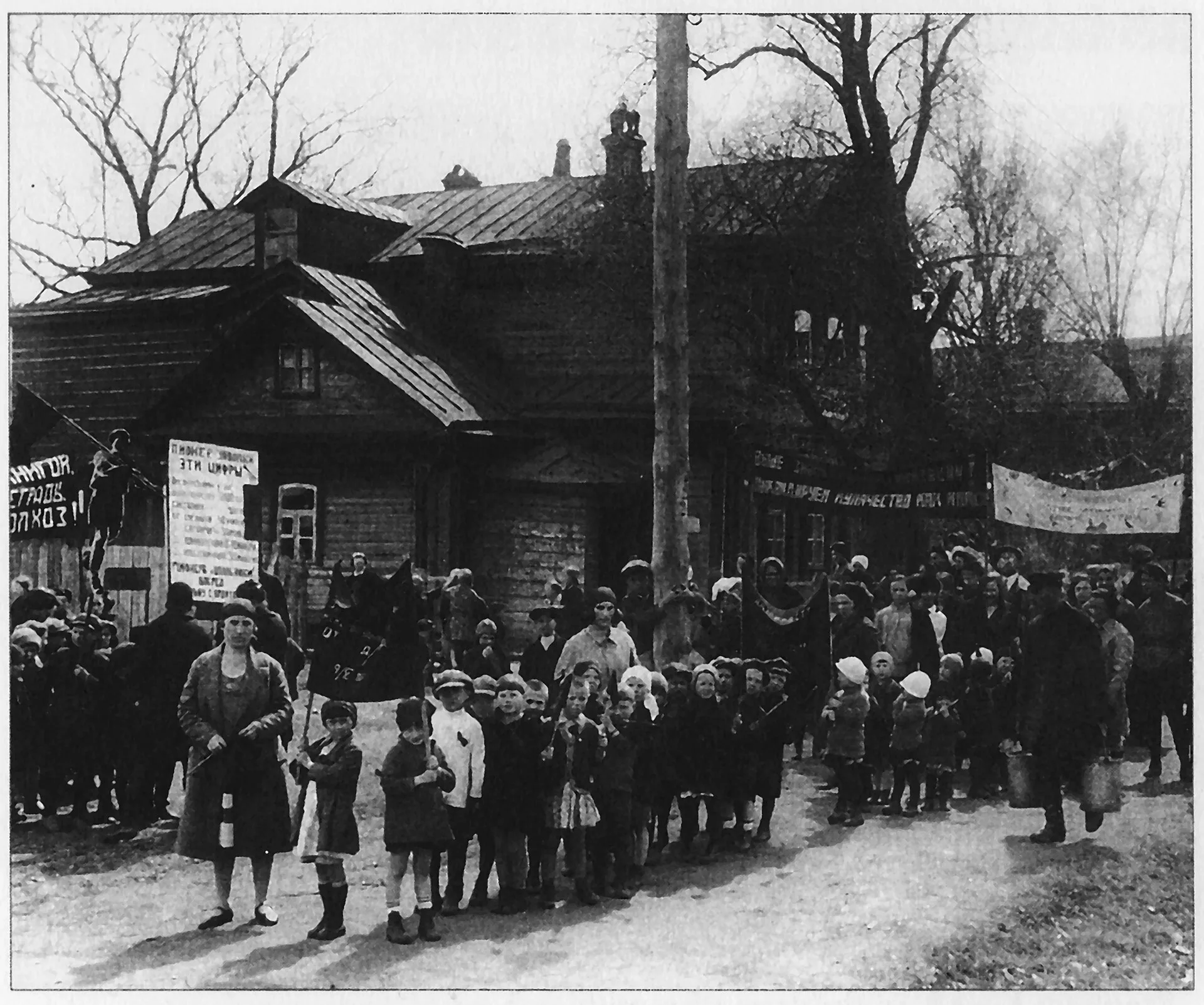
Soviet Union · 1929–1933
Stalin made war on the peasants, then used hunger as a weapon.
- 1929–1931: forced collectivization and the “liquidation of the kulaks as a class”; about 1.8 million peasants deported.
- 1932: grain quotas Ukraine could not meet. August 7: the “law of five ears”: death or ten years in the camps for a handful of grain stalks.
- Villages that fell short were blacklisted: shops closed and all food confiscated.
- January 22, 1933: Stalin and Molotov ordered peasants stopped from leaving Ukraine and the Kuban. People were sealed in with their hunger.
A dekulakization parade under banners reading “We will liquidate the kulaks as a class,” Soviet Union, c. 1929–1934. Unknown. Thanks to Lewis H. Siegelbaum and Andrej K. Sokolov · GFDL.
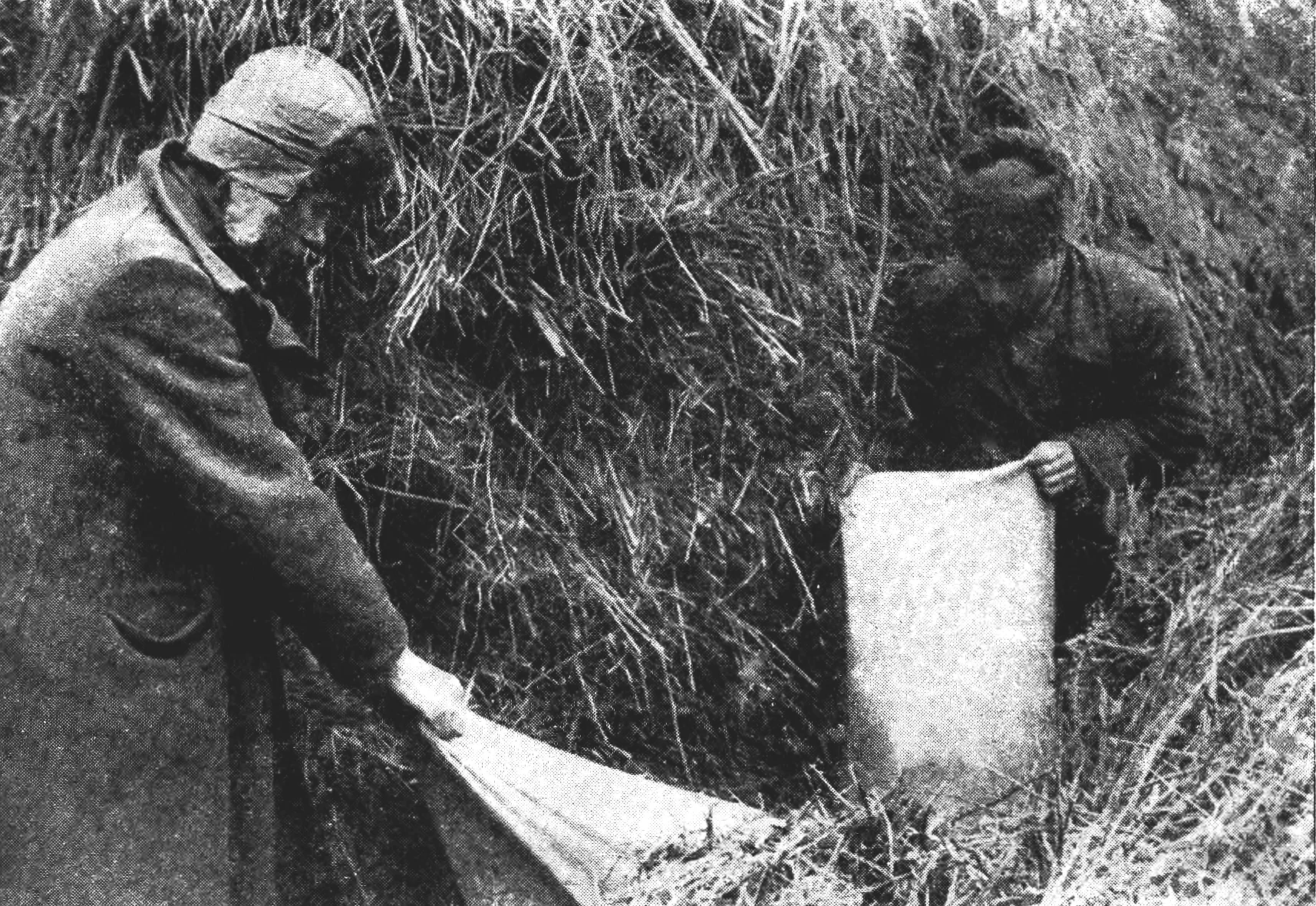
Soviet Ukraine · 1932–1933
The horrors: the Holodomor
- Brigades of local officials, activists, and young Communists, often from the same village, searched house after house, probing floors, walls, and gardens with iron rods.
- They took the last potatoes, beans, and seed. Neighbors were rewarded for informing; families caught hiding food lost what they had left.
- The starving ate grass, bark, nettles, and their cats and dogs. Bodies swelled with hunger before death.
- Parents left children at railway stations and in towns, hoping strangers would feed them. Whole villages died out.
- Hunger drove some to cannibalism; the police recorded the cases.
Grain hidden by a peasant family is dug up while officials look on, Timashyovsky District, Kuban, early 1933. Attributed to U. Druzhelubov · Public domain.
Solovki · White Sea Canal · Kolyma · 1918–1953
From a monastery prison to a continent of camps.
Gulag: the Soviet Union’s system of forced-labor camps, 1918 to after 1953
- 1923: the Solovetsky monastery became the camp Solovki, “the mother of the Gulag.” 1930: one administration for all camps, GULAG.
- 1931–1933: prisoners dug the White Sea–Baltic Canal largely by hand. Thousands died; writers led by Maxim Gorky praised it.
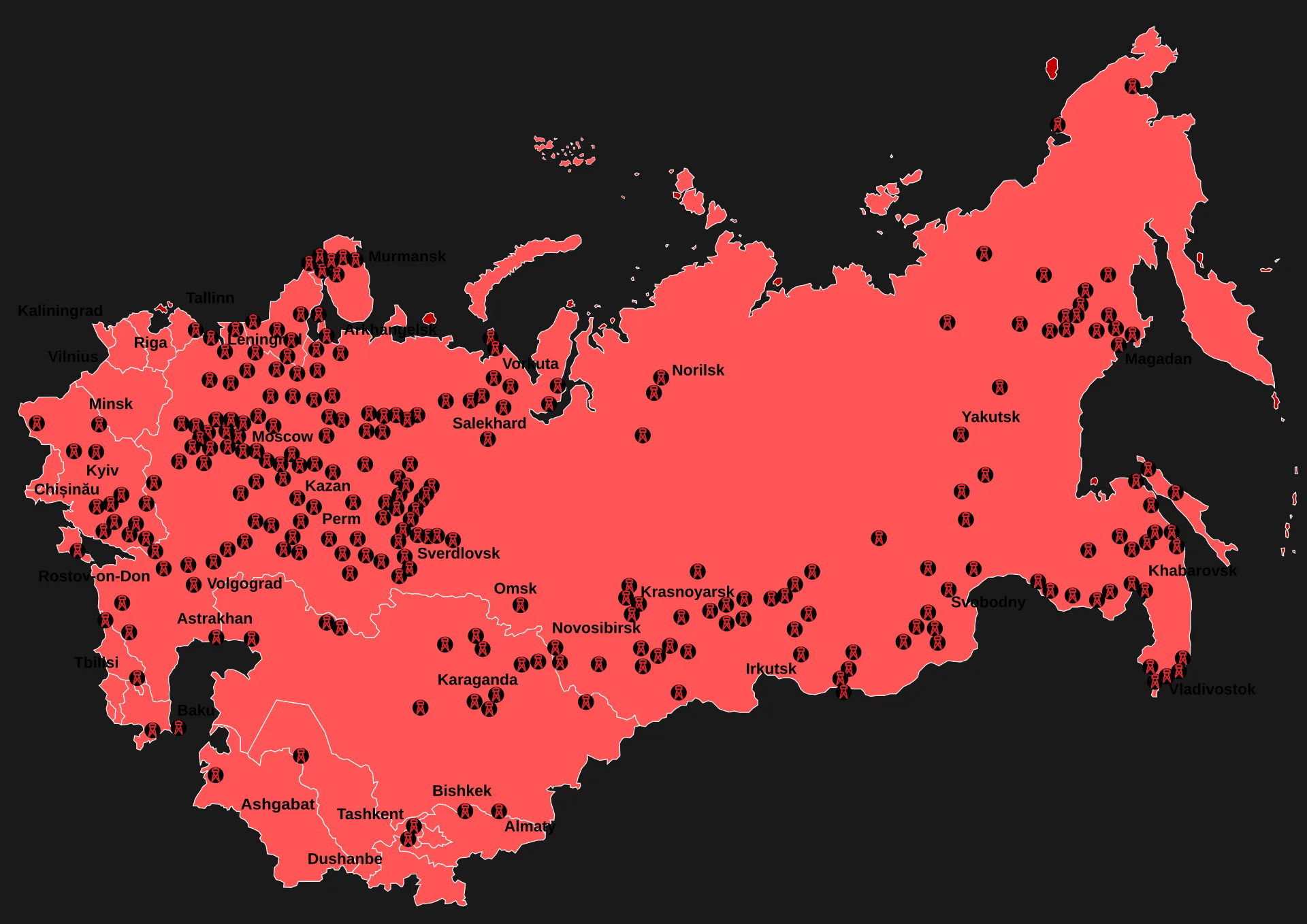
- Hundreds of camp complexes, from the White Sea to the gold mines of Kolyma.
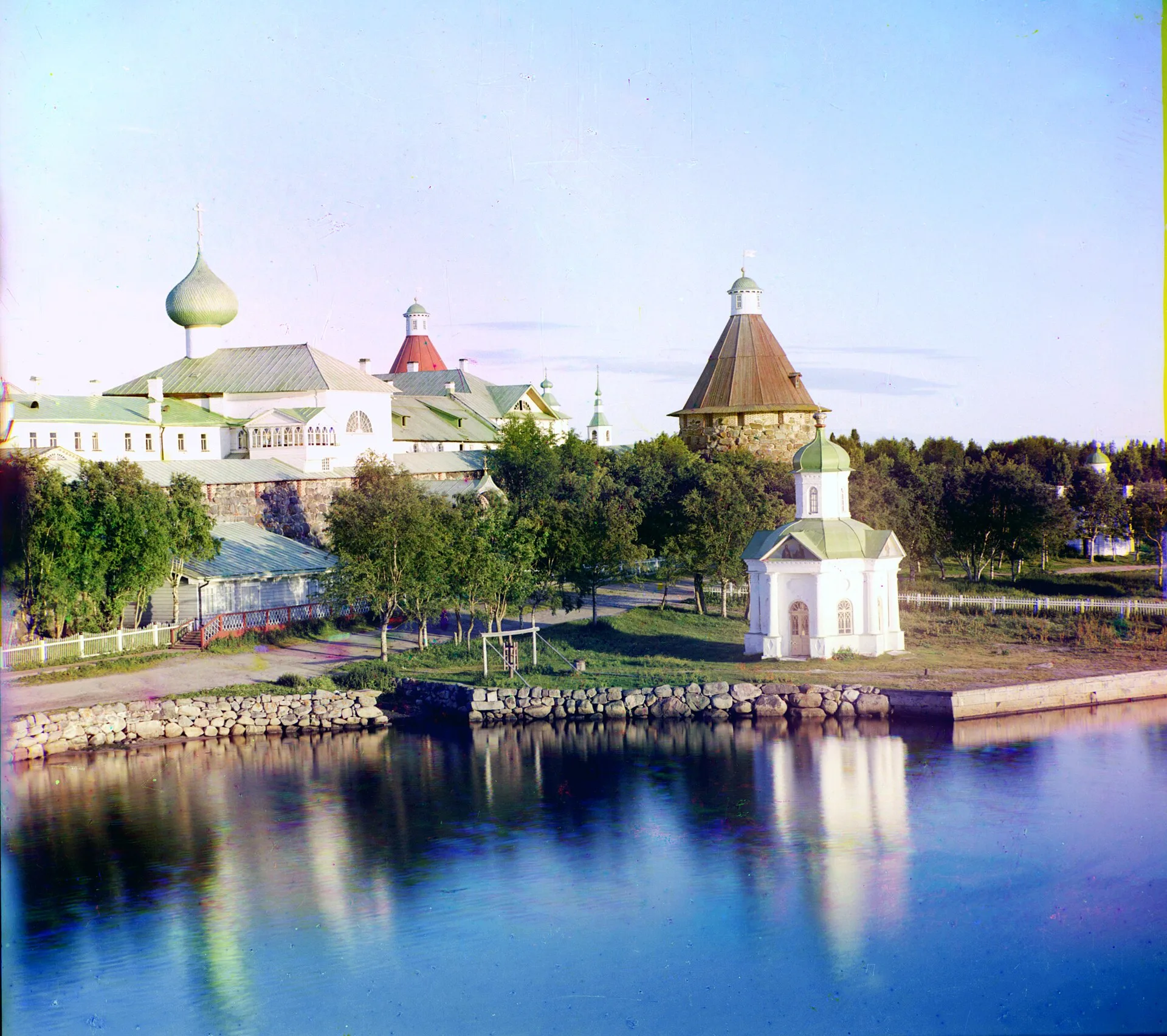
The Solovetsky Monastery seen from the guesthouse, 1915. Color photograph by Sergei Prokudin-Gorsky. Sergei Prokudin-Gorskii · Public domain.
Soviet Union · 1929–1953
Some 18 million people passed through the camps.
- Prisoners of every kind: thieves and murderers, peasants, workers, engineers, priests, poets, and Communists who had fallen from favor.
- Many “politicals” were sentenced under Article 58, which punished “counterrevolutionary” crimes and could be stretched to cover almost anything.
- At the peak, around 1950, roughly 2.5 million people were held in the camps and labor colonies at one time.
- Anne Applebaum estimates that about 18 million people passed through the camps between 1929 and 1953, and some six million more were sent into exile.
Locations of Gulag camps across the Soviet Union. Antonu · CC BY-SA 3.0.
Soviet Union · 1930–1953
The horrors: the Gulag
- Arrests came at night, often after a neighbor’s or colleague’s denunciation. Interrogators beat prisoners and kept them from sleep until they confessed and named others.
- Wives of “traitors” went to camps and their children to orphanages (NKVD Order 00486, 1937). Children born in the camps were taken from their mothers.
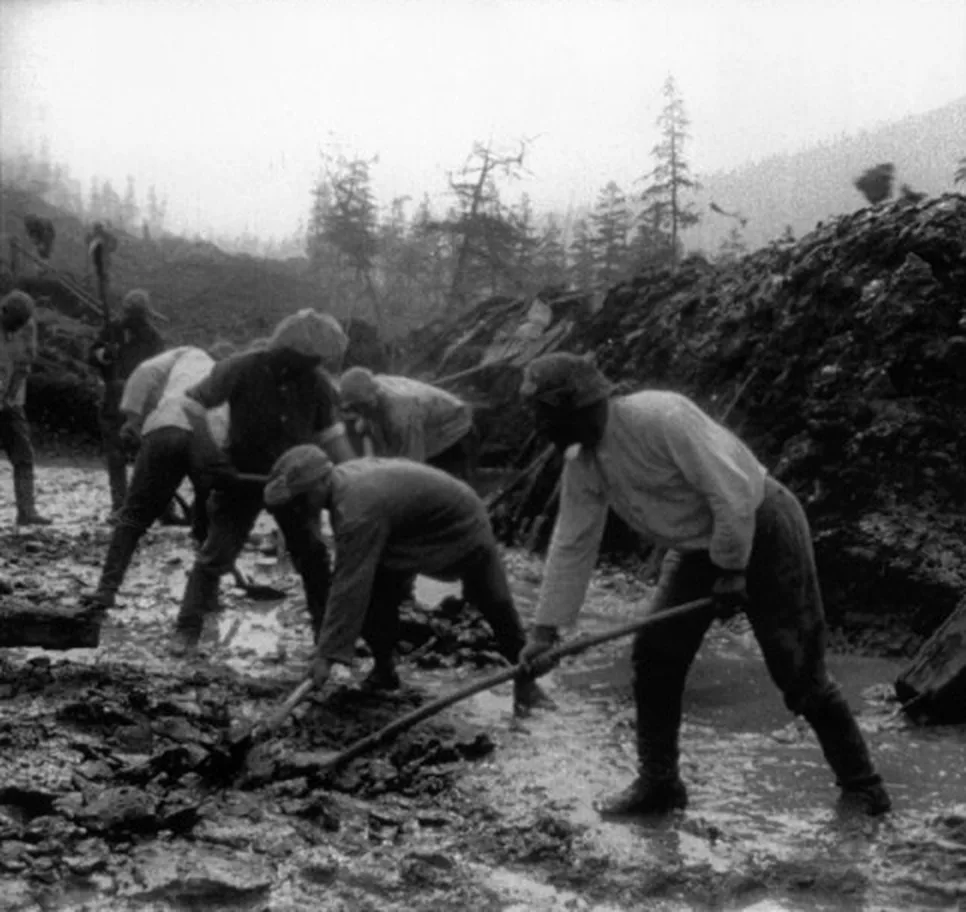
- Rations were tied to work quotas: the weak got less, grew weaker, and became dokhodyagi, “goners.” Cold, typhus, and scurvy did the rest.
- Guards and criminal gangs beat, robbed, raped, and killed; in 1937–38 thousands were shot in the camps. Many died in cattle cars and ship holds.
- In 1942, by the camps’ own records, about one prisoner in four died.
Dalstroy laborers, most of them prisoners, building the Kolyma road, Soviet Union, 1930s. Unknown photographer; reproduced in Tomasz Kizny, Gulag (2004) · Public domain (PD-Russia-2008).
Nanjing (Nanking), China · December 1937
The Japanese army took China’s capital and murdered and raped for six weeks.
- July 1937: Japan, ruled by a militarist, ultranationalist regime, began full-scale war on China.
- December 13, 1937: after three months of fighting for Shanghai, the Japanese army captured Nanjing, then China’s capital.
- For some six weeks soldiers murdered prisoners and civilians and raped tens of thousands of women and girls.
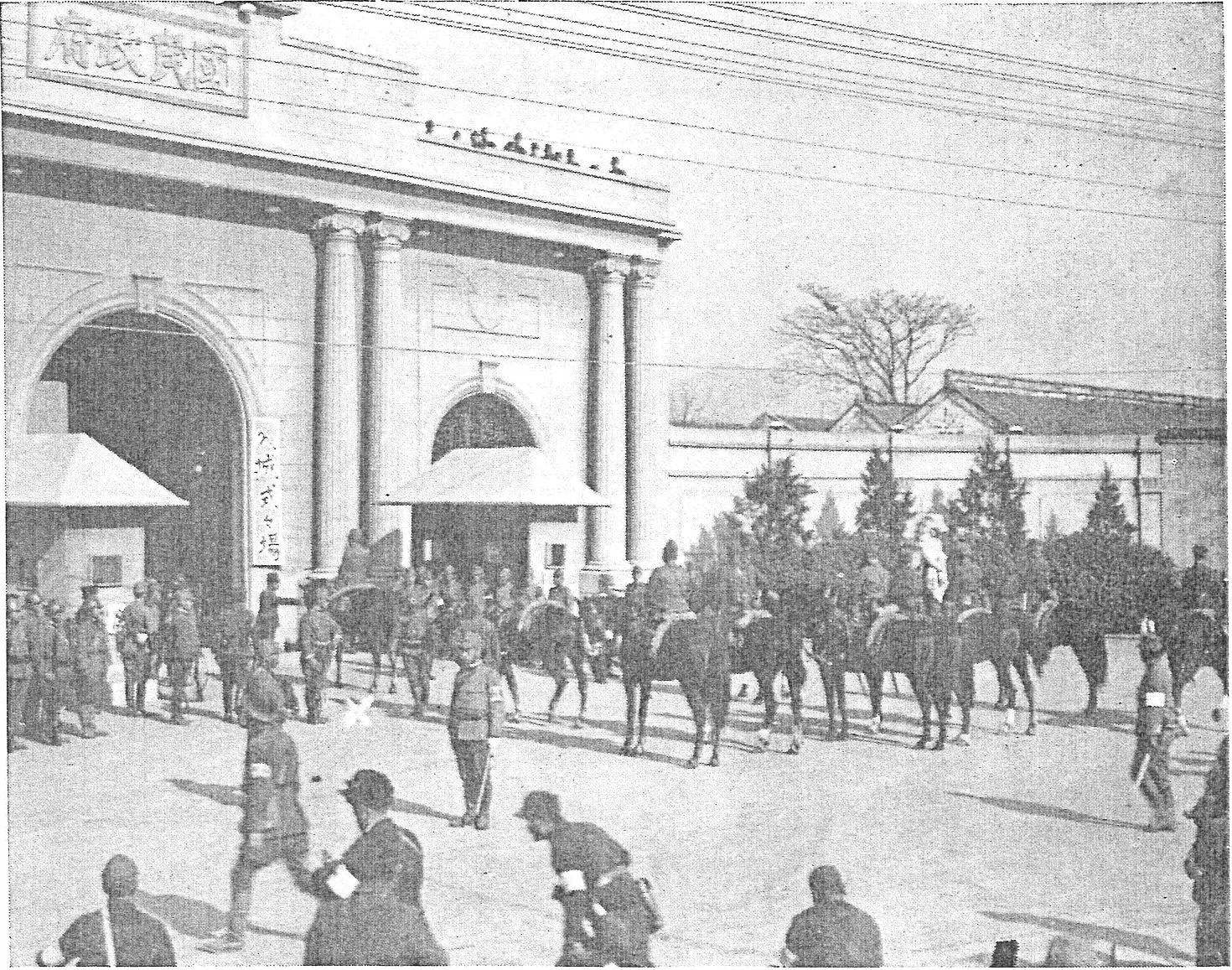
Japanese generals ride into the Chinese government compound, Nanjing, December 17, 1937; General Matsui Iwane leads (marked “x”). Sweeper tamonten · Public domain.
Nanjing · December 12–13, 1937
The defense collapsed, and the hunt for soldiers began.
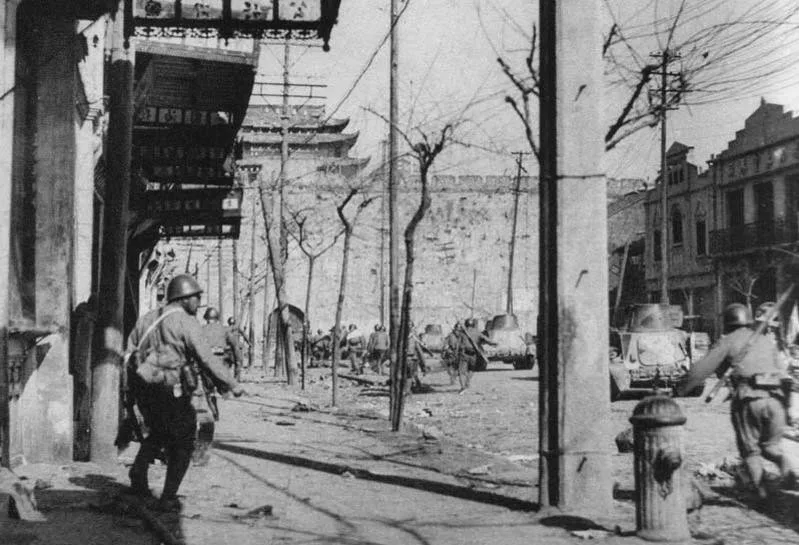
- The Chinese commanders were ordered to hold the city at all costs; on December 12 the order was reversed, and the retreat became a rout.
- Soldiers threw off their uniforms and hid among civilians. Nanjing fell on December 13.
- For six to seven weeks Japanese troops hunted for anyone who might have been a soldier: almost any young Chinese man.
- Mass shootings along the Yangtze; machine guns, bayonets, burning, beheading. Officers used prisoners for sword and bayonet practice.
Japanese tankettes and infantry attack a gate in the Nanjing city wall, December 12, 1937. Unknown photographer · Public domain.
Tokyo, Japan · December 1937
A Tokyo newspaper reported a killing contest like a sporting event.
- Two second lieutenants, Mukai Toshiaki and Noda Tsuyoshi: who would be first to kill a hundred Chinese with a sword?
- The Tokyo Nichi Nichi Shimbun printed the running score as they advanced on the city.
- After the war both were tried in Nanjing and executed in January 1948.
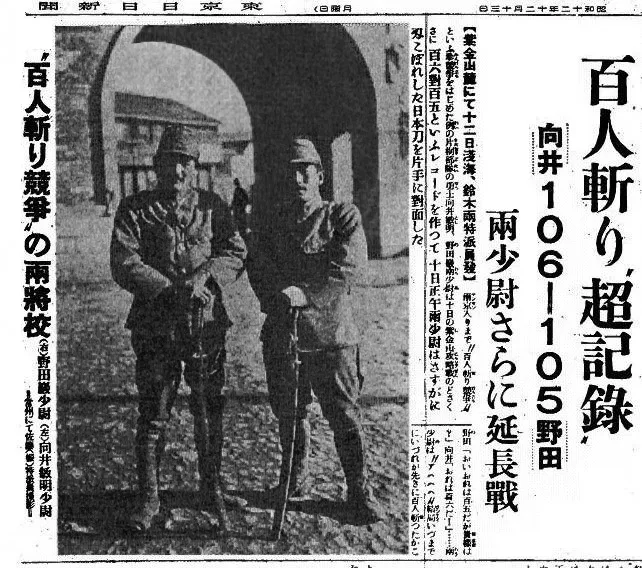
The Tokyo Nichi Nichi Shimbun report on the “contest to cut down 100 people,” December 1937, with a photograph of Noda and Mukai. Shinju Sato (佐藤振壽) · Public domain.
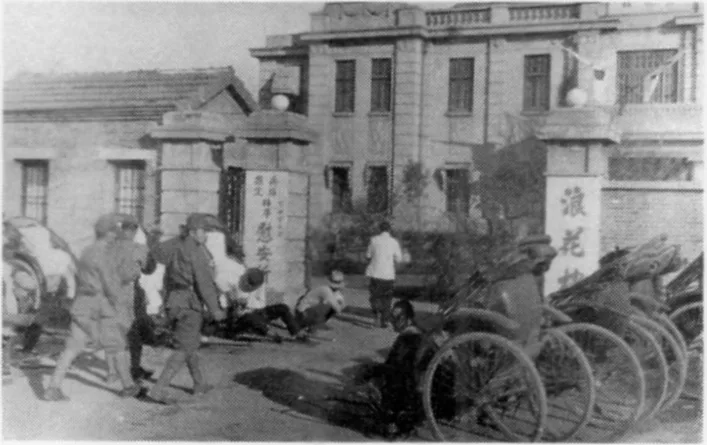
Nanjing · December 1937–January 1938
The horrors: Nanjing
- Soldiers went house to house, and into the refugee zone, dragging out men to be shot and women to be raped.
- The Tokyo tribunal found about 20,000 rapes in the first month; other estimates reach 80,000. Girls and old women were not spared; many were killed afterward.
- Families were killed in their homes; civilians were shot or bayoneted in the streets.
- Soldiers looted shops and homes and then set them on fire; about a third of the city burned.
- The killers were ordinary soldiers, often in groups, with officers looking on or joining in. For six weeks almost no one stopped them.
A note of care: this slide describes sexual violence.
A Nanjing street just after the city fell, December 1937. Photograph by Okamoto Katsuji. Okamoto Katsuji · Public domain.
Phnom Penh, Cambodia · April 17, 1975
The Khmer Rouge took power and emptied the capital in a day.
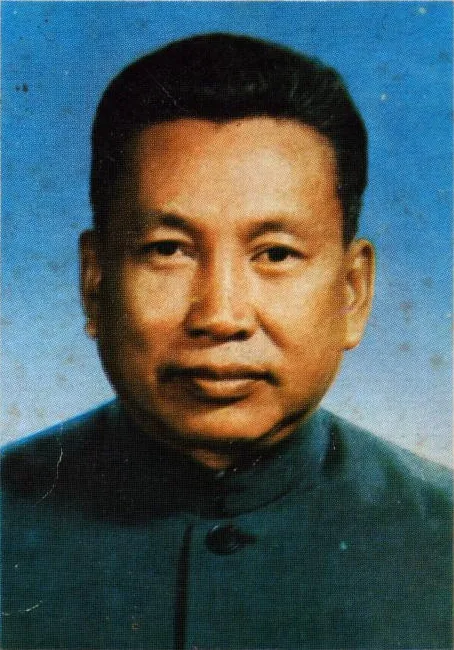
- The Khmer Rouge, a communist movement led by Pol Pot, ruled Cambodia from April 1975 to January 1979.
- On April 17 its soldiers ordered all of Phnom Penh, some two million people, out “for three days.” No one returned.
- Money, markets, schools, religion, and private property were abolished. The party called itself Angkar, “the Organization.”
- “New people”: anyone educated, anyone who wore glasses. “To keep you is no gain, to lose you is no loss.”
Pol Pot (Saloth Sar), 1978. Editura Politică · Public domain.
Phnom Penh · 1975–1979
A high school became a secret prison: S-21.
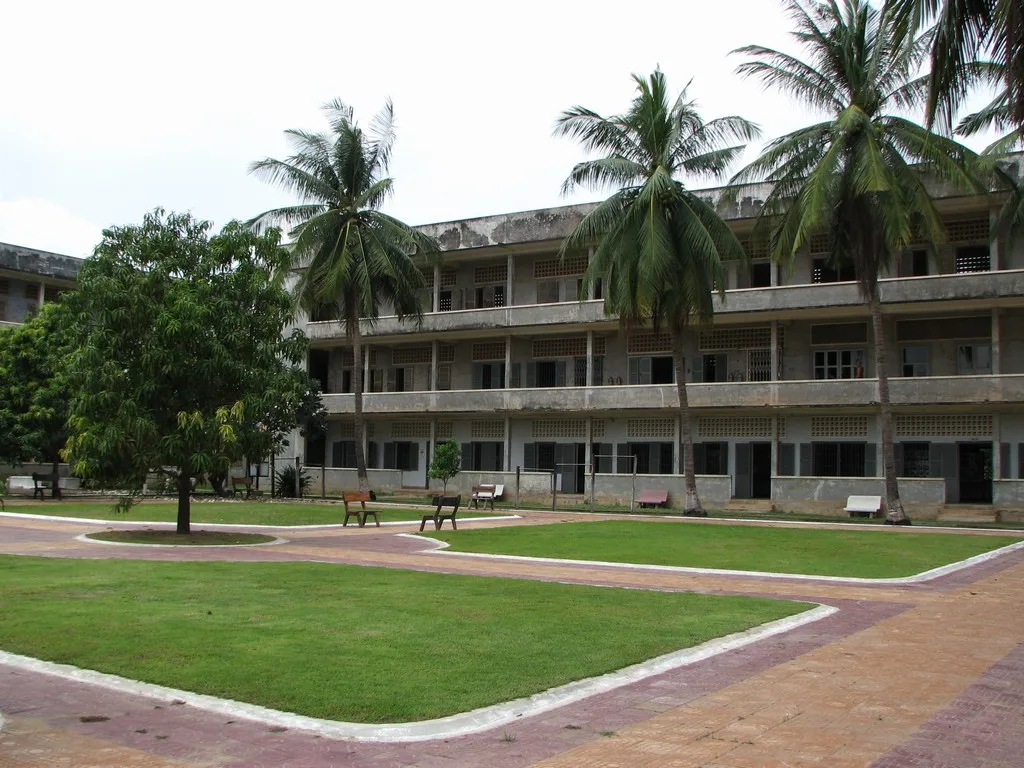
- In a former high school in Phnom Penh the Khmer Rouge set up a secret prison, S-21 (today the Tuol Sleng Genocide Museum).
- At least 12,273 people were held there. Very few came out alive.
- Most prisoners were the regime’s own cadres and soldiers, accused of treason, often brought in with their wives and children.
- Its commandant, Kaing Guek Eav, known as Duch, had been a mathematics teacher.
Tuol Sleng, the former high school that became S-21, Phnom Penh, Cambodia (photographed 2006). Michael Gruijters at Dutch Wikipedia · CC BY-SA 3.0.
S-21, Phnom Penh · 1975–1979
Inside S-21: photograph, torture, confession.
- On arrival every prisoner was photographed and numbered, then shackled in a cell.
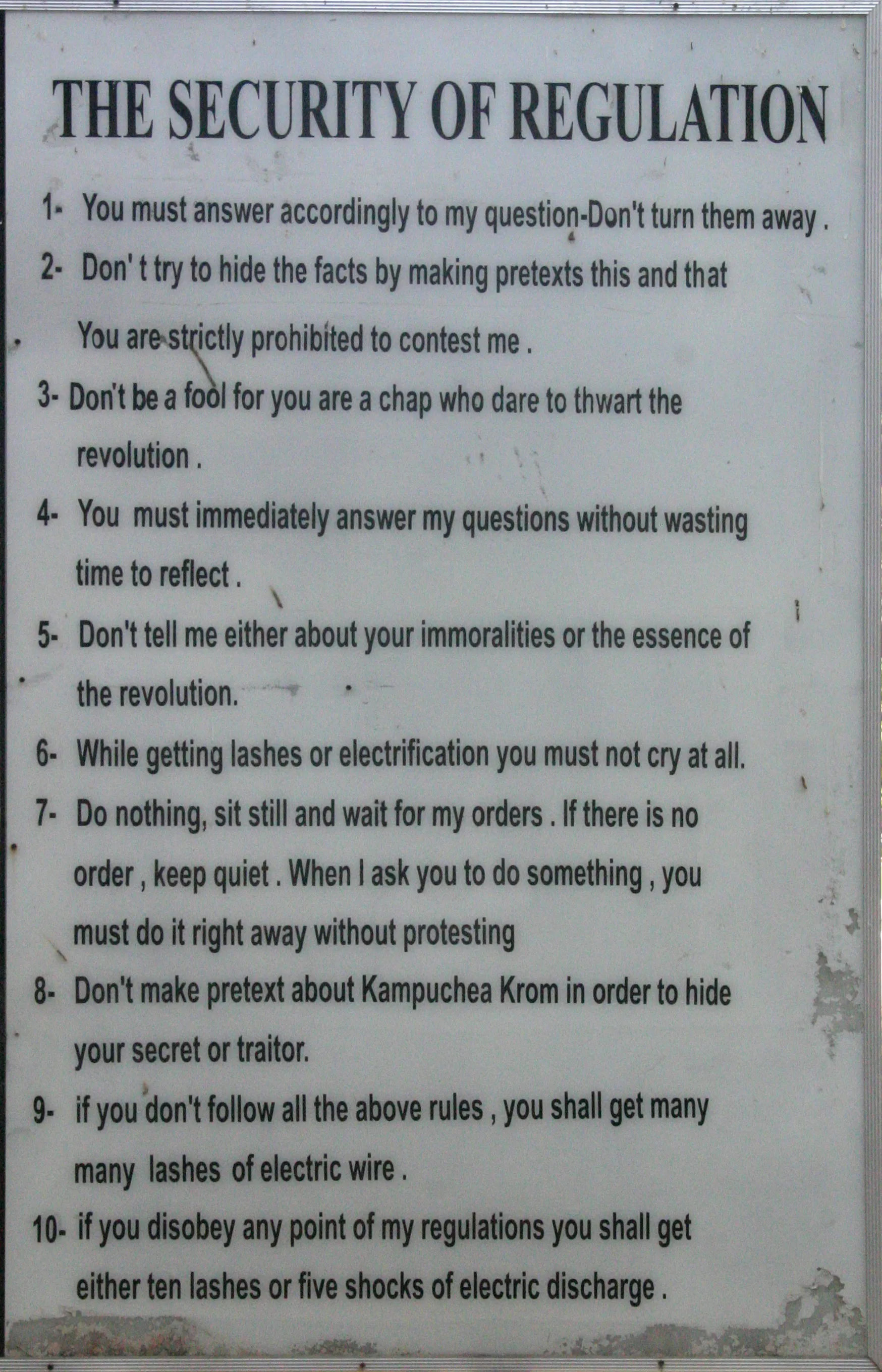
- Interrogators tortured prisoners with beatings, electric shocks, and suffocation with plastic bags.
- Each was tortured until he or she wrote a confession of spying for the CIA or Vietnam and named others, who were then arrested in turn.
- The prison kept its records: thousands of photographs and confessions survive, and they are how historians know what happened there.
The prison regulations as displayed at the Tuol Sleng Genocide Museum, Phnom Penh, Cambodia (photographed 2007). Gerd Eichmann · CC BY-SA 4.0.
Choeung Ek and the cooperatives · 1975–1979
The killing fields, and death by hunger and labor.
- Nearly all S-21 prisoners were trucked to Choeung Ek, an orchard outside Phnom Penh, and killed.
- Most were killed with blows from hoes and iron bars, to save bullets, and buried in mass graves.
- Researchers have mapped nearly 20,000 mass-grave pits across Cambodia.
- In the work cooperatives, people died of starvation, overwork, and untreated disease; “new people” got the least food.
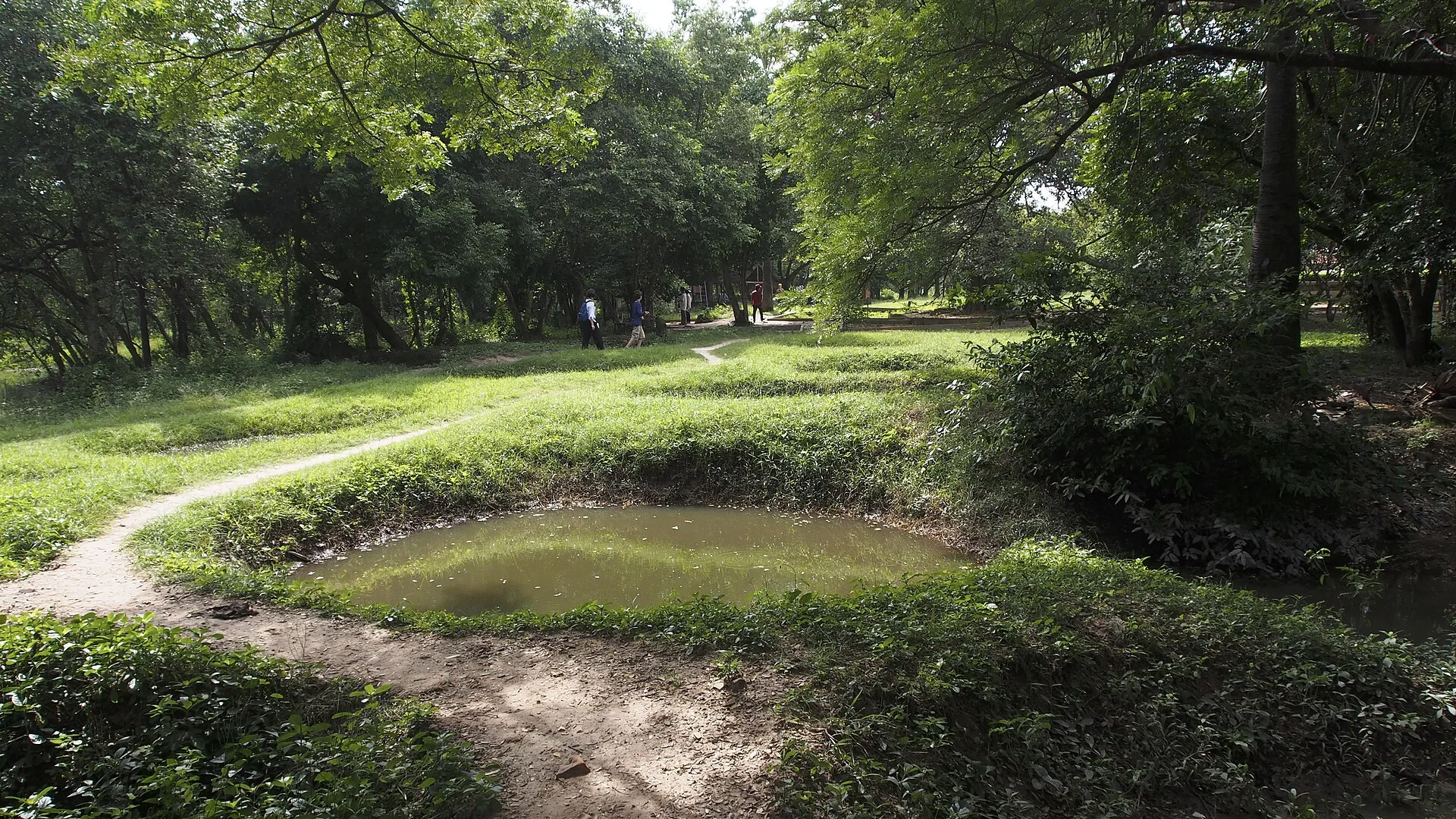
Excavated mass-grave pits at Choeung Ek, near Phnom Penh, Cambodia (photographed 2013). Clay Gilliland · CC BY-SA 2.0.
Cambodia · 1975–1978
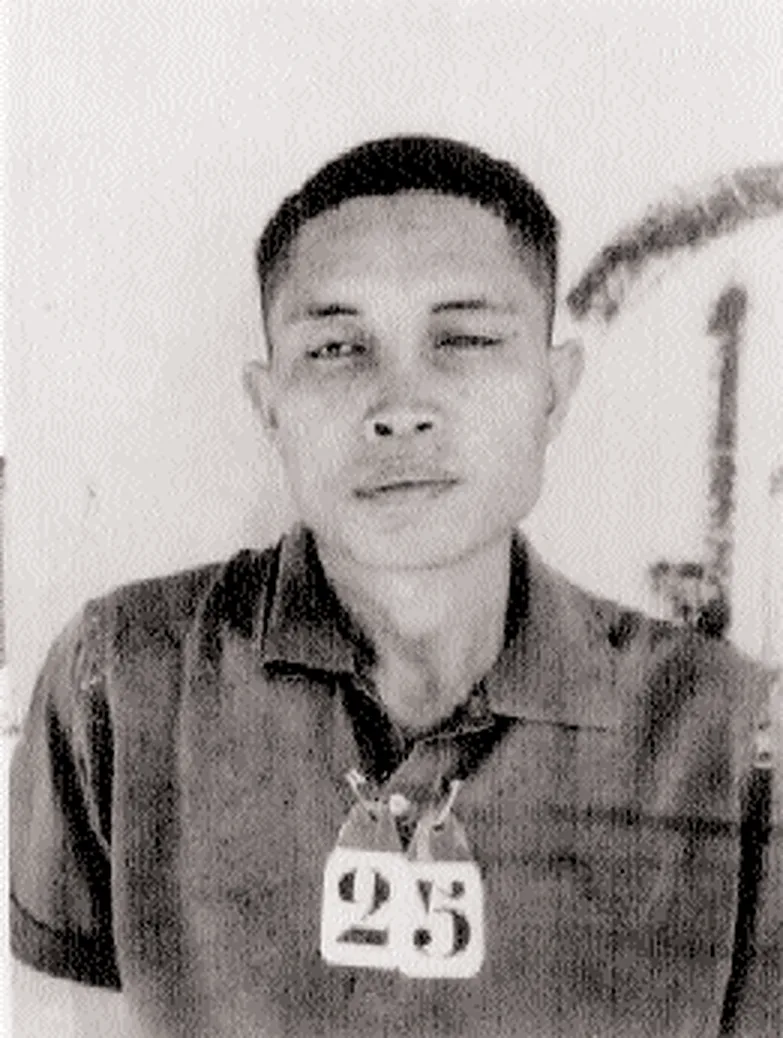
Some victims were chosen for who they were, not for their class.
- The Cham, a Muslim people of Cambodia: language, dress, and religion forbidden; Qur’ans burned, mosques destroyed, villagers forced to eat pork.
- Cham villages such as Koh Phal and Svay Khleang rose in protest in autumn 1975 and were crushed.
- Ben Kiernan estimates about 90,000 of some 250,000 Cham died; of 113 imams, only 21 are reported to have survived.
- Ethnic Vietnamese: some 150,000 expelled in 1975; of about 20,000 who stayed, nearly all were hunted down and killed in 1977–1978.
Ismael Ahmad, a Cham Muslim from Kampong Cham province, photographed as a prisoner at S-21, Phnom Penh, Cambodia, 1977. S-21 prison photograph (Tuol Sleng Genocide Museum archive), as reproduced in Ysa Osman, Oukoubah (Documentation Center of Cambodia, 2002) · Fair use (educational).
Cambodia · 1975–1979
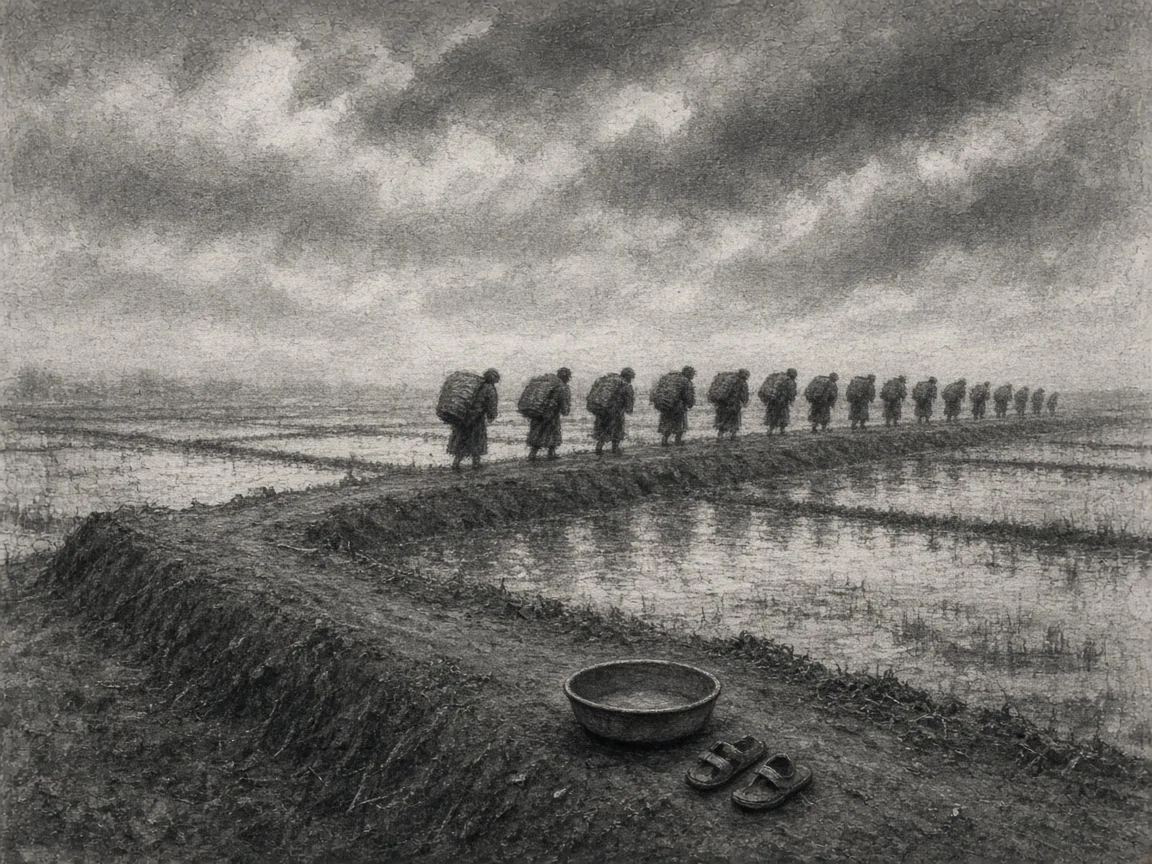
The horrors: life under Angkar
- Families were broken up: children went to youth work units, and husbands and wives to separate work brigades.
- Angkar forced strangers to marry in mass weddings, then had militiamen watch that the couples slept together.
- Taking food, complaining, or weeping for the dead could mean “re-education”: people were taken away at night and never seen again.
- Children were taught to spy on their parents. Village chiefs and young cadres, many of them teenagers, guarded, beat, and killed.
- Rations shrank to a thin rice gruel; people ate leaves, insects, and lizards to stay alive.
Kigali, Rwanda · April 6, 1994
In one hundred days, neighbors killed neighbors.
- Hutu extremists who controlled the government tried to exterminate Rwanda’s Tutsi minority, April to July 1994.
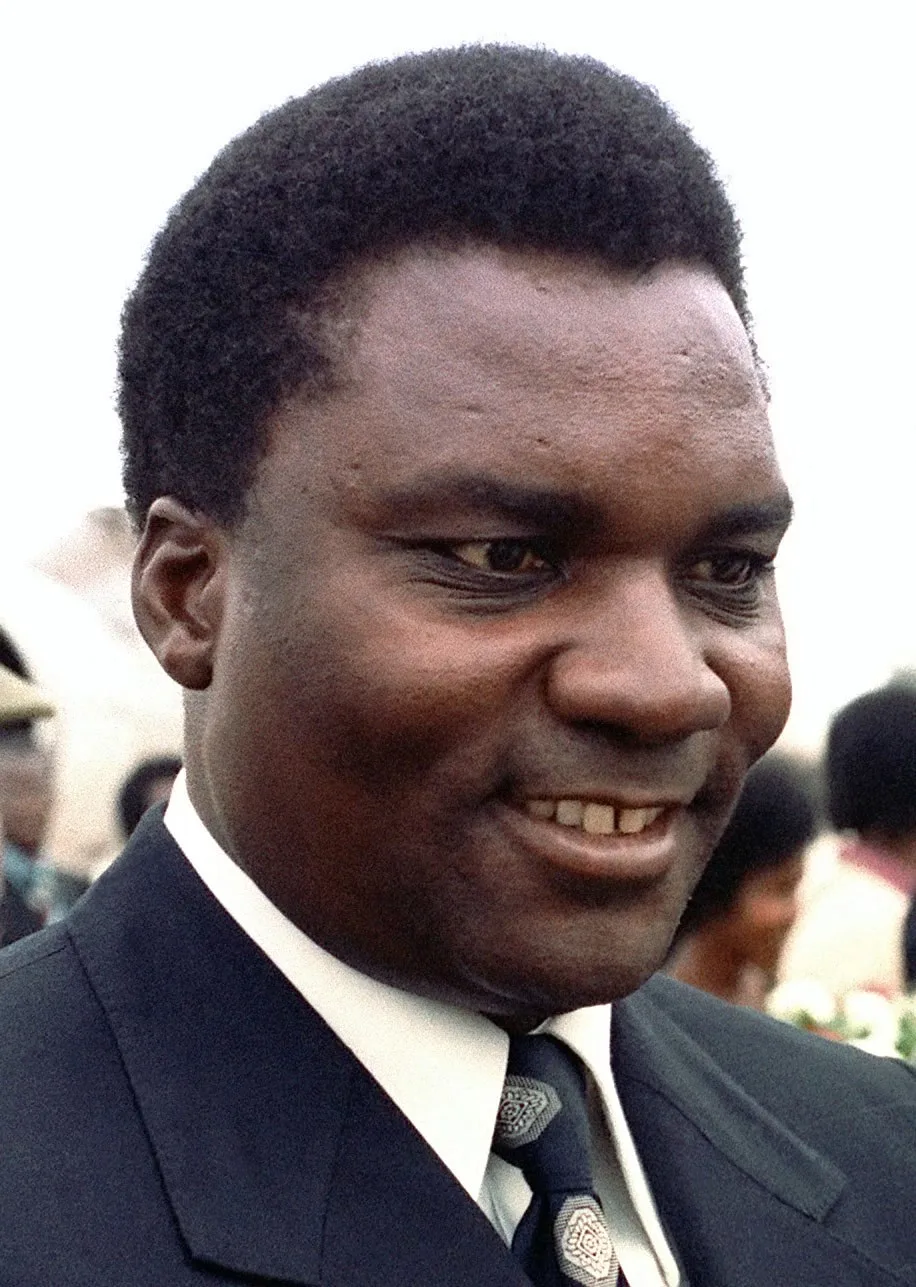
- April 6: the plane carrying President Juvénal Habyarimana was shot down over Kigali.
- Within hours the army, the presidential guard, and the Interahamwe militias (“those who attack together”) began killing Tutsi and moderate Hutu from lists prepared in advance.
- Radio RTLM broadcast names and hiding places and called Tutsi inyenzi, “cockroaches.” Most were killed with machetes and clubs.
President Juvénal Habyarimana of Rwanda arrives at Andrews Air Force Base, Maryland, United States, September 25, 1980. DF-SC-83-02204.jpg: Templeton derivative work: César · Public domain.
Rwanda · April–July 1994
The killing was done by hand.
- Most killers were ordinary Hutu men, many of them farmers, called out by local officials. They used machetes and clubs.
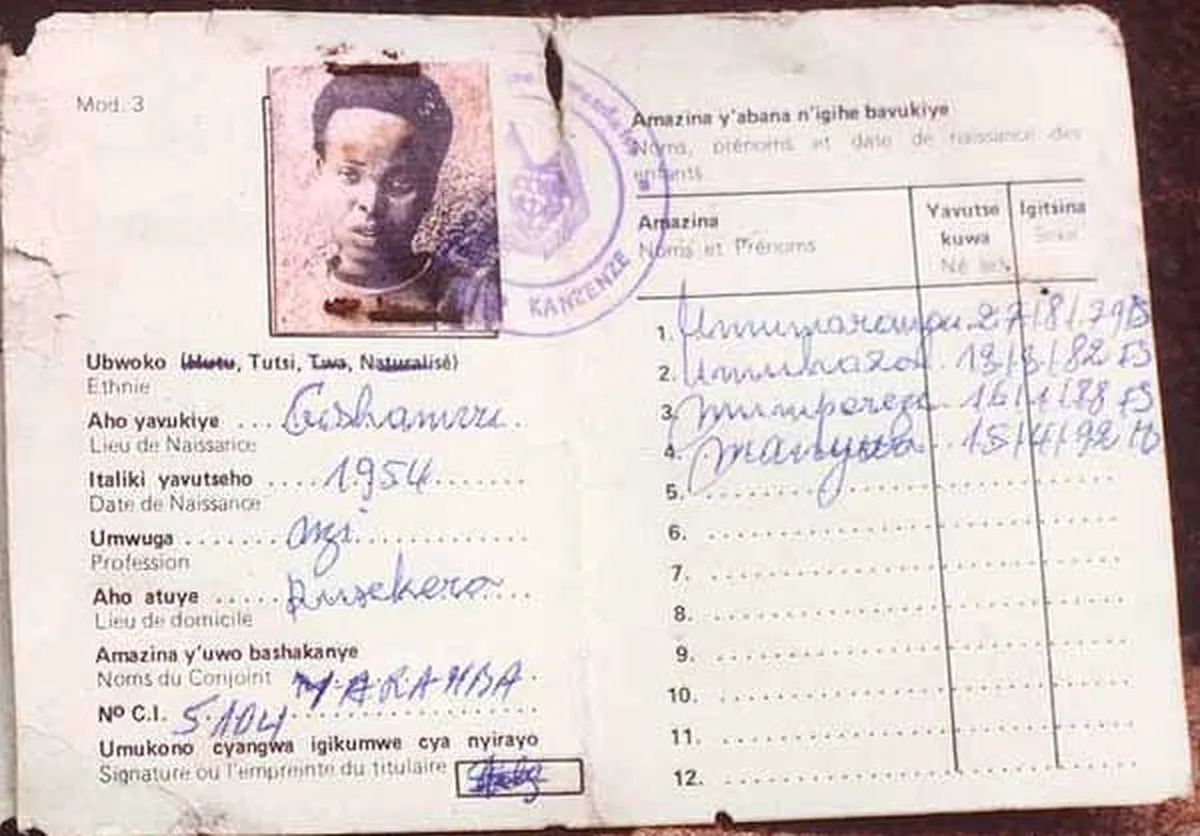
- At roadblocks, militiamen checked identity cards, which listed each Rwandan’s ethnicity. A “Tutsi” card could mean death.
- Tutsi who fled to churches, as at Nyamata and Ntarama, were killed inside.
- Radio RTLM called Tutsi inyenzi, “cockroaches,” and read out hiding places.
- Women and girls were raped on a mass scale: an estimated 250,000 to 500,000 rapes.
A Rwandan identity card; on the ethnicity line, every category but “Tutsi” is struck out. Photograph by Jerry Fowler, USHMM, via Prevent Genocide International · Fair use (educational).

Rwanda · April–July 1994
The horrors: Rwanda
- Tutsi were hunted for weeks through hills, forests, and marshes. In the marshes of Bugesera, the killers set out every morning, day after day.
- Most were killed by people they knew: neighbors, fellow parishioners, co-workers.
- Women and girls were raped, often by gangs, held as sex slaves, and mutilated. Many were killed afterward; many survivors were left with HIV.
- Children and babies were killed with their families. Many victims were maimed and left to die slowly.
- Hutu who refused to kill, or who hid Tutsi, could be killed too.
Eastern Bosnia and Herzegovina · 1992–1995
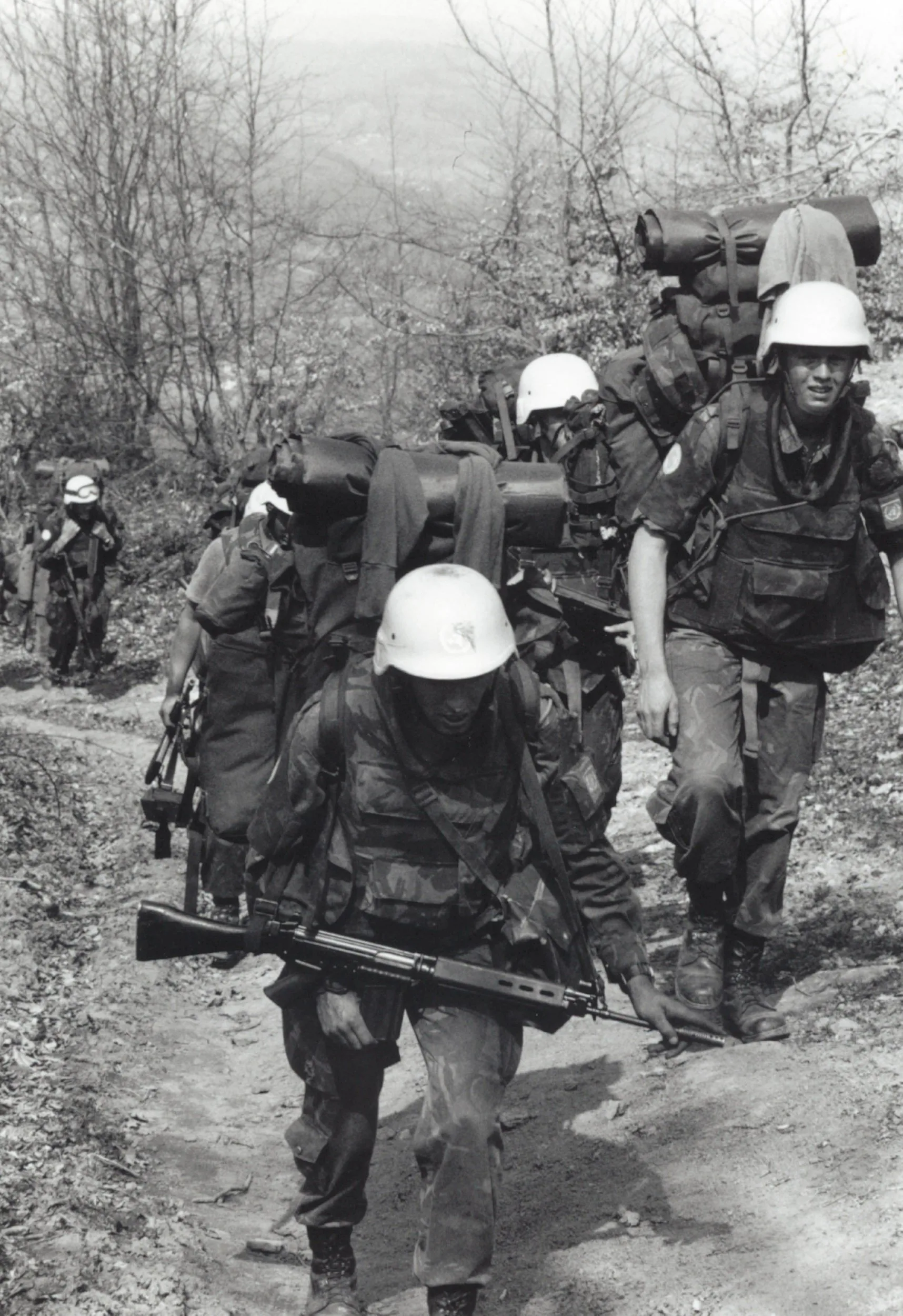
The UN promised to protect Srebrenica.
- July 1995: Bosnian Serb forces captured the UN “safe area” of Srebrenica, expelled the women, children, and elderly, and shot the Bosniak (Bosnian Muslim) men and boys.
- From 1992, as Yugoslavia broke apart, Bosnian Serb forces backed by Serbia drove Bosniaks from their villages: “ethnic cleansing.” Many fled into Srebrenica.
- April 1993: the UN declared the enclave a “safe area,” guarded by lightly armed Dutch peacekeepers.
Dutch UN peacekeepers on foot patrol to observation posts, Srebrenica, 1994. NIMH, Ministerie van Defensie · CC BY-SA 4.0.
Srebrenica and Potočari · July 6–13, 1995
The enclave fell; the men and boys were separated from their families.
- July 6: the Bosnian Serb army attacked. July 11: forces under General Ratko Mladić overran the town.
- 20,000 to 25,000 people, mostly women, children, and the elderly, fled to the Dutch base at Potočari.
- That night 10,000 to 15,000 men set out on foot through the forests toward Tuzla.
- July 12–13: the women, children, and elderly were bused out. The men and boys were separated and held apart; thousands more from the column were captured on the roads.
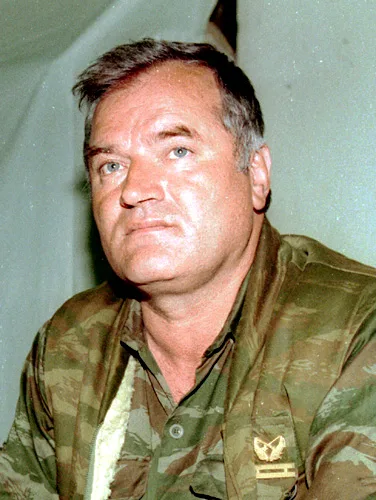
General Ratko Mladić at UN-mediated talks at Sarajevo airport, Bosnia and Herzegovina, 1993. Фото: Михаил Евстафьев / Photo by Evstafiev Mikhail · CC BY-SA 3.0.
Kravica · Orahovac · Petkovci · Branjevo · Kozluk · July 13–16, 1995
Over a few days, thousands of prisoners were shot.
- July 13: about 1,000 to 1,500 prisoners were crowded into a warehouse at Kravica and killed with rifle fire and grenades.
- Over the next days prisoners were bused to schools and other holding sites, then to execution sites: Orahovac, the Petkovci dam, the Branjevo military farm, Kozluk.
- Many were shot with their hands tied or their eyes blindfolded.
- The bodies were bulldozed into mass graves, later dug up and scattered to hide the evidence.
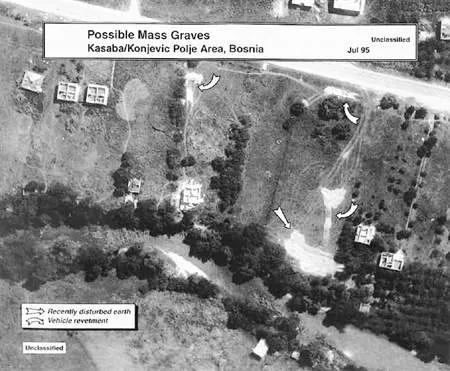
U.S. aerial reconnaissance photograph of mass graves at Nova Kasaba, Bosnia and Herzegovina, July 1995. United States Army Center of Military History · Public domain.
Potočari and the forests · July 11–16, 1995
The horrors: Srebrenica
- At Potočari some 25,000 people waited two days with little food or water in stifling heat, as soldiers burned houses nearby and cursed them.
- At night soldiers took people out of the crowd; some never came back. Refugees saw a rape and found bodies by a stream. Some, in terror, hanged themselves.
- At the buses, men and boys were pulled from their families, sons from their mothers’ hands.
- The column in the forest was shelled and ambushed. Soldiers called on the men to surrender, some using stolen UN equipment, and promised fair treatment.
- The killers were soldiers and police of the Bosnian Serb forces, among them brigades from the nearby towns of Bratunac and Zvornik.
Closing
Who were these people?
The perpetrators were not a different species. Neither were the rescuers.
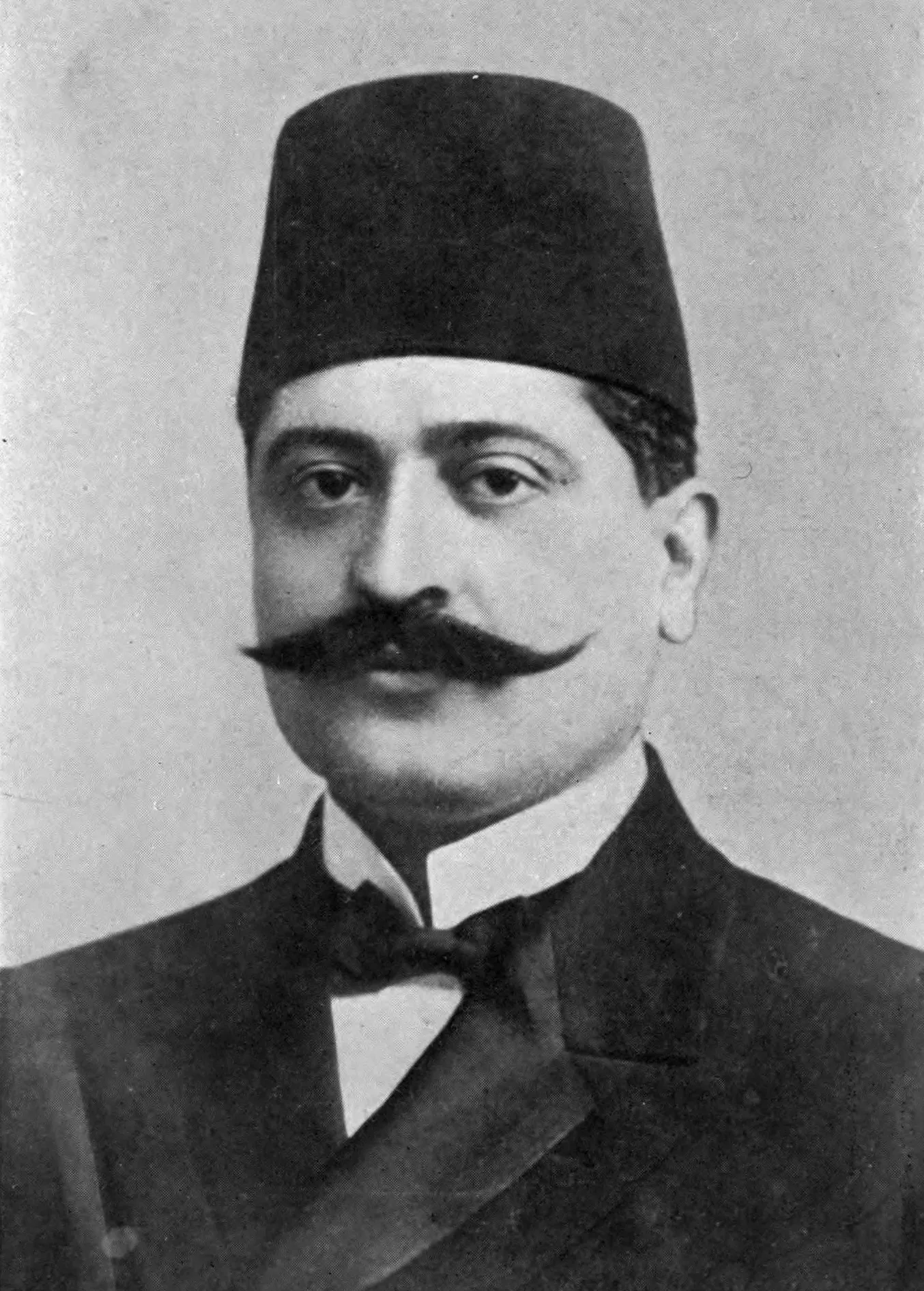
telegraph clerk
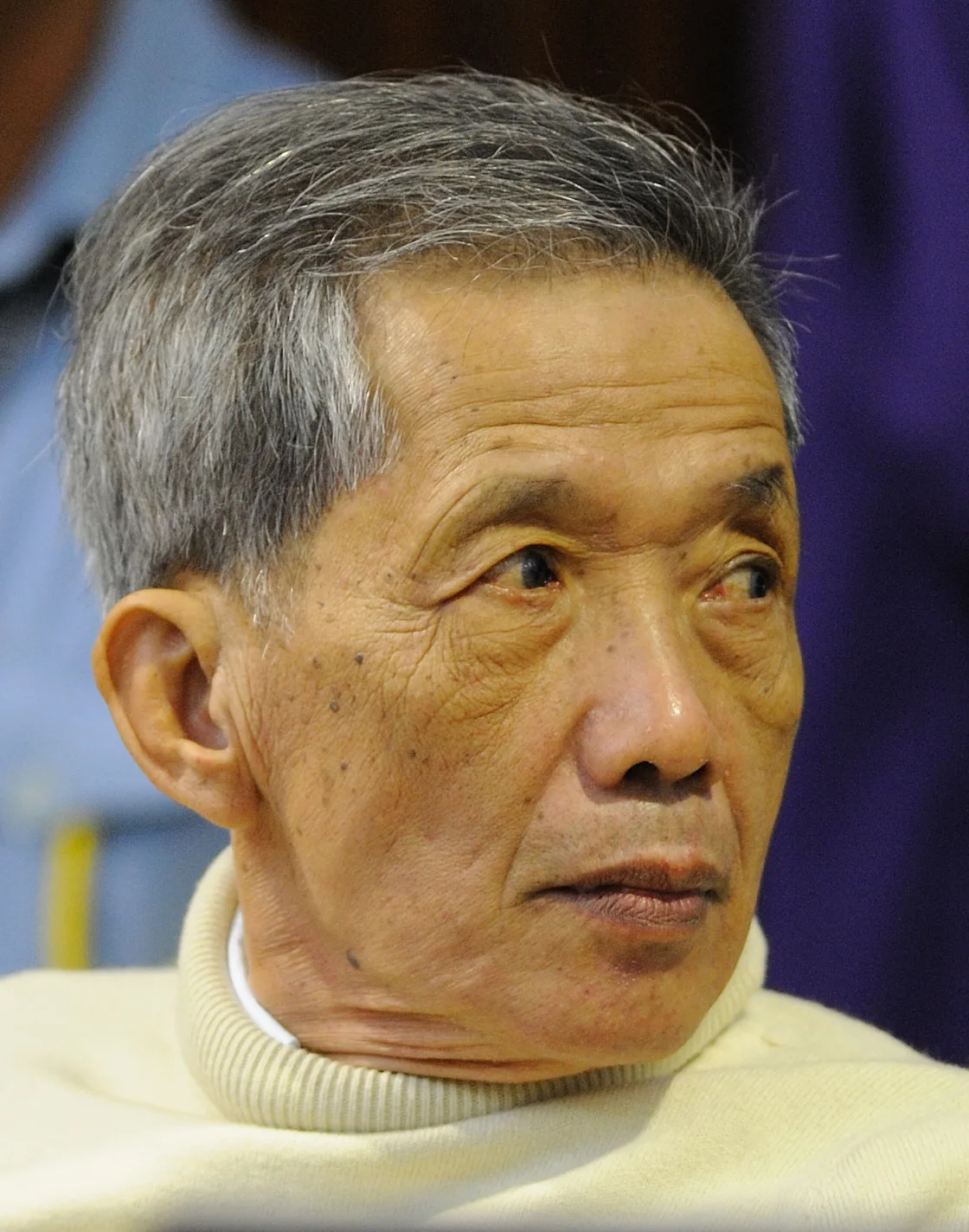
mathematics teacher
general
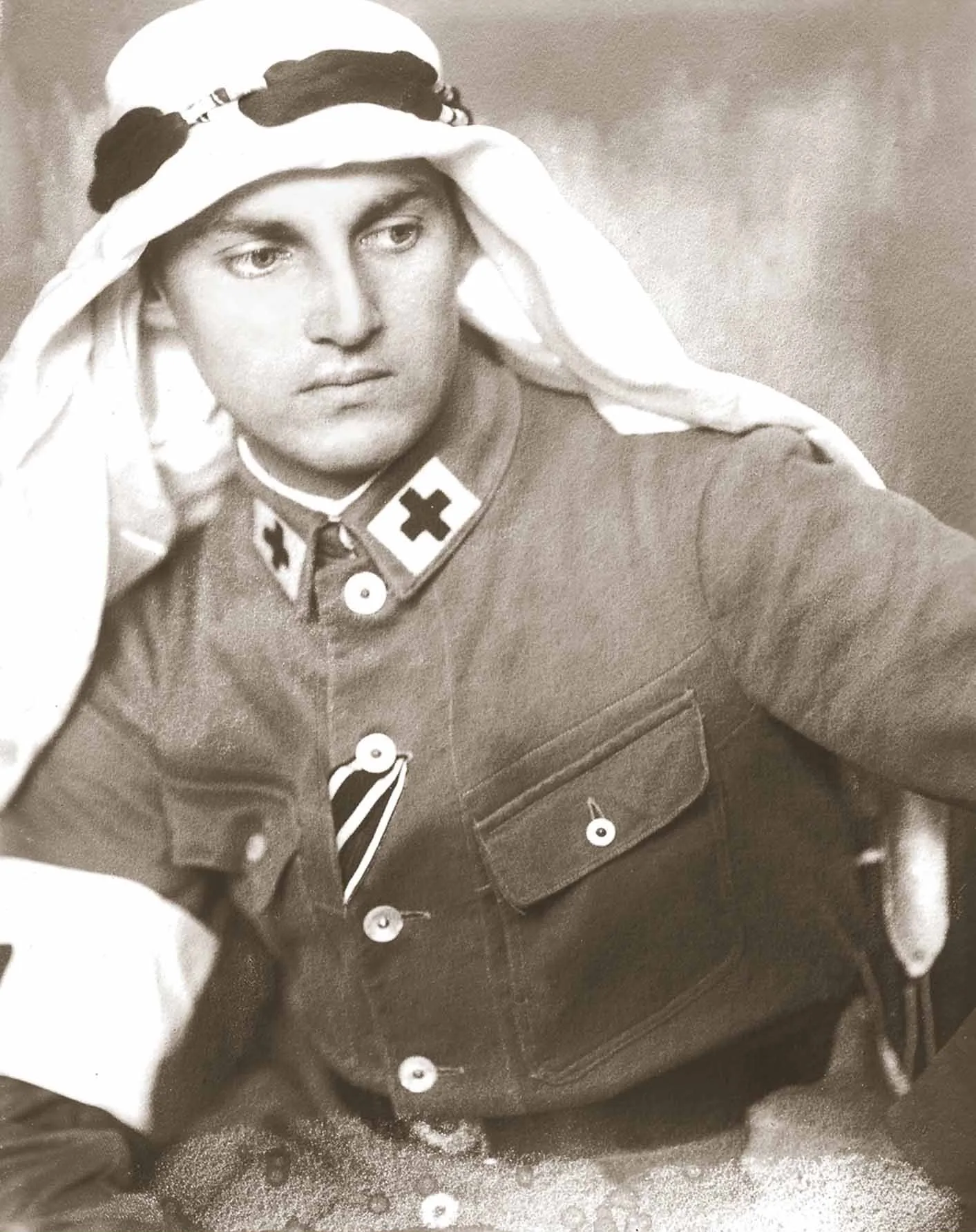
defied the Ottomans and Hitler
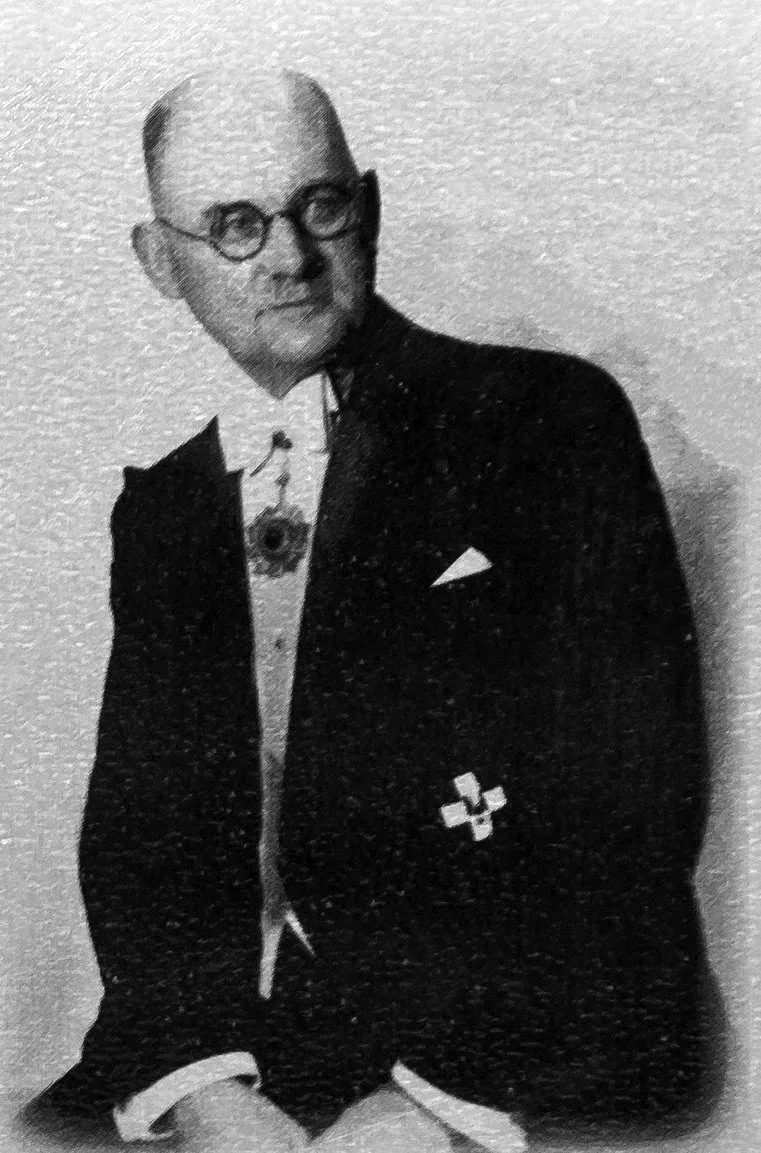
Nazi Party member who saved thousands
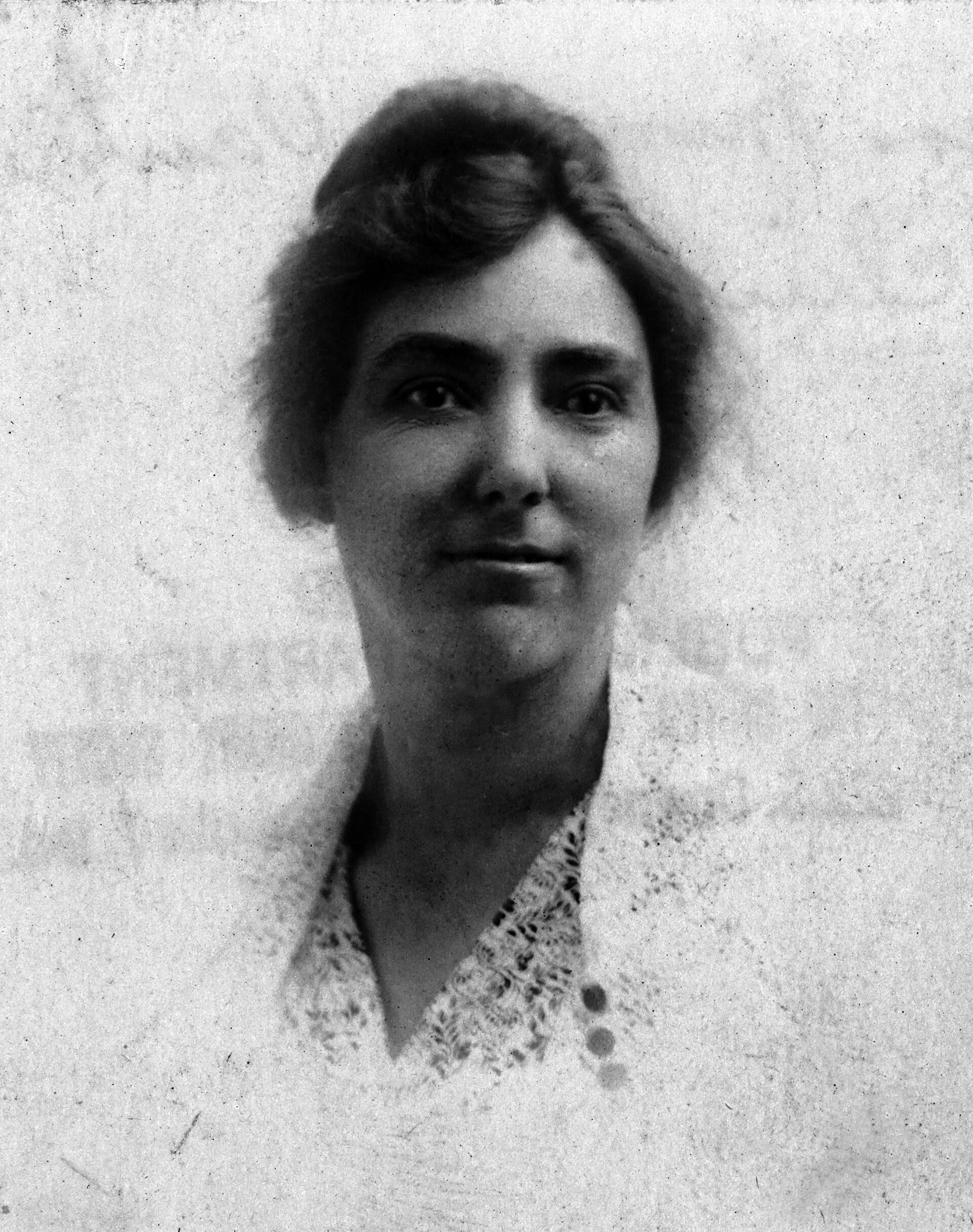
teacher from Illinois
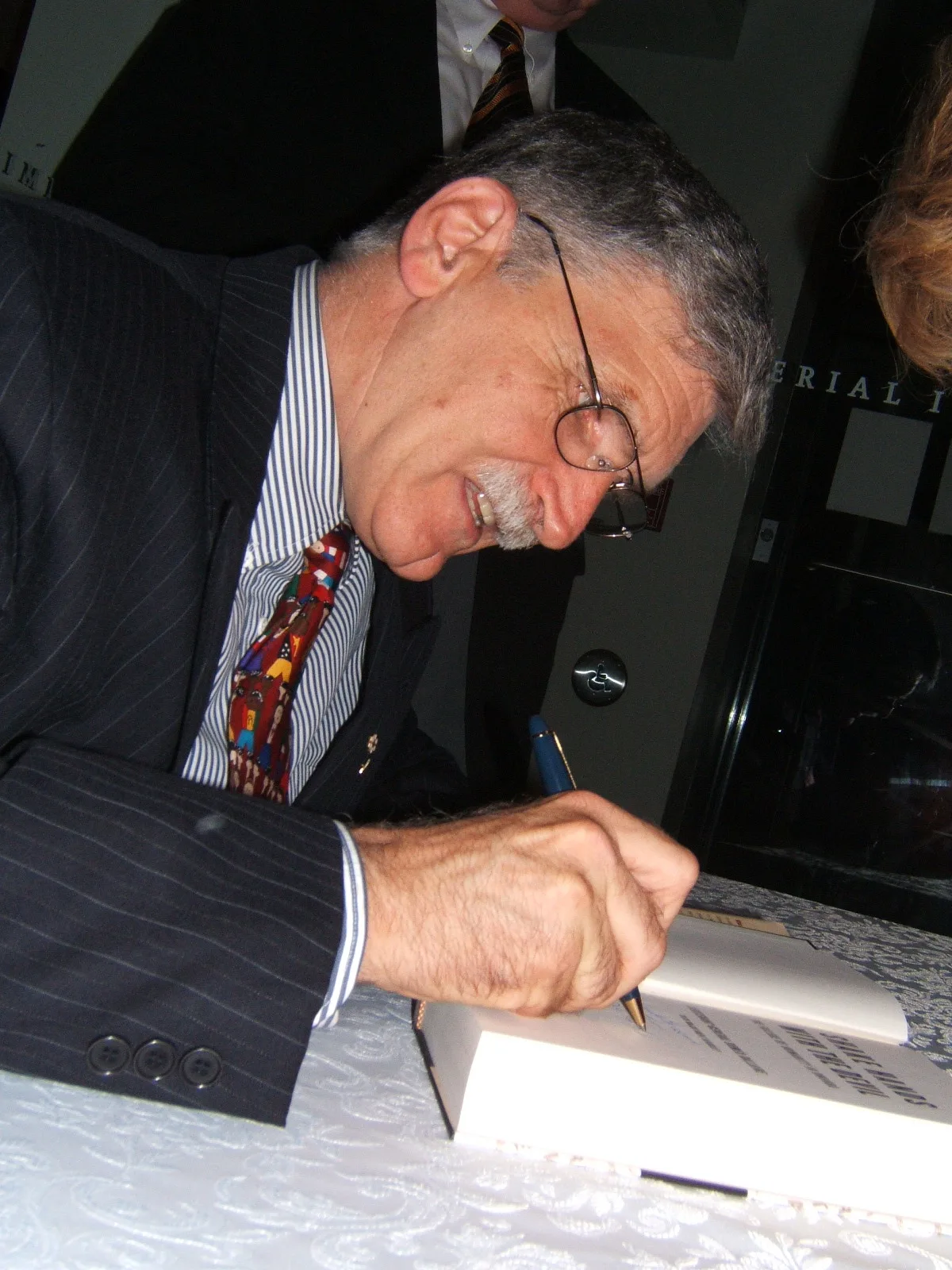
warned the UN
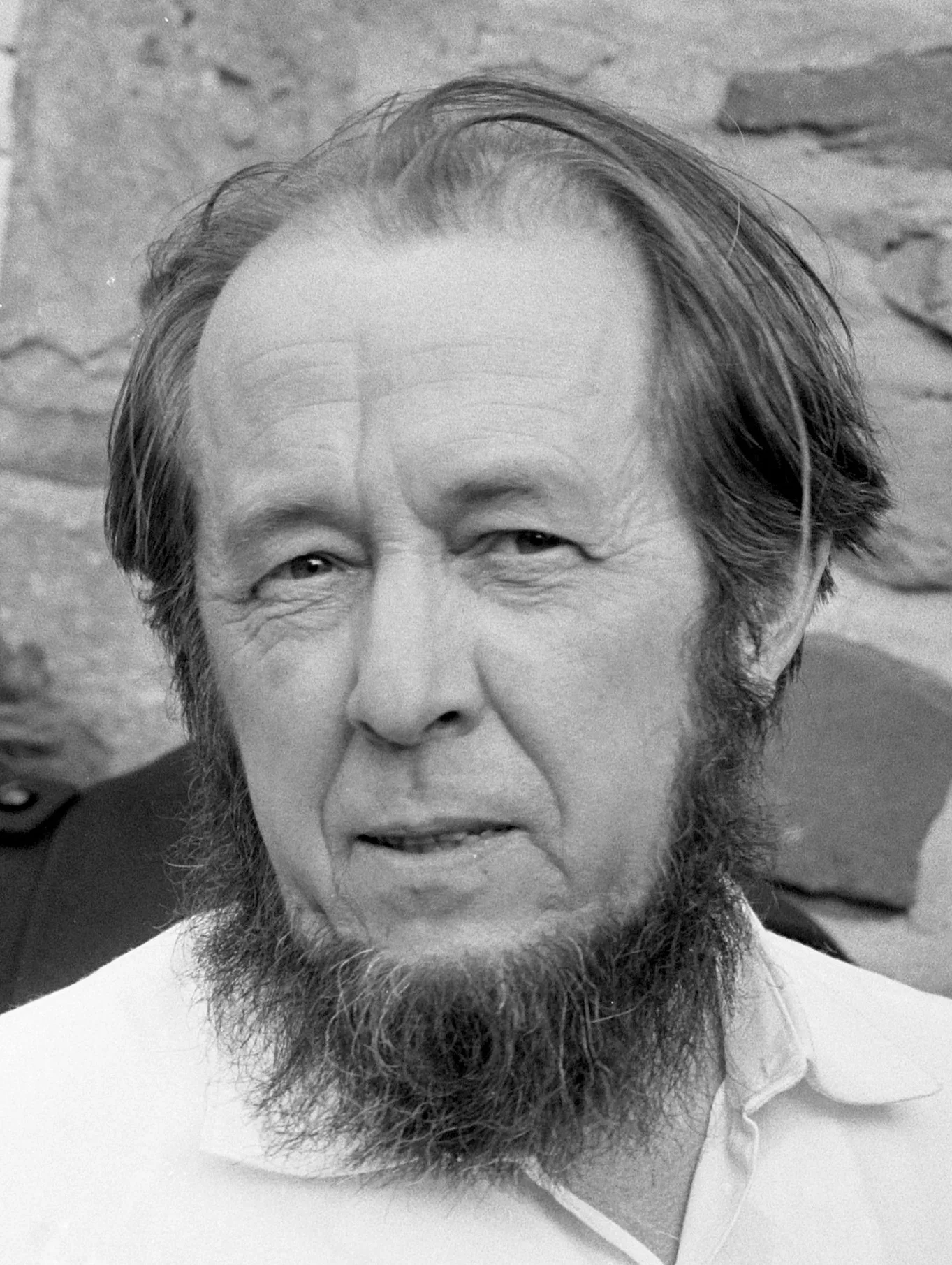
Aleksandr Solzhenitsyn, eight years in the Gulag
What is it in us that resists?
“the line separating good and evil passes not through states, nor between classes, nor between political parties either—but right through every human heart—and through all human hearts.”
Aleksandr Solzhenitsyn, The Gulag Archipelago
What, then, is it in human nature that makes this possible, and what is it in us that resists?
Aleksandr Solzhenitsyn, 1974. Bert Verhoeff for Anefo · CC0.
Pierian Spring
Crimes Against Humanity
Today’s lecture ends here. Continue on your own: the stories below finish this chapter’s history. They begin with more of the story of six of today’s cases, then turn to crimes against humanity beyond them.
The legal definition of genocide is drawn around groups destroyed “as such.” Most of the mass killing of the twentieth century fell on the other side of it: people killed as “class enemies,” as prisoners, as “enemies of the people,” as subjects of an empire at war. The law calls these crimes against humanity and war crimes.
“A little learning is a dang’rous thing; / Drink deep, or taste not the Pierian spring.” Alexander Pope
Pierian Spring · Berlin, Germany · March 15, 1921
A survivor shot the man who had ordered the deportations.
- On Hardenbergstraße, Soghomon Tehlirian, a 24-year-old Armenian, shot Mehmed Talaat Pasha once in the head.
- As Ottoman interior minister, Talaat had directed the destruction of the empire’s Armenians in 1915.
- Sentenced to death in absentia in 1919, Talaat had fled to Berlin under a false name.
- On June 3, 1921, a German jury heard the witnesses to the massacres and acquitted Tehlirian.
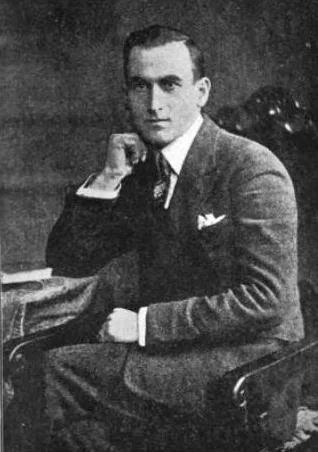
Soghomon Tehlirian, 1921. Unknown photographer · Public domain.
Pierian Spring · Lwów, Poland (today Lviv, Ukraine) · 1921
A law student asked why the killing of a million was no crime.
“Why is a man punished when he kills another man? Why is the killing of a million a lesser crime than the killing of a single individual?”
Raphael Lemkin, recalling 1921
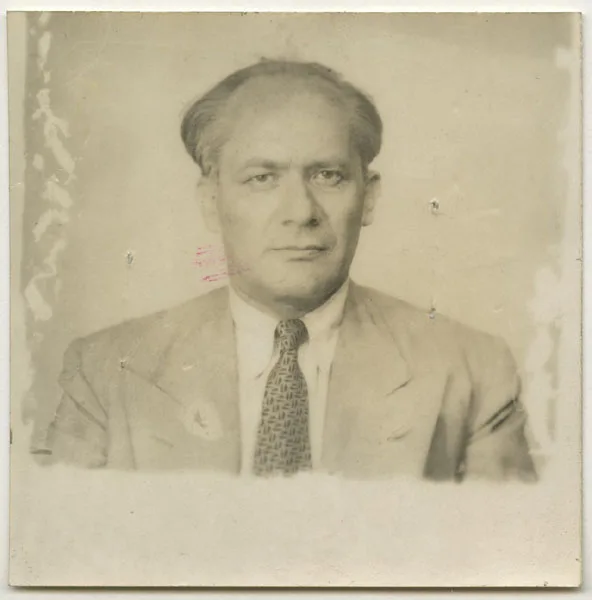
- Lemkin, a young Polish Jew studying linguistics, followed the Tehlirian case in the newspapers.
- His professor told him there was no law under which Talaat could have been arrested.
Raphael Lemkin (1900–1959), portrait, undated. Center for Jewish History, NYC · No known copyright restrictions.
Pierian Spring · Madrid, Spain · Poland · United States · 1933–1945
Lemkin escaped; his parents did not.
- 1933: Lemkin, now a lawyer, proposed to an international legal conference in Madrid, Spain, that destroying a people be made a crime. Nobody acted.
- September 1939: Germany invaded Poland. Lemkin fled through Lithuania and Sweden.
- 1941: he reached the United States. His parents stayed behind.
- He later counted 49 relatives, his mother and father among them, murdered in the Holocaust.
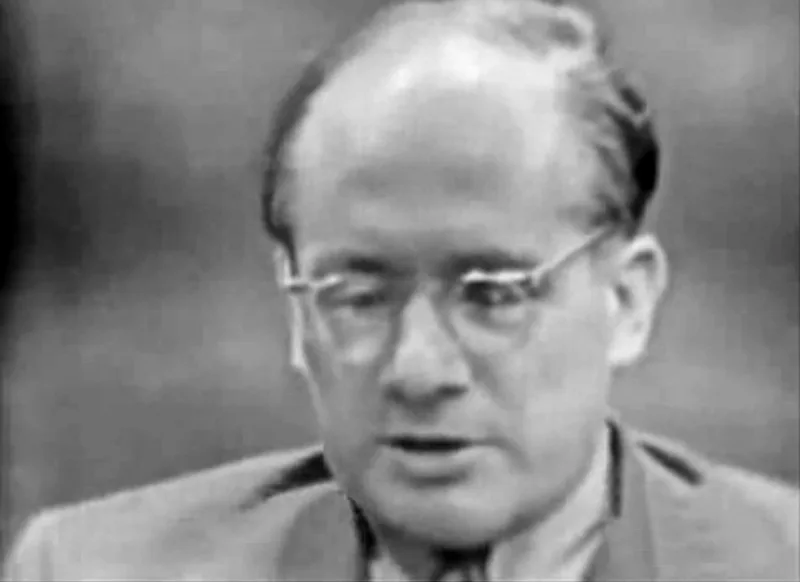
Raphael Lemkin, still from a filmed interview (date not stated in the source). Unknown photographer · Public domain.
Pierian Spring · August 1941 · 1944
Lemkin gave the crime its name: genocide.
“We are in the presence of a crime without a name.”
Winston Churchill, radio broadcast, August 1941
genocide = Greek genos (people, tribe) + Latin -cide (killing)
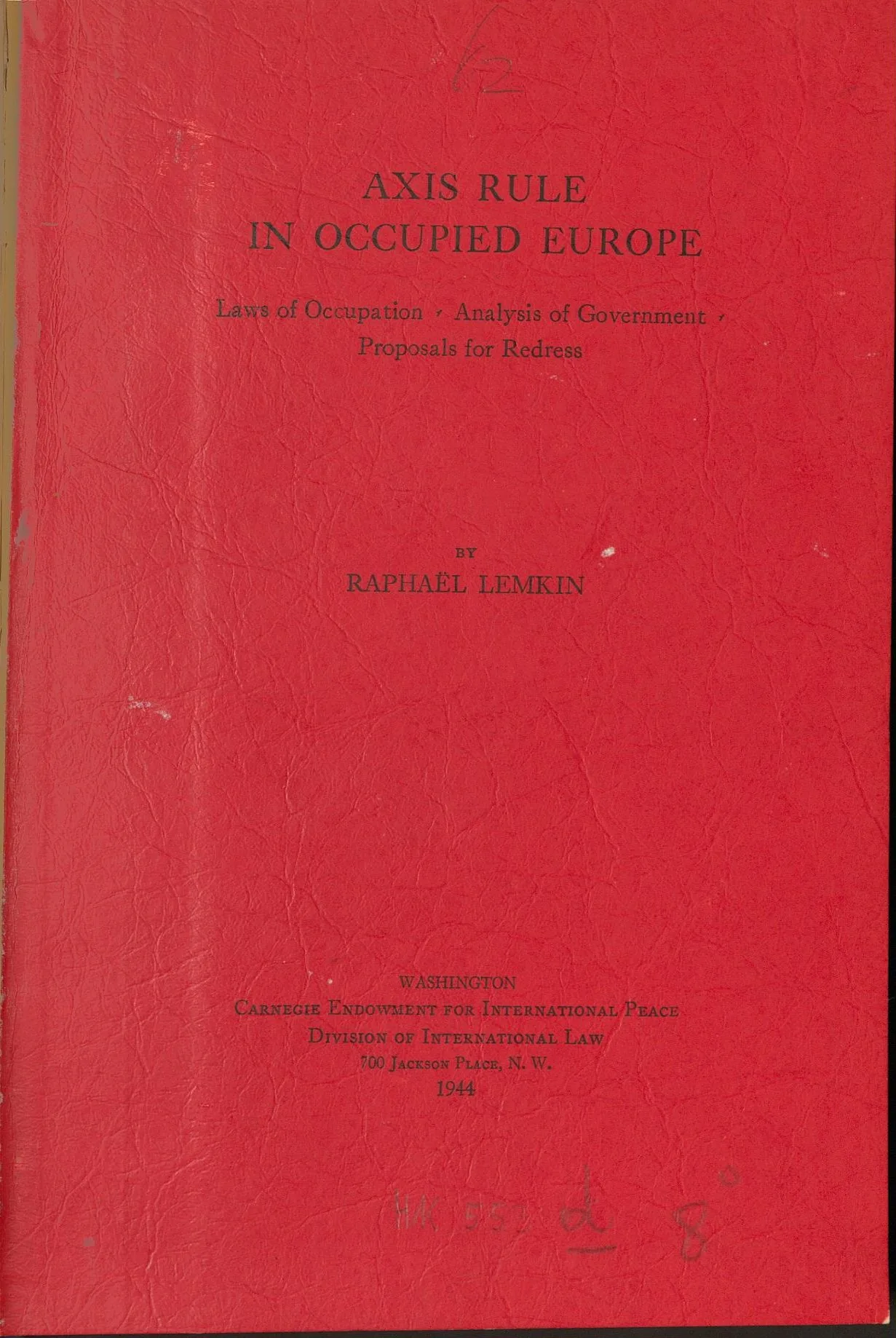
“By ‘genocide’ we mean the destruction of a nation or of an ethnic group.” Lemkin, Axis Rule in Occupied Europe (1944)
Title page of Lemkin’s Axis Rule in Occupied Europe (1944), where the word “genocide” first appeared. Unknown photographer · Public domain.
Pierian Spring · Muş · Trebizond (Trabzon) · Diyarbekir · 1915
A modern state found the means to make a whole people disappear.
- On the plain of Muş, villagers were herded into barns and stables and burned alive.
- At Trebizond on the Black Sea, witnesses testified that women and children were taken out to sea and thrown overboard.
- Doctors took part: Dr. Mehmed Reşid, governor of Diyarbekir; Dr. Bahaeddin Şakir of the Special Organization.
Telegraph, railway, bureaucracy, and the soothing word “relocation.”
Pierian Spring · Armenia: more of the story
A German medic disobeyed orders and photographed the camps.
- Armin T. Wegner photographed starving children and the dead by the roadside, and smuggled the pictures out.
- Many surviving images of the deportations come from his collection.
- April 1933: he wrote an open letter to Adolf Hitler protesting the persecution of Germany’s Jews; the Gestapo arrested him.
- 1967: Yad Vashem recognized him as Righteous Among the Nations.
Armin T. Wegner in Baghdad, 1916. Unknown photographer · Public domain.
Pierian Spring · Armenia: more of the story
The American ambassador called it a death warrant for a whole race.
“When the Turkish authorities gave the orders for these deportations, they were merely giving the death warrant to a whole race; they understood this well, and, in their conversations with me, they made no particular attempt to conceal the fact.”
Henry Morgenthau Sr., Ambassador Morgenthau’s Story (1918)
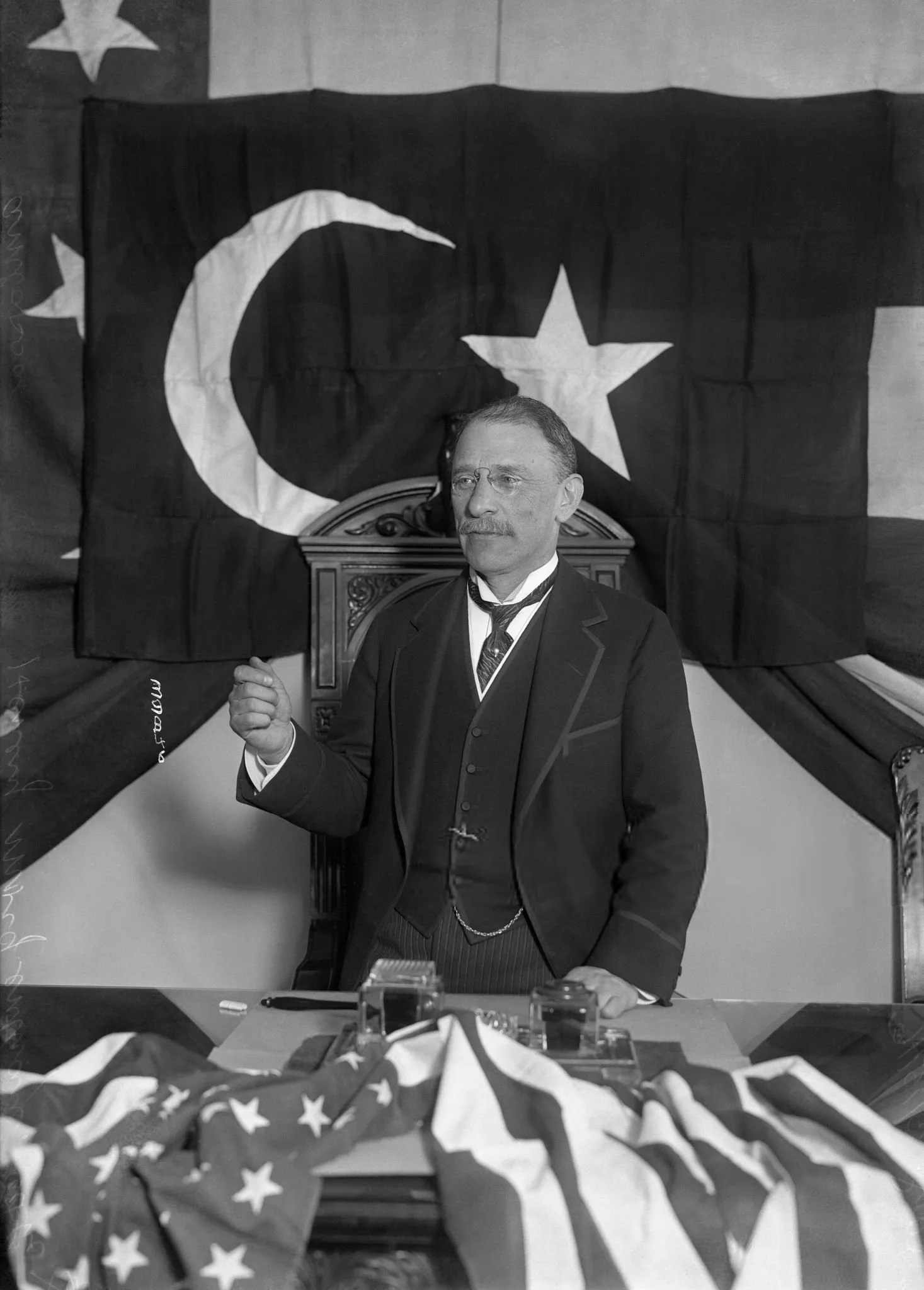
Henry Morgenthau Sr., U.S. ambassador to the Ottoman Empire, c. 1913–1916. Unknown, dedicated to Bettmann Archive · Public domain.
Pierian Spring · Armenia: more of the story
Almost no one was punished.
- 1919–1920: the organizers were tried in absentia in Constantinople.
- The British released the suspects they held on Malta; the courts-martial were abandoned.
- Talaat died on a Berlin pavement at the hands of a survivor, not before a court.
- Turkey still rejects the word genocide.
A disputed line: one version of a speech by Hitler (August 22, 1939) asks, “Who, after all, speaks today of the annihilation of the Armenians?” It was not admitted at Nuremberg, and historians still debate whether he said it.
Pierian Spring · The Holodomor: more of the story
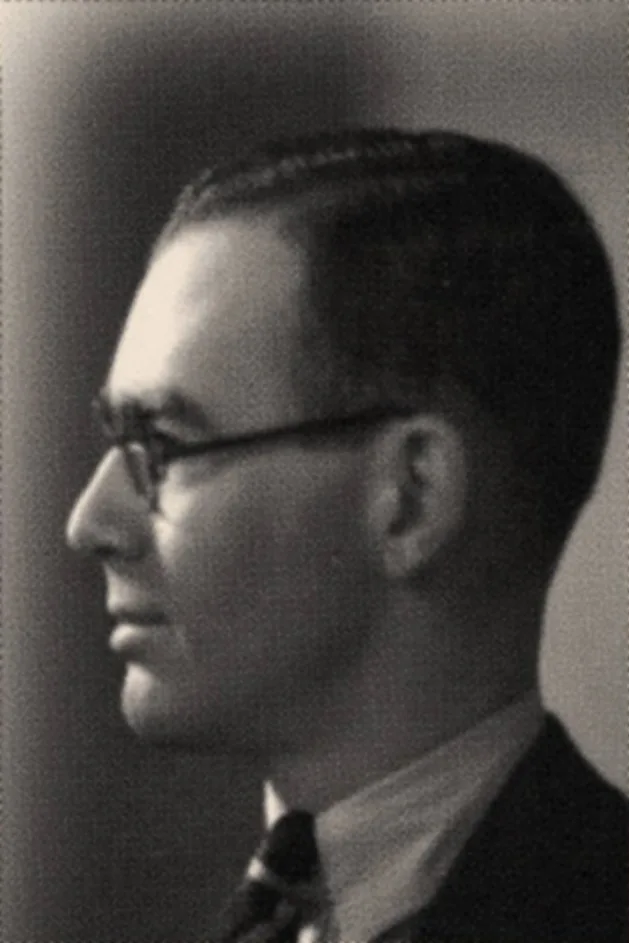
A young Welsh journalist walked into the villages and told the world.
“Everywhere was the cry, ‘There is no bread. We are dying.’”
Gareth Jones, Berlin, March 29, 1933
- Two days later, Walter Duranty of the New York Times, a Pulitzer Prize winner, dismissed the reports: “Russians Hungry, But Not Starving.”
- Jones was discredited. In 1935 he was killed by bandits in Inner Mongolia, China, the day before his thirtieth birthday.
Gareth Jones (1905–1935). Український інститут національної пам'яті · CC BY-SA 3.0.
Pierian Spring · The Holodomor: more of the story
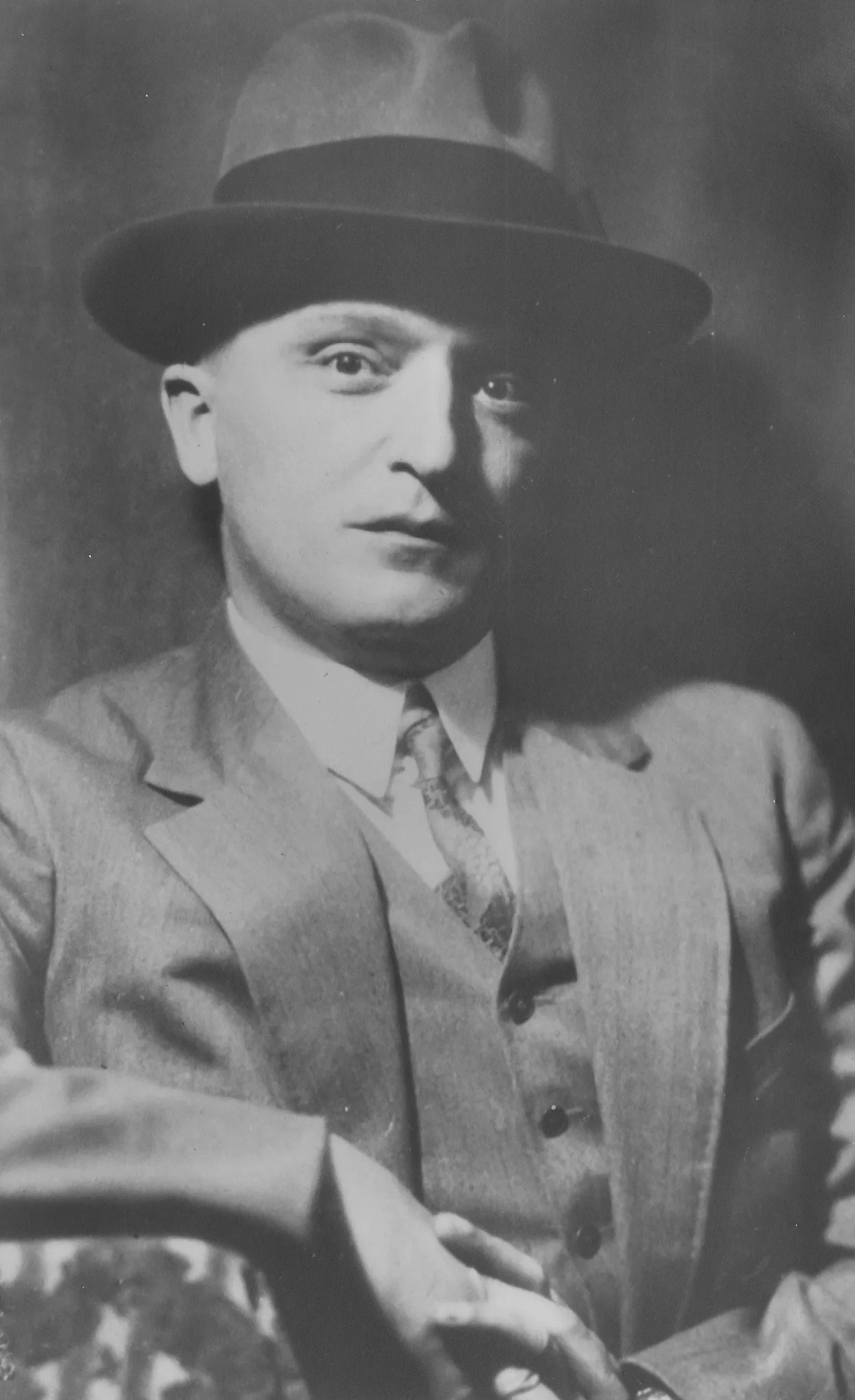
An Austrian engineer photographed the famine in secret.
- The famine was hidden so well that few photographs of it exist.
- The most important were taken secretly in Kharkiv in 1933 by Alexander Wienerberger, an Austrian chemical engineer at a Soviet factory.
- Starving peasants who came to the city for bread; bodies on the pavement as passers-by walked around them.
- Many other “Holodomor photographs” are not: some come from the Volga famine of 1921–1922. Honest captions protect the victims’ memory.
Alexander Wienerberger (1891–1955). Alexander Wienerberger (1891–1955) · Public domain.
Pierian Spring · The Gulag: more of the story
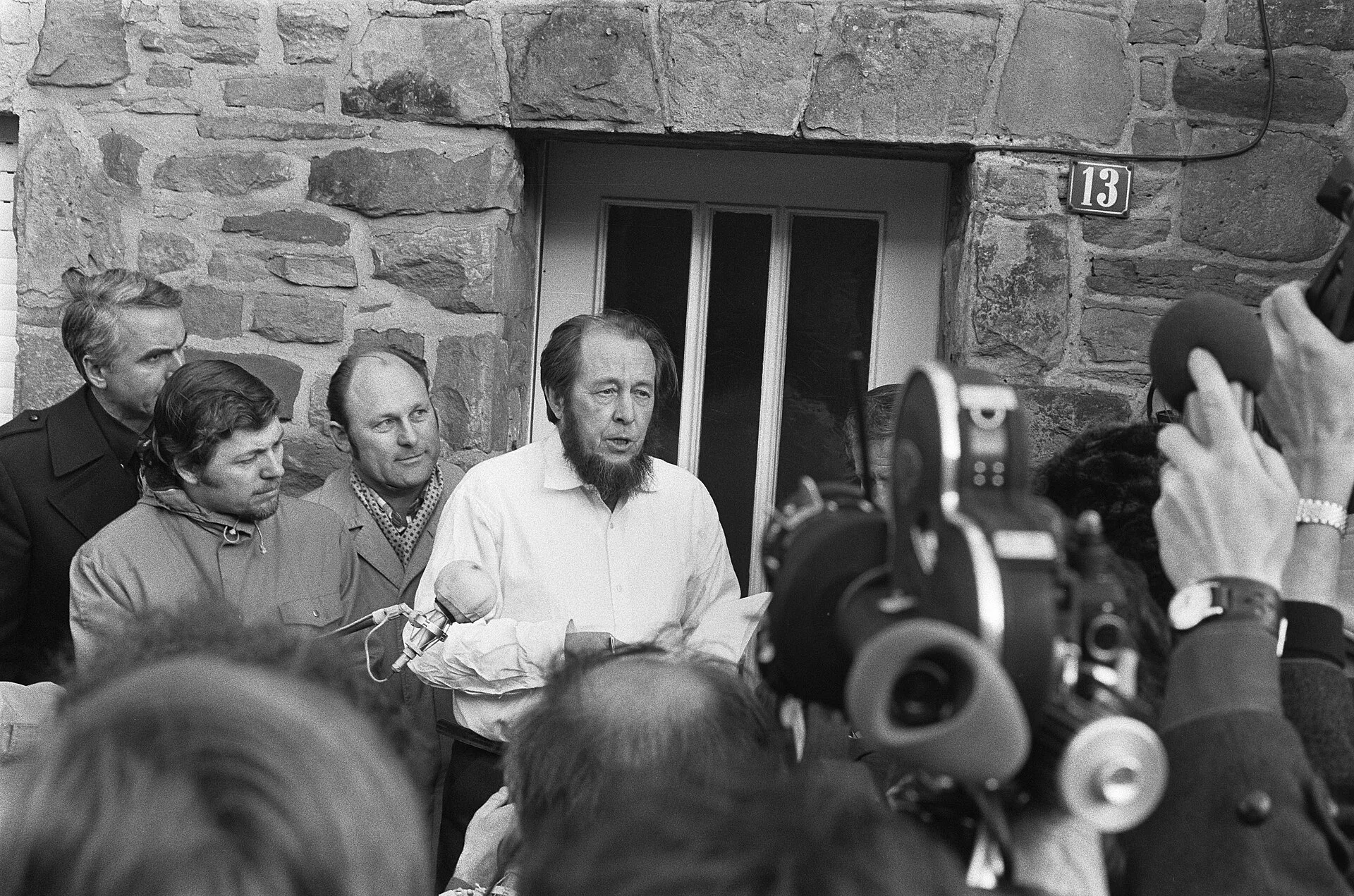
After Stalin, the prisoners came home.
- 1953: Stalin died; an amnesty freed about 1.2 million, mostly non-political prisoners.
- 1956: Khrushchev denounced Stalin’s crimes; political prisoners came home. 1960: the Gulag administration was abolished.
- 1962: Solzhenitsyn’s One Day in the Life of Ivan Denisovich put the Gulag in print.
Aleksandr Solzhenitsyn speaks to the press after his expulsion from the Soviet Union, February 14, 1974. Bert Verhoeff for Anefo · CC0.
Pierian Spring · Nanjing: more of the story
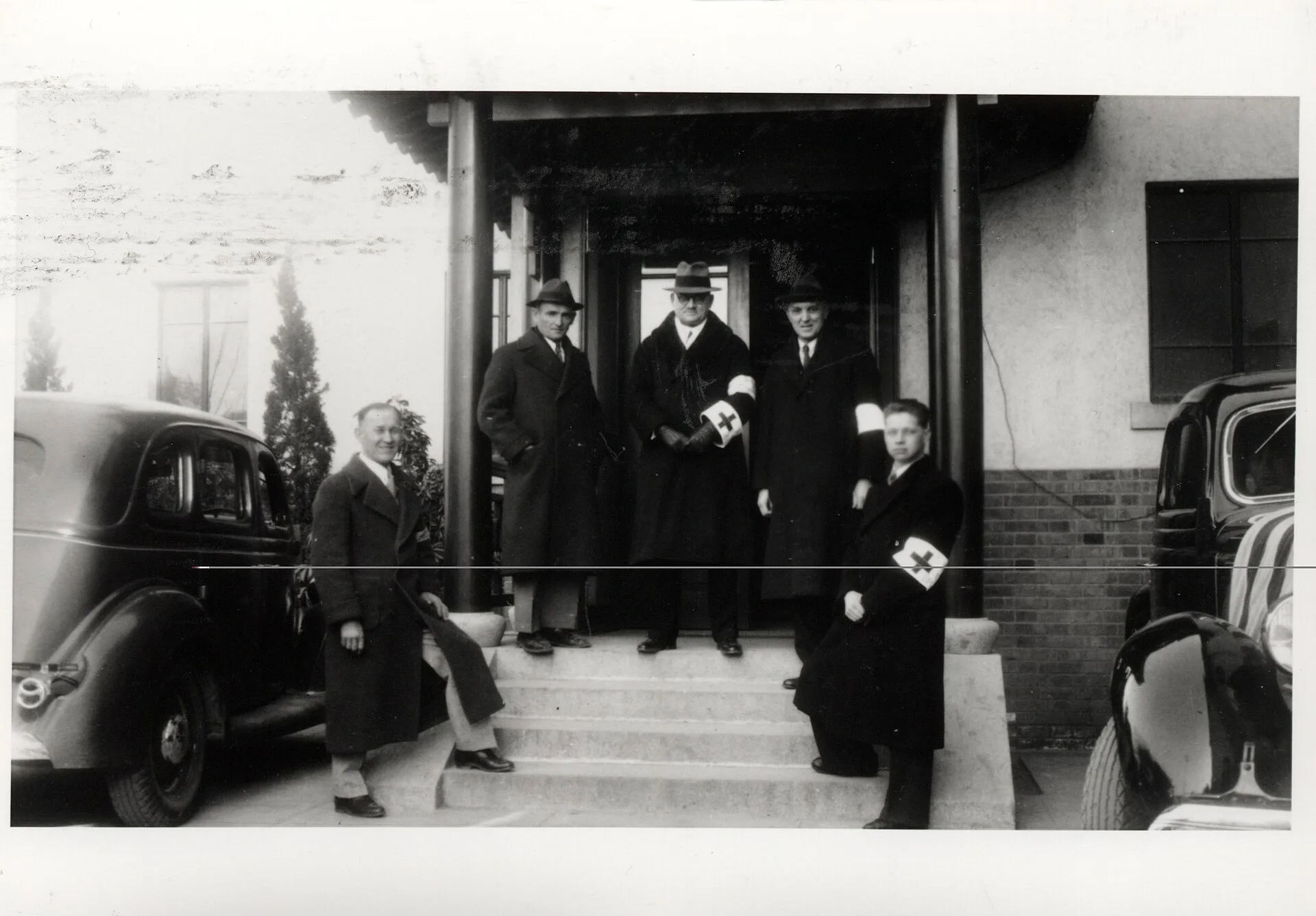
A German Nazi Party member chaired a refuge for 200,000 people.
- About two dozen Westerners, missionaries, doctors, professors, and businessmen, set up the Nanking Safety Zone.
- Some 200,000 to 250,000 Chinese crowded into a few square kilometers.
- Its chairman, John Rabe, managed the local office of the German firm Siemens and was a member of the Nazi Party.
- He faced down Japanese soldiers with his swastika armband and a Nazi flag, and sheltered hundreds of refugees in his own garden. In Germany he reported the massacre to Hitler and was briefly detained by the Gestapo.
Members of the International Committee in Nanjing, December 1937; John Rabe is third from left. Memorial Hall of the Victims in Nanjing Massacre by Japanese Invaders · Public domain.
Pierian Spring · Nanjing: more of the story
An Illinois teacher stood at a college gate night after night.
- Minnie Vautrin, an American missionary educator from Secor, Illinois, headed Ginling College.
- She turned its campus into a refuge for as many as 10,000 women and children.
- She stood at the gate night after night to turn soldiers away.
- Worn out and broken by what she had seen, she took her own life in 1941.
Minnie Vautrin (1886–1941), before 1938. donations to Memorial Hall of the Victims in Nanjing Massacre by Japanese Invaders · Public domain.
Pierian Spring · Nanjing: more of the story
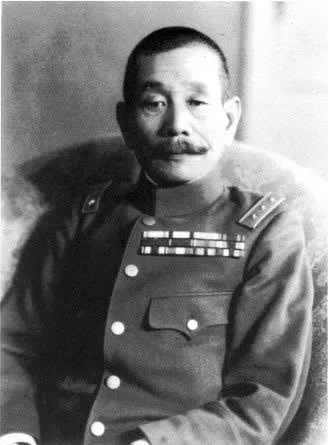
The commanding general was hanged for failing to prevent the atrocities.
- After the war the Tokyo tribunal convicted the commanding general, Matsui Iwane, of failing to prevent the atrocities.
- He was hanged on December 23, 1948.
General Matsui Iwane (1878–1948) (photograph undated). Unknown photographer · Public domain.
Pierian Spring · Cambodia: more of the story
A painter survived; the commandant had been a math teacher.
- Vann Nath, a painter, was brought to S-21 in January 1978. He lived because the commandant set him to painting portraits of Pol Pot.
- For the rest of his life he painted what he had seen there; in 2009 he testified against the commandant. He died in 2011.
- The commandant, Kaing Guek Eav, known as Duch, had been a mathematics teacher.
- Convicted of crimes against humanity in 2010; sentenced on appeal to life in prison.
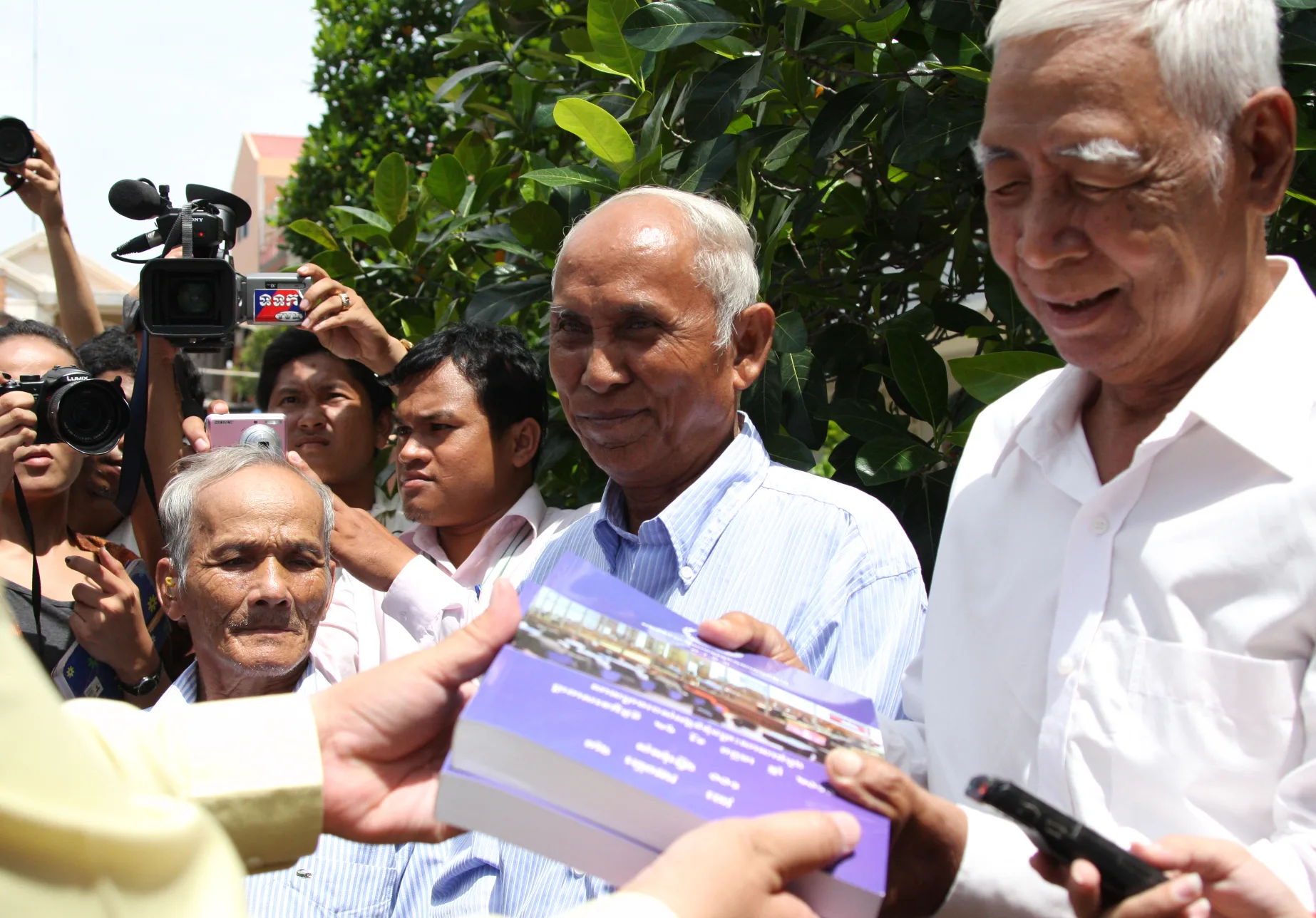
S-21 survivors Bou Meng, Chum Mey, and Vann Nath (right) with copies of the verdict against Duch, August 12, 2010. Extraordinary Chambers in the Courts of Cambodia · CC BY 2.0.
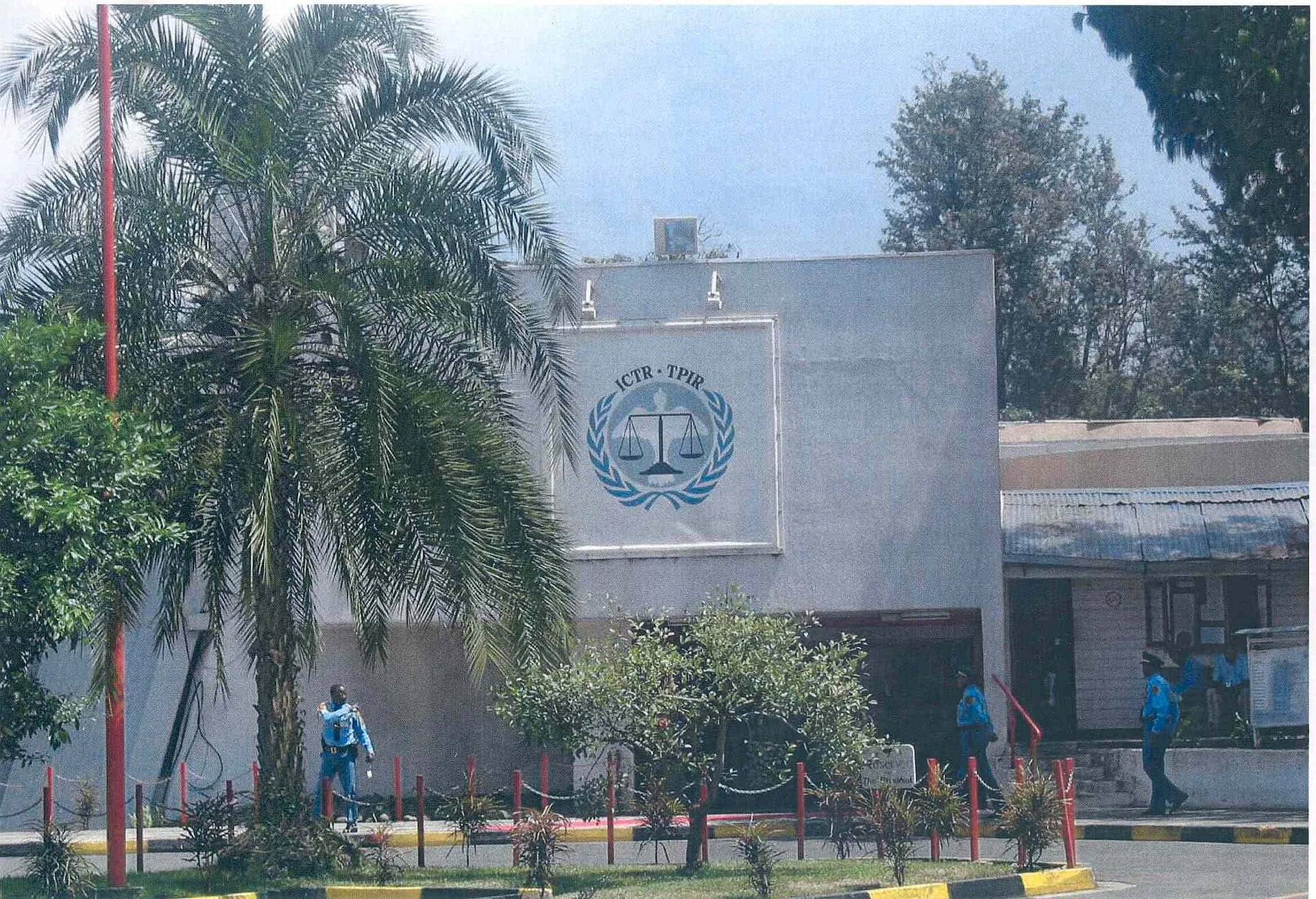
Pierian Spring · Rwanda: more of the story
A mayor protected his town, then urged his neighbors to kill.
- Jean-Paul Akayesu, a former schoolteacher and school inspector, was mayor of the commune of Taba.
- For the first days he kept the militias out and protected Taba’s Tutsi.
- After a meeting with leaders of the interim government on April 18, 1994, he changed sides and urged his neighbors to kill.
- September 2, 1998: the International Criminal Tribunal for Rwanda convicted him of genocide: the first conviction for genocide by an international court, and the first judgment to hold that rape could be an act of genocide.
The International Criminal Tribunal for Rwanda, Arusha, Tanzania, 2003. Tomsudani · Public domain.
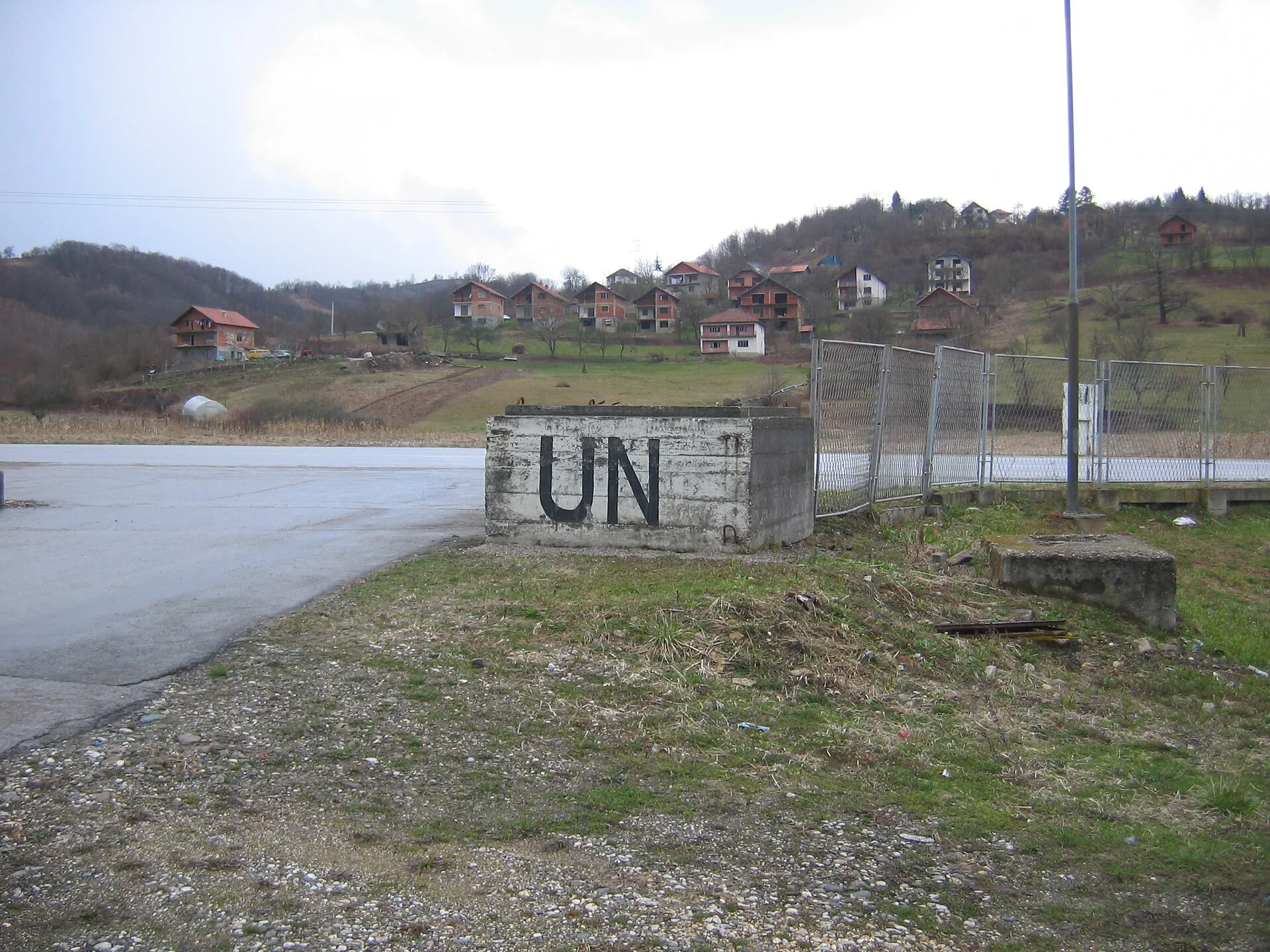
Pierian Spring · Srebrenica: more of the story
An interpreter was allowed to stay; his family was sent out the gate.
- Hasan Nuhanović was a young interpreter for the Dutch battalion. He was allowed to stay on the base.
- His father, Ibro, his mother, Nasiha, and his younger brother, Muhamed, were sent out through the gate.
- All three were killed.
The exit of the former Dutch battalion compound at Potočari (photographed 2009). MichaelBueker · CC BY 3.0.

Pierian Spring · Srebrenica: more of the story
Courts named it genocide.
- 2002: after a government-commissioned report, the Dutch cabinet of Wim Kok resigned. 2013: the Supreme Court of the Netherlands held the state responsible for the deaths of Nuhanović’s father and brother.
- ICTY: Radislav Krstić convicted (2001; aiding and abetting genocide on appeal, 2004); Radovan Karadžić convicted of genocide (2016; life, 2019).
- The International Court of Justice agreed in 2007 that genocide was committed.
- Mladić, arrested in Serbia in 2011, was convicted of genocide in 2017 and sentenced to life.
Ratko Mladić at his trial judgment, ICTY, The Hague, Netherlands, November 22, 2017. File:Mladić Trial Judgement.jpg · CC BY 3.0.
Pierian Spring · 1 of 8
The Red Terror, 1918–1922
Key term: the Cheka
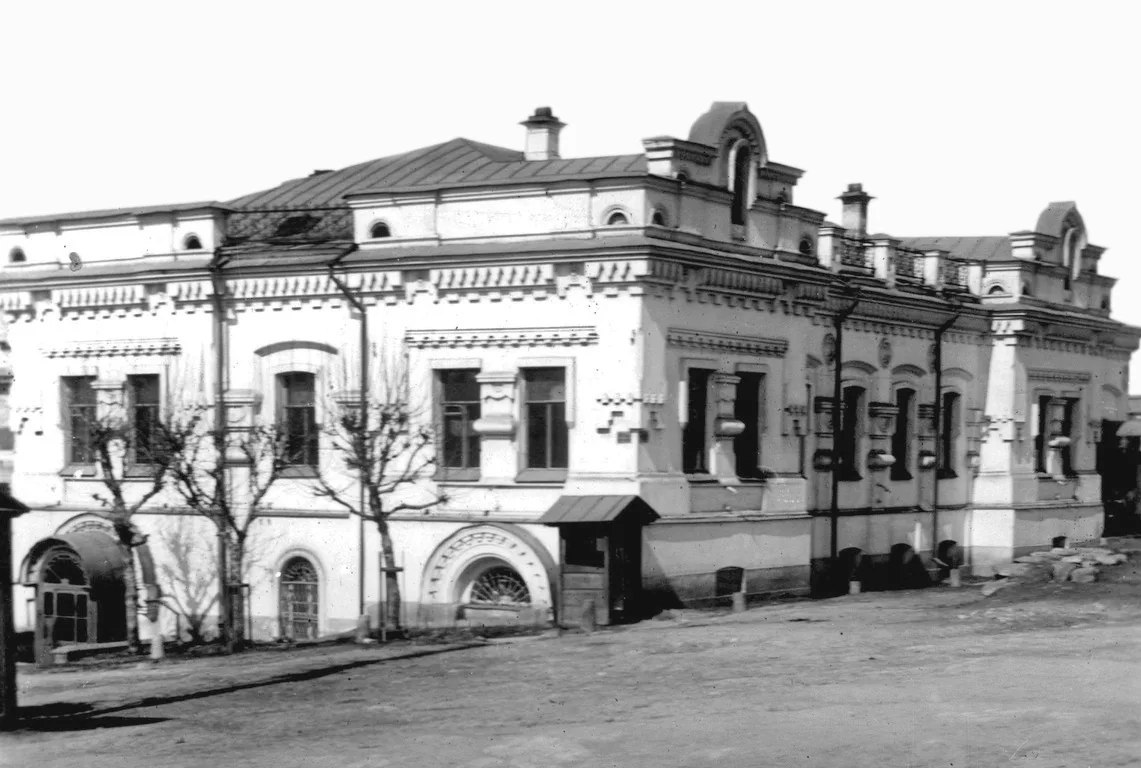
The Ipatiev House, Yekaterinburg, Russia, where the Romanov family was shot on the night of July 16–17, 1918 (photograph c. 1918). Unknown photographer, original uploader was Crimea at Hungarian Wikipedia · Public domain.
Pierian Spring · 2 of 8
The Great Terror and the Soviet total
20,000,000
a total often given for deaths in the USSR · How many died in the USSR?
Key term: the Great Terror
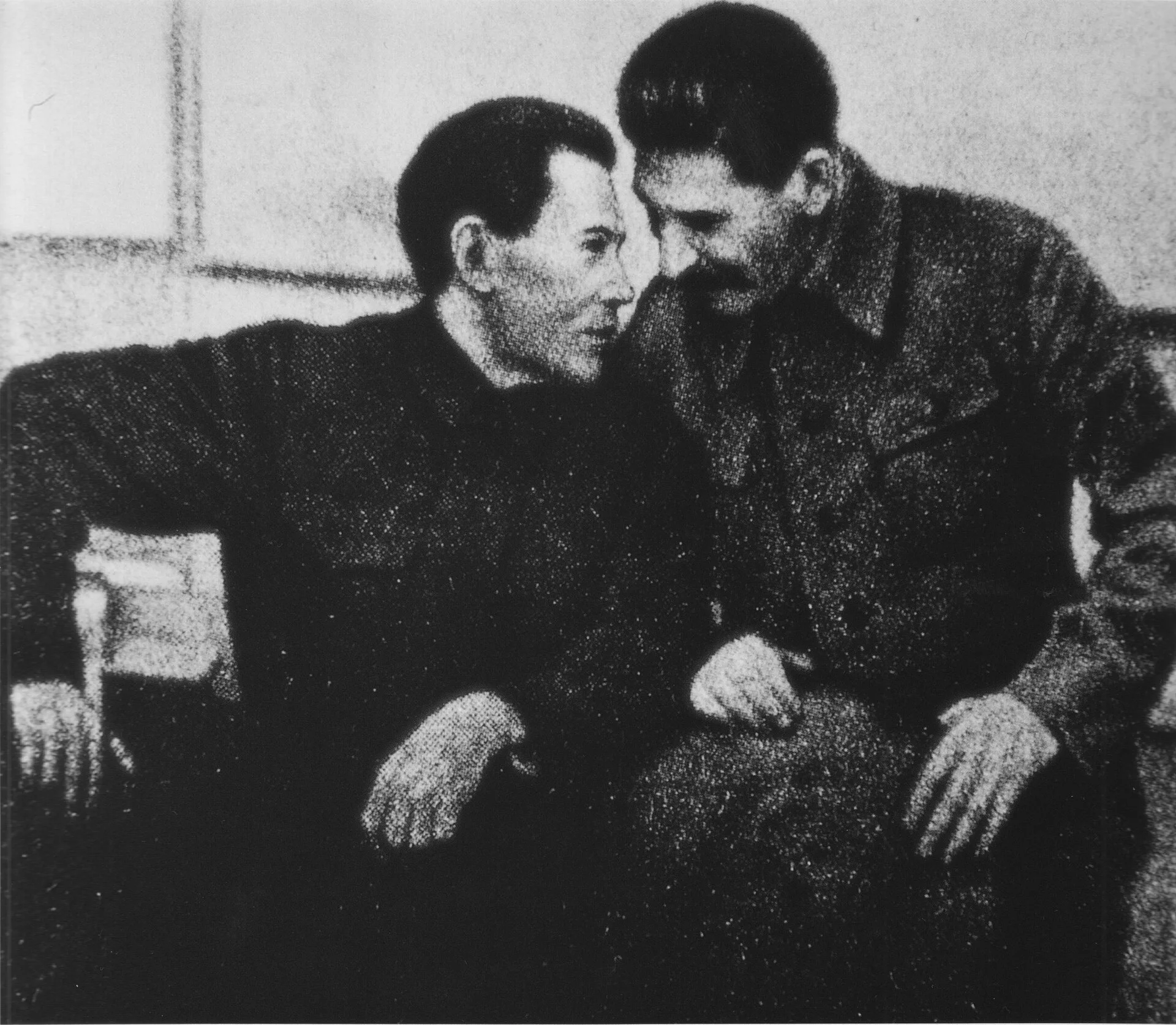
Joseph Stalin and NKVD chief Nikolai Yezhov at the twentieth anniversary of the Cheka, Moscow, December 20, 1937. Unknown photographer · Public domain.
Pierian Spring · 3 of 8
All communist regimes
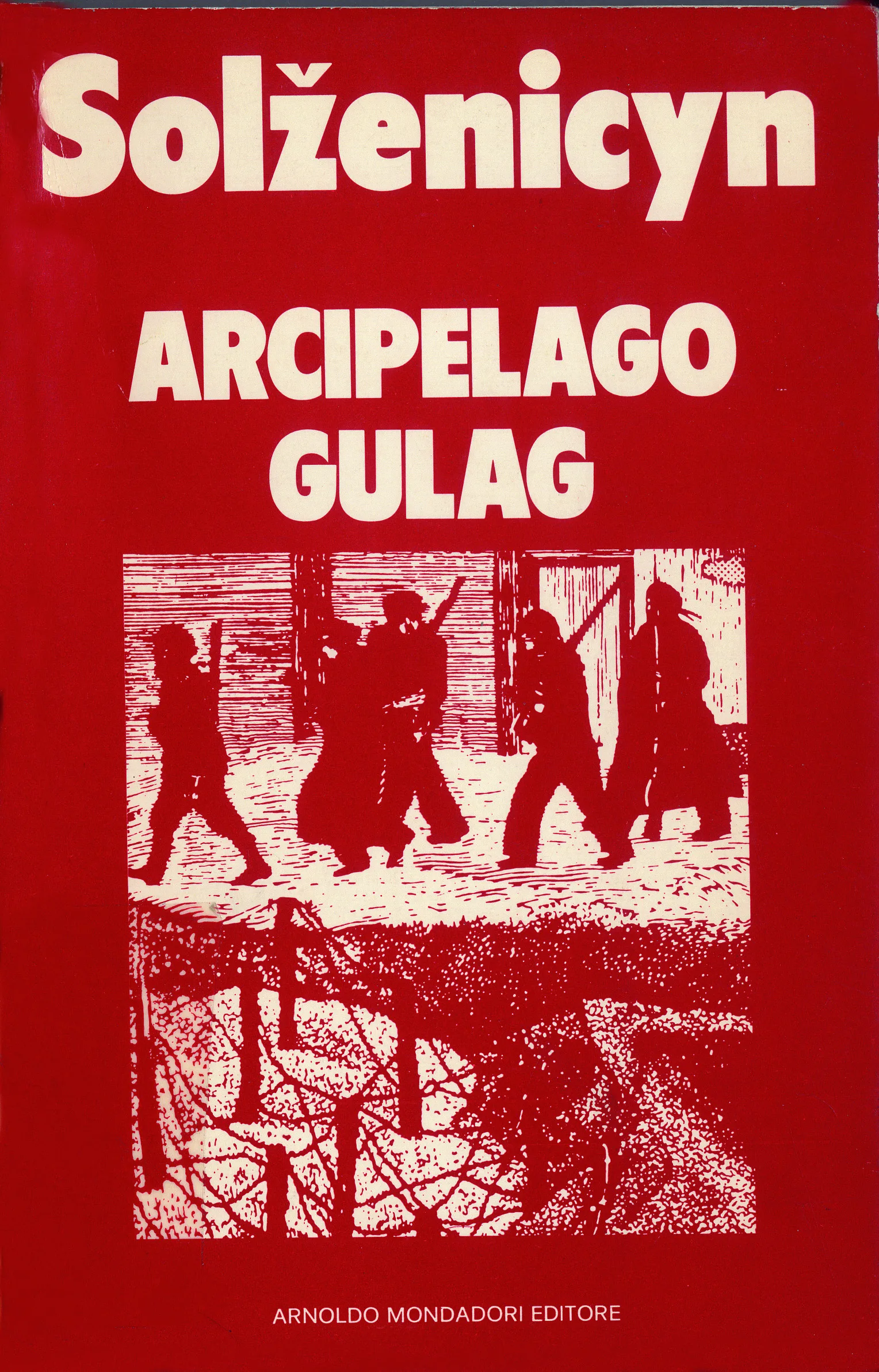
100,000,000
a toll often given for all communist regimes · How many died under communist regimes?
Cover of the first Italian edition of Solzhenitsyn’s Arcipelago Gulag (Mondadori, 1974). Aleksandr Solzhenitsyn · CC BY-SA 4.0.
Pierian Spring · 4 of 8
Imperial Japanese Atrocities: the “comfort women”
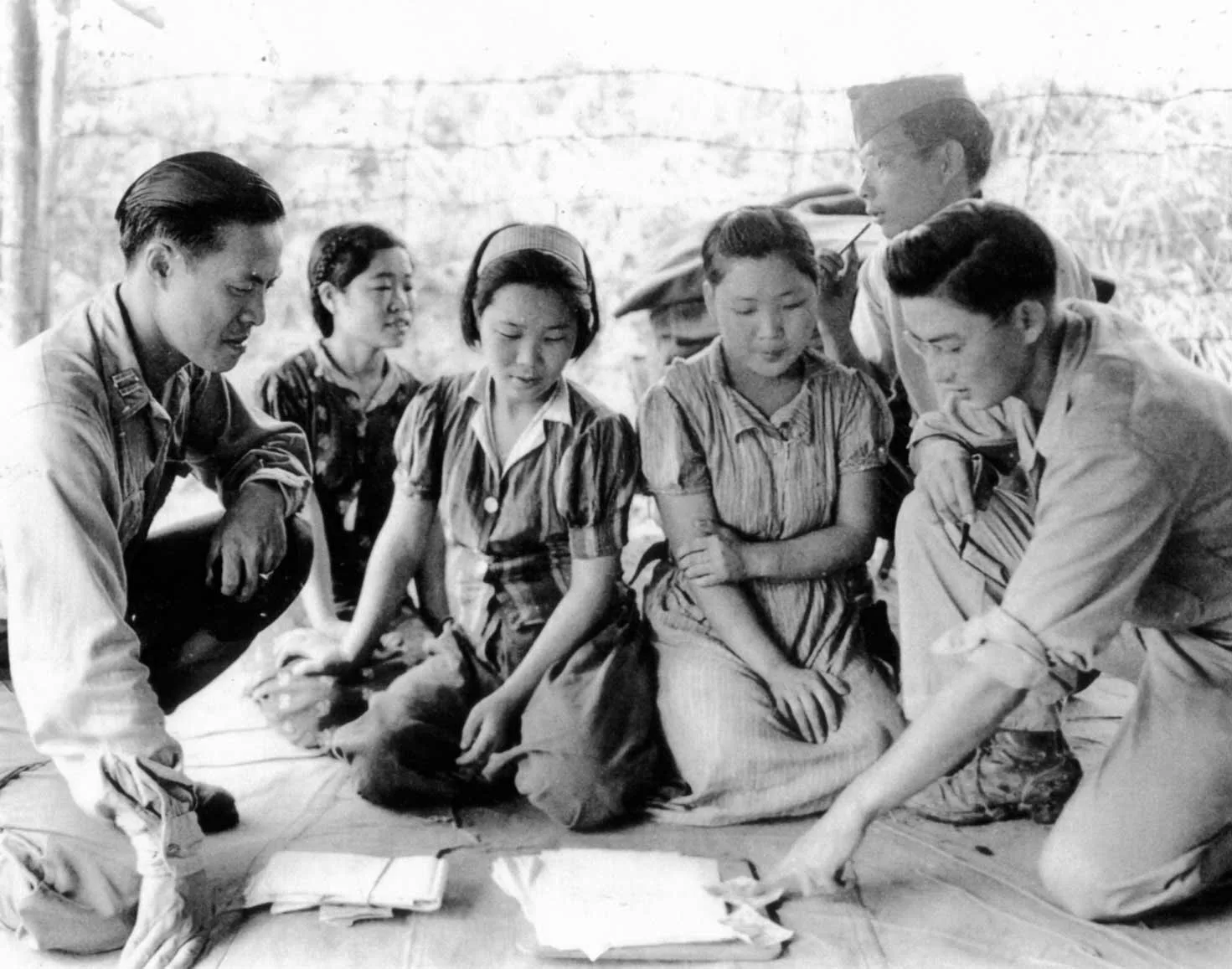
Key term: “comfort women”
Women held by the Japanese army as “comfort women,” captured by U.S. forces at Myitkyina, Burma (today Myanmar), August 14, 1944. U.S. Army · Public domain.
Pierian Spring · 5 of 8
Imperial Japanese Atrocities: Unit 731
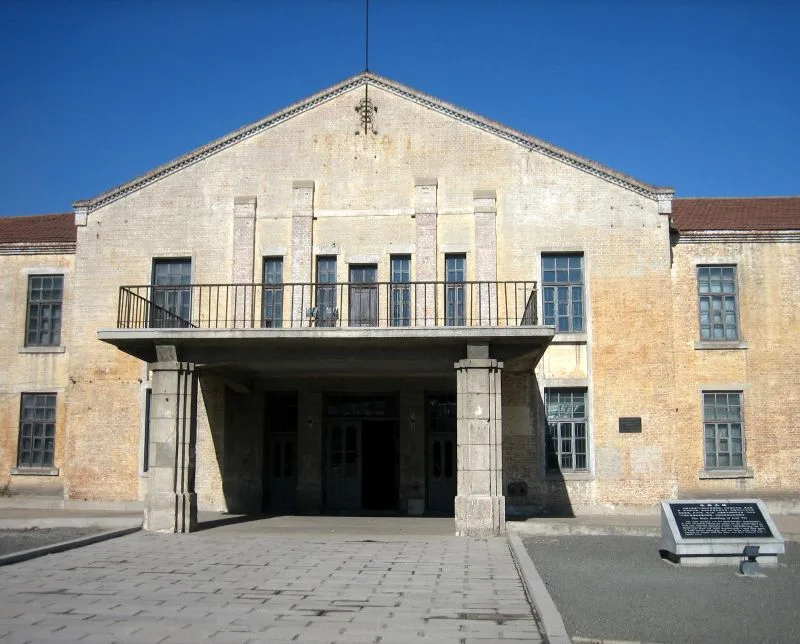
Key term: Unit 731
The remains of the Unit 731 headquarters at Pingfang, near Harbin, China (photographed 2007). Prince Roy from Ho Chi Minh City, Vietnam · CC BY 2.0.
Pierian Spring · 6 of 8
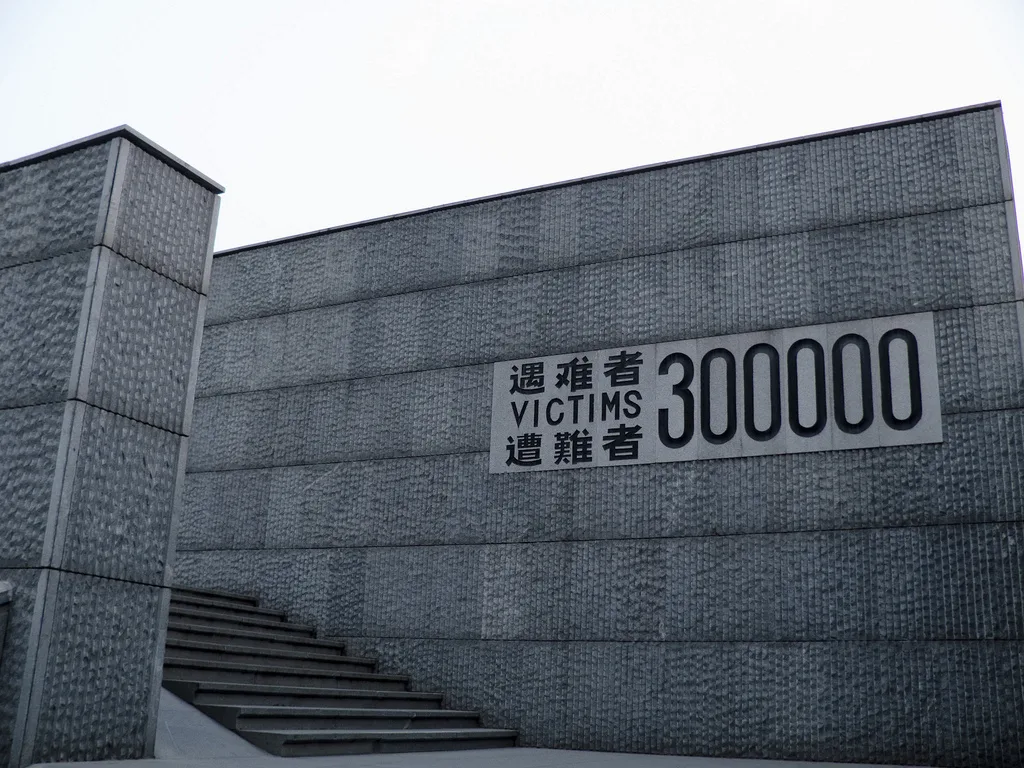
Counting the dead: why the numbers differ
The figure 300,000 on the wall of the Memorial Hall of the Victims in the Nanjing Massacre, Nanjing, China (photographed 2010). x li · CC BY-SA 2.0.
Pierian Spring · 7 of 8
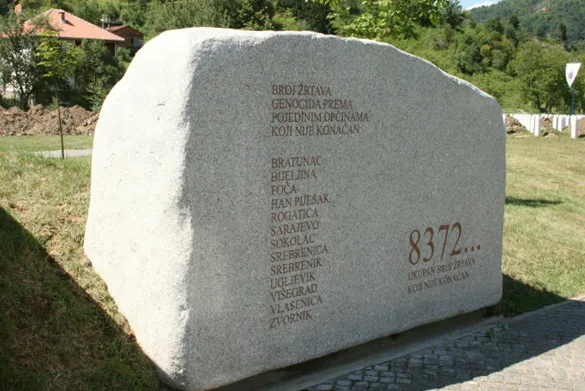
Naming and denying
The memorial stone at the Srebrenica-Potočari Memorial Center, Bosnia and Herzegovina (photographed 2005). Unknown · CC BY-SA 3.0.
Pierian Spring · 8 of 8
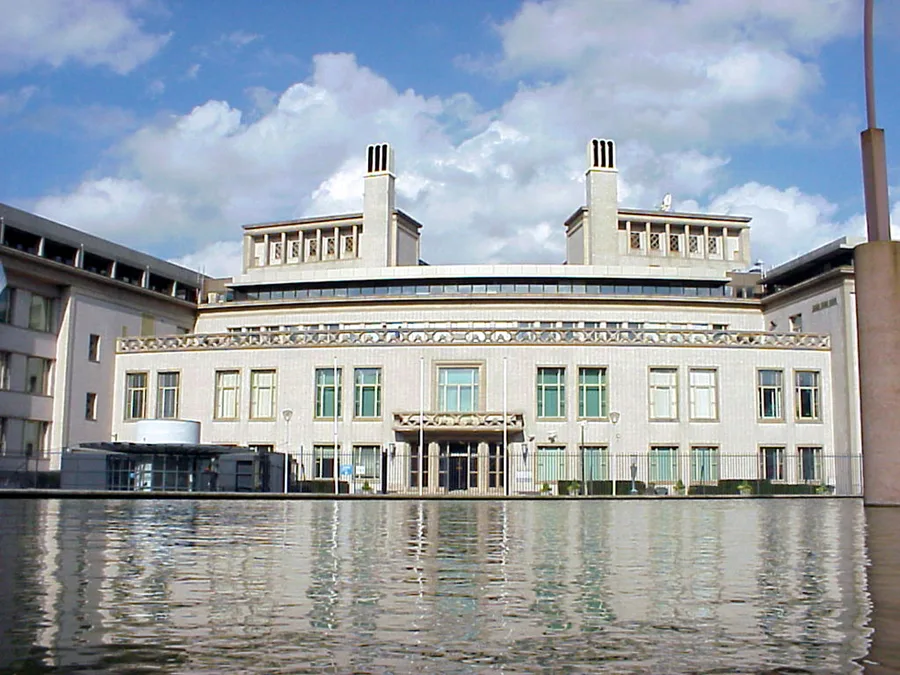
Justice and its failures
The International Criminal Tribunal for the former Yugoslavia, The Hague, Netherlands (photographed 2009). ICTY staff · CC BY 3.0.
Appendix · Where Is the Line?
The opening: Lemkin’s definition and the Holocaust
- The Holocaust is the clearest case the definition was written for: the destruction of a people “as such,” pursued to the last child.
- The twentieth century, “the century of genocide,” keeps asking: where does genocide end and other mass murder begin?
- Every case tests where Lemkin’s line falls.
Appendix · Where Is the Line?
Armenia, 1915
- Chosen because they were Armenians: a national and religious group.
- The desert marches: “conditions of life calculated to bring about its physical destruction.” Children taken and converted: “forcibly transferring children.”
- Broad agreement among historians outside Turkey that this was genocide; the U.S. recognized it in 2019 (Congress) and 2021 (president).
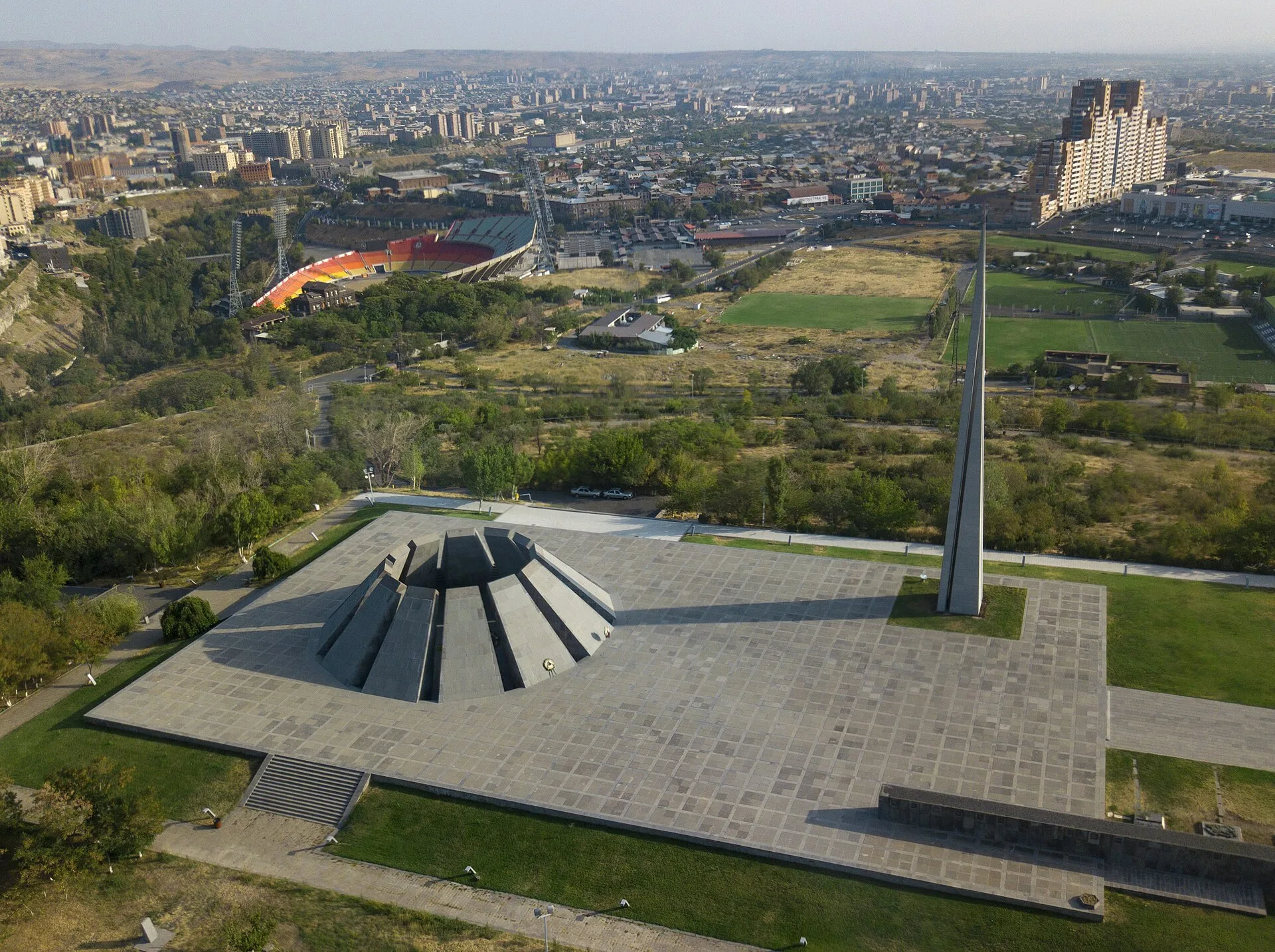
The Armenian Genocide Memorial, Yerevan, Armenia (reused from slide W). Aleksey Chalabyan (a.k.a. Xelgen) · CC BY-SA 4.0.
Appendix · Where Is the Line?
The Holodomor: Lemkin said genocide; historians still argue
- Lemkin, 1953: “This is not simply a case of mass murder. It is a case of genocide, of destruction, not of individuals only, but of a culture and a nation.”
- Historians agree on the causes and the cruelty; they disagree about intent.
- Nobody disputes the corpses. The argument is over what was in Stalin’s mind.
Alexander Wienerberger, who photographed the famine (reused from slide AC). Alexander Wienerberger (1891–1955) · Public domain.
Appendix · Where Is the Line?
Nanjing, 1937–1938
- Most scholars do not class Nanjing as genocide: the army did not set out to destroy the Chinese people “as such.”
- War crimes and crimes against humanity, which is how the Tokyo tribunal judged them.
- “Not genocide” does not mean “less evil.” The difference is in the intent of the killers, not in the worth of the victims.
General Matsui Iwane (reused from slide BC). Unknown photographer · Public domain.
Appendix · Where Is the Line?
Cambodia, 1975–1979: the political-groups gap
- Most victims were Khmer killed by Khmer, as “new people” and “class enemies”: the hole left in 1948.
- 2018: the tribunal convicted Nuon Chea and Khieu Samphan of genocide against the Vietnamese (and Nuon Chea against the Cham), and of crimes against humanity for the rest.
- A Cham grandmother and her Khmer neighbor might die in the same ditch; in law, one was a victim of genocide and the other of a crime against humanity.
Ismael Ahmad, a Cham Muslim, photographed as a prisoner at S-21, Phnom Penh, 1977 (reused from slide BN). S-21 (Tuol Sleng) prison photographer, 1977; reproduced in Ysa Osman, Oukoubah (DC-Cam, 2002), photo gallery · Copyright status unclear (S-21 prison photograph, 1977).
Appendix · Where Is the Line?
Rwanda, 1994: the textbook case
- The case the Convention was written for, after the Holocaust: the radio said “cockroaches”; victims were selected by the label on their identity cards.
- Yet officials in Washington and at the UN avoided the word “genocide” for weeks, because naming it might create an obligation to act.
- 1998: Akayesu, the first conviction for genocide by an international court.
The International Criminal Tribunal for Rwanda, Arusha, Tanzania (reused from slide BW). Tomsudani · Public domain.
Sources and image credits
- Raphael Lemkin, Axis Rule in Occupied Europe (1944) and Totally Unofficial (2013) · Genocide Convention, Art. II (1948)
- Ronald Grigor Suny, “They Can Live in the Desert but Nowhere Else” (2015) · Raymond Kévorkian, The Armenian Genocide (2011)
- Anne Applebaum, Red Famine (2017) and Gulag: A History (2003)
- Joshua A. Fogel, ed., The Nanjing Massacre in History and Historiography (2000) · John Rabe, The Good Man of Nanking (1998)
- Ben Kiernan, The Pol Pot Regime (1996) · David Chandler, Voices from S-21 (1999) · ECCC, Case 001 (Duch), Trial Judgment (2010)
- Alison Des Forges, “Leave None to Tell the Story” (1999) · Roméo Dallaire, Shake Hands with the Devil (2003)
- ICTY, Prosecutor v. Krstić (2001, 2004) · David Rohde, Endgame (1997) · Samantha Power, “A Problem from Hell” (2002)
Photographs are from Wikimedia Commons and the archives listed; they are used here for teaching (fair use, educational). G, H, CP, DN, DO and DP are AI-generated illustrations.